The Best Compliance Automation Platform That Cuts Manual Work by 80%

Join thousands of professionals and get the latest insight on Compliance & Cybersecurity.
Summary
- A staggering 77% of compliance teams still rely on manual processes, leading to audit-readiness anxiety and duplicated efforts across frameworks like SOC 2 and ISO 27001.
- Compliance automation transforms security from a periodic fire drill into a continuous state by automating evidence collection and constant control monitoring.
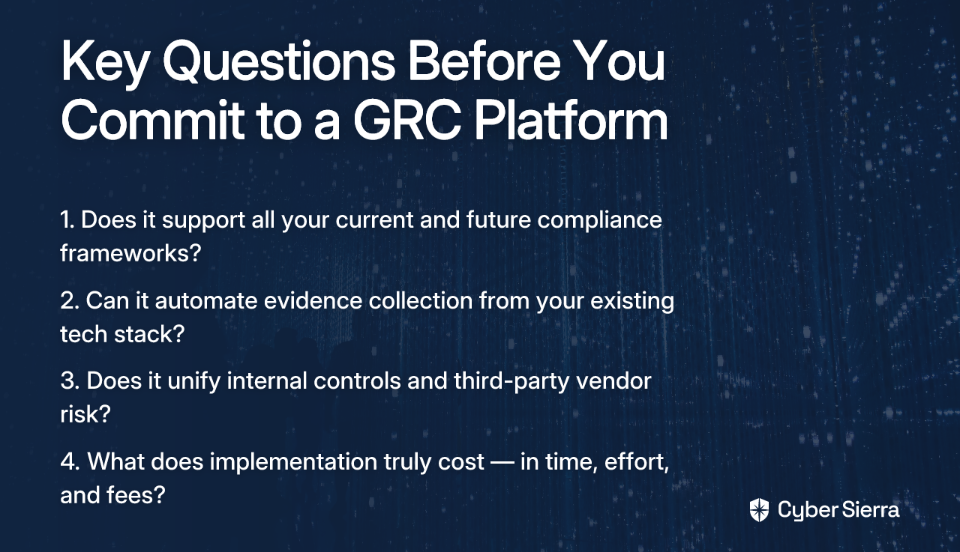
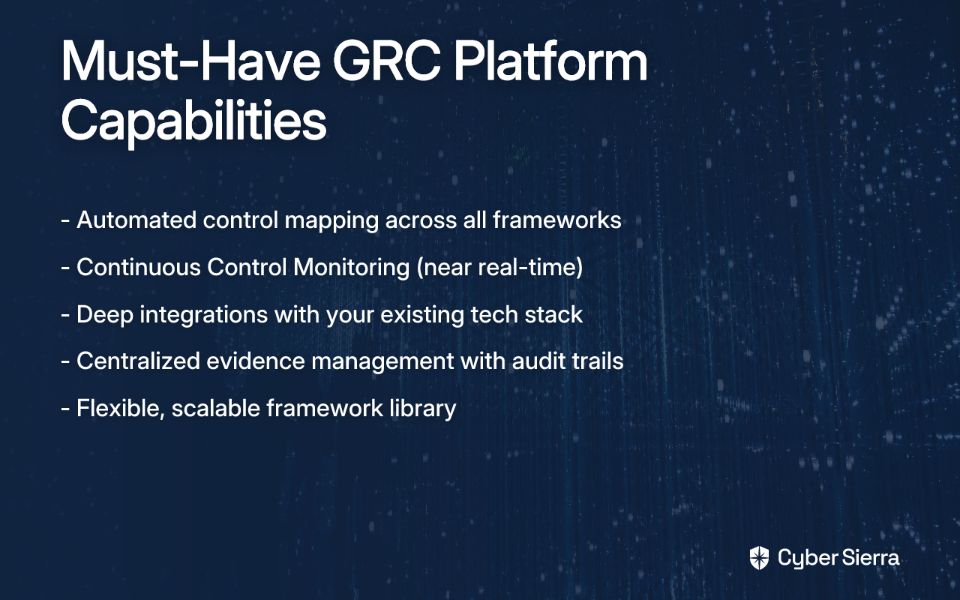
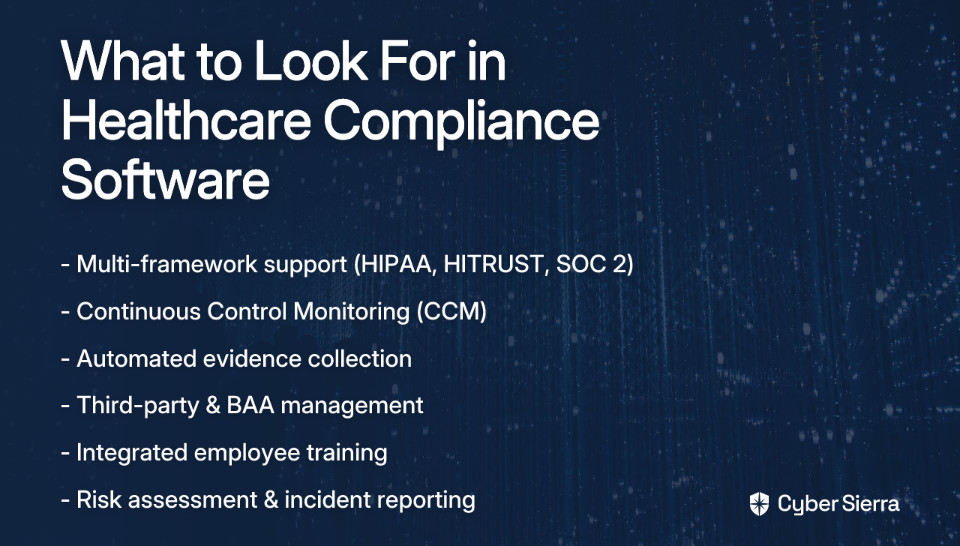
- To move beyond manual compliance, look for platforms with key capabilities like Continuous Control Monitoring (CCM), automated evidence collection, and multi-framework mapping.
- Cybersierra's unified platform helps teams achieve an 'always audit-ready' state by automating GRC workflows and providing a single source of truth for risk and compliance.
Picture this: it's two weeks before your SOC 2 audit. Your calendar is a graveyard of evidence-collection calls. You're hunting down engineers who may or may not remember where a config lives, hoping they can produce a screenshot with a visible timestamp. Meanwhile, the rest of your team still needs to patch systems, respond to alerts, and keep the lights on.
This is the reality for most security and compliance teams today. Not a security crisis — just the slow, grinding weight of manual compliance work.
The good news? This is exactly the problem a modern compliance automation platform is built to solve. Not by replacing your team or magically guaranteeing audit outcomes, but by eliminating the repetitive, low-value work that consumes hundreds of hours per cycle — freeing your people to focus on what actually moves the needle.
The Crushing Weight of Manual Compliance
Manual compliance isn't just inefficient. It's structurally broken.
According to research cited by Diligent, 92% of compliance professionals report increased challenges in their roles — and 77% are still relying on manual processes to manage them. That gap between the complexity of modern compliance and the tools being used to manage it is widening every year. This pressure to modernize is driving significant GRC market growth, with projections of a 13.22% CAGR through 2030.
But statistics only tell part of the story. Here's what manual compliance actually looks like on the ground:
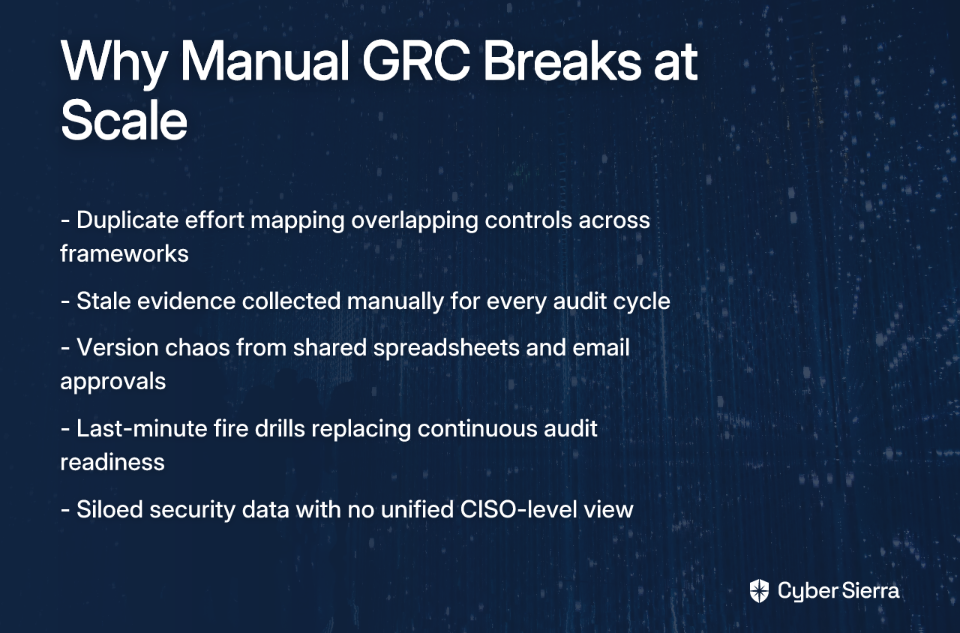
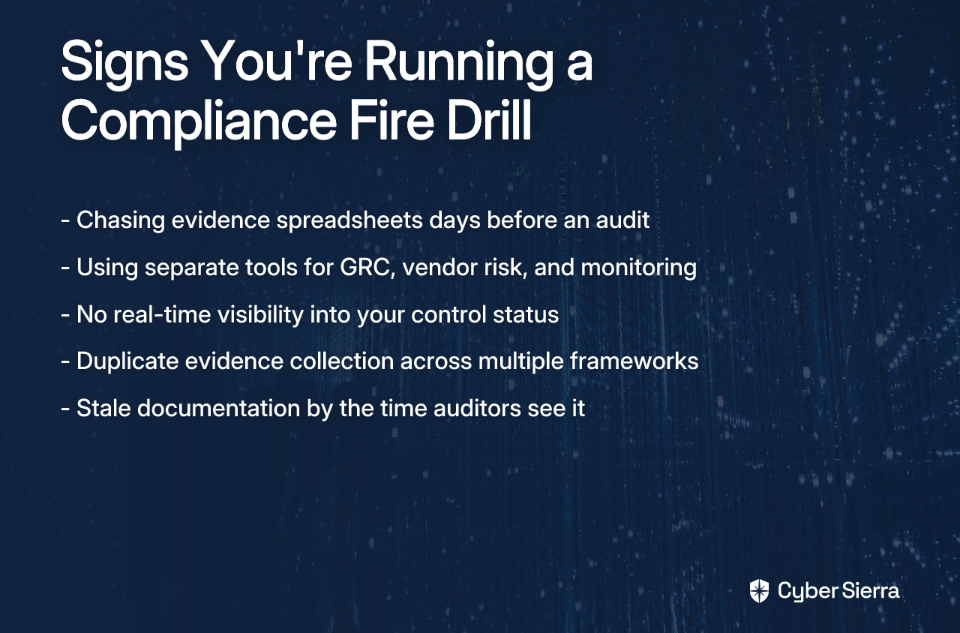
- Evidence sprawl. Gathering audit evidence means coordinating across IT, engineering, HR, and legal — chasing screenshots, log exports, and policy attestations that are often stale by the time they land in your inbox. As one security professional noted: "You end up on long calls with engineers who may or may not speak GRC and hope they remember where to find a config and take a screenshot with a timestamp."
- Framework overlap with no efficiency gains. Managing SOC 2, ISO 27001, HIPAA, and PCI DSS simultaneously means duplicated effort on controls that overlap significantly. Without cross-framework mapping, you're collecting the same evidence multiple times for different auditors.
- Vendor risk blind spots. A lot of Third-Party Risk Management (TPRM) programs are still built on spreadsheets, manual questionnaires, and periodic risk rankings. As practitioners observe, "Most TPRM problems aren't tool problems — they're inventory and governance problems." Point-in-time assessments tell you what a vendor looked like on the day they filled out a form. They tell you nothing about what's happening today.
- Audit readiness anxiety. Compliance is treated as a periodic fire drill: chaotic scramble before an audit, then months of relative inactivity. Being "always audit-ready" sounds aspirational, but for most teams it remains aspirational — not operational.
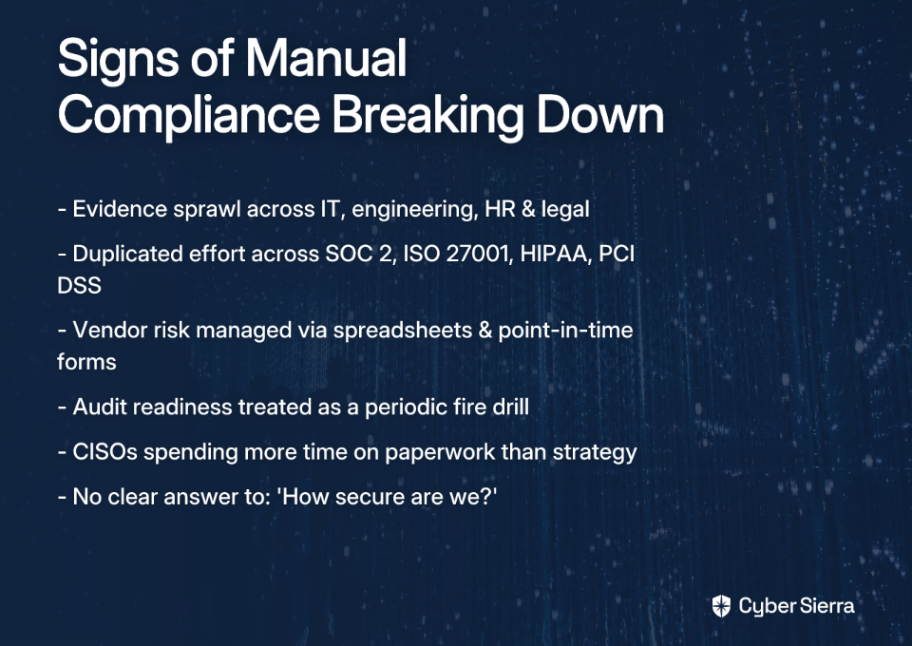
The cumulative effect is compliance fatigue. Skilled analysts burn out on repetitive tasks. Chief Information Security Officers (CISOs) spend more time on paperwork than on strategy. And the board still can't get a clear answer to the question: "How secure are we?"
What Compliance Automation Actually Is
Before evaluating any platform, it's worth being precise about what compliance automation does — and what it doesn't.
Compliance automation uses technology to connect directly to your existing systems and automate the repetitive, rule-based tasks in your compliance program. The core capabilities typically include evidence collection, control testing, framework mapping, workflow management, and audit reporting.
What it is not is a silver bullet. A common and valid observation in the practitioner community: "The hard part about SOC 2 isn't the automation of collecting evidence. The hard part about SOC 2 is actually being secure." Compliance and security are related, but not the same thing. A platform that automates checkbox collection without reinforcing actual control effectiveness is compliance theater, not compliance automation.
The right platform does both: it automates the administrative burden and provides continuous visibility into whether your controls are actually working.
Core Capabilities That Define a Top-Tier Platform
Not all compliance automation platforms are created equal. The following capabilities separate tools that genuinely reduce workload from those that just add another dashboard to manage.
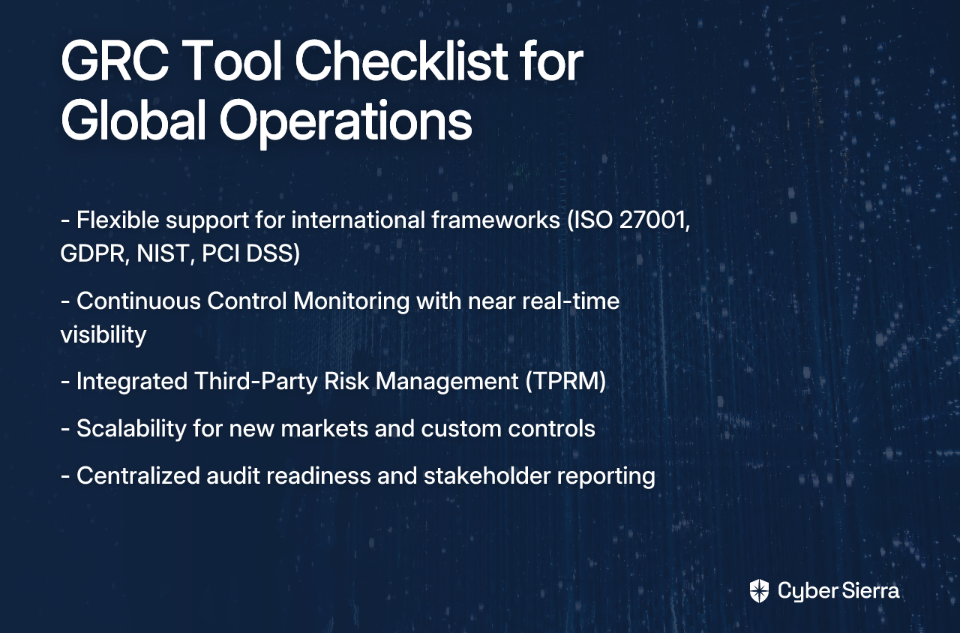
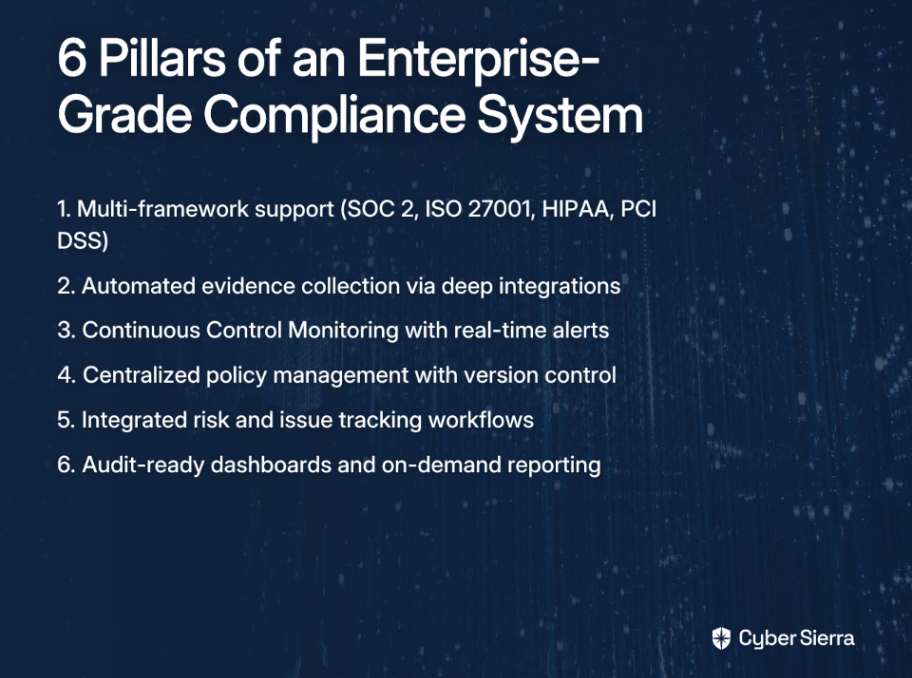
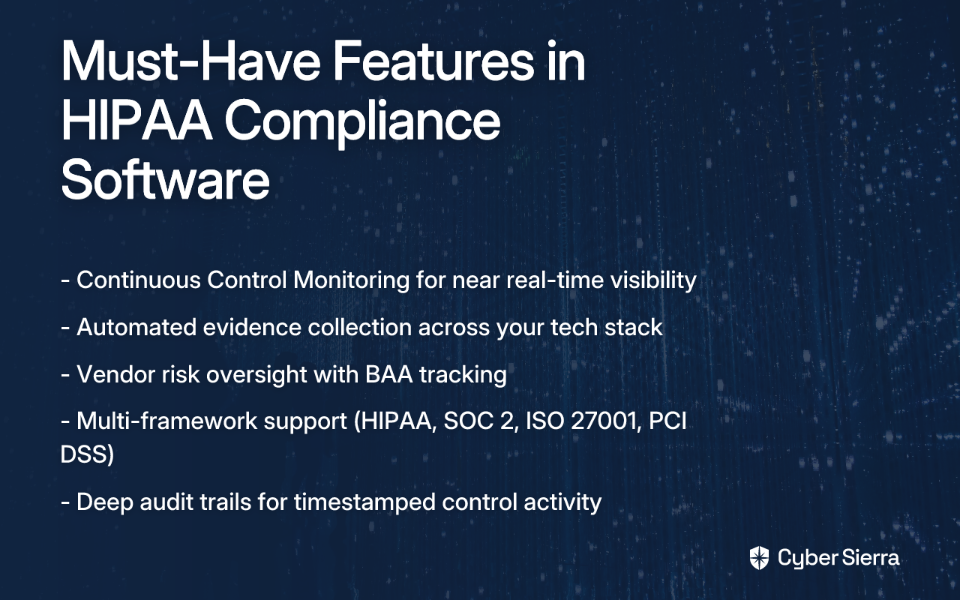
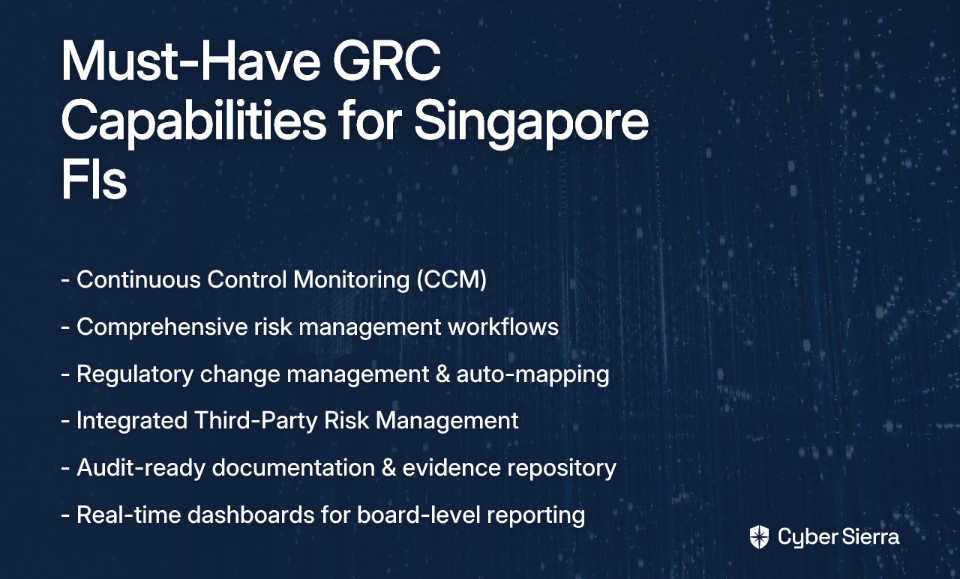
Continuous Control Monitoring (CCM). This is the foundation of any serious platform. Rather than testing controls once before an audit and hoping nothing has changed, CCM provides ongoing visibility into controls — detecting exceptions and anomalies in near real-time. This is what transforms compliance from a periodic event into a continuous state.
Automated evidence collection. The platform should integrate directly with your cloud providers, identity systems, HR tools, and infrastructure to pull evidence automatically. No more timestamp hunts. No more engineering calls. Evidence is collected continuously and is always current.
Multi-framework mapping. A centralized controls repository should allow a single control to satisfy requirements across multiple frameworks simultaneously. This is how you eliminate the redundant effort of managing SOC 2, ISO 27001, HIPAA, and PCI DSS in parallel.
Third-Party Risk Management automation. Beyond questionnaires, the platform should support a centralized vendor inventory, automated risk assessments, and continuous monitoring of your vendors' security posture — providing near real-time visibility into supply chain risk rather than a point-in-time snapshot.
Unified risk dashboard. Everything in one place: control status, remediation progress, vendor risk scores, and board-ready reports that quantify risk in business terms. The goal is a single source of truth that answers the "how secure are we?" question with confidence.
Deep integrations. Without integrations, automated evidence collection is just a promise. The platform must connect to the tools your organization actually uses — AWS, Azure, Google Cloud, Okta, GitHub, Jira, and others.
How Cyber Sierra Addresses This End-to-End
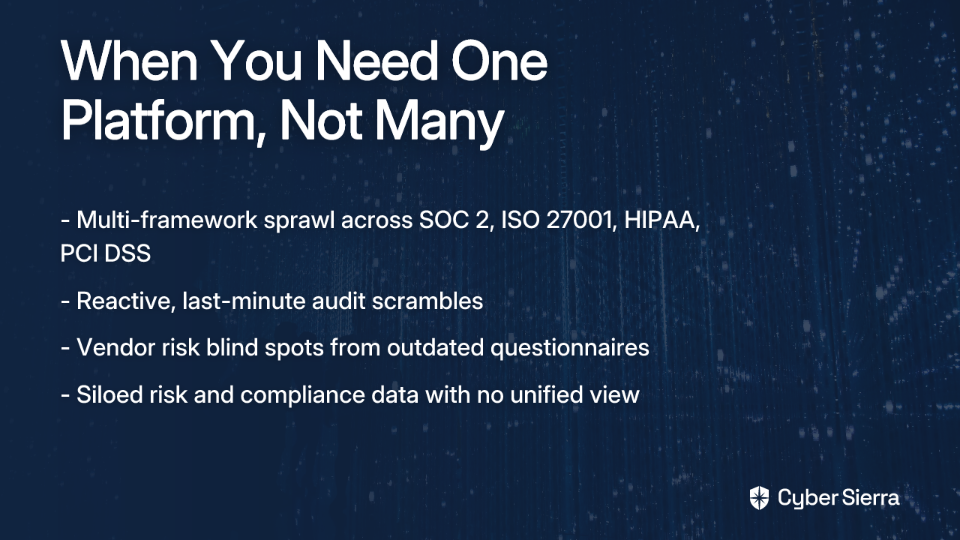
Most compliance tools specialize. They do GRC, or they do TPRM, or they handle vulnerability management — and then you're left stitching together the results across three different platforms with no unified view.
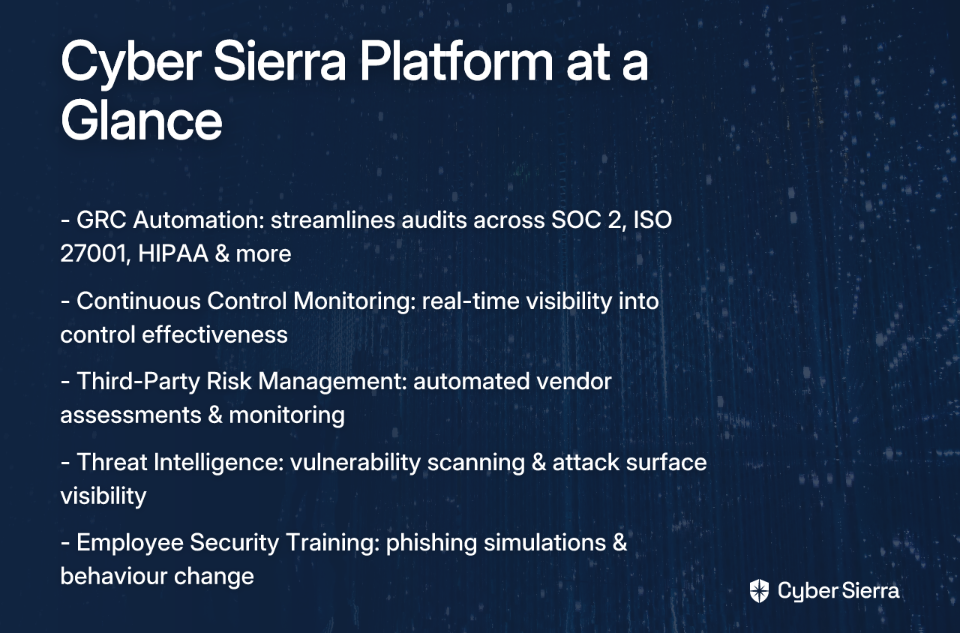
Cyber Sierra is an AI-enabled cybersecurity platform that was built to solve this fragmentation problem. It was recognized as a Sample Vendor in the Gartner® Hype Cycle™, is ISO 27001 certified, holds accreditation from the Cyber Security Agency of Singapore (CSA), and won the AI Innovation Awards 2024 — recognition that speaks to both credibility and innovation. The platform brings five capabilities together in a single environment:
Best for: CISOs, compliance managers, and security teams managing multi-framework environments across regulated industries. Supported frameworks: SOC 2, ISO 27001, HIPAA, PCI DSS, GDPR, NIST CSF, and custom controls. Deployment: Cloud-based SaaS platform.
Here's how each module maps to the manual work it eliminates:
GRC Automation
Cyber Sierra's GRC module automates data collection, risk assessments, and policy management across frameworks like SOC 2, ISO 27001, GDPR, and HIPAA. It generates comprehensive audit trails and compliance reports, and maintains a centralized policy repository — solving the version control chaos that turns pre-audit preparation into an archaeological dig through shared drives and wikis.
Continuous Control Monitoring
The CCM module continuously tests and validates controls, detects anomalies in real time, and provides a near real-time view of your compliance posture. For teams that have been stuck in the annual audit fire drill cycle, this shift to continuous monitoring is significant. Gaps are surfaced before they become audit findings — not during them.
Third-Party Risk Management
Cyber Sierra's TPRM module replaces the spreadsheet-and-questionnaire approach with automated vendor assessments, continuous monitoring of third-party security compliance, and a prioritized vendor inventory based on risk level. It addresses both the tool problem and the governance problem — giving compliance teams the structure and visibility they need to manage vendors systematically rather than reactively.
Threat Intelligence and Employee Security Training
The Threat Intelligence module connects compliance posture to real-world exposure, with network and cloud vulnerability scanning and an outside-in view of the attack surface. Alongside it, the Employee Security Training module addresses the human risk factor through interactive training and simulated phishing campaigns — turning compliance awareness into measurable behavior change.
Together, these capabilities move compliance from a documentation exercise to a reflection of actual security posture.
Make "Always Audit-Ready" Your Reality
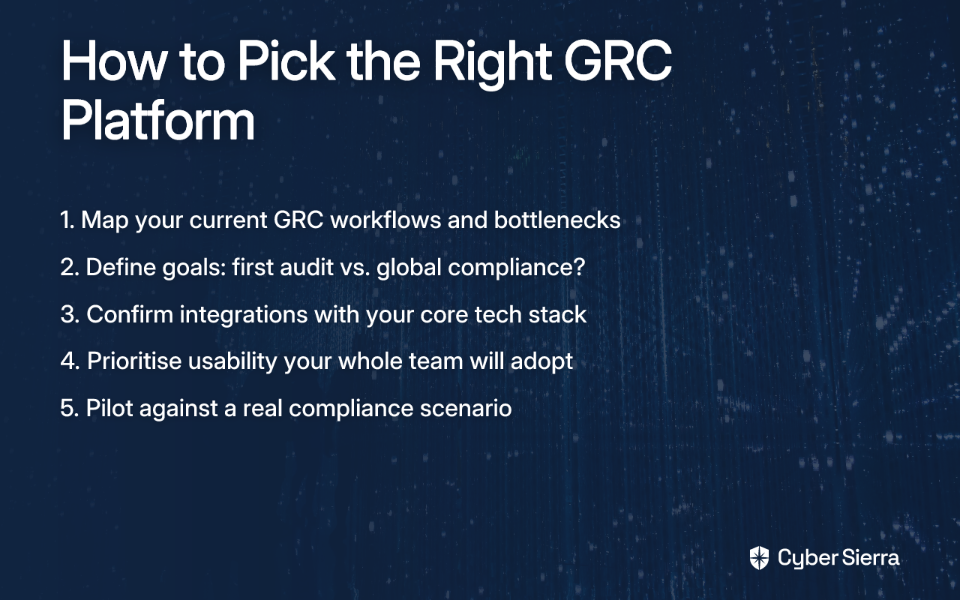
Moving from a manual grind to a continuous program can feel like a huge leap, but it boils down to two practical shifts. Instead of getting bogged down in theory, focus on the outcomes:
- End the pre-audit scramble. Automating evidence collection from your tech stack is the first step to reclaiming hundreds of hours. This frees up your security team to focus on strategic work, not chasing screenshots.
- Get a live view of your controls. The real transformation comes from Continuous Control Monitoring (CCM). It gives you a near real-time dashboard of your security posture, turning compliance into a genuine measure of effectiveness, not just a point-in-time report.
As a next step today, identify the single most time-consuming evidence request from your last audit. What would it take to get that data automatically?
When you’re ready to see how an integrated platform provides that visibility across all your frameworks, explore Cyber Sierra's platform with our team.
Frequently Asked Questions
What is compliance automation?
Compliance automation uses technology to connect to your systems and automate repetitive tasks like evidence collection and control testing. It streamlines audits and provides continuous visibility, freeing your team from manual work to focus on improving your actual security posture.
How does compliance automation save time for security teams?
It saves time by eliminating manual, repetitive tasks. Instead of chasing screenshots and coordinating with engineers, the platform automatically collects evidence from integrated systems like AWS, Okta, and Jira, keeping it always current and ready for auditors.
Can compliance automation improve security or is it just for passing audits?
A good platform improves both. By providing continuous control monitoring, it gives you a real-time view of your security posture and alerts you to gaps before they become audit findings. This transforms compliance from a periodic scramble into a reflection of your true security effectiveness.
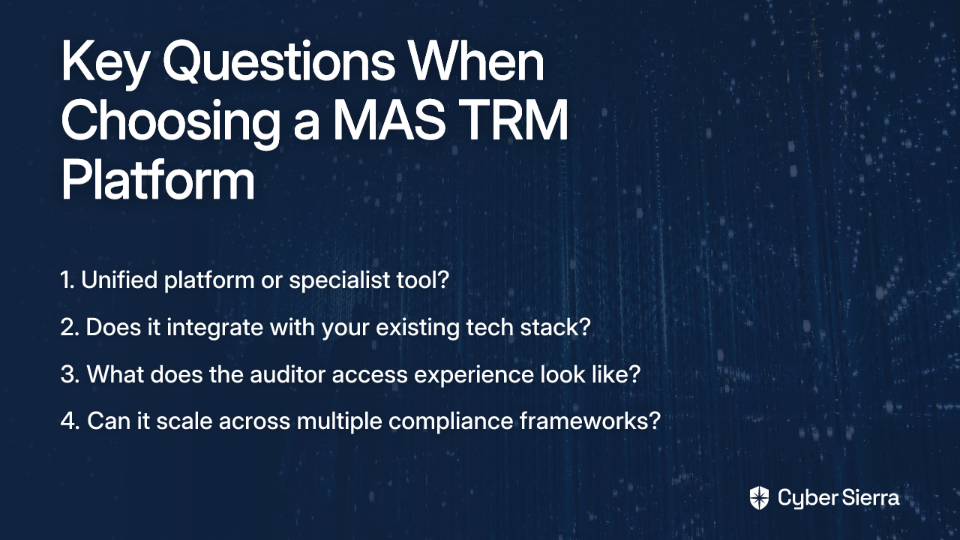
What are the most important features in a compliance automation platform?
Look for continuous control monitoring (CCM), automated evidence collection from your tech stack, multi-framework mapping (e.g., SOC 2, ISO 27001), automated third-party risk management (TPRM), and a unified dashboard for a single source of truth on risk and compliance.
How does a platform handle multiple frameworks like SOC 2 and ISO 27001?
Top platforms use multi-framework mapping. A single control and piece of evidence can be mapped to satisfy requirements across multiple frameworks simultaneously. This avoids duplicating work and collecting the same evidence multiple times for different audits.
Is our company ready for a compliance automation tool?
Automation is most effective when you have foundational governance in place, such as clear control ownership. If your team spends excessive time on manual evidence collection for audits and wants to shift to a continuous, proactive compliance model, you are ready to see significant benefits.