Security Continuous Monitoring vs. Periodic Assessments: ROI Comparison for CISOs


Join thousands of professionals and get the latest insight on Compliance & Cybersecurity.
Summary
- Periodic security assessments create dangerous blind spots, and with data breaches costing an average of $4.4 million, a reactive approach is no longer viable.
- Continuous security monitoring eliminates these blind spots by providing real-time visibility, enabling organizations to detect breaches up to 70% faster and significantly reduce financial impact.
- Security leaders can justify the investment using a Return on Security Investment (ROSI) framework that highlights cost avoidance, such as reducing audit preparation time by up to 60%.
- Transitioning to this model starts with a unified platform like Cybersierra's Continuous Control Monitoring (CCM), which centralizes security controls and automates evidence collection to keep your organization audit-ready.
"You cannot defend, you can only detect and respond." This sobering reality confronts every CISO today, underscoring why detection capabilities have become the backbone of modern security programs. Yet as security leaders, you face relentless pressure to justify budgets while struggling to quantify the value of investments that primarily prevent bad things from happening.
The fundamental question becomes: are your periodic, point-in-time assessments providing sufficient protection, or is there a more effective approach that delivers measurable business value?
This article provides a data-driven framework for comparing the true ROI of traditional periodic assessments against continuous monitoring approaches, enabling you to build a compelling business case for a security strategy that reduces risk, streamlines compliance, and improves operational efficiency.
The Hidden Costs of "Point-in-Time" Security
Periodic security assessments—whether quarterly vulnerability scans, annual penetration tests, or compliance audits—provide a snapshot of your security posture at a specific moment. While they have traditionally been the standard approach, they come with significant hidden costs.
The Critical Flaws
Security Blind Spots: The most fundamental flaw is the lack of visibility between assessments. A quarterly vulnerability scan might show a clean slate in January, but what about the critical vulnerability discovered in February that remains undetected until the next scan in April?
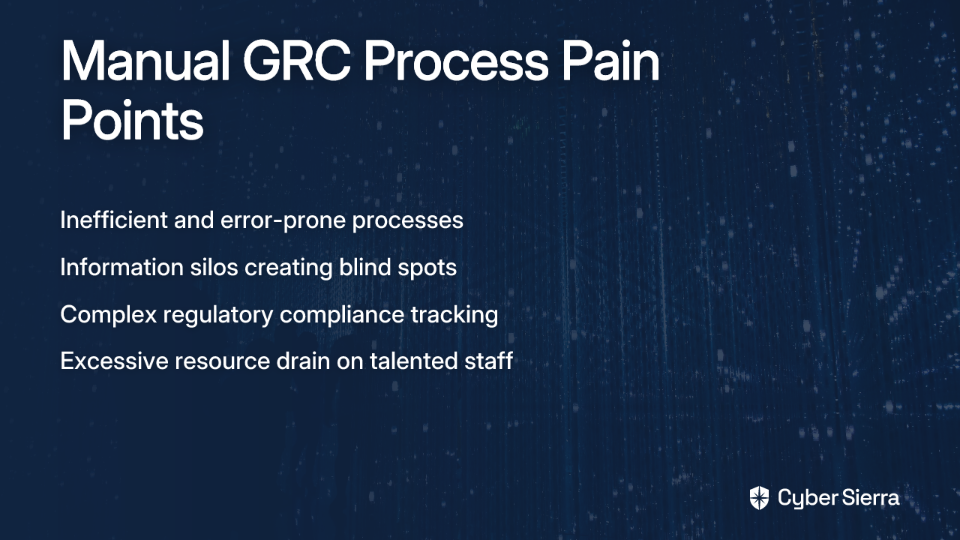
Resource Drain: The "audit season crunch" phenomenon is all too familiar. As one security professional noted, "The certs, risk docs, and endless follow-ups became a full-time job." Security teams spend weeks gathering evidence, documenting controls, and preparing for assessments—only to repeat the cycle months later.
False Sense of Security: A clean compliance report doesn't reflect the dynamic, constantly evolving threat landscape. Organizations can develop a dangerous complacency following successful assessments.
Reactive Posture: This approach forces security teams into a reactive stance—responding to findings that represent past vulnerabilities rather than current threats.
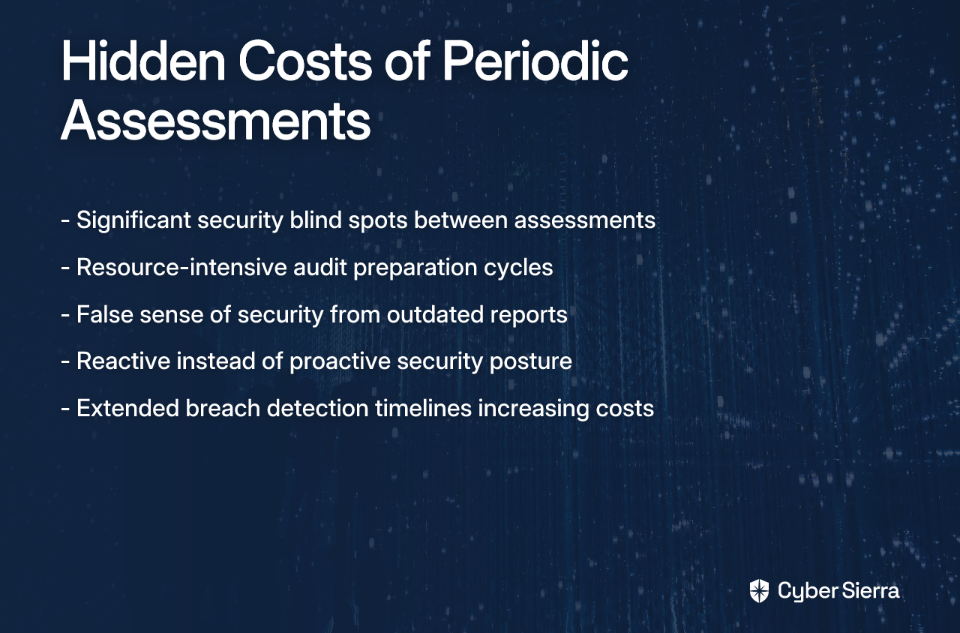
According to IBM's Cost of a Data Breach Report, organizations that identify breaches within 200 days save an average of $1.12 million compared to those that take longer. Yet periodic assessment models inherently extend detection timelines, increasing both risk exposure and potential financial impact.
The Strategic Shift to Continuous Security Monitoring
Continuous security monitoring represents a fundamental paradigm shift—moving from point-in-time snapshots to an ongoing, technology-driven surveillance of your security controls, systems, and infrastructure.
Strategic Benefits
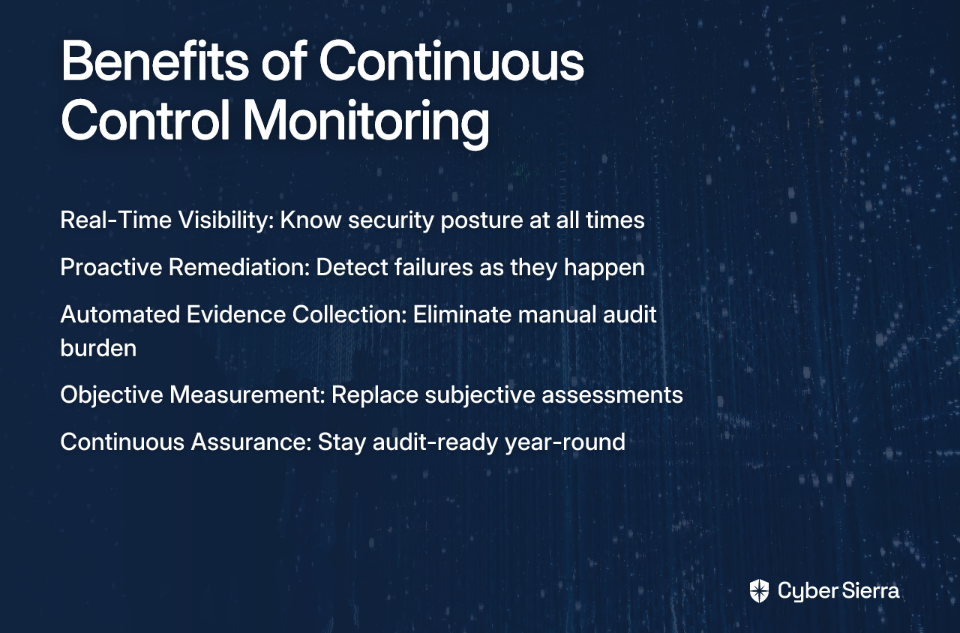
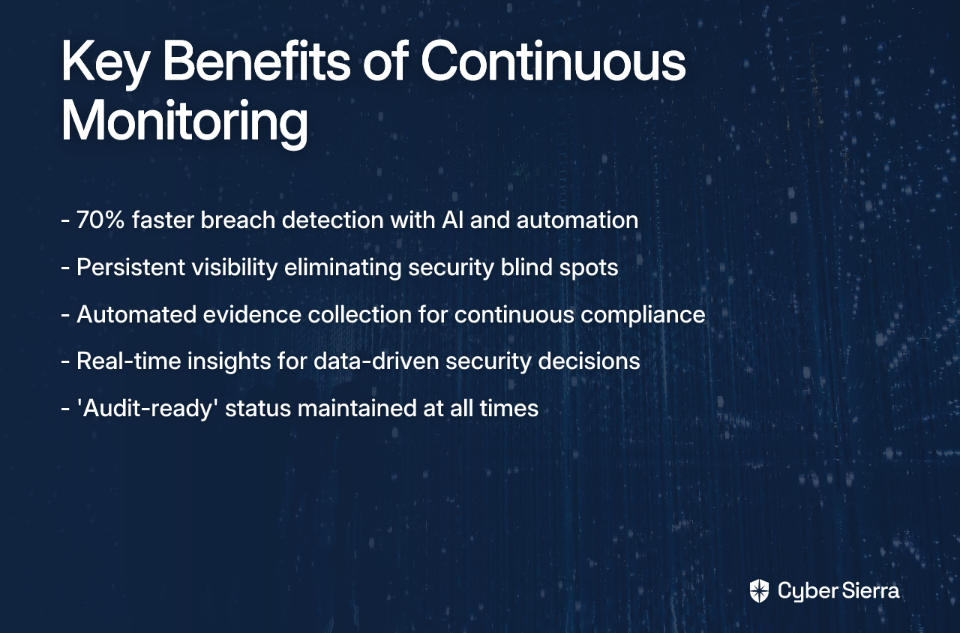
Early Threat Detection & Response: Organizations with AI and automation in their security operations detect breaches nearly 70% faster than those without. This dramatic improvement translates directly to reduced breach costs and business impact.
Elimination of Security Blind Spots: Rather than periodic glimpses, continuous monitoring provides persistent visibility into your security posture, ensuring that new vulnerabilities or compliance gaps are identified as they emerge.
Continuous Compliance: Instead of the frantic scramble before audits, continuous monitoring automates evidence collection and control validation for frameworks like SOC 2, ISO 27001, PCI DSS, and HIPAA—making your organization "audit-ready" at all times.
Data-Driven Decision Making: Continuous monitoring delivers actionable insights that help prioritize remediation efforts and resource allocation, addressing the challenge of "scaling cyber security infrastructure in a cost-efficient manner."
The CISO's Playbook: A Data-Driven ROI Analysis
To build a compelling business case for continuous monitoring, security leaders need a clear framework for calculating Return on Security Investment (ROSI). Unlike traditional ROI calculations that focus on revenue generation, ROSI centers on cost avoidance and risk reduction.
The ROSI Formula
ROI = (Risk Exposure without Mitigation – Risk Exposure with Mitigation) / Cost of Mitigation
Let's break down each component with concrete data:
Step 1: Calculate the True Cost of Periodic Assessments
Start with the stark reality of breach costs. According to IBM, the global average cost of a data breach is now $4.4 million. For organizations relying solely on periodic assessments, this risk is significantly higher due to extended detection times.
The formula for calculating breach risk is:
Breach Risk = Breach Likelihood (%) × Breach Impact ($)
Beyond direct breach costs, factor in:
- Labor costs for audit preparation (typically 2-3 weeks per major framework)
- Regulatory fines for compliance failures
- Operational downtime during assessment remediation
- Reputational damage from public breaches
For a mid-sized enterprise, these combined costs often exceed $300,000 annually—without accounting for the potential catastrophic impact of a major breach.
Step 2: Determine the Investment in Continuous Monitoring
The Total Cost of Ownership (TCO) for a continuous monitoring strategy includes:
- Platform licensing fees
- Implementation and integration costs
- Team training
- Ongoing operational costs
For a comprehensive solution like Cyber Sierra, the first-year TCO might be approximately $300,000, with costs decreasing in subsequent years as implementation is completed.
Step 3: Quantify the Returns of Continuous Monitoring
The data shows that continuous monitoring delivers substantial returns:
Reduced Breach Costs: Organizations using AI and automation in security save an average of $1.9 million per breach compared to those without these technologies.
Audit Efficiency: Implementing Continuous Control Monitoring (CCM) reduces audit preparation time by up to 60% and can decrease the effort required for demanding audits by as much as 94%.
Team Efficiency: Automation frees security professionals from manual evidence collection and repetitive tasks, allowing them to focus on strategic initiatives.
Step 4: Calculate Your ROI
Using these figures in our formula:
Year 1 Example:
($300,000 – $82,000) / $300,000 = 73% ROI
Year 2+ Example (with lower operational costs):
($300,000 – $82,000) / $150,000 = 145% ROI
This demonstrates not just a positive return, but an increasing one that compounds over time—a compelling narrative for board presentations and budget discussions.
Putting Continuous Monitoring into Action
Transitioning from periodic assessments to continuous monitoring requires a strategic approach. Here's how to implement an effective continuous monitoring program:
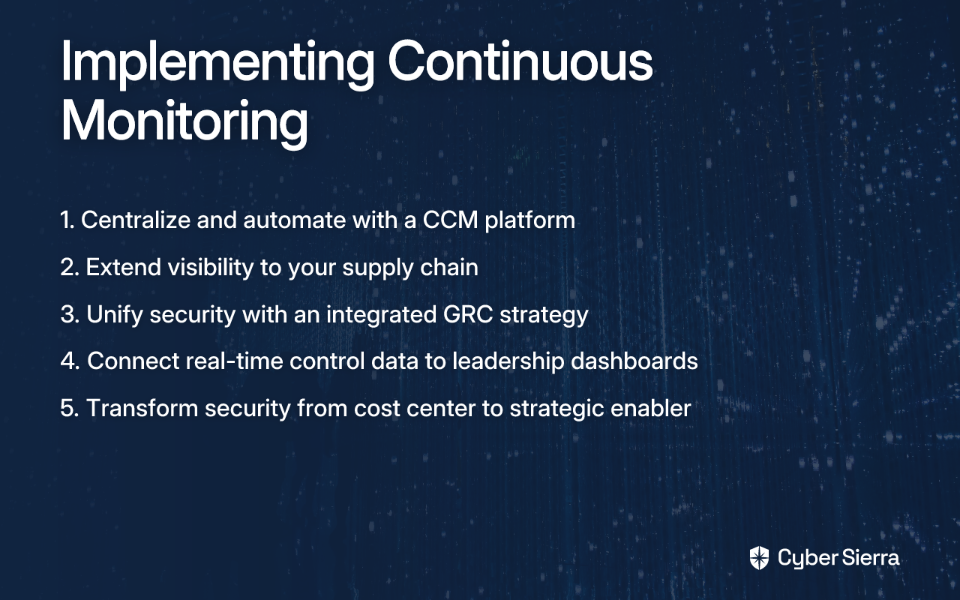
1. Centralize and Automate with a Continuous Control Monitoring Platform
The foundation of any continuous monitoring strategy is a robust CCM platform that moves you from spreadsheets and manual checks to an automated, single source of truth for security controls.
Cyber Sierra's CCM platform provides a central controls repository with near real-time updates, automating control testing and delivering actionable risk intelligence. It helps manage multiple compliance frameworks like NIST, ISO 27001, and PCI DSS from a unified dashboard, transforming security from periodic checks to continuous, automated monitoring.
2. Extend Visibility to Your Supply Chain
Third-party risk has become a critical vulnerability, yet many organizations still rely on annual vendor questionnaires—creating the same blind spots as internal periodic assessments.
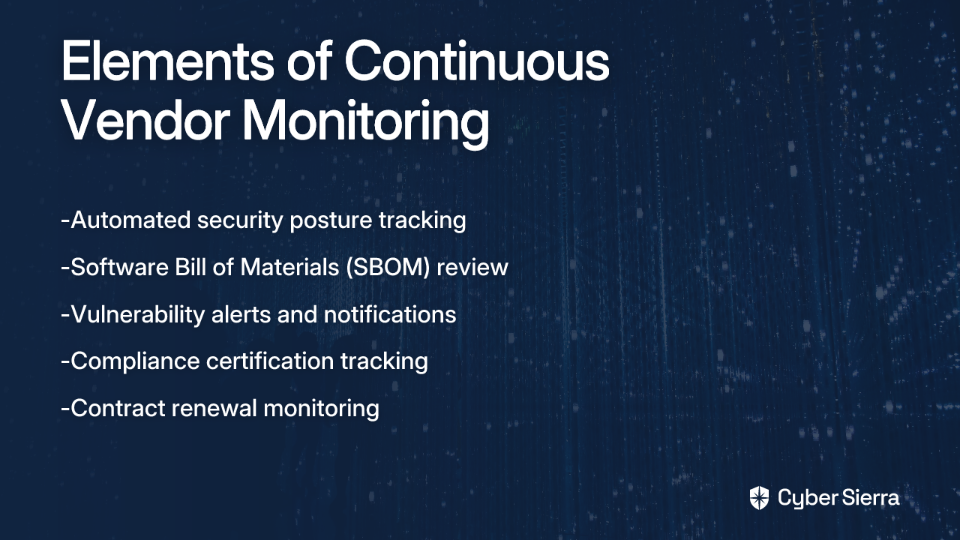
A modern approach involves continuously monitoring your vendors' security posture. This addresses what many security professionals describe as a "massive operational bottleneck" in vendor risk management.
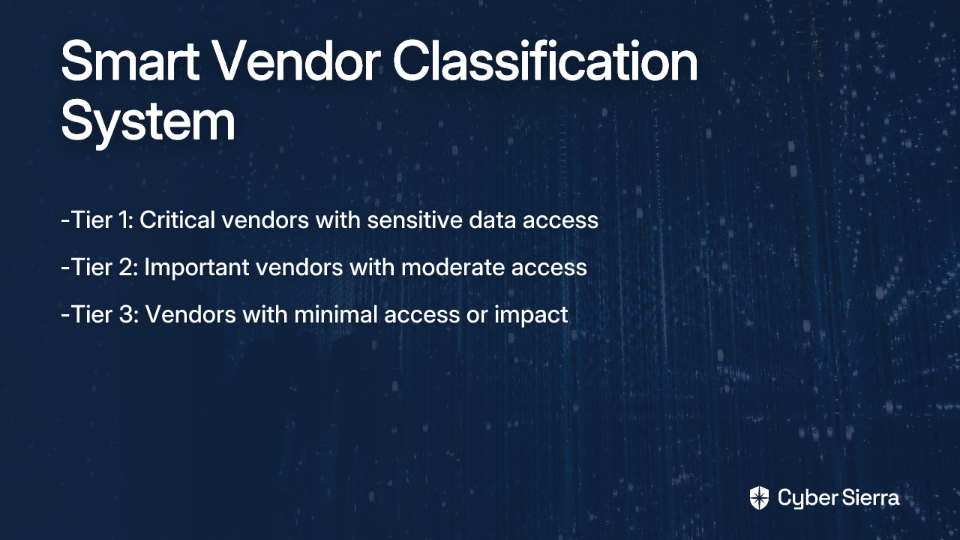
Cyber Sierra's TPRM module simplifies and automates vendor risk assessment, onboarding, and continuous monitoring, providing 24/7 visibility into third-party risks beyond static questionnaires.
3. Unify Security with an Integrated GRC Strategy
The final piece is connecting your real-time control data directly to your GRC processes. This provides leadership with live dashboards on compliance and risk posture—critical for gaining management buy-in when "company management doesn't actually care about addressing" recurring issues.
Cyber Sierra's integrated platform combines GRC, Threat Intelligence, and CCM to provide a holistic view of your attack surface, automate data collection for audits, and help prioritize remediation efforts based on real-world threats.
From Cost Center to Strategic Enabler
Shifting from periodic assessments to security continuous monitoring transforms cybersecurity from a reactive cost center into a proactive, strategic enabler. The ROI is clear and quantifiable through:
- Dramatically reduced breach impact through faster detection
- Significant reduction in audit preparation costs and time
- More efficient allocation of security resources
- Enhanced ability to demonstrate compliance to regulators, customers, and partners
As one CISO put it: "Security is not a cost center but a risk management measure." Continuous monitoring gives you the data to prove it.
Stop the cycle of audit-driven fire drills and security blind spots. Use the ROI framework outlined in this article to build your data-backed business case for a continuous monitoring strategy that delivers measurable value to your organization.
Frequently Asked Questions
What is the main difference between periodic assessments and continuous monitoring?
Periodic assessments provide a point-in-time snapshot of your security posture, like a single photograph. Continuous monitoring, in contrast, offers a real-time, ongoing video stream of your security controls and infrastructure. This means periodic assessments leave significant blind spots between scans, while continuous monitoring provides persistent visibility to detect and respond to threats as they emerge.
How does continuous monitoring improve compliance for frameworks like SOC 2 or ISO 27001?
Continuous monitoring helps achieve "continuous compliance" by automating the collection of evidence and the validation of security controls required by frameworks like SOC 2, ISO 27001, and PCI DSS. Instead of a frantic, manual scramble before an audit, the system constantly gathers the necessary data, ensuring you are always audit-ready and drastically reducing the time and resources spent on preparation.
Is implementing continuous monitoring more expensive than traditional periodic assessments?
While there is an upfront investment, continuous monitoring delivers a significant positive Return on Security Investment (ROSI) over time. It achieves this by dramatically reducing the financial impact of a potential breach through faster detection, cutting down on the high labor costs associated with manual audit preparation, and improving overall operational efficiency. The long-term savings and risk reduction often far outweigh the initial costs.
Can continuous monitoring completely replace periodic penetration tests?
No, continuous monitoring complements but does not replace periodic penetration tests. Continuous monitoring is excellent for automatically detecting known vulnerabilities, misconfigurations, and compliance drifts in real-time. Penetration testing is a manual, expert-led exercise designed to uncover unknown vulnerabilities and complex business logic flaws by simulating a real-world attack. A robust security strategy uses both to achieve defense-in-depth.
What is the first step to transition from periodic assessments to a continuous monitoring strategy?
The foundational step is to adopt a Continuous Control Monitoring (CCM) platform to centralize and automate your security controls. This moves your organization away from manual spreadsheets and disparate tools to a single source of truth for your security and compliance posture. A CCM platform provides the visibility and automation needed to build a mature continuous monitoring program.
How do I justify the investment in continuous monitoring to my board?
You can justify the investment by building a data-driven business case focused on Return on Security Investment (ROSI). Frame the discussion around cost avoidance and risk reduction. Use the ROSI formula to show how continuous monitoring reduces breach likelihood and impact (saving millions), lowers audit and operational costs (saving thousands in labor), and transforms security from a cost center into a strategic business enabler that protects revenue and reputation.
Ready to see how continuous monitoring can transform your security program? Cyber Sierra's AI-enabled cybersecurity platform can help you automate continuous monitoring, streamline compliance across multiple frameworks, and prove your security ROI. Schedule a personalized demo today to see it in action and take the first step toward a more proactive, efficient security posture.