blog-hero-background-image
Cyber Security

How to Implement AI-Driven Alert Prioritization for Security Teams

backdrop
Table of Contents

Join thousands of professionals and get the latest insight on Compliance & Cybersecurity.


Summary

  • Alert fatigue is overwhelming security teams, with analysts spending over 64% of their time on manual tasks, causing critical threats to be missed.
  • AI-driven prioritization solves this by automating alert enrichment and applying multi-factor risk scoring, allowing teams to focus on genuine threats instead of false positives.
  • Key steps for implementation include centralizing security data, automating contextual enrichment, and defining response workflows based on business impact.
  • Platforms like Cyber Sierra's Threat Intelligence integrate these capabilities to help teams proactively manage their attack surface and reduce alert noise from the start.

You're staring at your dashboard, watching alerts pile up from ten different security tools. Each notification demands attention, yet you know at least half are likely false positives. The sheer volume "drives you crazy," and you can't shake the feeling that critical threats are falling through the cracks while you're busy chasing ghosts.

Sound familiar? You're experiencing alert fatigue – one of the biggest threats to modern Security Operations Centers (SOCs). With SOC analysts spending over 64% of their time on tedious, manual tasks, the traditional approach to alert management has reached its breaking point.

But there's a solution: AI-driven alert prioritization. This isn't about replacing your analysts with robots – it's about empowering your team to work smarter, focus on genuine threats, and reclaim their time from the alert avalanche.

The Breaking Point: Why Traditional Alert Management Fails

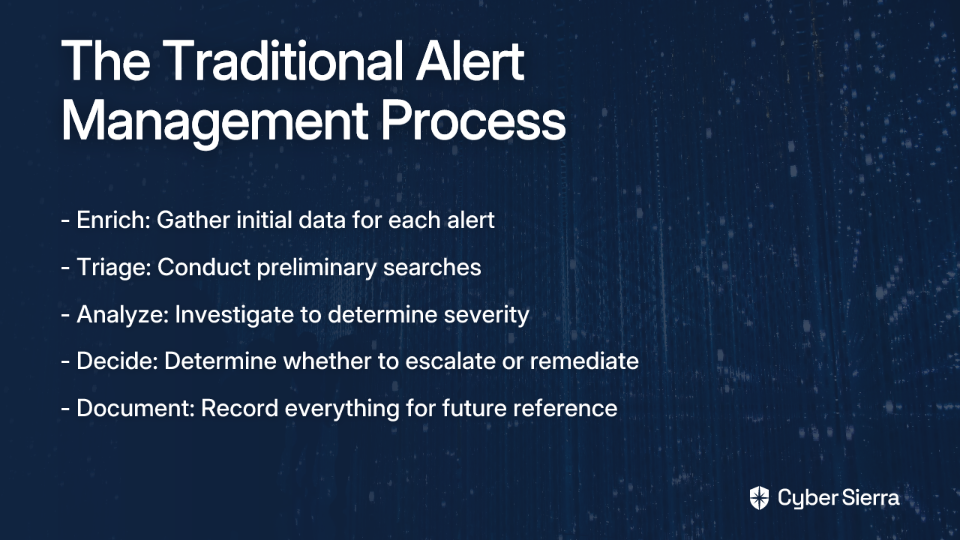
The manual triage process is painfully inefficient. For each alert, analysts must:

  1. Enrich by gathering initial data
  2. Triage by conducting preliminary searches
  3. Analyze and investigate to determine severity
  4. Decide whether to escalate or remediate
  5. Document everything for future reference

This approach simply can't scale with today's threat landscape.
As one security professional put it on Reddit: "The data variety and types have gone well beyond the capacity and capabilities of SIEMs to effectively triage even with extensive fine-tuning."

Legacy tools like traditional SIEMs struggle because they weren't designed for the volume and complexity of modern security data. Many teams report they "could not find one that can integrate and ingest vulnerabilities easily from other tools," creating dangerous blind spots.

Meanwhile, the high volume of false positives buries legitimate threats, increases response times, and contributes to analyst burnout – creating a perfect storm of security vulnerability.

The AI Revolution in the SOC: How AI Changes the Game

AI transforms alert management from a manual, step-by-step process into an intelligent, automated cycle:

  • Phase 0 - Detect: AI consolidates threats in real-time, analyzing events to identify anomalies automatically
  • Phase 1 - Enrich: Instead of manual lookups, AI instantly provides contextual information to help prioritize responses
  • Phase 2 - Investigate: Automated investigations run against pre-defined rules and ML models to assess threats
  • Phase 3 - Remediate: The system mitigates threats through automated actions or escalates highly-contextualized alerts to the SOC team

This revolution is powered by three key capabilities:

  1. Hyperautomation: Integrating security tools and automating processes to accelerate threat response
  2. AI Agents: Automating incident response by triaging alerts, analyzing patterns, and executing remediation playbooks
  3. AI-Powered Summarization: Generating concise, evidence-backed summaries for faster human decision-making

A Practical Blueprint: 6 Steps to Implement AI-Driven Alert Prioritization

Step 1: Centralize Your Alert Ingestion

Your first challenge is to create a single pipeline for all security data from your various tools (EDR, cloud scanners, firewalls, etc.). This requires a platform with strong integration capabilities.

Security teams on Reddit consistently cite the need to "centralize alerts" as their top priority. Look for solutions with:

  • Pre-built connectors for common security tools
  • API-first architecture for custom integrations
  • The ability to parse and normalize data from disparate sources

Step 2: Automate Contextual Enrichment

Every alert must be automatically enriched with critical context:

  • Asset Information: What is the affected asset? Is it a critical production database or a developer's laptop?
  • User Information: Who is the user involved? What is their role and access level?
  • Vulnerability Data: Does the alert correlate with a known CVE? Is there an active exploit for it?
  • Threat Intelligence: Is the IP address or domain associated with a known malicious actor or campaign?

Without this enrichment, you're forcing analysts to manually gather this information for every single alert – a massive time sink that AI can eliminate.

Step 3: Apply Multi-Factor Risk Scoring

Move beyond simple CVSS scores. AI models should calculate risk based on a combination of factors. This directly solves the user pain that "a vulnerability for a technology that you don't have is not a significant risk despite its scoring high."

Effective risk scoring should consider:

  • Threat Severity: How dangerous is this threat objectively?
  • Asset Criticality: How important is the affected system to your business?
  • Business Impact: What could happen if this threat is exploited?
  • Exploitability: How easy is it to exploit? Is there evidence of active exploitation?

Step 4: Define and Automate Response Workflows

Based on the risk score and alert type, trigger automated workflows:

  • Low-Risk: Automatically close the ticket and log for reporting
  • Medium-Risk: Create a ticket in a system like JIRA or ServiceNow and assign it to a Tier-1 analyst
  • High-Risk/Critical: Trigger an immediate action (e.g., isolate the host via an XDR solution, block an IP at the firewall) AND escalate to the IR team with a full summary

This automation dramatically reduces Mean Time to Respond (MTTRe) for critical threats while filtering out noise.

Step 5: Integrate Continuous Monitoring Feedback

Prioritization shouldn't just be based on external threats. It needs internal context.

This is where Continuous Control Monitoring (CCM) becomes critical. An AI system can use data on the effectiveness of your existing security controls to adjust risk scores. For example, an alert for a vulnerability might be down-prioritized if the CCM system verifies a compensating control is in place and working effectively.
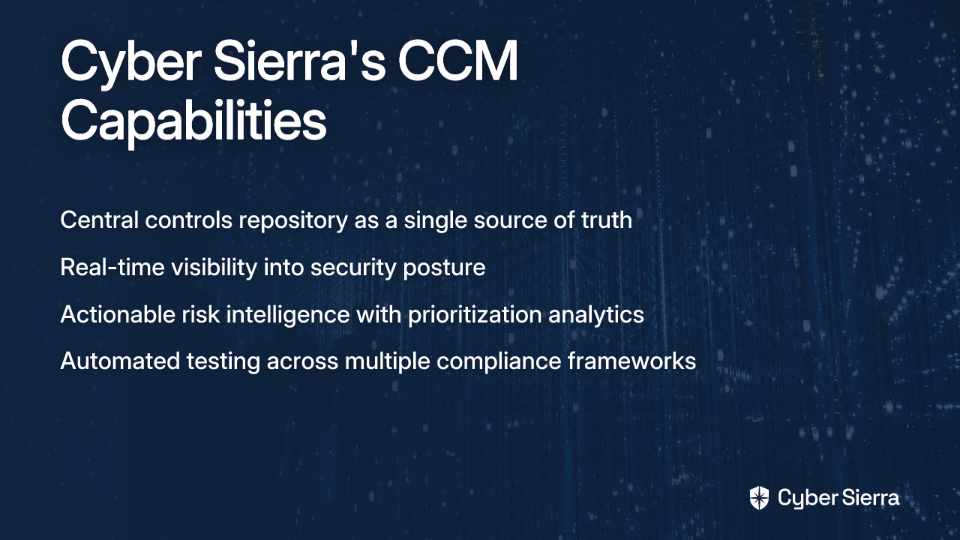
Platforms like Cyber Sierra's CCM provide this "single source of truth for controls" by building a central repository with near real-time updates, detecting exceptions, and delivering actionable risk intelligence for more accurate prioritization.

Step 6: Establish a Human-in-the-Loop Feedback System

The system must learn and improve. When an analyst re-prioritizes an alert or marks a finding as a false positive, this feedback should be used to retrain the ML models.

This reinforces the idea that "AI helps most when it's used to speed up analysis instead of replace the analyst." The goal is augmentation, not replacement.

Choosing Your Arsenal: Tools and Technologies for AI-Powered Triage

The tool landscape for AI-driven alert prioritization includes:

  • SIEM (Security Information and Event Management): Collects and correlates logs and alerts
  • SOAR (Security Orchestration, Automation and Response): Automates incident response workflows
  • XDR (Extended Detection and Response): Provides unified visibility and response across endpoints, network, and cloud

When evaluating solutions, look for these key features:

  1. Broad, API-first Integrations: The ability to "integrate and ingest" data easily is a top user requirement.
  2. Context-Based Analysis: The tool must go beyond basic log aggregation.
  3. Workflow Automation: Look for flexibility and ease of use, such as the ability to build workflows with natural language.
  4. Unified Visibility: A single dashboard to manage alerts and posture.

While standalone tools can solve parts of the puzzle, integrated platforms provide a more holistic solution. For example, Cyber Sierra's Threat Intelligence module doesn't just prioritize alerts; it provides proactive defense by combining a holistic attack surface analysis, network vulnerability scanning, and cloud infrastructure assessment in one place. This allows teams to identify and fix security gaps before they generate high-priority alerts, fulfilling the need for a truly proactive security posture.

The Ripple Effect: Broader Benefits of AI-Driven Prioritization

Implementing AI-driven alert prioritization creates benefits far beyond just managing alerts:

  1. Reduced Mean Time to Respond (MTTRe): Minimizes the exposure window for attackers. CloudGuard.ai reports customers reducing response time by up to 90%.
  2. Improved SOC Efficiency: Frees analysts for threat hunting and other strategic tasks. In one case study by CloudGuard.ai, Amazon Filters saved 52 days of work through alert automation.
  3. Bridging the Talent Gap: Automation acts as a force multiplier, allowing smaller teams to achieve more with existing headcount – critical in today's cybersecurity talent shortage.
  4. Cost Reduction: A more efficient operation can reduce the need for a larger SOC team, allowing organizations to optimize their security budget.

The Reality Check: Challenges and Key Considerations

While AI-driven alert prioritization offers tremendous benefits, it's important to approach it with realistic expectations:

  • AI is an Augment, Not a Replacement: As one security professional on Reddit noted, "Bad guys work very hard at not following patterns," so human intuition remains invaluable. AI should enhance, not replace, your human analysts.
  • Implementation Can Be Resource-Intensive: Success requires "custom models, lots of dev time... and a bunch of trial and error." This is why choosing a mature platform can be more effective than building from scratch.
  • Handling Novel Threats: AI models are trained on past data and may struggle with zero-day attacks. This highlights the importance of integrating real-time third-party threat intelligence and maintaining human oversight.

Conclusion

Transitioning from manual, chaotic alert management to an AI-driven, context-aware prioritization model is no longer a luxury—it's a necessity for survival in today's threat landscape.

By centralizing data, automating enrichment, applying intelligent risk-scoring, and establishing a feedback loop, security teams can conquer alert fatigue and focus on protecting the organization from genuine threats.

The goal isn't 100% automation, but rather creating a powerful partnership between human expertise and machine efficiency. This partnership leads to a more secure, resilient, and proactive defense posture – and a SOC team that can finally break free from alert fatigue.

Remember: AI doesn't replace your analysts – it empowers them to be more effective by focusing their expertise where it matters most.
Frequently Asked Questions

What is alert fatigue and why is it a problem for SOCs?

Alert fatigue is a state of exhaustion and desensitization experienced by security analysts due to an overwhelming volume of security alerts, many of which are false positives. It's a significant problem because it leads to slower response times, analyst burnout, and an increased risk of missing genuine, critical threats that get lost in the noise.

How does AI prioritize security alerts more effectively than manual methods?

AI prioritizes security alerts by automatically enriching them with business context, threat intelligence, and vulnerability data, then applying multi-factor risk scoring to determine their true urgency. Unlike manual triage, which is slow and inconsistent, AI can process thousands of alerts in real-time, considering factors like asset criticality and potential business impact to ensure analysts focus on the most significant threats first.

Will AI-driven alert prioritization replace the need for human SOC analysts?

No, AI-driven alert prioritization is designed to augment, not replace, human SOC analysts. AI excels at handling the repetitive, high-volume tasks of data gathering and initial triage. This frees up human experts for higher-value activities like complex threat hunting, strategic analysis, and responding to novel attacks that don't fit known patterns.

What is the first step to implementing AI-driven alert prioritization?

The first and most critical step is to centralize your alert ingestion. This involves creating a single pipeline for all security data from your various tools (e.g., EDR, cloud scanners, firewalls). You cannot effectively prioritize what you cannot see, so a platform with strong integration capabilities is essential to create a unified view of all security events.

How is an AI-powered security platform different from a traditional SIEM?

While a traditional SIEM primarily collects and correlates logs, an AI-powered platform automates more of the incident lifecycle, including enrichment, multi-factor risk scoring, and response orchestration. Modern AI platforms (often part of SOAR or XDR solutions) don't just present data; they provide contextualized, prioritized, and actionable insights, significantly reducing the manual workload on analysts.


Looking to implement AI-driven alert prioritization in your organization? Cyber Sierra's integrated platform combines threat intelligence, continuous control monitoring, and automated workflows to help security teams prioritize what matters and reduce alert fatigue. Book a demo today to learn more.
blog-hero-background-image
Cyber Security

How to Build a Hybrid Team of Human and AI Security Agents

backdrop
Table of Contents

Join thousands of professionals and get the latest insight on Compliance & Cybersecurity.


Summary

  • Traditional Security Operations Centers (SOCs) are struggling with alert overload; a hybrid human-AI model can reduce alert fatigue by up to 90%.
  • The most effective hybrid teams assign AI to high-volume, repetitive tasks like alert triage, freeing human analysts for strategic work like threat hunting.
  • Begin building your hybrid team by identifying key pain points, launching a small pilot project, and defining clear success metrics like Mean Time to Respond (MTTR).
  • A successful hybrid team relies on an integrated platform; Cybersierra unifies security functions to enable seamless human-AI collaboration.

You've set up a Security Operations Center (SOC) with all the latest tools. You've invested in SIEM, SOAR, EDR, and a dozen other acronyms. Yet somehow, managing your security operations still feels like playing whack-a-mole—alerts popping up faster than your team can address them, tool sprawl creating more complexity than clarity, and the constant fear that something critical is slipping through the cracks.

Sound familiar?

As one security professional recently lamented on Reddit, "managing hybrid teams feels like whack-a-mole some days" while another complained about "managing too many point solutions" with "scattered VPNs and firewalls" that create more problems than they solve.

The reality is clear: traditional SOCs are drowning in data and alerts, and the old approach of throwing more tools and more analysts at the problem isn't scaling. The volume and sophistication of threats have outpaced our human capacity to respond.

The solution isn't replacing your human team with AI—it's building a hybrid security team where human analysts and AI agents work in a symbiotic relationship, each handling what they do best. This isn't futuristic thinking; it's the practical evolution security teams need to make now.

The Inevitable Shift: Why Your SOC Needs a Human-AI Overhaul

The data flooding modern SOCs has created an untenable situation. According to research from USC's Information Sciences Institute, the sheer volume and complexity of cyber threats have made it impossible for human analysts alone to effectively spot trends and detect anomalies.

A hybrid approach offers several critical benefits:

  1. Improved Visibility & Proactive Prevention: AI-driven monitoring tools provide 24/7 coverage across your entire attack surface, detecting patterns and anomalies humans might miss, while human analysts provide the context and strategic thinking to interpret these findings.
  2. Faster Emergency Response: When seconds count, AI provides the initial detection and triage, allowing human responders to focus immediately on containment and remediation rather than discovery.
  3. Flexibility and Scalability: As threats evolve, a hybrid model allows you to scale your security response without proportionally increasing headcount or burning out your team.
  4. Reduced Alert Fatigue: Perhaps most importantly for security teams, AI can filter the noise, reducing the alerts requiring human attention by an estimated 80-90%.

Defining the Dream Team: Assigning Roles for Maximum Impact

Building an effective hybrid security team starts with a clear division of labor based on the comparative advantages of humans and machines.

AI's Domain: The Machine

Focus your AI agents on high-volume, routine tasks:

  • Handling Massive Data Streams: AI excels at analyzing vast security logs and data streams, automatically recognizing patterns and anomalies far beyond human capacity.
  • Alert Triage and Enrichment: AI can filter alerts, enrich them with contextual information, and prioritize them based on risk scores—reducing the flood of notifications to a manageable stream.
  • Automated Standard Response: For known, low-level threats with clear remediation paths, AI can trigger pre-defined response workflows without human intervention.
  • Continuous Compliance Monitoring: AI can continuously test controls and collect evidence, reducing audit preparation time by up to 70%.
  • Vulnerability Scanning: AI can scan networks and cloud infrastructure, identifying and prioritizing vulnerabilities based on exploitability and potential impact.

Human's Domain: The Analyst

Focus your human team members on high-complexity, strategic work:

  • Validation and Judgment: Humans provide the critical judgment to validate AI-generated alerts in complex scenarios and make decisions in high-stakes situations.
  • Strategic Decision-Making: When novel attack patterns emerge that don't match known signatures, human intuition and creative problem-solving become essential.
  • Threat Hunting: Proactive exploration based on intelligence, hunches, and emerging threat research is where humans truly shine.
  • Trust Calibration: Perhaps most importantly, humans manage and calibrate trust in AI systems, deciding when to rely on automated decisions and when to intervene—a critical "human-in-the-loop" (HITL) role.

A Framework for Synergy: Models for Human-AI Collaboration

Successfully implementing a hybrid security team requires a structured approach. One widely recognized framework is the Autonomous SOC Maturity Model, which provides a clear path for organizations to progress from manual operations to a true human-AI partnership:

  • Level 0: Manual operations with no automation
  • Level 1: Basic automation with rule-based alerts
  • Level 2: Enhanced detection using AI-assisted threat identification
  • Level 3: Orchestrated response with automated workflows for routine incidents
  • Level 4: Autonomous operations where AI handles most tasks with human oversight

The most challenging aspect of this progression is building trust between human analysts and AI systems. This is where explainable AI (XAI) becomes crucial.

As USC's research on human-AI collaboration in cybersecurity emphasizes, analysts must understand why AI is making certain recommendations. When an AI flags an authentication attempt as suspicious, for instance, it should explain its reasoning (e.g., "unusual input pattern detected despite correct credentials"), giving the human analyst the context needed to make the right call.

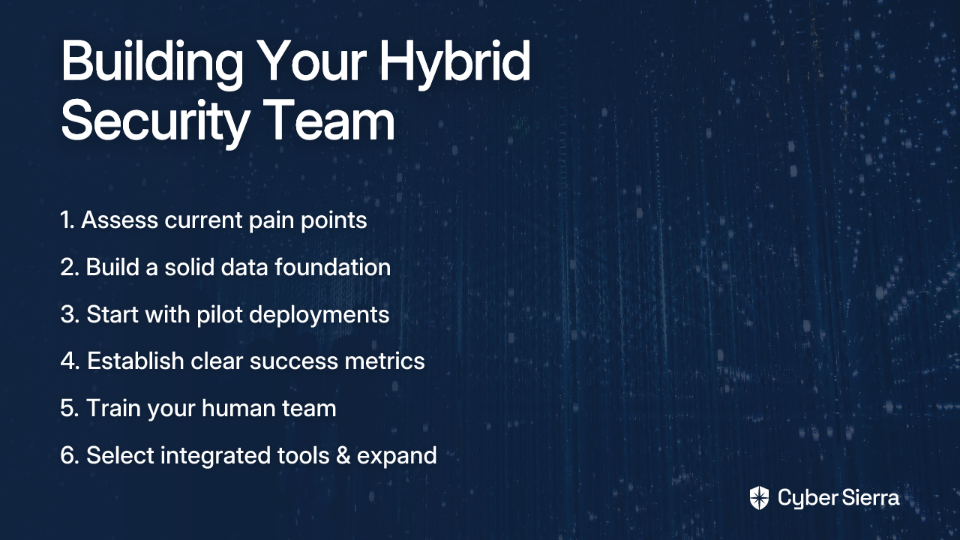
Your 6-Step Roadmap to Building a Hybrid Security Team

Ready to build your own hybrid security team? Here's a practical roadmap:

Step 1: Assess Readiness & Identify Pain Points

Before investing in new tools, understand your current state. What percentage of alerts are manually reviewed? Where do your analysts spend most of their time? Identify high-impact areas ripe for an initial pilot. Look for repetitive, time-consuming tasks that are draining analyst resources—these are prime candidates for AI augmentation.

Step 2: Build a Solid Data Foundation

AI is only as good as the data it's trained on. Ensure you have a complete asset inventory, centralized security logs, and clean data pipelines. Without this foundation, even the most sophisticated AI will struggle to deliver reliable results.

Step 3: Start with Pilot Deployments

Don't try to transform your entire SOC overnight. Start with "small-scale AI models in non-critical areas" to evaluate effectiveness and build trust. Target a specific pain point like alert triage, where AI can demonstrate immediate value while analysts maintain oversight.

Step 4: Establish Clear Success Metrics

Define what success looks like from the start. Are you aiming to reduce MTTR (Mean Time to Respond)? Decrease false positives? Improve analyst satisfaction? Having clear metrics will help you demonstrate ROI and guide further investment.

Step 5: Train Your Human Team

This critical step is often overlooked. Evaluate skills gaps and invest in training that empowers analysts to work alongside AI, interpret its findings, and manage its operations effectively. The goal isn't to make your team obsolete but to elevate their capabilities.

Step 6: Select the Right Tools & Expand

Choose tools based on integration capabilities, transparency (explainability), and scalability. Once a pilot proves successful, expand to more coordinated workflows, gradually moving up the Autonomous SOC Maturity Model.

Powering Your Hybrid Team with the Right Infrastructure

The old way of juggling scattered VPNs, firewalls, and point solutions creates more problems than it solves. A successful hybrid team needs an integrated platform that allows human and AI agents to collaborate seamlessly—what some experts call an "agentic infrastructure."

This is where platforms like Cybersierra can play a vital role in your hybrid security strategy. By providing an AI-enabled cybersecurity platform that unifies various security functions, Cybersierra helps move organizations from periodic, manual checks to proactive, near real-time risk management.

For example, Cybersierra's Continuous Control Monitoring (CCM) module demonstrates the hybrid approach in action. The AI component continuously monitors controls and automates evidence gathering, freeing human analysts from manual, repetitive work to focus on interpreting risk intelligence and developing remediation strategies.

Similarly, the platform's Threat Intelligence capabilities allow AI to continuously scan the attack surface while human analysts use this intelligence to make strategic decisions about vulnerability prioritization.

The key is finding a platform that reduces tool sprawl rather than adding to it—directly addressing the pain point expressed by security professionals who feel overwhelmed by "managing too many point solutions."

Measuring What Matters: Gauging the Success of Your Hybrid Team

How do you know if your hybrid security team is actually delivering results? Focus on these key metrics:

Operational Metrics

  • Mean Time to Detect (MTTD): How quickly threats are identified
  • Mean Time to Respond (MTTR): How quickly your team responds to threats
  • Mean Time to Investigate (MTTI): How efficiently investigations are conducted
  • False Positive Rate: The accuracy of your detection systems

Team Efficiency and Well-being Metrics

  • Analyst Productivity: Measure the shift from low-value tasks (alert clearing) to high-value activities (threat hunting, strategic analysis)
  • Employee Satisfaction and Retention: A successful hybrid model should reduce analyst burnout and alert fatigue

As you track these metrics, look for trends over time rather than immediate transformations. Building an effective hybrid team is an evolutionary process, not a one-time implementation.

The Future is a Cognitive SOC

The end goal of this hybrid approach is what security leaders are calling the "cognitive SOC"—a security operations center where AI and humans work together in a continuous loop of detection, response, and learning, creating a resilient and proactive security posture.
This isn't about replacing human analysts; it's about augmenting their capabilities so they can focus on what humans do best: strategic thinking, creative problem-solving, and complex decision-making. The AI handles the routine, the repetitive, and the data-intensive, while humans provide oversight, judgment, and direction.

As you embark on this journey, start by assessing where your organization currently stands on the Autonomous SOC Maturity Model. Identify the most significant pain points that a pilot AI project could address. Then take that first step toward building a hybrid security team that can finally break free from the endless game of whack-a-mole and shift to a proactive security posture.
The threats aren't slowing down. It's time our defense strategies evolve to match them.
Frequently Asked Questions

What is a hybrid security team?

A hybrid security team is a model where human security analysts and AI agents work together in a symbiotic relationship. This approach combines the speed, data-processing power, and 24/7 monitoring of AI with the strategic thinking, creative problem-solving, and contextual judgment of human experts.

Why should a SOC adopt a human-AI hybrid model?

A SOC should adopt a human-AI hybrid model to overcome the limitations of traditional security operations, which are often overwhelmed by massive data volumes and constant alerts. Key benefits include reducing alert fatigue by up to 90%, enabling faster incident detection and response, improving visibility across the entire attack surface, and scaling security capabilities without a proportional increase in headcount.

What tasks are best suited for AI in a hybrid SOC?

AI is best suited for high-volume, repetitive, and data-intensive tasks. This includes analyzing massive data streams for anomalies, performing initial alert triage and enrichment, automating responses to known low-level threats, continuous compliance monitoring, and vulnerability scanning. This frees up human analysts for more complex work.

How can I start building a hybrid security team?

You can start building a hybrid security team by first assessing your current operational pain points to identify repetitive, time-consuming tasks. Begin with a small-scale pilot project, such as AI-powered alert triage, to demonstrate value and build trust. It's also crucial to establish clear success metrics (like reducing MTTR) and train your human team to work effectively alongside AI tools.

Will AI replace human security analysts in a hybrid model?

No, AI is not meant to replace human security analysts but to augment their capabilities. In a hybrid model, AI handles the routine and data-heavy tasks, which allows human analysts to shift their focus to higher-value strategic work like threat hunting, validating complex alerts, and making critical decisions during novel attacks. The goal is to elevate the role of the human analyst, not eliminate it.

How do you measure the success of a hybrid security team?

The success of a hybrid security team is measured through a combination of operational and team-focused metrics. Key operational metrics include reductions in Mean Time to Detect (MTTD) and Mean Time to Respond (MTTR), as well as a lower false positive rate. Team metrics include improved analyst productivity—shifting from manual tasks to strategic work—and higher employee satisfaction and retention due to reduced burnout.

blog-hero-background-image
Cyber Security

How to Use Machine Learning to Predict Control Failures Before They Happen

backdrop
Table of Contents

Join thousands of professionals and get the latest insight on Compliance & Cybersecurity.


Summary

  • While using machine learning to predict control failures offers a proactive alternative to reactive audits, it is challenging to implement due to complex data and high false positive rates.
  • A successful framework requires a strong data foundation, selecting appropriate ML models like XGBoost or LSTMs, and integrating predictions into actionable operational workflows.
  • Organizations that overcome these challenges can achieve significant ROI, with some companies saving over $30 million by preventing just one major failure.
  • Cyber Sierra's Continuous Control Monitoring (CCM) platform provides the automated data collection and actionable intelligence needed to operationalize predictive insights.

You've invested in robust security controls, compliance frameworks, and regular audits. Yet somehow, critical control failures still catch you off guard, causing compliance violations, security breaches, and operational disruptions. If only you could predict these failures before they happen.

The promise of machine learning (ML) for predicting control failures sounds appealing on paper. But if you've attempted to implement predictive systems in the real world, you've likely encountered frustrating challenges: non-stationary data that varies across systems, high rates of false positives, and predictions that aren't operationally useful.

As one practitioner bluntly puts it: "predicting failures consistently, ahead enough to make an operational difference? Nope."

Despite these challenges, organizations that successfully implement ML-driven control failure prediction are achieving remarkable results. This article provides a practical framework for using machine learning to predict control failures before they happen, addressing common pitfalls along the way.

The Paradigm Shift: From Periodic Audits to Predictive Monitoring

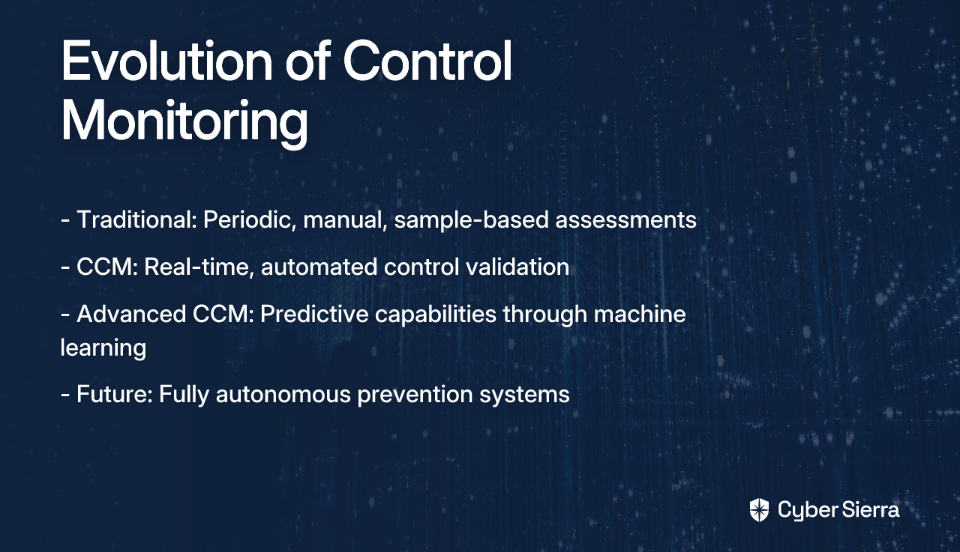
Traditional control monitoring relies on periodic, manual, sample-based assessments. This approach leaves dangerous blind spots between audit cycles, with control failures often discovered only after they've already caused damage.

Enter Continuous Control Monitoring (CCM) – a technology-driven approach that validates the effectiveness of organizational controls in real-time, rather than at scheduled intervals. As defined by MetricStream, CCM "automates the monitoring and testing of internal controls to identify anomalies, policy violations, and control failures in real-time."

But CCM alone, while valuable, is primarily reactive. It tells you when a control has failed. The real power comes when you add predictive capabilities through machine learning – transforming your security posture from reactive to proactive.

Acknowledging the Challenge: Why Predicting Failures is Harder Than It Looks

Before diving into solutions, it's important to acknowledge the very real challenges of predicting control failures:

The Data Problem

Security and operational data presents unique challenges that commercial ML solutions often gloss over:

  • Non-Stationary Data: As one practitioner notes, "the data is non-stationary and will vary from machine to machine and even sensor to sensor." This means patterns change over time, making static models quickly obsolete.
  • Dynamic Environments: "Industrial operation is a very dynamical environment," making it "really hard to generalize using only past data."
  • Sensor Complexity: Modern control environments involve multiple data sources reporting on "different time scales with different sorts of sensitivity," creating a complex data fusion challenge.

The Model Problem

Even with quality data, developing accurate predictive models faces significant obstacles:

  • The Plague of False Positives: "Most techniques if applied at face value will probably yield a lot of false positives," creating alert fatigue and undermining trust in the system.
  • Actionability Gap: In many cases, "the mean time before failure is so large (years and years)" that predictions aren't operationally useful without extreme lead times.
  • System Complexity: "The complexity of real equipment (which consists of multiple subsystems, each with its own distribution) makes it very difficult to anticipate failures" in a way that operations teams can act upon.

Given these challenges, it's no wonder that some practitioners believe that "when applied to real data, nothing really adds value over properly performed condition monitoring."

But this pessimism, while understandable, isn't the full story. Let's explore a framework for success.

The Practitioner's Framework for Predictive Control Failure

Success with ML-driven control failure prediction requires a holistic approach that addresses both technical and operational challenges:

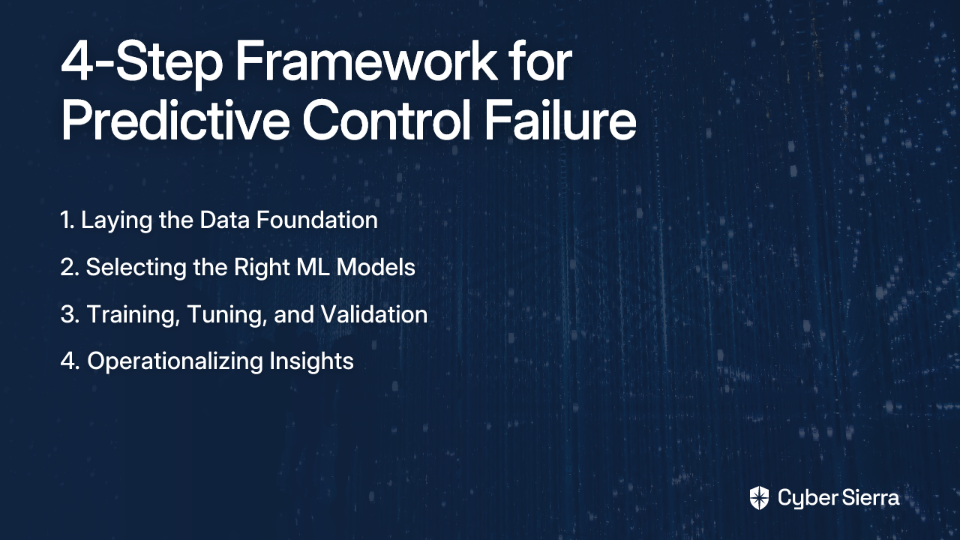
Step 1: Laying the Data Foundation

The foundation of any successful ML implementation is high-quality data. This is especially critical for control failure prediction:

  • Engineer Your Features: "The best advice I can give is to get a good grip at the engineering aspects of the problem you are trying to model." Work closely with domain experts to identify meaningful indicators of potential control degradation.
  • Handle Non-Stationary Data: Transform non-stationary data into stationary data through techniques like differencing, detrending, or seasonal adjustments. As noted in a comprehensive study on machine failure prediction, proper data preprocessing significantly improves model accuracy.
  • Address Data Imbalance: Control failures are (hopefully) rare events, creating highly imbalanced datasets. Techniques like SMOTE (Synthetic Minority Oversampling Technique) can generate synthetic examples of the minority class to improve model training.
  • Implement Sensor Fusion: When working with data from multiple sources, implement sensor fusion techniques to combine data with different time scales and sensitivities into a coherent input for your models.

Step 2: Choosing Your Weapon - Selecting the Right ML Models

No single model works best for all control failure prediction scenarios. Consider these options based on your specific needs:

  • Traditional ML for Classification: XGBoost has shown "high effectiveness in predicting machine failures" according to research published in Smart Manufacturing and Service Engineering. Random Forest and Isolation Forest can also be effective, particularly for reducing false positives in anomaly detection.
  • Deep Learning for Time-Series: Long Short-Term Memory (LSTM) networks have been shown to "outperform traditional machine learning methods" for time-series data, making them excellent candidates for control monitoring data with temporal patterns.
  • Survival Models for Remaining Useful Life: When asked about estimating remaining useful life, one practitioner recommended survival models: "They give the probability of an event e.g., a fault occurring at a point in time." These models are particularly valuable when you need to forecast the probability of failure over extended time horizons.

Step 3: Training, Tuning, and Validation

Model performance depends heavily on proper training and evaluation:

  • Hyperparameter Tuning: Don't settle for default configurations. Use techniques like grid search or Bayesian optimization to find the optimal parameters for your models.
  • Beyond Accuracy: In imbalanced datasets common to control failure prediction, accuracy alone is misleading. Focus on metrics like precision, recall, F1-score, and Area Under the ROC Curve (AUC) to get a complete picture of model performance.
  • Cross-Validation: Use time-based cross-validation methods that respect the temporal nature of your data, rather than random splitting which can lead to data leakage and overly optimistic performance estimates.

Step 4: From Prediction to Action - Operationalizing Insights

A prediction without action is just an interesting data point. Create clear pathways from prediction to intervention:

  • Actionable Alerts: Structure alerts to include specific recommended actions, not just notifications that something might fail.
  • Integration with Workflows: Ensure predictions feed directly into existing GRC and incident response workflows, rather than creating a separate system that may be ignored.
  • Continuous Feedback Loop: Track which predictions led to successful interventions and which didn't, using this data to continuously improve your models.

The Proof is in the ROI: Real-World Success Stories

Despite the challenges, organizations are achieving significant returns on investment from ML-driven control failure prediction:

  • PETRONAS saved $33 million by using AI-enhanced analytics for asset reliability, addressing 51 warnings and reducing unplanned downtime.
  • Duke Energy saved over $34 million in a single early-catch event by deploying a no-code predictive maintenance solution.

These examples demonstrate that success is possible, but it requires choosing "providers with proven industry expertise" and avoiding the marketing hype that dominates the space.

Scaling Success with an AI-Powered GRC Platform

Building a predictive system from scratch requires significant expertise and resources. For organizations seeking a faster path to implementation, an AI-powered GRC platform can provide the infrastructure needed for effective control failure prediction.

Cyber Sierra's Continuous Control Monitoring (CCM) platform exemplifies this approach by providing:

Conclusion: From Prediction to Prevention

The ultimate goal of machine learning for control failure prediction isn't just to know what might break—it's to prevent problems before they occur.

Success requires a holistic approach that combines:

  1. Deep domain knowledge of the systems and controls you're monitoring
  2. Robust data preparation techniques to handle the unique challenges of control data
  3. Appropriate model selection based on your specific prediction needs
  4. A powerful platform to operationalize insights and drive action

By implementing this framework, you can transform your organization from a reactive posture—constantly putting out fires—to a proactive one that prevents incidents before they happen.

The skeptics aren't wrong about the challenges. Predicting control failures is difficult. But with the right approach, it's not just possible—it's transformative.

Frequently Asked Questions

What is predictive control monitoring?

Predictive control monitoring uses machine learning to analyze real-time data and forecast potential control failures before they happen. This approach builds upon Continuous Control Monitoring (CCM) by adding a predictive layer, allowing organizations to shift from a reactive security posture (fixing failures after they occur) to a proactive one (preventing them entirely).

Why is it so difficult to predict control failures with machine learning?

Predicting control failures is difficult primarily due to data and model challenges. The data from security and operational systems is often "non-stationary" (patterns change over time) and comes from complex, dynamic environments. This makes it hard to build static models. Furthermore, models can produce a high number of false positives, leading to alert fatigue and a lack of trust in the system.

How can I get started with predictive control failure analysis?

The best way to start is by laying a solid data foundation, which is the first step in the framework outlined in this article. This involves working with domain experts to identify meaningful indicators of control degradation, implementing techniques to handle non-stationary and imbalanced data, and ensuring you have high-quality inputs before attempting to build or select a machine learning model.

What are the best machine learning models for predicting control failures?

There is no single best model, as the ideal choice depends on your specific data and goals. However, effective models often include XGBoost for classification tasks, Long Short-Term Memory (LSTM) networks for analyzing time-series data with temporal patterns, and Survival Models for estimating the "remaining useful life" of a control over longer time horizons.

How does an AI-powered GRC platform help with predictive monitoring?

An AI-powered Governance, Risk, and Compliance (GRC) platform accelerates implementation and improves effectiveness. It provides a central controls repository to solve data chaos, automates data collection from various sources, and integrates predictive insights directly into remediation workflows. This turns a high-level prediction into an actionable task, bridging the critical gap between insight and intervention.

What is the business impact of successfully predicting control failures?

The primary business impact is a significant reduction in costs associated with security breaches, compliance violations, and operational downtime. As seen with companies like PETRONAS and Duke Energy, successfully predicting and preventing even a single major failure can result in tens of millions of dollars in savings, delivering a clear and substantial return on investment.

Ready to explore how AI-powered continuous control monitoring can help your organization predict and prevent control failures? Learn more about Cyber Sierra's CCM platform and discover how it can transform your security posture from reactive to predictive.

blog-hero-background-image
Cyber Security

How to Deploy GenAI Agents for Real-Time Security Gap Detection

backdrop
Table of Contents

Join thousands of professionals and get the latest insight on Compliance & Cybersecurity.


Summary

  • Traditional point-in-time security audits are failing, with 73% of businesses admitting they are unprepared for a cyberattack.
  • GenAI agents, when combined with a Continuous Control Monitoring (CCM) framework, enable a shift from periodic manual checks to automated, real-time security vigilance.
  • Implement this by prioritizing key controls, integrating agents with your security tools, and maintaining a "human-in-the-loop" for critical decision-making to mitigate AI risks.
  • A unified platform like Cyber Sierra's Continuous Control Monitoring (CCM) can automate control testing and provide actionable, real-time risk intelligence.

You've heard the hype surrounding GenAI in cybersecurity, but you're skeptical. "GenAI has shown to be unreliable because it has horrible performance and accuracy," as one security professional put it. "You can't delegate critical tasks to something that can hallucinate and turn off your environment."

These concerns are valid. But what if there was a way to harness the power of generative AI while maintaining human oversight for critical decisions? The answer lies in deploying GenAI agents within a Continuous Control Monitoring (CCM) framework—transforming your security posture from periodic snapshots to real-time vigilance.

In today's rapidly evolving threat landscape, the traditional approach of point-in-time security assessments is increasingly inadequate. Consider these sobering statistics:

This article provides a practical framework for deploying GenAI agents to augment your security team, automate control monitoring, and identify security gaps as they emerge—not weeks or months after they've been exploited.

What Are GenAI Agents (and Why Should Security Teams Care?)

GenAI agents go far beyond simple chatbots. An agent is an autonomous system designed for independent operation and specific tasks, incorporating capabilities like learning, reasoning, planning, decision-making, and action execution.

For security teams, this means having digital assistants that can:

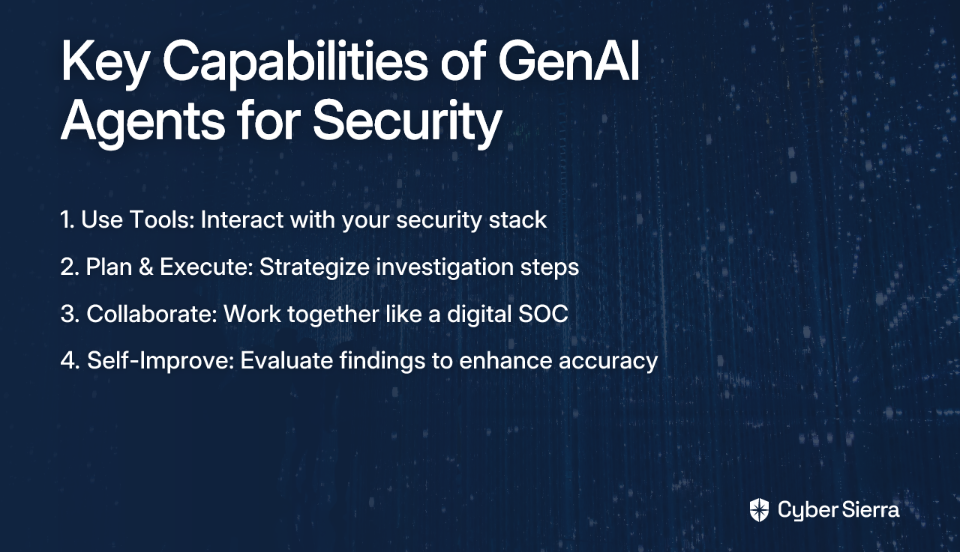
  1. Use Tools: Interact with your existing security stack (vulnerability scanners, SIEMs, log parsers) to gather data and execute tasks.
  2. Plan and Execute: Strategize the steps needed to investigate complex alerts, such as correlating logs from multiple sources, checking against threat intelligence feeds, and referencing internal policies.
  3. Collaborate: Specialized agents can work together like a digital SOC—one agent detects an anomaly, another enriches it with threat data, a third assesses its impact against compliance controls, and a fourth drafts an incident report.
  4. Self-Improve: Through reflection capabilities, agents can evaluate their own findings to improve accuracy and reduce false positives—a common pain point for security teams.

As one Reddit user noted, "We can use it to enrich our human decisions" and "help junior level analysts to be smarter." The goal isn't to replace human expertise but to augment it, allowing your team to focus on strategic initiatives rather than routine monitoring tasks.

The Problem with Point-in-Time Security: Why Manual Gap Analysis Fails

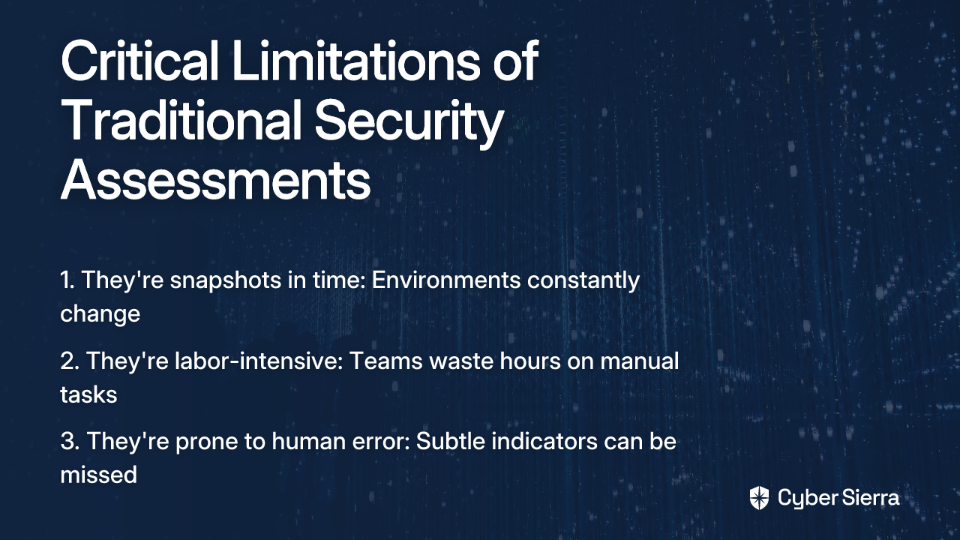
Traditional security assessments and manual control validation suffer from three critical limitations:

  1. They're snapshots in time: Your environment is constantly changing. New vulnerabilities emerge, configurations drift, and permissions expand—all between your quarterly or annual assessments.
  2. They're labor-intensive: Security teams spend countless hours collecting evidence, reviewing logs, and validating controls manually—time that could be better spent on threat hunting or strategic initiatives.
  3. They're prone to human error: Even the most diligent analysts can miss subtle indicators of compromise or misconfigurations when reviewing vast amounts of data.

This is where Continuous Control Monitoring (CCM) becomes essential. CCM is a technology-driven approach designed to continuously validate the effectiveness of security controls, providing real-time insights instead of relying on periodic audits. GenAI agents are the engines that make true, scalable CCM possible.

A 5-Step Framework for Deploying GenAI Agents for Real-Time Gap Detection

Here's a practical framework for implementing an AI-enhanced CCM strategy:

Step 1: Identify and Prioritize Key Controls

Don't try to monitor everything at once. Focus on critical controls based on your organization's risk profile and relevant compliance frameworks like NIST, ISO 27001, or SOC 2.

Examples of priority controls include:

  • User access management
  • Firewall rule configurations
  • Cloud storage bucket permissions
  • Data encryption settings
  • Privileged account activity

Step 2: Integrate Agents with Existing Tools and Data Sources

GenAI agents need "eyes and ears" to be effective. Provide them with API access to your security stack:

  • Cloud providers (AWS, Azure, GCP)
  • SIEM platforms
  • Endpoint detection tools
  • Code repositories
  • HR systems for user lifecycle management

This integration allows agents to gather the data they need for continuous monitoring without disrupting your existing workflows.

Step 3: Automate Control Testing with Specialized Agents

Assign specific, automated tasks to agents based on the controls you've prioritized:

  • Cloud Security Agent: Continuously query cloud APIs to ensure no S3 buckets are public, IAM roles follow least-privilege principles, and security groups aren't overly permissive.
  • Access Control Agent: Cross-reference active user accounts against the HR database daily to flag accounts of offboarded employees or detect privilege escalation.
  • Threat Intel Agent: Automatically query threat intelligence feeds when suspicious IPs or hashes are detected, providing context and enrichment.

This automation transforms manual, periodic checks into continuous monitoring—significantly reducing the time between a security gap emerging and its detection.

Step 4: Establish Smart Alerting and AI-Powered Triage

This is where GenAI truly excels. Instead of bombarding analysts with raw alerts, agents can provide enriched context and initial analysis:

Example Alert: "Alert: Privileged command rm -rf /var/log/* executed on server PROD-DB-01 by user admin. Analysis: This command attempts to delete all log files. The admin account has not performed this action in the last 180 days. This pattern is anomalous and could indicate credential compromise or an attempt to cover tracks. Recommendation: Immediately verify the activity with the user and consider account suspension."

This directly addresses the need for tools that can "deobfuscate" commands and "help junior level analysts to be smarter," as mentioned by security professionals on Reddit.

Step 5: Maintain a "Human-in-the-Loop" for Review and Continuous Improvement

Addressing concerns about hallucinations head-on is critical. The agent's role is to detect, analyze, and recommend—not to take critical, irreversible action autonomously.

A human analyst should:

  • Review the agent's findings
  • Validate the context
  • Make the final decision on response actions

This feedback loop (confirming true positives, correcting false positives) trains the AI models, enhancing their accuracy and reliability over time.

The Strategic Advantage: Beyond Detection to Business Resilience

Implementing an AI-powered CCM program delivers significant business benefits:

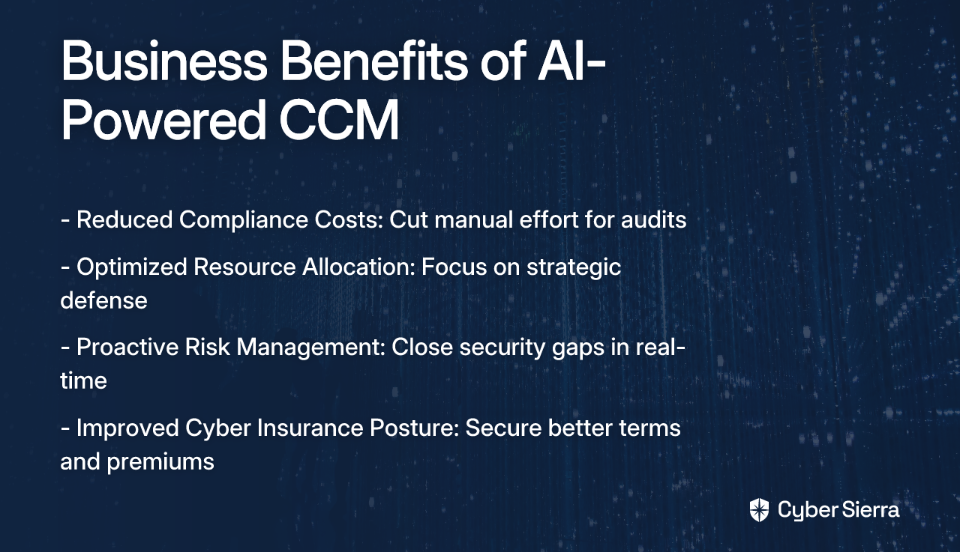
  • Reduced Compliance Costs: Automation drastically cuts down the manual effort and expense of audit preparation and evidence gathering.
  • Optimized Resource Allocation: Senior analysts can focus on threat hunting and strategic defense, while junior analysts become more effective with AI assistance.
  • Proactive Risk Management: Closing security gaps in near real-time minimizes the window of opportunity for attackers.
  • Improved Cyber Insurance Posture: Demonstrable, continuous monitoring can lead to better terms and lower premiums from cyber insurers.

Operationalizing Your Strategy with a Unified Platform

Building a robust, multi-agent framework from scratch is a significant engineering challenge. The most efficient path is to leverage a unified platform designed for this purpose.

Platforms like Cyber Sierra are built on a multi-agentic infrastructure that combines human and AI agents to automate cybersecurity and compliance. Cyber Sierra's Continuous Control Monitoring (CCM) module automates control testing across cloud and on-prem environments, provides a centralized repository for control evidence, and delivers actionable risk intelligence in near real-time.

Conclusion: From Reactive to Proactive Security

GenAI agents are not a silver bullet, but when deployed thoughtfully within a CCM framework, they become an indispensable tool for augmenting security teams.

The shift from reactive to proactive security isn't just about technology—it's about a fundamental change in approach. By embracing this human-machine partnership, organizations can finally keep pace with the speed of modern threats and the complexity of regulatory demands.

As one security professional put it, "We are using it to be faster." In today's threat landscape, that speed—combined with accuracy and continuous vigilance—might be the difference between a minor incident and a major breach.

Frequently Asked Questions

What is a GenAI agent in cybersecurity?

A GenAI agent is an autonomous system designed to perform specific security tasks by interacting with your existing tools, planning actions, and learning from outcomes. Unlike simple chatbots, these agents can use your security stack (like SIEMs and vulnerability scanners), plan multi-step investigations, collaborate with other agents to enrich data, and even evaluate their own findings to improve accuracy over time. They act as digital assistants to augment the capabilities of a security team.

How do GenAI agents address the limitations of traditional security audits?

GenAI agents enable a shift from periodic, point-in-time security audits to real-time, Continuous Control Monitoring (CCM), identifying security gaps as they emerge. Traditional audits are snapshots that quickly become outdated and are labor-intensive. GenAI agents automate the process of control testing, continuously checking for issues like misconfigured cloud permissions, improper user access, or policy drifts. This provides constant vigilance instead of quarterly or annual assessments.

What are the main risks of using GenAI for security, and how can they be mitigated?

The primary risk of using GenAI in security is the potential for "hallucinations" or inaccurate findings, which can lead to incorrect actions. This risk is mitigated by implementing a "human-in-the-loop" framework. In a well-designed system, the GenAI agent's role is to detect, analyze, and recommend actions, not to execute critical changes autonomously. A human analyst reviews the agent's findings, validates the context, and makes the final decision. This approach harnesses the speed of AI while ensuring human oversight prevents errors and also helps train the AI model to become more accurate over time.

Will GenAI agents replace human security analysts?

No, the goal of GenAI agents is not to replace human security analysts but to augment them by automating routine, time-consuming tasks. By handling continuous monitoring and initial alert triage, agents free up human experts to focus on more strategic activities like threat hunting, incident response, and complex investigations. GenAI acts as a force multiplier, helping junior analysts become more effective and allowing senior analysts to apply their expertise where it matters most.

What is the first step to implementing GenAI for continuous monitoring?

The first step is to identify and prioritize the most critical security controls for your organization based on your specific risk profile and compliance requirements. Instead of trying to monitor everything at once, focus on high-impact areas such as user access management, firewall configurations, cloud storage permissions, and privileged account activity. This targeted approach ensures that your initial implementation delivers the most value and addresses your most significant risks first.

What is Continuous Control Monitoring (CCM)?

Continuous Control Monitoring (CCM) is a technology-driven approach that automates the process of validating the effectiveness of your security controls in real-time. Unlike traditional audits that happen periodically, CCM provides a constant stream of information about your security posture. By using tools like GenAI agents to continuously test controls, organizations can detect and remediate security gaps, configuration drifts, and compliance violations almost as soon as they occur, rather than weeks or months later.

Ready to explore how GenAI-powered Continuous Control Monitoring can transform your security posture? Learn more about Cyber Sierra's approach to real-time security gap detection.

blog-hero-background-image
Cyber Security

How to Use AI Agents to Automate Continuous Controls Monitoring

backdrop
Table of Contents

Join thousands of professionals and get the latest insight on Compliance & Cybersecurity.


Summary

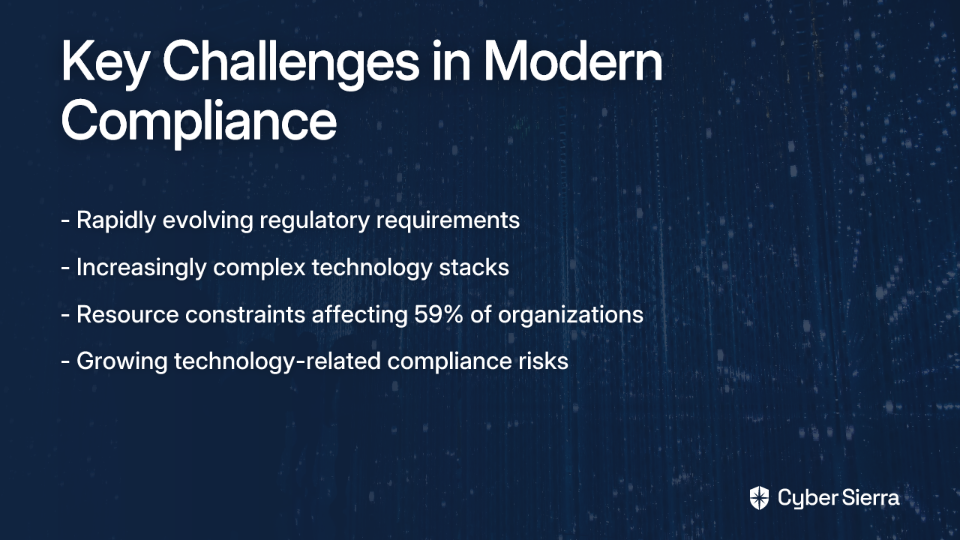
  • Manual compliance monitoring is increasingly ineffective, with 59% of organizations citing resource constraints as a key barrier to success.
  • Agentic AI transforms Continuous Controls Monitoring (CCM) by automating evidence collection and providing real-time risk insights, moving compliance from periodic checks to a continuous process.
  • To get started, implement AI-powered CCM by launching a pilot program focused on a single, high-impact control to demonstrate value quickly.
  • Platforms like Cyber Sierra’s Continuous Control Monitoring use AI to automate compliance, reduce audit fatigue, and provide a real-time view of your security posture.

You've heard about AI automation and maybe you're intrigued by the possibilities. But with a sea of tools like Zapier, Make, and N8N out there, the starting point seems murky at best. Should you choose per-node or per-workflow pricing? Do you need to master complex coding before you can create anything useful?

Instead of getting lost in these questions, let's focus on a specific, high-value application for AI agents that delivers immediate business impact: Continuous Controls Monitoring (CCM).

This isn't just about auto-categorizing emails or summarizing meeting notes. This is about transforming how your organization handles security, compliance, and risk—moving from periodic, manual checks to a real-time, automated framework that provides continuous assurance.

The Compliance Challenge: Why Manual Monitoring is No Longer Enough

Continuous Controls Monitoring (CCM) is the use of technology to continually validate the effectiveness of security and compliance controls in real-time. Unlike traditional audit methods that provide only periodic snapshots, CCM ensures ongoing cyber defense and regulatory compliance.

The challenge? Most organizations are stuck in a reactive cycle:

  1. Prepare frantically for audits
  2. Scramble to collect evidence
  3. Discover control failures too late
  4. Repeat next quarter or year

This approach is not just inefficient—it's increasingly dangerous in today's environment where:

  • Regulatory requirements are expanding and evolving rapidly
  • Technology stacks are becoming more complex
  • Resources are constrained, with 59% of organizations citing lack of resources as a key barrier to achieving ROI on compliance programs

According to PwC's 2025 Global Compliance Survey, executives now identify technology as their top compliance risk priority, yet most lack the tools to address it effectively.

The Power of Agentic AI in Transforming CCM

This is where AI agents—specifically what's called "Agentic AI"—come into play. Unlike simple automation scripts or even standard AI assistants, Agentic AI refers to autonomous systems powered by Large Language Models (LLMs) that can make decisions and take actions without constant human oversight.

According to research from Accenture, companies that achieve enterprise-level value from AI are 4.5 times more likely to have adopted agentic architectures. For CCM, this translates into transformative capabilities:

Automated, Agentic Evidence Collection

AI agents can autonomously gather audit-ready evidence across your entire tech stack—even reaching data that APIs can't access. This eliminates a significant amount of the manual labor of evidence gathering.

As CyberSaint notes, these agents operate within strict security guardrails to ensure safe, permissioned access to systems.

Predictive Analytics and Risk Forecasting

Beyond monitoring current states, AI can analyze historical data to identify patterns, predict potential control failures, and help prioritize risks before they lead to incidents.

Enhanced Accuracy and Reduced False Positives

Machine learning algorithms learn from historical data to improve detection accuracy and adapt to new threats, reducing the alert fatigue that plagues many compliance and security teams.

Dynamic Adaptation to Regulatory Changes

AI can interpret new regulations and automatically suggest updates to monitoring parameters and control tests, ensuring your compliance program stays current without manual reconfiguration.

A Step-by-Step Framework for Implementing AI-Automated CCM

If you're feeling overwhelmed by the prospect of implementing AI-powered CCM, you're not alone. Many professionals struggle with where to begin, which is why we've created this four-phase framework to guide you through the process.

Phase 1: Foundation & Planning

  1. Conduct a Comprehensive Compliance Assessment Start by evaluating risks across your organization to establish a baseline. This doesn't need to be complex—simply identify which regulations apply to your business and what controls you currently have in place.
  2. Select & Prioritize Key Controls Don't try to automate everything at once. As one Reddit user wisely advised about automation: "pick a specific use case first instead of trying to learn the platform generally." Start with controls that:
    • Run frequently and generate clean, structured data
    • Have high impact on your risk profile
    • Are currently manual and time-consuming
    Use industry frameworks like COSO, COBIT, or NIST 800-53 to help identify relevant controls for your specific risk profile.
  3. Define Clear Objectives & Test Criteria For each selected control, specify what "pass" and "fail" look like. Determine the required frequency of testing (e.g., daily, weekly) and set clear thresholds for alerts.

Phase 2: Technology Integration & Agent Deployment

  1. Integrate Your Tech Stack Use 1-click API integrations to connect your security solutions (e.g., vulnerability scanners, cloud configuration tools) to a central compliance platform. This normalizes security telemetry to align with control frameworks. If you're just starting, platforms like Hyperproof or Diligent offer user-friendly interfaces similar to what you might find in Zapier, but purpose-built for compliance.
  2. Deploy AI Agents for Evidence Collection Configure autonomous agents to collect evidence that APIs can't reach. These agents operate within strict security guardrails to ensure safe, permissioned access to systems.

Phase 3: Automation & Operations

  1. Implement Automated Tests Develop automated test scripts or configure AI-driven tests within your CCM platform to continuously validate controls against the defined criteria.
  2. Establish Alerting & Response Protocols Define alert severity levels for control failures and create clear escalation paths. As CyberSierra notes, don't just generate alarms; have a process to manage them.
  3. Adopt a "Human-in-the-Loop" Approach AI handles the high-volume, routine monitoring tasks, while human experts review flagged exceptions, investigate complex anomalies, and make final remediation decisions. This ensures accountability and reduces the risk of AI errors.

Phase 4: Optimization & Governance

  1. Continuously Refine and Improve Regularly analyze the performance of your AI models. Use feedback from compliance teams on false positives to refine the system and improve its accuracy over time.
  2. Measure Effectiveness Use KPIs to track the success of your CCM program and demonstrate its value to leadership.

Overcoming the Hurdles: Security and Accountability

Implementing AI agents isn't without risks. According to a MIT Sloan Review study, security professionals are increasingly concerned about two specific vulnerabilities:

  • Data Poisoning: Malicious actors manipulating training data to undermine the AI system's integrity. 57% of organizations cite this as a major concern.
  • Prompt Injections: Embedding malicious instructions in benign-looking content to hijack an AI agent's behavior.

To mitigate these risks:

  • Map all interactions between systems to expose hidden data connections
  • Implement robust safeguards to protect data integrity
  • Simulate attacks to proactively identify and patch weaknesses
  • Clearly define which decisions an AI agent can make autonomously

As one Reddit user aptly pointed out, "understanding the basics of how LLMs work and what makes a good prompt is more important than which tool you pick." This knowledge helps you implement proper safeguards against these vulnerabilities.

The Business Case: Why AI-Powered CCM is a Competitive Advantage

Beyond the technical benefits, AI-powered CCM delivers substantial business value:

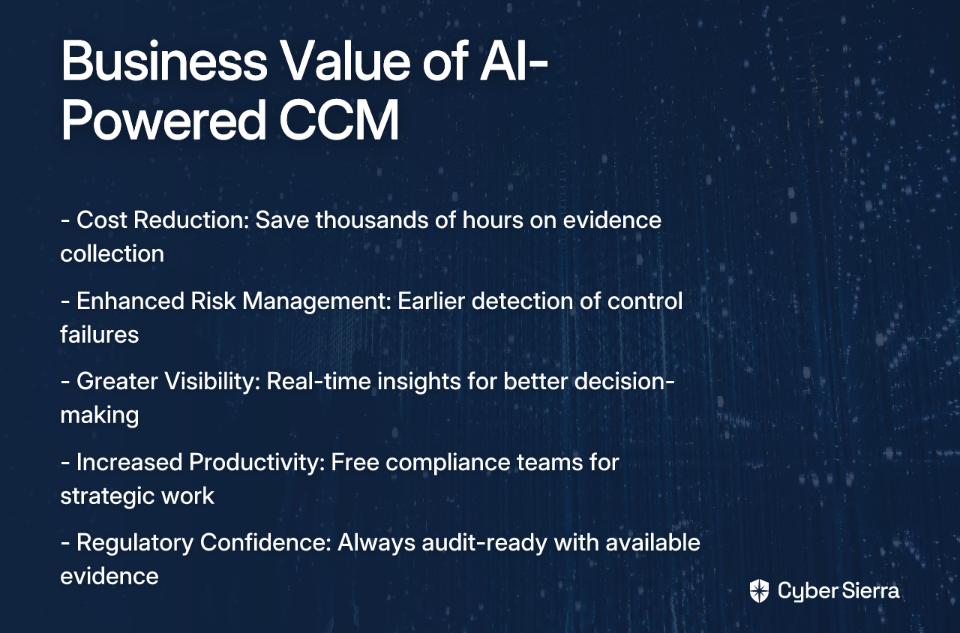
Cost Reduction: Automation significantly lowers compliance costs by reducing manual labor for testing and audit preparation. One CyberSaint client reported saving over 2,000 hours annually on evidence collection alone.

Enhanced Risk Management: Earlier detection of control failures mitigates potential damages, fines, and reputational harm. This is especially valuable as the SEC and other regulatory bodies emphasize proactive compliance measures.

Greater Visibility & Better Decisions: Senior leaders get improved, real-time insights into risk, security, and compliance, enabling better strategic prioritization. Instead of point-in-time snapshots, they have continuous visibility into the organization's compliance posture.

Increased Productivity: Compliance and audit teams are freed from tedious evidence gathering to focus on high-value strategic efforts, like resolving complex issues. This addresses the resource constraints that 59% of organizations cite as their biggest compliance challenge.

Regulatory Confidence: Readily available, audit-ready evidence of effective risk mitigation improves your standing with regulators, customers, and auditors.

Getting Started: Your First Step

The future of compliance isn't about replacing humans but augmenting them. The integration of AI agents with human expertise creates a resilient, adaptive, and efficient compliance ecosystem.

If you're concerned about scaling complexity—a common pain point among automation beginners—remember that you don't need to automate your entire compliance program at once. As one Reddit user advised about automation platforms: "Start simple... understand how triggers and actions work" before tackling more complex workflows.

Start your journey by identifying one critical, high-frequency control and build a pilot program to automate its monitoring. For example:

  1. Select a specific use case like monitoring user access reviews or software vulnerability management
  2. Define clear pass/fail criteria
  3. Implement a single AI agent to gather evidence and test the control
  4. Learn from the results and gradually expand

By starting small and scaling gradually, you'll avoid the "learning curve" concerns that many automation beginners express while still gaining significant value from AI-powered CCM.

The journey to automated continuous controls monitoring doesn't have to be overwhelming. With a thoughtful, phased approach, you can transform your compliance program from a reactive burden into a proactive, strategic asset powered by intelligent AI agents.

Whether you're concerned about pricing models, integration capabilities, or technical complexity, the key is to start with a specific, high-value use case rather than attempting to build a complete solution from day one. As your confidence grows, you'll find that AI agents provide the scalability and flexibility to adapt to your organization's evolving compliance needs.

Are you ready to take the first step toward automated continuous controls monitoring? The competitive advantages of enhanced security, reduced costs, and improved regulatory confidence await.

Frequently Asked Questions

What is Continuous Controls Monitoring (CCM)?

Continuous Controls Monitoring (CCM) is the use of technology to automatically and continuously check that security and compliance controls are working effectively in real-time. Unlike traditional audits which provide a snapshot in time, CCM offers ongoing assurance. This proactive approach helps organizations identify and fix control weaknesses as they happen, rather than discovering them months later during a manual review, thus maintaining a constant state of compliance.

How does Agentic AI differ from standard automation tools like Zapier?

Agentic AI consists of autonomous systems that can make decisions and take actions independently, whereas standard automation tools typically follow pre-defined, rigid "if-this-then-that" rules. Tools like Zapier are excellent for connecting apps and automating simple, linear workflows. Agentic AI, powered by Large Language Models (LLMs), goes a step further by interpreting data, making judgments, and performing complex, multi-step tasks without constant human intervention. For CCM, this means an agent can not only fetch data but also analyze it, decide if it constitutes a control failure, and initiate a response.

What are the main benefits of using AI for compliance monitoring?

The primary benefits of using AI for compliance monitoring are significant cost savings, enhanced risk management through real-time alerts, and increased productivity for compliance teams. AI automates the tedious, manual work of evidence collection, saving thousands of hours. It provides continuous visibility into your compliance posture, allowing for earlier detection of control failures. This frees up human experts to focus on strategic tasks like investigating complex anomalies and improving the overall risk framework, rather than getting bogged down in repetitive data gathering.

What is the best way to start implementing AI-powered CCM?

The best way to start is by selecting one high-impact, frequently-run control and launching a small pilot program to automate its monitoring. Avoid trying to automate your entire compliance program at once. Choose a specific use case, such as monitoring user access reviews or vulnerability scanning results. Define clear success criteria for the control, deploy an AI agent to handle the evidence collection and testing, and then learn from the results. This phased approach allows you to demonstrate value quickly and scale your efforts gradually as you gain experience.

What are the biggest security risks with AI agents and how can they be managed?

The two biggest security risks are data poisoning, where training data is maliciously altered, and prompt injections, which hijack the AI's behavior through malicious instructions. These risks can be managed by implementing robust security guardrails. This includes mapping all system interactions to identify potential vulnerabilities, protecting the integrity of training data, simulating attacks to find weaknesses proactively, and clearly defining the scope of decisions an AI agent can make autonomously. A "human-in-the-loop" approach, where experts review critical AI outputs, is also essential for accountability.

Will AI make compliance and audit roles obsolete?

No, AI is not designed to make compliance and audit roles obsolete but rather to augment them by handling repetitive tasks. AI excels at high-volume, routine monitoring and data collection, which frees human professionals from manual drudgery. This allows compliance and audit experts to focus on higher-value activities that require critical thinking, such as investigating complex anomalies, making strategic decisions on risk remediation, and managing the overall governance framework. The future is a collaborative one where human expertise guides and oversees powerful AI tools.

blog-hero-background-image
Cyber Security

How to Detect Control Failures Before They Cause Security Incidents

backdrop
Table of Contents

Join thousands of professionals and get the latest insight on Compliance & Cybersecurity.


Summary

  • Key Stat: 82% of enterprises have experienced security incidents that evaded existing controls, with successful attacks often requiring a chain of five or more control failures.
  • Key Learning: Traditional point-in-time audits create a false sense of security by failing to detect control "drift" and vulnerabilities that arise between assessments.
  • Key Action: Shift to a proactive approach by implementing Continuous Controls Monitoring (CCM) to automatically test controls, identify failures in near real-time, and prioritize remediation based on impact.
  • The Solution: A unified platform like Cyber Sierra's Continuous Control Monitoring (CCM) automates this process, providing a single source of truth to make your organization audit-ready at all times.

What's an acceptable control failure rate? 5%? 10%?

If you're asking this question, you're already thinking about security controls in the wrong way. The raw number of failures tells you nothing without understanding their context, impact, and interactions with your broader environment.

In fact, a survey of 1,200 enterprise security leaders found that 82% have experienced security incidents that evaded controls they believed were in place. Even more concerning, a successful attack typically requires an average of five or more control failures in sequence. This means failures aren't isolated events but rather a chain of weaknesses that, when aligned, create the perfect conditions for a breach.

The problem isn't just that controls fail—it's that organizations lack visibility and confidence in their security posture. Only 36% of security leaders feel confident they can prove their controls are effective and fully operational at any given moment.

This article provides a practical guide for shifting from a reactive, audit-passing mindset to a proactive, continuous approach for detecting and remediating control failures before they become tomorrow's headlines.

The Silent Threat: Understanding the True Impact of Control Failures

Before we can detect control failures effectively, we need to understand what they actually are. According to audit standards, control failures fall into two main categories:

  1. Design Deficiency: A control is missing entirely or is improperly designed, so it cannot meet its objective even if operated perfectly. For example, a lack of segregation of duties in financial processes.
  2. Operation Deficiency: A properly designed control isn't operated as intended by the person performing it. This often happens due to insufficient training, manual errors, or circumvention of procedures.

The complexity of modern security environments makes these failures both common and difficult to detect. Security teams now manage an average of 76 different security tools—up from 64 in 2019—and spend over half their time (54%) on manual reporting rather than proactive security work.

This complexity creates critical visibility gaps, particularly in databases (27%), devices (17%), and IoT infrastructure (16%). As one security professional noted, "If your system admin control failed because someone modified code that they shouldn't have, that can undermine your entire reporting system." Meanwhile, a less significant failure, such as "someone not uploading evidence to the right folder (but they did the work and have the evidence)," may have minimal impact.

The goal isn't zero failures—that's unrealistic. The goal is zero impactful failures that could lead to security incidents.

Why Point-in-Time Audits Create a False Sense of Security

Traditional point-in-time audits are like taking a single photograph of a marathon runner. They can confirm a control was working on Tuesday at 2 PM but offer no assurance about Wednesday or any other time.

This approach has several critical flaws:

  1. Inherently Reactive: By the time an audit identifies a control failure, it's already existed for weeks or months—providing ample opportunity for exploitation.
  2. Resource-Intensive: Manual evidence collection consumes valuable security resources and contributes to widespread "audit fatigue."
  3. Fails to Capture Drift: Controls often "drift" from their intended configuration between audits, creating undetected vulnerability windows.
  4. Sampling Limitations: Most audits only examine a small sample of control executions, potentially missing patterns of failure.

Since the pandemic began, security leaders have reported a 42% increase in unpatched vulnerabilities—a direct result of the inability to continuously validate that patching controls are operating effectively. Each of these vulnerabilities represents a potential entry point for attackers during the long gaps between formal assessments.

A Proactive Framework for Continuous Control Detection

Shifting from reactive to proactive control monitoring requires both a mindset shift and a structured approach to implementation. Here's how to make that transition:

The Foundational Mindset Shift

The Cloud Security Alliance recommends four key principles for modern compliance and security:

  1. Automation: Reduce human error and free up teams for strategic work by automating routine control checks.
  2. Compliance by Design: Integrate security into the entire system development lifecycle, making it built-in rather than bolted on as an afterthought.
  3. Shifting Left: Engage security and compliance teams early in the development process to catch issues before they reach production environments.
  4. Continuous Compliance: Create a feedback loop for constant improvement and use infrastructure-as-code for rapid, compliant adaptation.

A Modern Approach to Evaluating Controls

To effectively detect control failures before they cause incidents, follow this structured evaluation process:

  1. Index Existing Controls: Create a comprehensive inventory of all security controls across your organization, mapping them to specific risks and compliance requirements.
  2. Assess the Control Environment: Evaluate your organization's "tone at the top" and commitment to ethical practices, as this influences how seriously controls are taken.
  3. Evaluate Risk Assessment Processes: Analyze how effectively your organization identifies and manages risks, with particular attention to fraud risks.
  4. Investigate Control Activities: Ensure appropriate procedures exist to mitigate each identified risk, with clear ownership and accountability.
  5. Examine Information & Communication Systems: Verify that communication channels effectively support internal controls and that information flows appropriately.
  6. Analyze Monitoring Activities: Confirm that controls are being continuously evaluated and adapted based on changing conditions.

For each control deficiency identified, perform both an Impact Analysis (what could happen if this control fails?) and a Root Cause Analysis (why did this control fail?). This provides the context necessary to prioritize remediation efforts based on materiality rather than arbitrary thresholds.

Implementing Continuous Controls Monitoring (CCM)

Continuous Controls Monitoring is defined as "automated, ongoing tracking of compliance, risk management, and security controls that mitigate vulnerabilities related to data and infrastructure."

Unlike point-in-time audits, CCM provides real-time visibility into control effectiveness through automated testing and validation. Key benefits include:

  • Increased efficiency and cost reduction by finding issues early
  • Improved decision-making with real-time risk data
  • Reduced risk of data breaches and outages
  • Enhanced ability to demonstrate compliance to auditors and regulators

To implement CCM effectively:

  1. Identify Key Processes and Controls: Use risk assessments and frameworks like ISO 27001 or the NIST Cybersecurity Framework to prioritize what to monitor. Focus on controls that protect your crown jewels and have the highest impact if they fail.
  2. Define Control Objectives: Clearly state what each control is meant to achieve, aligning with business and regulatory goals. For example, "Ensure all production servers receive critical security patches within 72 hours of release."
  3. Set Up Automated Tests: Implement scripts and tools to check control status at high frequencies (hourly or daily), not quarterly. For the patching example, this might involve automated scanning to verify patch levels across your server fleet.
  4. Monitor and Report: Use a centralized dashboard to track Key Risk Indicators (KRIs) and trigger automated alerts for remediation when a control fails or drifts from its baseline.

Operationalizing Proactive Detection with a Unified Platform

While the framework above provides the blueprint, implementing CCM effectively requires addressing the "76 different security tools" problem. Disparate tools create data silos, inconsistent monitoring approaches, and gaps in visibility.

A unified GRC platform provides the solution by centralizing control monitoring, automating evidence collection, and providing real-time visibility across the entire control environment.

Cyber Sierra's Continuous Control Monitoring (CCM) module exemplifies this unified approach. It provides:

  • A central controls repository that acts as a single source of truth with near real-time updates
  • Clear visibility into security posture through continuous monitoring and real-time exception detection
  • Actionable risk intelligence with analytics to help prioritize remediation efforts
  • Automated control testing and validation across multiple compliance frameworks including NIST, ISO 27001, PCI DSS, GDPR, and HIPAA

This approach transforms the theoretical CCM framework into practical reality by addressing the core challenges of complexity and visibility.

What makes this approach particularly powerful is how it integrates with broader GRC functions. For instance, the data from CCM feeds directly into Cyber Sierra's Governance, Risk & Compliance (GRC) module, automating evidence collection and making the organization "audit-ready" at all times. This eliminates the resource drain and stress associated with periodic audit preparations.

Similarly, this proactive internal approach strengthens an organization's Third-Party Risk Management program by establishing clear standards for vendor security postures and enabling consistent monitoring across both internal and external environments.

Building a Resilient Security Posture Through Proactive Detection

The question shouldn't be "What's an acceptable control failure rate?" but rather "How quickly can we detect and remediate impactful failures?"

By combining a proactive mindset (Shifting Left, Compliance by Design), a structured evaluation process, and the right technology (CCM), organizations can:

  1. Detect control failures immediately rather than during the next audit cycle
  2. Understand the context and impact of each failure to prioritize response
  3. Remediate issues before they can be exploited by attackers
  4. Demonstrate continuous compliance to auditors, regulators, and customers
  5. Free up security resources to focus on strategic initiatives rather than manual evidence collection

The path forward is clear: abandon manual, periodic checks in favor of automation and continuous monitoring. This shift doesn't just improve security—it transforms how organizations approach risk management, making control effectiveness a continuous journey rather than a periodic destination.

As cyber threats continue to evolve in sophistication and scale, the organizations that thrive will be those that can detect the subtle warning signs of control degradation long before they manifest as security headlines. By implementing the proactive framework outlined in this article, you'll be well-positioned to join their ranks.

Frequently Asked Questions

What is a control failure in cybersecurity?

A control failure in cybersecurity occurs when a security measure is either designed improperly or is not operating as intended, creating a potential weakness that could be exploited. These failures fall into two main categories: design deficiencies, where a control is missing or flawed from the start, and operation deficiencies, where a correctly designed control is executed incorrectly due to human error, lack of training, or circumvention. A single successful attack often involves a chain of multiple control failures.

Why is relying on a control failure rate misleading?

Relying on a simple control failure rate is misleading because it lacks context. A low failure rate can still be catastrophic if the few failures that occur are critical, while a high rate of minor, low-impact failures might pose less overall risk. The focus should not be on an arbitrary number but on the potential impact of each failure. The goal is to achieve zero impactful failures that could lead to a breach, which requires understanding the context and materiality of each failure.

How does Continuous Controls Monitoring (CCM) differ from traditional audits?

Continuous Controls Monitoring (CCM) is a proactive, automated, and real-time approach to validating security controls, whereas traditional audits are reactive, manual, and provide only a point-in-time snapshot of control effectiveness. Audits can confirm a control was working during the assessment but offer no visibility into its status between audit cycles. CCM provides ongoing visibility, enabling teams to detect and remediate failures immediately and maintain a constant state of compliance.

What are the first steps to implementing a Continuous Controls Monitoring program?

The first step to implementing a Continuous Controls Monitoring (CCM) program is to inventory your existing controls and prioritize them based on risk. Focus on the controls that protect your most critical assets or "crown jewels." After identifying and prioritizing key controls, you should clearly define their objectives (e.g., "all critical vulnerabilities must be patched within 72 hours"), implement automated tests, and set up a centralized dashboard for monitoring and alerting.

How does a unified platform help with control failure detection?

A unified platform helps with control failure detection by centralizing data from disparate security tools, eliminating visibility gaps, and providing a single source of truth for your entire control environment. The average security team manages dozens of different tools, creating data silos. A unified platform integrates these sources, automates evidence collection, provides real-time analytics for risk prioritization, and ensures consistent monitoring across multiple compliance frameworks.

What is the difference between a design deficiency and an operation deficiency?

A design deficiency means a control is inherently flawed or missing, so it cannot achieve its objective even if performed perfectly. An operation deficiency occurs when a well-designed control is not executed correctly by the person responsible for it. For example, not having a policy that requires multi-factor authentication for administrative access is a design deficiency. In contrast, having the policy but an administrator failing to enable MFA on a new server is an operation deficiency.


Ready to implement continuous control monitoring in your organization? Learn more about Cyber Sierra's CCM solution and how it can help you detect control failures before they lead to security incidents.

blog-hero-background-image
Cyber Security

How to Create a Risk Register That Board Members Actually Understand

backdrop
Table of Contents

Join thousands of professionals and get the latest insight on Compliance & Cybersecurity.


Summary

  • Most risk registers fail to engage the board because they focus on technical jargon instead of quantifiable business impact, leading to a disconnect between security teams and decision-makers.
  • To make risks understandable, quantify their potential financial impact using metrics like Annualized Loss Expectancy (ALE) and frame mitigation efforts in terms of Return on Investment (ROI).
  • Effective risk management requires moving beyond static spreadsheets, which are error-prone and quickly outdated, to dynamic dashboards that provide real-time visibility.
  • Automating risk management with a GRC platform helps translate technical data into board-ready reports, ensuring continuous monitoring and strategic alignment.

You've meticulously documented every vulnerability, mapped threats to controls, and calculated risk scores. Your risk register is technically flawless—a masterpiece of security documentation. There's just one problem: when you present it to the board, you're met with blank stares and polite nods.

Sound familiar?

"Never worked at a place that was high enough functioning to maintain a risk register..." confessed one security professional on Reddit. Another candidly admitted, "Any tool or service that my senior stakeholders are comfortable using. It's their risk. I'm just a messenger."

The disconnect is clear: most risk registers are created by security professionals for security professionals—not for the business leaders who ultimately own the risks and control the budget.

This article will show you how to transform your risk register from a dense technical document into a strategic communication tool that translates cyber risk into the language of business, enabling informed decision-making at the highest levels of your organization.

Why Your Current Risk Register Isn't Working

The Spreadsheet Trap

"Excel LOL" was one Reddit user's succinct summary of their risk management tool. While spreadsheets are where most risk registers begin, they come with significant limitations:

  • They're static snapshots, quickly becoming outdated in a dynamic threat landscape
  • They're error-prone, especially when managed by multiple stakeholders
  • They lack real-time visibility into how risks are evolving
  • They provide poor visualization capabilities for complex risk relationships

Another professional on the thread noted: "I helped build and design software around this space for 10 years... but surprisingly from talking with hundreds of companies, spreadsheets still rule the world."

Lost in Translation

The average risk register entry looks something like this:

Risk ID: SEC-VUL-2023-01
Description: Insufficient endpoint protection controls
Likelihood: High
Impact: Medium
Risk Score: 12

This might make perfect sense to a security professional, but it fails to answer the questions board members actually care about:

  • What does this mean for our business?
  • How much could this cost us?
  • How does this compare to other business risks we face?
  • What's the return on investment for fixing it?

Lack of Prioritization

When everything is marked "high priority," nothing is. Many risk registers present a long list of technical issues without clear business-based prioritization, leading to decision paralysis at the executive level.

The Anatomy of a Board-Ready Risk Register

Creating a risk register that resonates with board members requires reconfiguring each component to speak their language. Here's how to transform the standard elements:

1. Risk Identification & Description (In Plain English)

Standard Approach: Technical vulnerability descriptions.
Board-Ready Approach: Business scenarios that explain the potential chain of events.

Instead of "Unpatched critical vulnerability in web application," try:
"Potential for unauthorized access to customer data through our e-commerce platform, which could trigger GDPR penalties and damage customer trust."

2. Risk Category (Aligned with Business Functions)

Standard Approach: Technical categories like "Network Security" or "Access Control."
Board-Ready Approach: Business categories that executives recognize.

Categories should include:

  • Financial/Revenue Impact
  • Operational Disruption
  • Regulatory Compliance
  • Reputation/Brand Damage
  • Strategic Objectives

3. Risk Analysis (Likelihood & Impact in Business Terms)

Standard Approach: Qualitative ratings (High, Medium, Low).
Board-Ready Approach: Quantified estimates with financial implications.

For likelihood, use percentages or frequencies: "20% probability annually" or "Expected to occur once every 2 years."

For impact, quantify wherever possible: "Estimated financial impact of $500,000-$1M, including regulatory fines, response costs, and lost revenue."

4. Risk Priority (The "So What?" Score)

Calculate priority by combining impact and probability, but present it with clear business context. A heat map or color-coding system (Red, Amber, Green) can provide instant visual cues about severity.

Make it clear which risks demand immediate attention versus those that can be managed over time.

5. Risk Response & Mitigation Plan (The Investment Ask)

Standard Approach: Technical solutions.
Board-Ready Approach: Business cases with ROI calculations.

Frame your mitigation as an investment decision: "Proposed investment: $75K for enhanced data loss prevention. Expected risk reduction: 65%. Net benefit: Preventing potential losses of $500K annually."

This approach transforms security spending from a cost center to a business investment with quantifiable returns.

6. Risk Ownership (Accountability)

Assign ownership not just to technical managers but to business leaders who ultimately own the outcomes. The CIO might own infrastructure risks, while the CMO might own website security risks that could impact brand reputation.

7. Risk Status (Progress Tracking)

Keep it simple but informative:

  • Open (Unaddressed)
  • In Progress (Mitigation underway)
  • Mitigated (Controls implemented)
  • Accepted (Formally accepted by leadership)

Add a timeline for resolution to create accountability.

The Secret Sauce: Translating Technical Risk into Business Impact

The most critical step in making your risk register board-ready is quantifying cyber risk in financial terms—a practice known as Cyber Risk Quantification (CRQ).

Speaking the Language of Money

Board members are ultimately responsible for ensuring the organization's financial health. When you translate technical risks into potential financial losses, you're speaking their native language.

Key financial metrics to include:

  • Single Loss Expectancy (SLE): The monetary impact of a single incident
  • Annualized Loss Expectancy (ALE): The total expected loss over one year
  • Risk Reduction ROI: The return on security investments in terms of loss prevention

According to C-Risk, "Cyber risk as business risk is crucial for overall operations and strategy," and using financial terms helps bridge the gap between technical and business discussions.

Aligning with Regulatory Requirements

Recent regulations are forcing this conversation at the board level. The SEC's new cybersecurity disclosure rules require public companies to report material cybersecurity incidents and provide updates on risk management practices. The NACD Director's Handbook on Cyber Risk Oversight emphasizes the need for boards to "understand economic drivers of cyber risk."

These regulatory pressures add urgency to creating a board-ready risk register that clearly communicates material risks.

From Static Spreadsheets to Dynamic Dashboards: The Power of Automation

To truly transform your risk management approach, you need to move beyond static spreadsheets to dynamic, automated solutions.

The Limitations of Manual Processes

A risk register updated quarterly (or less frequently) is practically obsolete in today's rapidly evolving threat landscape. Manual processes also make it difficult to correlate risks across different business units and systems.

Risk Management Automation

Risk management automation uses software to streamline the identification, monitoring, and management of organizational risks. According to Vanta, key benefits include:

  • Continuous Monitoring: Real-time visibility into risk posture
  • Enhanced Anomaly Detection: Automated identification of deviations from security baselines
  • Improved Reporting: On-demand generation of up-to-date reports
  • Faster Risk Assessment: Streamlined evaluation of new threats and vulnerabilities

Modern GRC platforms like Cybersierra solve these challenges by automating data collection, providing continuous control monitoring, and generating comprehensive reports. This directly addresses the pain of manual evidence gathering and lack of real-time posture visibility.

Cybersierra's Continuous Control Monitoring (CCM) provides the near real-time updates needed to keep a risk register dynamic and relevant, transforming security from periodic checks into a continuous process.

A Step-by-Step Guide to Building Your Board-Ready Risk Register

Let's put this all together with a practical approach:

Step 1: Identify Risks Through Business Collaboration

Start by engaging business leaders, not just IT. Ask them: "What scenarios could significantly impact our business operations or reputation?" This ensures you're capturing risks that matter to the business, not just technical vulnerabilities.

Step 2: Describe Risks as Business Scenarios

Frame each risk as a business scenario with clear cause-and-effect relationships. This helps board members visualize the potential impact.

Step 3: Quantify Impact with Financial Estimates

Work with finance to estimate potential losses for each scenario. Even rough estimates are better than qualitative ratings alone.

Step 4: Create a Business Case for Each Mitigation

Define not just the technical solution, but the expected risk reduction and return on investment.

Step 5: Present Visually with Executive Summaries

Use heat maps, charts, and executive summaries to make complex risk information digestible at a glance.

Example: A Board-Ready Risk Register Entry

Risk Name: Supply Chain Compromise via Key Vendor

Risk Description: Our primary payment processor (Vendor X) could suffer a data breach, exposing our customer PII and payment data, leading to regulatory fines and severe reputational damage.

Risk Category: Supply Chain, Regulatory, Financial

Risk Likelihood: 15% annually (Based on industry breach statistics)

Risk Impact: $5M+ (Includes GDPR fines, customer compensation, incident response costs)

Risk Mitigation: Implement enhanced vendor security assessment program with continuous monitoring. Estimated cost: $30K/year. Risk reduction: 70%.

Risk Priority: High (Top 3 organizational risks)

Risk Owner: Chief Financial Officer

Risk Status: In Progress (Mitigation plan approved, implementation underway)

Tools like Cybersierra's Third-Party Risk Management (TPRM) module can automate this process by continuously monitoring vendor security postures and streamlining risk assessments, reducing reliance on annual self-attestations.

Conclusion: Transforming Risk from a Liability to a Strategic Enabler

A board-ready risk register is more than a compliance document—it's a strategic tool that helps executives make informed decisions about risk acceptance and security investments.

By translating technical details into business language, quantifying impacts financially, and automating the monitoring process, you transform risk management from a technical function to a business enabler that supports strategic decision-making.

Modern GRC platforms like Cybersierra are essential for building this mature, data-driven approach to risk communication, enabling organizations to become more resilient and audit-ready while providing the continuous visibility that static spreadsheets simply cannot deliver.

The result? A board that truly understands your organization's risk posture and is empowered to make strategic decisions that balance security investments with business objectives—turning your risk register from a document that collects dust to one that drives business strategy.

Frequently Asked Questions

What is a board-ready risk register?

A board-ready risk register is a strategic document that translates technical cyber risks into clear, quantifiable business impacts, enabling informed decision-making by executives and board members. Unlike traditional, technical registers, it avoids jargon and focuses on business scenarios, financial quantification (like potential revenue loss or fines), and the return on investment (ROI) for mitigation efforts. Its primary goal is to communicate risk in the language of business, not security.

How do you translate technical risks into business impact?

To translate technical risks into business impact, you must reframe them as business scenarios and quantify their potential financial consequences. Instead of describing a "critical vulnerability," explain the business outcome, such as the "potential for a data breach leading to $1M in regulatory fines and brand damage." Use financial metrics like Single Loss Expectancy (SLE) and Annualized Loss Expectancy (ALE) to connect security issues directly to the company's bottom line.

Why are spreadsheets a poor choice for modern risk management?

Spreadsheets are a poor choice for modern risk management because they are static, error-prone, and lack the real-time visibility needed to manage a dynamic threat landscape effectively. They quickly become outdated, making it difficult to track risk evolution or collaborate across teams. Automated platforms provide a dynamic, centralized, and more accurate view of an organization's risk posture.

Who should own the risks in a risk register?

Risks should be owned by the business leaders whose functions would be most affected by the risk materializing, not just by IT or security personnel. For example, the Chief Marketing Officer (CMO) might own the risk of a website data breach that could damage brand reputation, while the Chief Financial Officer (CFO) might own risks related to financial system compromises. This approach ensures accountability is aligned with business outcomes.

What is the first step to building a better risk register?

The first step is to collaborate directly with business leaders to identify risks based on what could significantly impact business operations, revenue, or reputation. By moving beyond a purely technical vulnerability assessment and asking executives what scenarios they worry about most, you ensure the risk register is focused on threats that are material to the organization's strategic objectives from the start.

blog-hero-background-image
Cyber Security

How to Present Cyber Risk to Executive Leadership Effectively

backdrop
Table of Contents

Join thousands of professionals and get the latest insight on Compliance & Cybersecurity.


Summary

  • Many cybersecurity reports are ineffective because they focus on technical details instead of the financial and business impact that leadership understands.
  • To gain executive support, security initiatives must be directly linked to strategic business goals, such as protecting revenue or ensuring operational uptime.
  • Quantify risks in financial terms using frameworks like FAIR and present findings with clear, visual dashboards and compelling stories to drive action.
  • Automating risk quantification and reporting with a unified GRC platform simplifies the creation of compelling, executive-level communications.

You've spent weeks analyzing vulnerabilities, gathering data, and preparing a comprehensive cybersecurity risk report. But when you present it to your executive leadership, you're met with blank stares, dismissive nods, or worse—defensiveness and pushback. If this scenario feels painfully familiar, you're not alone.

"Reporting risks to leadership can be fraught with defensiveness and difficult dynamics," notes a security professional in a recent online discussion. Another points out that "technical risks are often overlooked by C-level executives" because they lack context and business relevance.

The problem isn't your expertise or the validity of your concerns—it's a fundamental communication gap. While security teams speak in terms of vulnerabilities, patches, and technical controls, executives think in terms of financial impact, strategic objectives, and business risk.

This article offers a practical framework for bridging this gap—translating complex cybersecurity risks into compelling business narratives that drive action and secure investment.

Why Your Current Risk Reports Are Falling Flat

Before we discuss solutions, let's diagnose the common pitfalls that lead to disengagement:

You're Speaking the Wrong Language

When you dive into the technical details of a stored XSS vulnerability or an unpatched server, executives aren't dismissing the importance—they're struggling to translate it into business terms they understand. As one CISO bluntly put it, "At the C-level, they speak business risk only."

According to Forbes, overloading presentations with technical jargon is one of the quickest ways to lose executive attention. Remember, most board members don't have cybersecurity backgrounds; they're experts in finance, operations, or business strategy.

You're Missing the "So What?" Factor

Your reports may meticulously document risks but fail to answer the crucial question: "How does this affect the business?"

Without clear connections to revenue, reputation, customer trust, or operational stability, risks remain abstract. This mirrors the frustration many security professionals express that "without quantification tied to business processes, risks may not be taken seriously."

Your Data Lacks Financial Context

Presenting risks without quantifying their potential financial impact makes it impossible for leaders to prioritize investments. Which deserves more attention: the unpatched server or the weak access controls? Without financial context, it's just a list of technical issues competing for limited resources.

The FAIR Institute emphasizes that translating technical risks into financial terms allows stakeholders to understand potential impacts and prioritize investments effectively.

The Foundation: Shifting Your Mindset Before You Speak

Before creating your next presentation, you need to establish a foundation that bridges the gap between technical details and business strategy:

Know Your Audience & Their Risk Appetite

Organizations have different tolerances for risk based on their industry, regulatory environment, and business model. As highlighted by Forbes, risk appetite can be high, low, or neutral, directly influencing decision-making and resource allocation.

Before proposing security initiatives, understand:

  • What level of risk is acceptable to your organization?
  • Which business assets are most critical to protect?
  • What regulatory requirements must be met?

This knowledge allows you to calibrate your message appropriately. Instead of arguing that all risks must be addressed immediately, you can prioritize based on your organization's unique risk tolerance.

Align with Business Objectives and KPIs

Every security discussion should connect directly to strategic goals. A key insight from cybersecurity professionals is the "need to align cybersecurity strategies with the business goals and key performance indicators (KPIs) of the board."

Instead of saying, "We need to patch these vulnerabilities," reframe it as: "To protect our Q4 revenue target of $10M, we must address this vulnerability that threatens our e-commerce platform's availability."

This approach transforms cybersecurity from a cost center into a business enabler that supports growth, customer trust, and competitive advantage.

Clarify Your Terms: Vulnerability vs. Threat vs. Risk

The distinction between these terms often causes confusion, as noted by multiple security professionals. Providing simple, clear definitions ensures everyone is speaking the same language:

  • Vulnerability: A weakness that can be exploited (e.g., an unpatched server)
  • Threat: A malicious actor or event that could exploit a vulnerability (e.g., a ransomware gang)
  • Risk: The potential for loss or damage when a threat exploits a vulnerability (e.g., the financial and reputational damage from a ransomware attack)

This clarity is essential for productive conversations about cybersecurity priorities.

A Practical Playbook for Communicating Cyber Risk

Now that we've established the foundation, let's build a step-by-step approach to creating compelling risk presentations:

Step 1: Quantify Risk in Financial Terms (The FAIR Approach)

Factor Analysis of Information Risk (FAIR) provides a framework for translating technical risks into business-friendly financial terms. Rather than abstract risk levels (high/medium/low), FAIR helps you calculate probable loss magnitudes.

This shifts the conversation from "We have a stored XSS vulnerability" to "This vulnerability creates a 15% probability of a data breach this year, with a likely financial impact of $2.5 million in fines and remediation costs."

Using scenario analysis makes the consequences tangible. For example, walking through the potential impact of a supply chain attack—from initial detection to remediation costs, regulatory penalties, and customer churn—provides a comprehensive view of the risk landscape.

Step 2: Craft a Compelling Narrative with Storytelling

Effective communication aims to "inform, influence, and alter behavior," and storytelling is a powerful tool to achieve this, according to Forbes.

Use relatable analogies to make complex concepts accessible. For instance, compare a third-party breach to a contagious virus spreading through a school—it highlights how one infected vendor can compromise your entire ecosystem.

Beyond the numbers, discuss qualitative impacts on customer trust, brand reputation, and competitive positioning. These factors often resonate deeply with leadership teams focused on market perception.

Keep your presentations concise with one-page executive summaries that highlight key risks, financial implications, and recommended actions. This respects executives' time constraints while ensuring your message is received.

Step 3: Visualize Data with Executive Dashboards

Dense spreadsheets and text-heavy slides rarely engage executive audiences. Instead, use charts, graphs, and heat maps to help stakeholders quickly grasp complex data.

As suggested by Quodorbis, a powerful executive dashboard should focus on three primary areas:

  1. Business Impact: Major threats and their potential financial, legal, and operational repercussions
  2. Cybersecurity Effectiveness: Evidence of how well current security investments are performing (your ROI)
  3. Actionable Steps: Clear recommendations with required resources, budgets, and timelines

Step 4: Provide Clear, Actionable Recommendations

Don't just present problems—come with solutions. Develop a top-down risk register by interviewing senior leaders to translate their concerns into tangible risk items. This ensures alignment from the start and demonstrates that you understand their business priorities.

Before your main presentation, consider piloting your messaging with industry experts or friendly stakeholders for feedback. This allows you to refine your approach and anticipate potential questions or objections.

Streamlining Risk Communication with Automation

Implementing the playbook above requires significant data collection, analysis, and continuous monitoring. For many organizations, this manual approach quickly becomes overwhelming, especially when "constantly managing a multitude of risks."

Modern GRC (Governance, Risk, and Compliance) platforms can streamline this process, providing the data foundation needed for effective executive communication.

For example, Cyber Sierra's GRC module automates data collection, risk assessments, and reporting across multiple frameworks like SOC 2, ISO 27001, and NIST. This makes it simple to generate the executive dashboards discussed earlier without the manual overhead.

Continuous Control Monitoring (CCM) solutions like Cyber Sierra's CCM platform provide ongoing, near real-time visibility into your security posture. This replaces periodic checks with a live view, helping you identify control gaps before they become major risks and providing concrete data to demonstrate cybersecurity effectiveness to the board.

For organizations concerned about supply chain risks, Third-Party Risk Management (TPRM) tools can automate vendor risk assessments, helping quantify and communicate risks from your extended ecosystem—a major concern for boards in today's interconnected business landscape.

Conclusion: From Technical Guardian to Strategic Advisor

By mastering the art of risk communication, security leaders can elevate their role from technical guardians to strategic business partners. This transformation is essential not just for securing resources, but for building truly resilient organizations where security enables rather than hinders business objectives.

The key strategies to remember:

  • Speak the language of business: Focus on financial impact, KPIs, and ROI
  • Quantify and contextualize: Use frameworks like FAIR to translate technical issues into business terms
  • Tell a story: Use narratives, analogies, and visualizations to make data memorable and impactful
  • Be proactive and solution-oriented: Present clear, actionable plans, not just problems

For teams looking to move from periodic, manual reporting to a continuous, automated approach, exploring how a unified platform can provide the risk intelligence needed for effective leadership conversations is a worthwhile next step.

By bridging the communication gap, you transform cybersecurity from a cost center into what it truly is—a strategic business enabler that protects your organization's most valuable assets and supports its long-term success.

Frequently Asked Questions

Why do executive leaders often ignore cybersecurity reports?

Executive leaders often ignore cybersecurity reports because they are filled with technical jargon and lack clear business context. To be effective, reports must bridge the communication gap by translating technical issues into financial impact, aligning with strategic business objectives, and answering the crucial "So what?" question for the business.

How can I translate technical cyber risks into business terms?

The most effective way to translate technical risks is to quantify their potential financial impact. Frameworks like Factor Analysis of Information Risk (FAIR) help calculate probable loss. Instead of describing a vulnerability, explain how it could disrupt a key business process, threaten a quarterly revenue target, or result in specific regulatory fines.

What is the difference between a vulnerability, a threat, and a risk?

These terms are often confused but have distinct meanings. A vulnerability is a weakness (e.g., an unpatched server). A threat is a malicious actor or event that could exploit that weakness (e.g., a ransomware gang). Risk is the potential for loss or damage when a threat exploits a vulnerability (e.g., the financial and reputational damage from a successful attack).

What is the FAIR framework and how does it help in risk communication?

FAIR, which stands for Factor Analysis of Information Risk, is a model for quantifying information risk in financial terms. It helps security professionals move away from subjective, qualitative ratings (like "high," "medium," or "low") and instead calculate the probable frequency and magnitude of future loss. This allows executives to compare cybersecurity risks alongside other business risks and make informed investment decisions.

How can I make my cybersecurity presentations more engaging for executives?

To make presentations more engaging, use storytelling and visual data. Craft a compelling narrative with relatable analogies, use executive dashboards with charts and heat maps instead of dense spreadsheets, and provide a one-page executive summary. The goal is to inform, influence, and alter behavior by making complex data accessible and memorable.

What role do GRC platforms play in communicating risk?

Governance, Risk, and Compliance (GRC) platforms automate the data collection, risk assessment, and reporting required for effective communication. They provide a centralized, data-driven foundation to quantify risks, monitor security controls continuously (CCM), and generate executive-friendly dashboards, streamlining the entire process and reducing the manual effort needed to prepare compelling reports.

blog-hero-background-image
Cyber Security

How to Use CCM to Reduce False Positives in Security Alerts

backdrop
Table of Contents

Join thousands of professionals and get the latest insight on Compliance & Cybersecurity.


Summary

  • High volumes of false positive security alerts cause alert fatigue, desensitizing analysts and increasing the risk of missing genuine breaches.
  • Continuous Controls Monitoring (CCM) provides the real-time context and automated control validation needed to distinguish actual threats from operational noise, dramatically improving alert quality.
  • Start implementing CCM by identifying your noisiest controls and setting up automated tests, or streamline the process with a dedicated platform like Cybersierra's Continuous Control Monitoring to regain focus on real threats.

Your SIEM screams "brute-force attack," and your team spends hours investigating, only to find it was a user who changed their password, causing Kerberos tickets to "go crazy for a few hours." One security professional lamented wasting "a solid, like 3 months of bruteforce alerts" on similar sync issues. This isn't just an annoyance; it's a critical drain on security resources.

False positives—alerts that incorrectly indicate a vulnerability or malicious activity is present when it is not—are more than just a frustrating part of security operations. They're actively undermining your ability to detect real threats. Alert fatigue leads to analysts missing genuine threats, burning out, and wasting valuable time that could be spent on proactive threat hunting. This is especially painful for "lean teams who still need to patch and otherwise keep lights on."

So how do you fix this problem at its source? Enter Continuous Controls Monitoring (CCM)—a technology-driven approach that provides the real-time context needed to distinguish signal from noise and dramatically reduce false positives in your security environment.

The Crippling Cost of "Crying Wolf": Why False Positives Are More Than an Annoyance

"The old saying of garbage in -> garbage out is very relevant to effectively deploying a SIEM and make sure you have high value alerts with a very low false positive rate." This observation from a security professional on Reddit perfectly captures the core problem. Without accurate, up-to-date information about your environment's controls, your SIEM is working with flawed data.

The consequences of high false positive rates are far-reaching:

  1. Resource Drain: Each false positive consumes significant man-hours in investigation, documentation, and reporting. For security teams already stretched thin, this is time that could be spent on proactive security measures.
  2. Desensitization: When analysts are constantly bombarded with false alarms, they become desensitized. This "alert fatigue" means they're more likely to overlook the one alert that signals a real breach.
  3. Lost Credibility: Constantly reporting false threats to management undermines the security team's credibility and can lead to reduced investment in security initiatives.
  4. Operational Inefficiency: Security tools that generate excessive false positives require constant tuning and maintenance, creating an ongoing operational burden.

In essence, false positives don't just waste time—they actively increase your organization's risk profile by distracting from real threats.

What is Continuous Controls Monitoring (CCM)?

Continuous Controls Monitoring is "a set of technologies aimed at reducing business losses through continuous monitoring and minimizing audit costs via continuous auditing of controls." It represents a paradigm shift from traditional "point-in-time" audits to an ongoing, automated validation of security controls.

Traditional security and compliance approaches rely on periodic assessments—annual audits, quarterly reviews, or manual checks. CCM changes that model completely by implementing technology that continuously verifies the proper functioning of your security controls.

The core benefits of CCM include:

  • Real-time Visibility: Provides continuous insight into IT risks and compliance posture, offering a true picture of your security state at any moment.
  • Proactive Risk Management: Enables teams to identify and remediate vulnerabilities before they can be exploited or trigger false alerts.
  • Streamlined Audits: Drastically reduces audit fatigue and the "painful" evidence gathering process that consumes so much time.
  • Data-Driven Decisions: Offers executives meaningful visualizations and data to make informed security decisions.

The Mechanics: How CCM Directly Reduces False Positives

Understanding how CCM works to reduce false positives requires examining the core mechanisms through which it improves alert fidelity:

1. Providing an Accurate, Real-Time Baseline

A security alert is often meaningless without context. Is that server supposed to be communicating with an external IP? Is that administrative account authorized to access a particular system? CCM provides this ground truth by maintaining an accurate baseline of your environment.

For example, when your SIEM detects unusual network activity, CCM can immediately verify whether it aligns with approved configurations and expected behavior, preventing false alarms from triggering in the first place.

2. Automating Control Testing and Validation

Many false positives arise from misconfigured or temporarily offline systems. CCM automates the validation of these controls, ensuring that your detection systems have accurate information.

Use Case Example (Access Management): Instead of an alert for a potential privilege escalation, CCM can automatically test and confirm that access levels are appropriate for employee roles, preventing the alert from ever firing.

3. Enabling Precision Tuning and "Detection as Code"

The strategy of treating "Detections like Code" requires reliable data. CCM provides this foundation for sophisticated alert logic.

Practical Example: A security professional on Reddit mentioned changing an alert to Event ID 4771 with status code 0x18 and adding a 24-hour exclusion after a password change. With CCM, you can build even smarter logic: If EID 4771 fires, AND CCM confirms the user's password was changed in the last 24 hours, AND the 'Account Lockout Policy' control is verified as active, THEN suppress the alert.

A Practical 4-Step Guide to Implementing CCM for Better Alerting

Ready to start reducing false positives with CCM? Here's a practical implementation framework:

Step 1: Identify Key Processes and Controls

Don't try to boil the ocean. Start with critical processes and controls that generate the most noise in your security operations. Leverage frameworks like ISO 27001 or NIST to guide your selection. Focus on controls that:

  • Are frequently involved in false positive alerts
  • Protect your most critical assets
  • Are required for compliance with key regulations

Step 2: Define Control Objectives

Clearly align each control's objective with business goals and your risk appetite. For example, the objective of a firewall rule control is to prevent unauthorized external access while allowing legitimate business traffic.

These clearly defined objectives become the basis for your automated testing.

Step 3: Set Up Automated Tests

This is the core of CCM. Configure frequent, automated tests (ideally hourly or more) to ensure controls are operating as intended. These tests should:

  • Verify control configurations match expected values
  • Confirm controls are functioning properly
  • Detect any deviations from approved baselines
  • Document findings in an auditable format

Step 4: Monitor and Report Adequately

Use dashboards and Key Risk Indicators (KRIs) to monitor control health. When a control fails a test, it should generate a high-fidelity internal alert for remediation, preventing a cascade of low-quality alerts in the SIEM.

This monitoring should feed directly into your SIEM or detection system to provide the context needed for alert suppression or correlation.

Unifying Your Approach: From Manual Chaos to Automated Clarity

Implementing CCM requires a centralized hub for data and controls and an automation-enabled GRC solution. Building this from scratch is a significant undertaking, which is why many organizations turn to dedicated CCM platforms.

Platforms like Cybersierra's CCM module are designed to address this challenge head-on. Looking at how such platforms map to common pain points can illustrate the value of a unified approach:

Pain: "The most painful part of an audit is typically evidence gathering." Cybersierra's CCM module builds a "central controls repository with near real-time updates" and automates evidence collection, making the organization "audit ready" and eliminating painful manual work.

Pain: The need for a "hands-off" tool that "just works." Effective CCM platforms "automate control testing and validation" and "detect exceptions and anomalies in real-time," providing the continuous oversight teams need without constant manual intervention.

Pain: Generic tools that don't fit specific environments. Purpose-built CCM solutions help "manage controls across multiple compliance frameworks (NIST, ISO 27001, PCI DSS etc.)," allowing for tailored monitoring that fits specific compliance and security requirements.

Conclusion: Beyond the Noise

Moving beyond the noise of false positives requires a shift from reactive alerting to proactive control validation. CCM provides the context, automation, and data integrity needed to make security alerts meaningful again.

By implementing a CCM strategy—whether through a dedicated platform like Cybersierra or by building your own solution—you create a foundation for more intelligent, efficient, and resilient security operations. Your analysts will thank you for the reduced alert fatigue, and your organization will benefit from the increased focus on real threats rather than false alarms.

The future of security operations isn't about handling more alerts—it's about handling the right alerts. CCM is the key to making that transition.

Frequently Asked Questions

What is Continuous Controls Monitoring (CCM)?

Continuous Controls Monitoring (CCM) is a technology-driven approach that automatically and continuously validates the effectiveness of an organization's security controls. Unlike traditional point-in-time audits that happen periodically, CCM provides real-time visibility into your security posture. It uses automation to constantly test controls like access rights, firewall configurations, and system settings to ensure they are working as intended, offering an up-to-the-minute view of your risk and compliance status.

How does CCM help reduce false positives in a SIEM?

CCM reduces false positives by providing your SIEM with accurate, real-time context about your environment and security controls. Many false positives occur because detection tools lack context. For example, an alert might fire for unusual network activity. CCM can instantly verify if this activity is within an expected baseline or if a control (like a firewall rule) was recently changed. By automating control validation and maintaining an accurate baseline, CCM helps distinguish genuine threats from benign operational noise, preventing low-quality alerts from ever reaching your security team.

Why is alert fatigue a serious problem for security teams?

Alert fatigue is a serious problem because it desensitizes security analysts to real threats, increases the risk of a breach, and leads to team burnout. When analysts are constantly overwhelmed by a high volume of false positive alerts, they begin to tune them out or investigate them less thoroughly. This creates a "crying wolf" scenario where a genuine, critical alert might be missed. This not only increases the organization's risk profile but also drains valuable time and resources that could be spent on proactive threat hunting and other high-value security tasks.

What is the difference between CCM and traditional security audits?

The primary difference is timing and automation: CCM is a continuous, automated process, while traditional audits are manual, point-in-time assessments. Traditional audits, such as annual penetration tests or quarterly reviews, provide a snapshot of your security posture at a specific moment. CCM, on the other hand, implements technology to monitor your controls 24/7. This shifts security and compliance from a periodic, reactive exercise to a proactive, ongoing discipline, drastically reducing the manual effort required for evidence gathering and providing a more accurate, current view of security effectiveness.

What is the first step to implementing a CCM program?

The first step to implementing a CCM program is to identify the key processes and controls that generate the most false positives or protect your most critical assets. Instead of trying to monitor everything at once, start with a targeted approach. Analyze your SIEM data to find the noisiest alerts and map them back to specific controls (e.g., account lockout policies, firewall rules). You can also leverage frameworks like NIST or ISO 27001 to prioritize controls that are essential for compliance and protect high-value systems. This focused start ensures you get the most immediate value from your CCM implementation.

Can CCM help with compliance and audits?

Yes, CCM significantly helps with compliance and audits by automating the evidence collection process and ensuring the organization is always "audit-ready." A major challenge during audits is manually gathering evidence to prove that controls are in place and effective. CCM automates this by continuously testing controls and logging the results in a centralized, auditable format. When auditors ask for proof, you can provide near real-time data and reports, drastically reducing the time, effort, and stress associated with compliance activities for frameworks like ISO 27001, PCI DSS, and NIST.

blog-hero-background-image
Cyber Security

How to Measure the Effectiveness of Your Security Controls

backdrop
Table of Contents

Join thousands of professionals and get the latest insight on Compliance & Cybersecurity.


Summary

  • The "set and forget" approach to security controls is failing, with the average data breach now costing $4.24 million.
  • True security assurance requires moving beyond simple compliance to continuously measuring the effectiveness of both technical and human controls.
  • To measure effectiveness, organizations must track key metrics like control coverage and failure rates, and proactively test defenses with Breach and Attack Simulation (BAS).
  • Automating this process with a Continuous Control Monitoring (CCM) platform provides real-time visibility into your security posture and ensures you are always audit-ready.

Your SIEM is screaming with alerts, your EDR is flagging suspicious activities, and every external email gets a warning banner. With all this noise, how do you know what's actually working? Are your expensive security controls really protecting you, or just creating desensitization and alert fatigue?

This question isn't just academic—it's financial. With the average cost of a data breach reaching $4.24 million, ineffective security controls can be catastrophically expensive. Yet many organizations continue to take a "set and forget" approach, implementing controls to check compliance boxes without truly measuring their effectiveness.

In this article, we'll explore a practical framework for measuring security control effectiveness—the degree to which your safeguards (firewalls, EDR, training, etc.) actually prevent, detect, and respond to cyberattacks in the real world. Moving beyond checkbox compliance to genuine security assurance isn't just good practice—it's essential for survival in today's threat landscape.

Why 'Set and Forget' Security Controls Fail in 2024

The cybersecurity landscape is constantly evolving, with attackers developing new techniques daily. Controls that were effective yesterday may be useless today, and the goalposts are always moving. This dynamic environment exposes several critical weaknesses in the traditional approach to security controls:

Common Pain Points & Gaps

Insufficient Basic Hygiene

Many breaches stem from overlooked fundamentals:

  • Outdated Asset Inventories: As the saying goes, "you can't protect what you don't know you have." Research from Reddit discussions shows that many organizations lack proper asset management, creating security blind spots where vulnerabilities lurk unmonitored.
  • Delayed Patch Management: Even when vulnerabilities are publicly known with CVEs issued, many organizations delay applying critical patches. This creates windows of opportunity for attackers who specifically target known, unpatched vulnerabilities.

The Human Element

Technology is only part of the equation:

  • Bypassing Controls: Users, especially VIPs, often find ways around security measures they deem disruptive. When employees start using personal email to bypass security filters or disable security software to "make things work," your controls become ineffective regardless of their technical capabilities.
  • Lack of Ongoing Training: One-off security awareness training isn't enough. Without continuous reinforcement, users remain vulnerable to phishing and social engineering attacks, which continue to be primary attack vectors.

The Business Case for Measurement

Given these challenges, measuring control effectiveness becomes critical for several reasons:

  1. Operational Effectiveness: Understand where security investments are providing real value and where resources are being wasted.
  2. Breach Prevention: Effective controls are the difference between a detected attempt and a full-blown incident.
  3. Validation of Security Stack: Prove that your NGFW, WAF, EDR, SIEM, and DLP tools are configured correctly and defending against current threats.
  4. Impact Assessment: Evaluate how infrastructure changes affect your security resilience before an attacker does.

A Framework for Measuring Control Effectiveness

Measuring the effectiveness of security controls requires a multi-layered approach that combines different methodologies for a holistic view. Let's break this down into manageable components:

Direct vs. Indirect Measurement

There are two fundamental approaches to measuring control effectiveness:

Indirect Assessment

  • Definition: Uses external observations (e.g., software versions, DNS configurations) to infer risks and control states.
  • Pros: Simple, non-invasive, and often easier to implement.
  • Cons: Limited view, only sees the "external facade" and can't confirm if a control is actually working internally.

According to Huntsman Security, indirect assessments are like judging a house's security by looking at it from the street—you might see locks on doors and windows, but you can't tell if they're actually engaged or effective.

Direct Measurement

  • Definition: Involves on-network assessment of the actual state and configuration of security controls.
  • Pros: Provides accurate, comprehensive, and verifiable metrics on your actual security posture.
  • Recommendation: Best practice is to use direct measurement methods for true assurance.

Direct measurement is like actually testing each lock and alarm in the house to confirm they work—it takes more effort but provides genuine security assurance.

Key Metrics You Must Track

To effectively measure control effectiveness, track these critical metrics:

Technical Control Metrics

  • Control Coverage: What percentage of your critical assets are protected by key security controls (e.g., EDR, vulnerability scanning)? Sprinto recommends tracking this as a foundational metric.
  • Control Failure Rate: How often do controls fail or generate errors over a given period?
  • False Positive Reporting Rate (FPRR): A high rate indicates alert fatigue and wasted analyst time. Tuning is needed to improve the signal-to-noise ratio.
  • Incident Response Time: Track Mean Time to Detect (MTTD) and Mean Time to Respond (MTTR) for security incidents related to control failures.

Access & Identity Metrics

  • Excessive Permissions Detected: How many user accounts have more access than required by the principle of least privilege?
  • Obsolete Credentials Removed: Are you tracking and disabling accounts for users on leave or who have left the company? This directly addresses a common pain point about poor lifecycle management.

Human Control Metrics

  • Phishing Simulation Click Rate: What percentage of users click on links in simulated phishing campaigns?
  • Security Training Completion Rate: Track completion and quiz scores to measure engagement and understanding.

Proactive Validation with Real-World Scenarios

Going beyond passive metrics, active testing shows how your controls stand up to real attacks:

Breach and Attack Simulation (BAS)

BAS tools continuously and safely simulate real-world attack techniques to test your defenses. According to Picus Security, the process works as follows:

  1. Identify Threat Actors: Use threat libraries to mimic threats relevant to your industry.
  2. Define Scope: Customize simulations to test specific controls (NGFW, WAF, EDR, etc.).
  3. Conduct Simulations: Run automated simulations using real-world TTPs.
  4. Quantify Results: BAS platforms provide clear prevention and detection scores.
  5. Mitigate Gaps: Use the findings to harden preventive controls and detective controls.
  6. Continuously Update & Reassess: Keep threat libraries updated and re-run tests regularly.

Employee Security Testing

This is a form of direct measurement for your "human firewall":

  • Run simulated phishing campaigns to gather data on employee vigilance.
  • Track metrics like click rates, reporting rates, and time to report.
  • Use platforms like Cyber Sierra's Employee Security Training module that not only deliver training but use simulated campaigns to provide a dashboard overview of employees' security quotient, turning training into a measurable control.

The Power of Automation: Shifting to Continuous Control Monitoring (CCM)

The problem with periodic security checks is clear: relying on quarterly or annual audits creates security gaps. A misconfiguration today could be exploited tomorrow, long before your next scheduled assessment. This is where Continuous Control Monitoring (CCM) becomes critical.

What is Continuous Control Monitoring?

CCM is a technology-driven approach to consistently and automatically monitor compliance, risk, and security controls in near real-time. Unlike traditional point-in-time assessments, CCM provides ongoing visibility into your security posture, allowing you to identify and remediate issues as they arise.

The core benefits of implementing CCM include:

Real-Time Visibility

Gain an up-to-the-minute view of your security posture instead of a point-in-time snapshot. This visibility allows you to detect and respond to control failures or misconfigurations before they can be exploited.

Increased Compliance Efficiency

Automate evidence gathering for multiple frameworks (SOC2, ISO 27001, PCI DSS, GDPR, HIPAA), eliminating manual, repetitive work for your team. This reduces audit fatigue and frees up resources for more strategic security initiatives.

Proactive Risk Reduction

Identify control gaps, misconfigurations, and vulnerabilities as they happen, allowing for early remediation. This shifts your security posture from reactive to proactive, potentially preventing breaches before they occur.

Enhanced Decision-Making

Use real-time data to make informed decisions about security investments and priorities. This ensures that resources are allocated to the most critical areas and that security investments deliver measurable value.

How CCM Platforms Work

Modern CCM platforms connect directly to your tech stack—AWS, Azure, identity providers, EDR tools, and more—to automatically test controls. They create a unified control library, mapping a single control to multiple frameworks to avoid duplicating effort.

The shift from manual spot-checks to automated, continuous assurance is where modern GRC platforms provide immense value. For example, Cyber Sierra's Continuous Control Monitoring (CCM) platform is designed to address these challenges directly. It automates control testing and validation by connecting to your environment, builds a central controls repository with near real-time updates, and delivers actionable risk intelligence. This transforms security from a periodic, stressful exercise into a continuous, data-driven process, making you audit-ready at all times and freeing up your team to focus on strategic risk management.

Conclusion: From Checkbox Compliance to Evidence-Based Security

Measuring security control effectiveness is not an abstract concept; it's a critical business function that requires a move away from "checkbox security." The process involves:

  1. Starting with foundational hygiene: Ensure asset inventory is current and patch management is timely.
  2. Embracing direct measurement: Move beyond indirect assessments to verify controls are working as intended.
  3. Tracking key metrics: Monitor technical, access, and human elements of your security program.
  4. Implementing proactive validation: Use BAS and phishing simulations to test defenses against real-world scenarios.
  5. Leveraging automation and CCM: Make the process sustainable and scalable through continuous monitoring.

Remember, security control effectiveness is not a one-time achievement but a continuous process. By implementing these measurement strategies, you'll build an evidence-backed security program that demonstrates resilience, justifies investment, and truly reduces organizational risk.

The ultimate goal is to move from wondering if your security controls are working to knowing they are—with data to prove it. This shift not only improves your actual security posture but also provides confidence and clarity for leadership, auditors, and stakeholders across the organization.

In today's rapidly evolving threat landscape, organizations can't afford to guess about their security posture. By measuring the effectiveness of your security controls, you transform security from a cost center into a strategic enabler of business resilience and trust.

Frequently Asked Questions

What is security control effectiveness?

Security control effectiveness is the measure of how well your security safeguards—such as firewalls, EDR, and employee training—actually prevent, detect, and respond to real-world cyberattacks. It moves beyond simply having controls in place ("checkbox compliance") to verifying that they are configured correctly and functioning as intended. An effective control is one that demonstrably reduces risk by blocking threats, identifying suspicious activity, or enabling a swift response to an incident.

Why is it critical to measure security control effectiveness?

Measuring security control effectiveness is critical because it validates security investments, prevents costly data breaches, reduces alert fatigue, and shifts your security posture from reactive to proactive. Without measurement, you are essentially flying blind, unable to prove that your expensive security stack is working. By measuring effectiveness, you can identify and fix security gaps, justify spending with hard data, and ensure you are truly protected against evolving threats.

What are the first steps to start measuring security controls?

The first steps to measuring security controls are to establish a complete asset inventory, implement a timely patch management process, and then begin tracking key metrics for control coverage and failure rates. Start with foundational hygiene, as you can't protect what you don't know you have. Once you have a clear picture of your assets, you can move to direct measurement methods to track technical, access, and human control metrics to establish a baseline understanding of your security posture.

What is the difference between direct and indirect security measurement?

Direct security measurement involves actively testing the internal configuration and state of a control, while indirect measurement infers its status from external observations. For example, an indirect assessment might see that a firewall is online, but a direct measurement would test its rule sets to confirm it's actually blocking malicious traffic. Direct measurement is a best practice because it provides verifiable proof that your controls are working correctly, not just present.

How does Continuous Control Monitoring (CCM) improve security?

Continuous Control Monitoring (CCM) improves security by automating the process of testing and validating controls in near real-time, providing constant visibility into your security posture. Unlike periodic audits that offer a point-in-time snapshot, CCM platforms connect to your tech stack (like AWS, EDR, etc.) to continuously test controls. This allows you to detect misconfigurations or failures immediately and proactively reduce risk before vulnerabilities can be exploited.

How often should security controls be tested?

Security controls should be tested continuously rather than periodically, as the threat landscape changes daily. While traditional audits might be quarterly or annual, this creates dangerous visibility gaps. Modern best practice is to use automated solutions like Breach and Attack Simulation (BAS) and Continuous Control Monitoring (CCM) to test controls on an ongoing basis, ensuring your defenses are always validated against the latest threats.

toaster icon

Thank you for reaching out to us!

We will get back to you soon.