How to Use CCM to Reduce False Positives in Security Alerts



Join thousands of professionals and get the latest insight on Compliance & Cybersecurity.
Summary
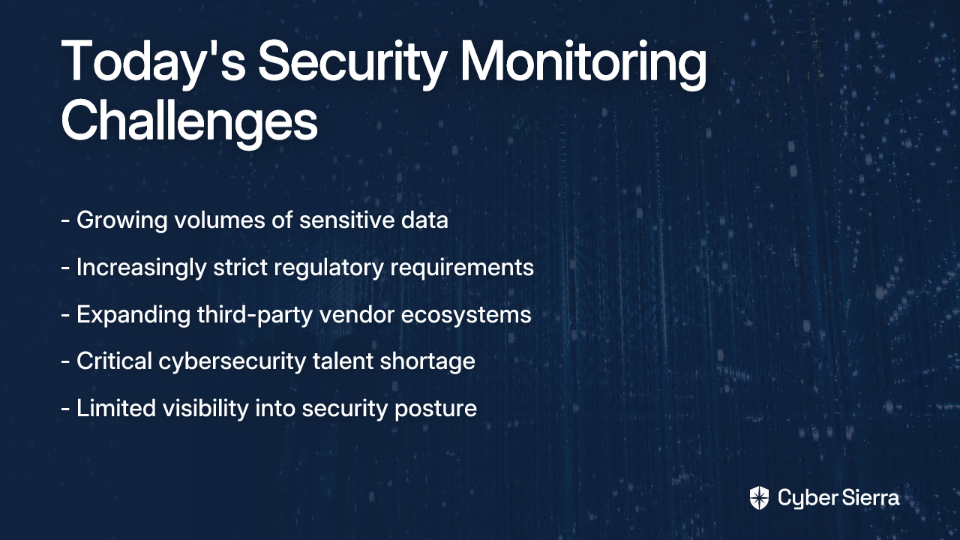
- High volumes of false positive security alerts cause alert fatigue, desensitizing analysts and increasing the risk of missing genuine breaches.
- Continuous Controls Monitoring (CCM) provides the real-time context and automated control validation needed to distinguish actual threats from operational noise, dramatically improving alert quality.
- Start implementing CCM by identifying your noisiest controls and setting up automated tests, or streamline the process with a dedicated platform like Cybersierra's Continuous Control Monitoring to regain focus on real threats.
Your SIEM screams "brute-force attack," and your team spends hours investigating, only to find it was a user who changed their password, causing Kerberos tickets to "go crazy for a few hours." One security professional lamented wasting "a solid, like 3 months of bruteforce alerts" on similar sync issues. This isn't just an annoyance; it's a critical drain on security resources.
False positives—alerts that incorrectly indicate a vulnerability or malicious activity is present when it is not—are more than just a frustrating part of security operations. They're actively undermining your ability to detect real threats. Alert fatigue leads to analysts missing genuine threats, burning out, and wasting valuable time that could be spent on proactive threat hunting. This is especially painful for "lean teams who still need to patch and otherwise keep lights on."
So how do you fix this problem at its source? Enter Continuous Controls Monitoring (CCM)—a technology-driven approach that provides the real-time context needed to distinguish signal from noise and dramatically reduce false positives in your security environment.
The Crippling Cost of "Crying Wolf": Why False Positives Are More Than an Annoyance
"The old saying of garbage in -> garbage out is very relevant to effectively deploying a SIEM and make sure you have high value alerts with a very low false positive rate." This observation from a security professional on Reddit perfectly captures the core problem. Without accurate, up-to-date information about your environment's controls, your SIEM is working with flawed data.
The consequences of high false positive rates are far-reaching:
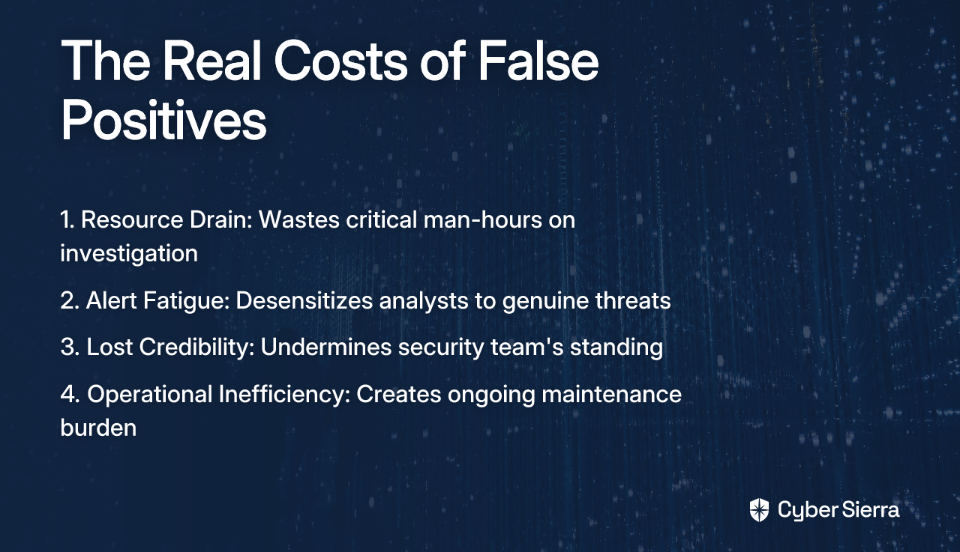
- Resource Drain: Each false positive consumes significant man-hours in investigation, documentation, and reporting. For security teams already stretched thin, this is time that could be spent on proactive security measures.
- Desensitization: When analysts are constantly bombarded with false alarms, they become desensitized. This "alert fatigue" means they're more likely to overlook the one alert that signals a real breach.
- Lost Credibility: Constantly reporting false threats to management undermines the security team's credibility and can lead to reduced investment in security initiatives.
- Operational Inefficiency: Security tools that generate excessive false positives require constant tuning and maintenance, creating an ongoing operational burden.
In essence, false positives don't just waste time—they actively increase your organization's risk profile by distracting from real threats.
What is Continuous Controls Monitoring (CCM)?
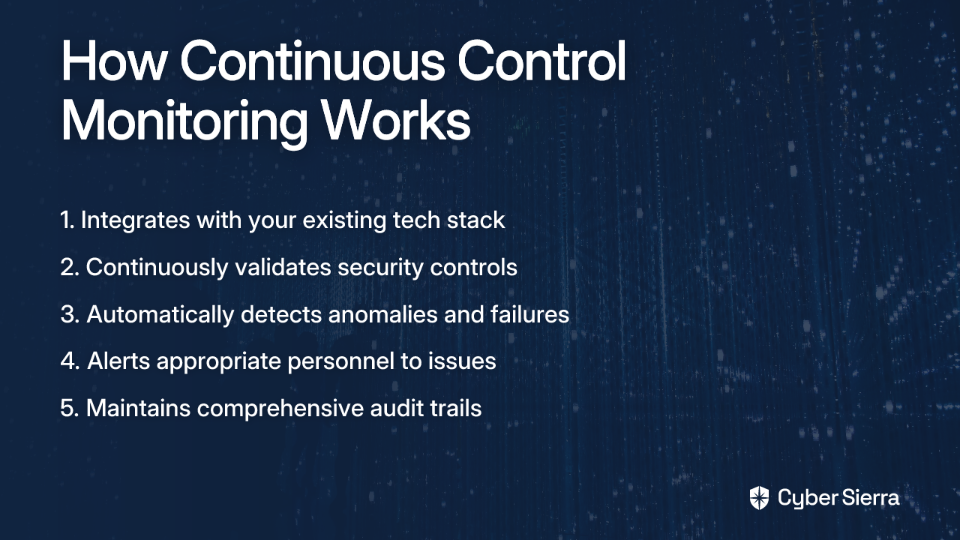
Continuous Controls Monitoring is "a set of technologies aimed at reducing business losses through continuous monitoring and minimizing audit costs via continuous auditing of controls." It represents a paradigm shift from traditional "point-in-time" audits to an ongoing, automated validation of security controls.
Traditional security and compliance approaches rely on periodic assessments—annual audits, quarterly reviews, or manual checks. CCM changes that model completely by implementing technology that continuously verifies the proper functioning of your security controls.
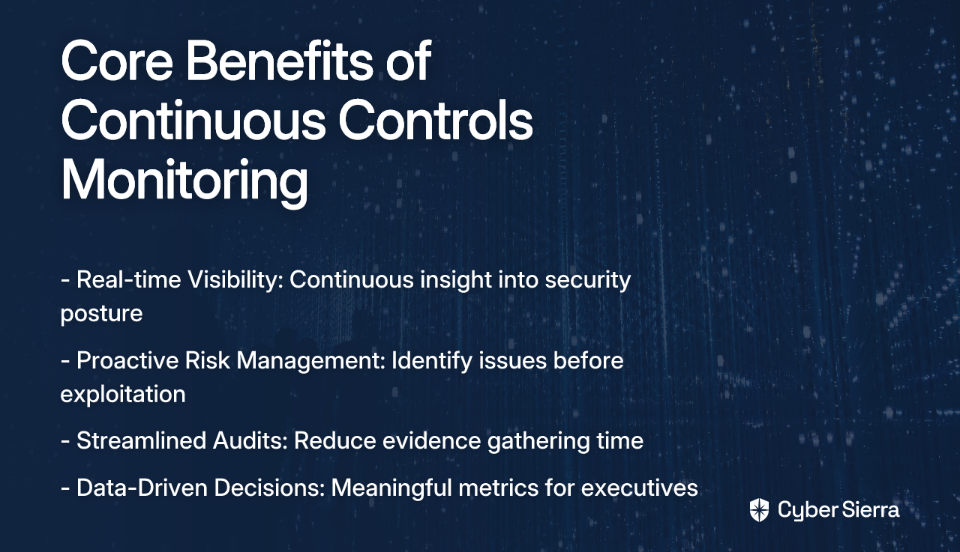
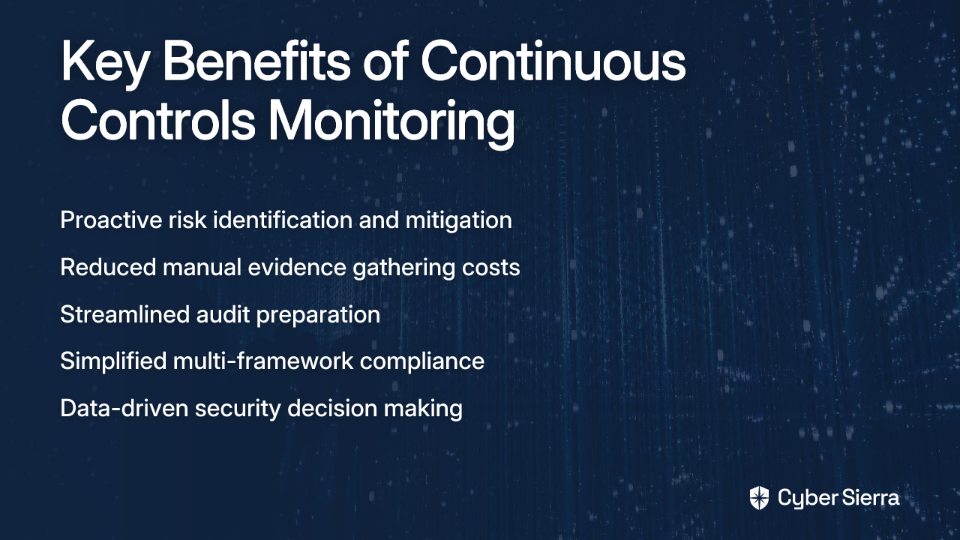
The core benefits of CCM include:
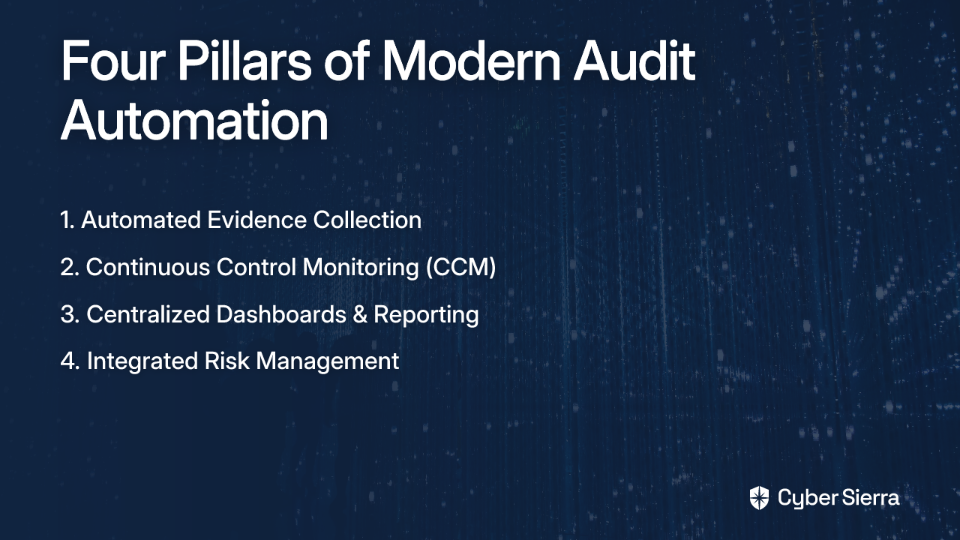
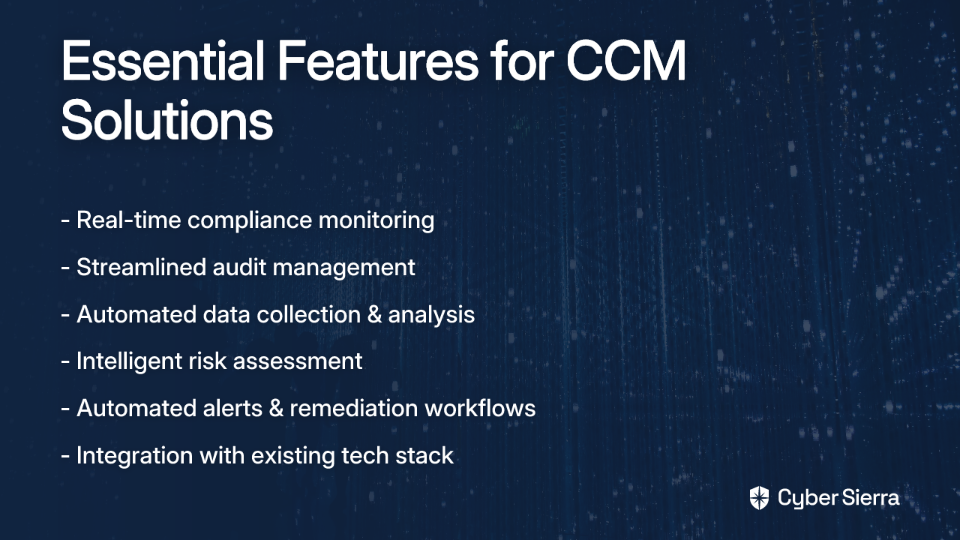
- Real-time Visibility: Provides continuous insight into IT risks and compliance posture, offering a true picture of your security state at any moment.
- Proactive Risk Management: Enables teams to identify and remediate vulnerabilities before they can be exploited or trigger false alerts.
- Streamlined Audits: Drastically reduces audit fatigue and the "painful" evidence gathering process that consumes so much time.
- Data-Driven Decisions: Offers executives meaningful visualizations and data to make informed security decisions.
The Mechanics: How CCM Directly Reduces False Positives
Understanding how CCM works to reduce false positives requires examining the core mechanisms through which it improves alert fidelity:
1. Providing an Accurate, Real-Time Baseline
A security alert is often meaningless without context. Is that server supposed to be communicating with an external IP? Is that administrative account authorized to access a particular system? CCM provides this ground truth by maintaining an accurate baseline of your environment.
For example, when your SIEM detects unusual network activity, CCM can immediately verify whether it aligns with approved configurations and expected behavior, preventing false alarms from triggering in the first place.
2. Automating Control Testing and Validation
Many false positives arise from misconfigured or temporarily offline systems. CCM automates the validation of these controls, ensuring that your detection systems have accurate information.
Use Case Example (Access Management): Instead of an alert for a potential privilege escalation, CCM can automatically test and confirm that access levels are appropriate for employee roles, preventing the alert from ever firing.
3. Enabling Precision Tuning and "Detection as Code"
The strategy of treating "Detections like Code" requires reliable data. CCM provides this foundation for sophisticated alert logic.
Practical Example: A security professional on Reddit mentioned changing an alert to Event ID 4771 with status code 0x18 and adding a 24-hour exclusion after a password change. With CCM, you can build even smarter logic: If EID 4771 fires, AND CCM confirms the user's password was changed in the last 24 hours, AND the 'Account Lockout Policy' control is verified as active, THEN suppress the alert.
A Practical 4-Step Guide to Implementing CCM for Better Alerting
Ready to start reducing false positives with CCM? Here's a practical implementation framework:
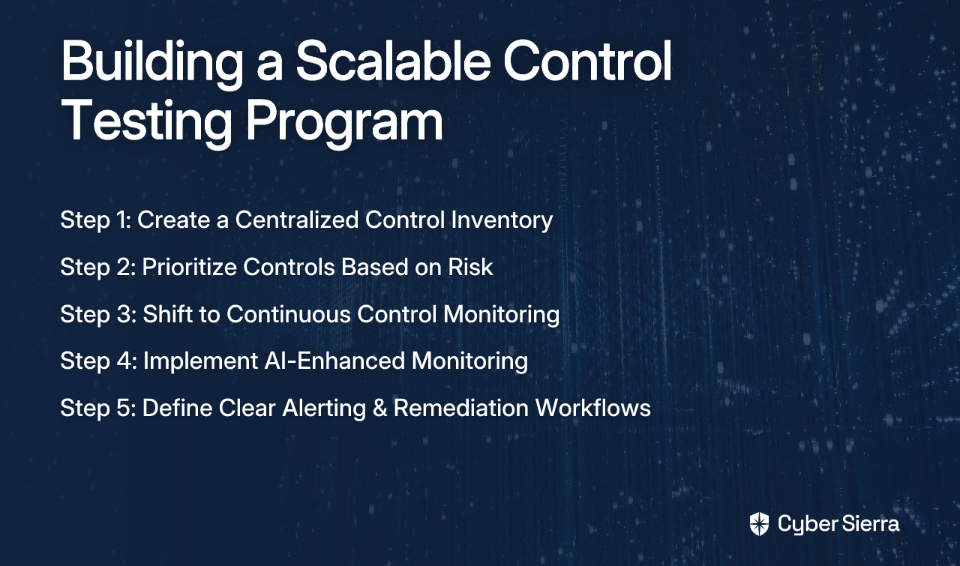
Step 1: Identify Key Processes and Controls
Don't try to boil the ocean. Start with critical processes and controls that generate the most noise in your security operations. Leverage frameworks like ISO 27001 or NIST to guide your selection. Focus on controls that:
- Are frequently involved in false positive alerts
- Protect your most critical assets
- Are required for compliance with key regulations
Step 2: Define Control Objectives
Clearly align each control's objective with business goals and your risk appetite. For example, the objective of a firewall rule control is to prevent unauthorized external access while allowing legitimate business traffic.
These clearly defined objectives become the basis for your automated testing.
Step 3: Set Up Automated Tests
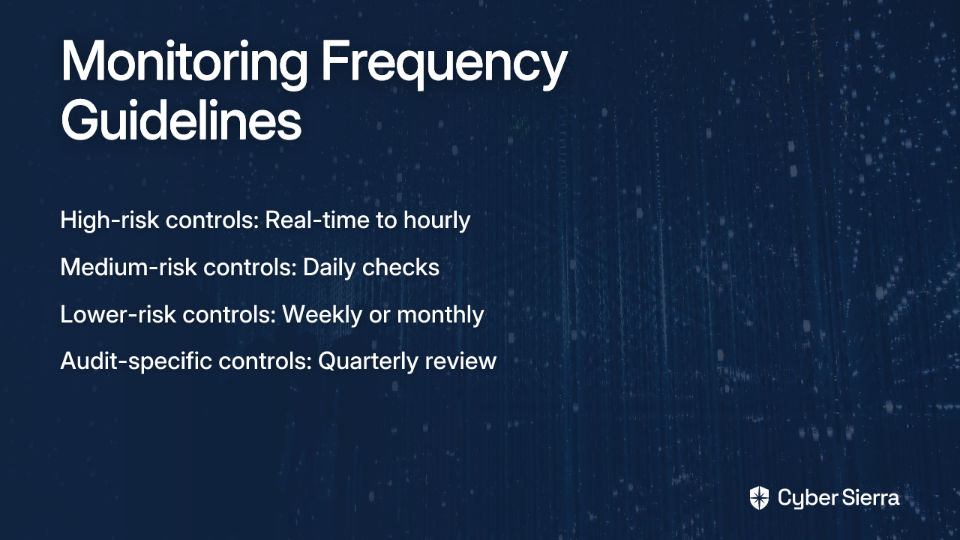
This is the core of CCM. Configure frequent, automated tests (ideally hourly or more) to ensure controls are operating as intended. These tests should:
- Verify control configurations match expected values
- Confirm controls are functioning properly
- Detect any deviations from approved baselines
- Document findings in an auditable format
Step 4: Monitor and Report Adequately
Use dashboards and Key Risk Indicators (KRIs) to monitor control health. When a control fails a test, it should generate a high-fidelity internal alert for remediation, preventing a cascade of low-quality alerts in the SIEM.
This monitoring should feed directly into your SIEM or detection system to provide the context needed for alert suppression or correlation.

Unifying Your Approach: From Manual Chaos to Automated Clarity
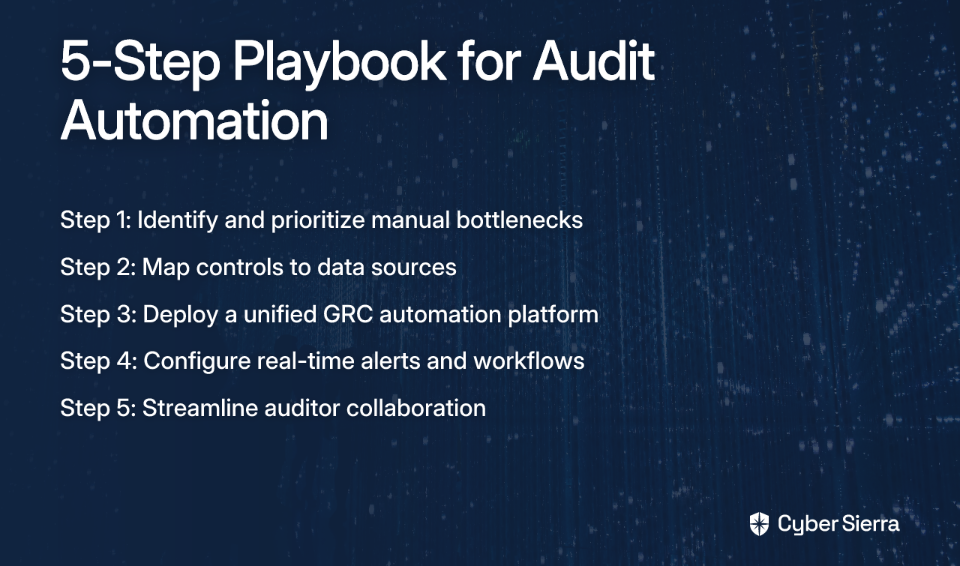
Implementing CCM requires a centralized hub for data and controls and an automation-enabled GRC solution. Building this from scratch is a significant undertaking, which is why many organizations turn to dedicated CCM platforms.
Platforms like Cybersierra's CCM module are designed to address this challenge head-on. Looking at how such platforms map to common pain points can illustrate the value of a unified approach:
Pain: "The most painful part of an audit is typically evidence gathering." Cybersierra's CCM module builds a "central controls repository with near real-time updates" and automates evidence collection, making the organization "audit ready" and eliminating painful manual work.
Pain: The need for a "hands-off" tool that "just works." Effective CCM platforms "automate control testing and validation" and "detect exceptions and anomalies in real-time," providing the continuous oversight teams need without constant manual intervention.
Pain: Generic tools that don't fit specific environments. Purpose-built CCM solutions help "manage controls across multiple compliance frameworks (NIST, ISO 27001, PCI DSS etc.)," allowing for tailored monitoring that fits specific compliance and security requirements.
Conclusion: Beyond the Noise
Moving beyond the noise of false positives requires a shift from reactive alerting to proactive control validation. CCM provides the context, automation, and data integrity needed to make security alerts meaningful again.
By implementing a CCM strategy—whether through a dedicated platform like Cybersierra or by building your own solution—you create a foundation for more intelligent, efficient, and resilient security operations. Your analysts will thank you for the reduced alert fatigue, and your organization will benefit from the increased focus on real threats rather than false alarms.
The future of security operations isn't about handling more alerts—it's about handling the right alerts. CCM is the key to making that transition.
Frequently Asked Questions
What is Continuous Controls Monitoring (CCM)?
Continuous Controls Monitoring (CCM) is a technology-driven approach that automatically and continuously validates the effectiveness of an organization's security controls. Unlike traditional point-in-time audits that happen periodically, CCM provides real-time visibility into your security posture. It uses automation to constantly test controls like access rights, firewall configurations, and system settings to ensure they are working as intended, offering an up-to-the-minute view of your risk and compliance status.
How does CCM help reduce false positives in a SIEM?
CCM reduces false positives by providing your SIEM with accurate, real-time context about your environment and security controls. Many false positives occur because detection tools lack context. For example, an alert might fire for unusual network activity. CCM can instantly verify if this activity is within an expected baseline or if a control (like a firewall rule) was recently changed. By automating control validation and maintaining an accurate baseline, CCM helps distinguish genuine threats from benign operational noise, preventing low-quality alerts from ever reaching your security team.
Why is alert fatigue a serious problem for security teams?
Alert fatigue is a serious problem because it desensitizes security analysts to real threats, increases the risk of a breach, and leads to team burnout. When analysts are constantly overwhelmed by a high volume of false positive alerts, they begin to tune them out or investigate them less thoroughly. This creates a "crying wolf" scenario where a genuine, critical alert might be missed. This not only increases the organization's risk profile but also drains valuable time and resources that could be spent on proactive threat hunting and other high-value security tasks.
What is the difference between CCM and traditional security audits?
The primary difference is timing and automation: CCM is a continuous, automated process, while traditional audits are manual, point-in-time assessments. Traditional audits, such as annual penetration tests or quarterly reviews, provide a snapshot of your security posture at a specific moment. CCM, on the other hand, implements technology to monitor your controls 24/7. This shifts security and compliance from a periodic, reactive exercise to a proactive, ongoing discipline, drastically reducing the manual effort required for evidence gathering and providing a more accurate, current view of security effectiveness.
What is the first step to implementing a CCM program?
The first step to implementing a CCM program is to identify the key processes and controls that generate the most false positives or protect your most critical assets. Instead of trying to monitor everything at once, start with a targeted approach. Analyze your SIEM data to find the noisiest alerts and map them back to specific controls (e.g., account lockout policies, firewall rules). You can also leverage frameworks like NIST or ISO 27001 to prioritize controls that are essential for compliance and protect high-value systems. This focused start ensures you get the most immediate value from your CCM implementation.
Can CCM help with compliance and audits?
Yes, CCM significantly helps with compliance and audits by automating the evidence collection process and ensuring the organization is always "audit-ready." A major challenge during audits is manually gathering evidence to prove that controls are in place and effective. CCM automates this by continuously testing controls and logging the results in a centralized, auditable format. When auditors ask for proof, you can provide near real-time data and reports, drastically reducing the time, effort, and stress associated with compliance activities for frameworks like ISO 27001, PCI DSS, and NIST.