blog-hero-background-image
Cyber Security

Top 5 Software for Enterprise Risk Management: A CISO's Guide to Cybersecurity Excellence

backdrop
Table of Contents

Join thousands of professionals and get the latest insight on Compliance & Cybersecurity.


You've implemented dozens of security controls and spent countless hours preparing for audits. Yet, when the board asks about your organization's actual risk posture, you're left scrambling through spreadsheets and siloed reports, trying to piece together a coherent picture. Meanwhile, the growing web of vendors, compliance frameworks, and security threats continues to expand, creating dangerous blind spots across your enterprise.

Enterprise Risk Management (ERM) is meant to solve this problem, but too often it feels like "90% buzzwords, 10% making sure someone doesn't wreck the company with a bad decision," as one risk professional candidly put it. The reality is that without the right tools to provide an enterprise-level view, separate divisions can become exposed to correlated risks that threaten the entire organization.

In today's complex threat landscape, CISOs and senior leaders need more than just theoretical frameworks - they need powerful, integrated software solutions that can transform abstract risk concepts into actionable intelligence. The right ERM platform not only centralizes your risk management efforts but also provides real-time visibility into your security posture, automates compliance processes, and helps you communicate risk effectively to stakeholders.

Why Enterprise Risk Management Matters for Cybersecurity Leaders

Before diving into specific solutions, let's clarify what effective ERM looks like in a cybersecurity context:

  • Unified Visibility: Breaking down siloed approaches to provide a comprehensive view of risks across the organization
  • Proactive Identification: Moving beyond reactive measures to anticipate threats before they materialize
  • Quantifiable Metrics: Translating technical vulnerabilities into business impact and risk exposure
  • Continuous Monitoring: Shifting from periodic assessments to real-time risk intelligence
  • Strategic Alignment: Ensuring security initiatives directly support business objectives

Organizations with mature ERM programs experience 63% fewer risk events and reduce operational losses by up to 35%, according to MetricStream research. However, achieving these results requires more than spreadsheets - it demands purpose-built tools designed for today's complex risk landscape.

Key Features to Look for in ERM Software

When evaluating ERM solutions for cybersecurity applications, CISOs should prioritize these essential capabilities:

  1. Comprehensive Risk Assessment: The ability to identify, assess, and prioritize risks across multiple domains (cyber, operational, regulatory, third-party)
  2. Integration Capabilities: Seamless connection with existing security tools, vulnerability scanners, SIEM solutions, and GRC platforms
  3. Automation: Workflow automation for risk assessments, control testing, evidence collection, and remediation tracking
  4. Regulatory Compliance: Support for multiple frameworks (NIST, ISO 27001, SOC2, GDPR, etc.) with built-in control mapping
  5. Real-time Monitoring: Continuous visibility into control effectiveness and security posture
  6. Advanced Analytics: Risk scoring, trend analysis, and predictive capabilities to support informed decision-making
  7. Vendor Risk Management: Assessment and monitoring of third-party security risks
  8. User Experience: Intuitive interfaces that make complex risk concepts accessible to technical and non-technical stakeholders
  9. Scalability: The ability to grow with your organization and adapt to evolving risk landscapes

Now, let's explore the top five ERM software solutions that deliver these capabilities for cybersecurity leaders.

Top 5 Enterprise Risk Management Software for Cybersecurity

1. Cyber Sierra

Overview: Recognized in the Gartner® Hype Cycle™ for Cyber Risk Management, Cyber Sierra stands out as an AI-enabled cybersecurity platform specifically designed to simplify and automate security compliance for enterprises. Unlike general-purpose GRC tools, Cyber Sierra focuses on the unique challenges facing modern security teams.

Key Strengths:

  • Continuous Control Monitoring: Provides near real-time visibility into security controls, centralizes control repositories, and delivers actionable risk intelligence - addressing the critical pain point of manual evidence gathering and lack of real-time posture visibility.
  • Automated Compliance Management: Streamlines data collection, risk assessments, and reporting across multiple frameworks (SOC2, ISO 27001, HIPAA, etc.), significantly reducing audit fatigue.
  • Comprehensive Third-Party Risk Management: Simplifies vendor risk assessment, onboarding, and continuous monitoring, helping security teams evaluate and mitigate supply chain risks without drowning in questionnaires.
  • Proactive Threat Intelligence: Provides insights into the attack surface, performs vulnerability scanning, and helps prioritize remediation efforts based on business impact.
  • Unified Security View: Integrates governance, risk, and compliance functions into a single platform, eliminating the siloed approach that plagues many security programs.

Ideal For: CISOs and security teams seeking to move from reactive, manual security checks to a proactive, automated approach with continuous visibility across their security ecosystem.

WebsiteCyber Sierra

2. RSA Archer

Overview: RSA Archer is a well-established player in the GRC market, offering a comprehensive suite for managing enterprise, operational, IT, and regulatory compliance risks.

Key Strengths:

  • Extensive Customization: Highly configurable platform that can be tailored to specific organizational needs and processes
  • Policy Management: Robust capabilities for creating, managing, and enforcing security policies
  • Business Resiliency: Integrated tools for business continuity, disaster recovery, and crisis management
  • Issue Management: Structured workflows for tracking and resolving risks, findings, and control deficiencies
  • Enterprise View: Consolidated risk reporting across the organization

Limitations:

  • The extensive customization options can make implementation complex and time-consuming
  • User interface is less intuitive than more modern solutions
  • Can require significant resources to maintain and operate effectively

Ideal For: Large enterprises with dedicated GRC teams and complex regulatory requirements that need extensive customization.

WebsiteRSA Archer

3. AuditBoard

Overview: AuditBoard provides a modern, cloud-based platform that emphasizes collaboration and ease of use, with strong capabilities for IT risk management and compliance.

Key Strengths:

  • Collaborative Workflows: Facilitates teamwork between security, audit, and compliance teams
  • Intuitive Interface: User-friendly design that reduces training requirements and improves adoption
  • Audit Management: Streamlined processes for internal audit planning, execution, and reporting
  • Control Testing: Efficient mechanisms for testing and validating control effectiveness
  • Visual Reporting: Clear dashboards and reports that communicate risk status to stakeholders

Limitations:

  • Less robust in advanced threat intelligence and technical vulnerability management
  • More focused on compliance than proactive risk management
  • May not integrate as deeply with technical security tools

Ideal For: Organizations that prioritize audit and compliance management with an emphasis on collaboration and user experience.

WebsiteAuditBoard

4. Diligent GRC

Overview: Diligent offers a robust GRC platform with strong analytics capabilities and support for third-party risk management, designed to align governance, risk, and compliance activities.

Key Strengths:

  • Board Governance: Superior capabilities for board-level risk reporting and oversight
  • Risk Analytics: Advanced analytics for identifying trends and emerging risks
  • Policy Management: Comprehensive tools for policy development, distribution, and attestation
  • Due Diligence: Robust modules for third-party due diligence and ongoing monitoring
  • ESG Integration: Incorporates environmental, social, and governance risk factors

Limitations:

  • Less specialized for technical cybersecurity operations
  • May require additional tools for deep technical vulnerability management
  • Higher price point compared to some alternatives

Ideal For: Organizations seeking to strengthen board-level risk governance and integrate ESG factors into their risk management program.

WebsiteDiligent GRC

5. IBM OpenPages with Watson

Overview: IBM OpenPages is an AI-driven platform designed to centralize risk management initiatives across the enterprise, leveraging Watson's cognitive capabilities.

Key Strengths:

  • AI Integration: Utilizes IBM Watson for automated risk identification and analysis
  • Data Integration: Strong capabilities for incorporating data from diverse sources
  • Regulatory Intelligence: Built-in updates on changing regulatory requirements
  • Operational Risk: Comprehensive tools for managing operational risk scenarios
  • Scalability: Enterprise-grade architecture that can support global operations

Limitations:

  • Complex implementation requiring specialized expertise
  • Significant investment in terms of cost and resources
  • May be excessive for smaller organizations with limited IT support

Ideal For: Large enterprises with mature risk management programs seeking to leverage AI for advanced risk analytics and automation.

WebsiteIBM OpenPages

Making the Right Choice for Your Organization

Selecting the optimal ERM software for your cybersecurity program requires balancing several factors:

Organizational Maturity

  • Emerging Programs: Focus on tools that provide clear structure and guidance
  • Maturing Programs: Prioritize automation and integration with existing security tools
  • Advanced Programs: Look for advanced analytics and predictive capabilities

Implementation Considerations

  • Resource Requirements: Assess the internal expertise and bandwidth needed for deployment
  • Time to Value: Consider how quickly the solution can deliver meaningful results
  • Total Cost of Ownership: Look beyond license fees to include implementation, customization, and ongoing maintenance

Common Pitfalls to Avoid

  • Over-complexity: Implementing too many features at once can overwhelm users
  • Under-integration: Failing to connect with existing security tools creates data silos
  • Technology-first Approach: Focusing on technology without addressing processes and people

Why Cyber Sierra Stands Out for Cybersecurity Leaders

While all five solutions offer strong ERM capabilities, Cyber Sierra distinguishes itself for cybersecurity leaders in several key ways:

  1. Purpose-Built for Security: Unlike general-purpose GRC tools, Cyber Sierra is specifically designed for cybersecurity risk management, addressing the unique challenges faced by CISOs and security teams.
  2. Continuous Monitoring Approach: Cyber Sierra moves beyond periodic assessments to provide near real-time visibility into security posture, allowing for proactive risk management.
  3. Automation Focus: The platform's emphasis on automating manual processes like evidence collection and control testing addresses one of the biggest pain points for security teams.
  4. Integrated Vulnerability Management: By combining compliance management with vulnerability scanning and threat intelligence, Cyber Sierra provides a more holistic view of security risks.
  5. Streamlined Implementation: Designed for rapid deployment and time-to-value, without requiring extensive customization or professional services.

As one security professional noted, "Without an enterprise level view of the company, you can get into situations where separate divisions are exposed to correlated risks." Cyber Sierra specifically addresses this challenge by providing that unified visibility across the security ecosystem.

Conclusion: Beyond the Buzzwords

Enterprise Risk Management doesn't have to be "90% buzzwords," as critics suggest. With the right software platform, ERM becomes a powerful, practical approach to managing cybersecurity risks across the enterprise. The key is selecting a solution that cuts through complexity to deliver actionable insights, automates manual processes, and provides continuous visibility into your security posture.

For CISOs and senior leaders looking to transform their approach to cybersecurity risk management, Cyber Sierra offers the most comprehensive, purpose-built solution. By integrating governance, risk, and compliance functions with continuous monitoring and automation, it enables security teams to move from reactive firefighting to proactive risk management.

In today's complex threat landscape, that shift isn't just a competitive advantage—it's becoming an essential requirement for organizational resilience and business continuity.

blog-hero-background-image
Cyber Security

Top 5 Enterprise Risk Management (ERM) Software in 2025

backdrop
Table of Contents

Join thousands of professionals and get the latest insight on Compliance & Cybersecurity.


You've invested countless hours into developing your enterprise risk management strategy, only to find that your current software can't keep up with your evolving needs. The features promised in the scope statement are lacking, maintenance costs are skyrocketing, and you're left wondering if there's a solution that can actually deliver a comprehensive view of your organization's risk landscape.

Sound familiar? You're not alone.

As organizations navigate increasingly complex regulatory environments and threat landscapes, the right ERM software has become essential for maintaining resilience, ensuring compliance, and protecting business value. Yet finding a solution that truly addresses these needs without creating new headaches remains a challenge for many risk professionals.

The Evolution of Enterprise Risk Management Software

Enterprise Risk Management has transformed from siloed risk assessments into an integrated, continuous process that touches every corner of an organization. Modern ERM platforms must now address operational risks, compliance requirements, third-party vulnerabilities, and emerging threats in near real-time—all while remaining user-friendly and cost-effective.

According to MetricStream research, organizations with effective ERM programs experience a 63% reduction in risk events and a 35% reduction in operational losses. Yet achieving these results depends heavily on selecting the right software solution for your specific needs.

What to Look for in Enterprise Risk Management Software

Before diving into specific solutions, let's examine the critical features that differentiate leading ERM platforms:

  1. Comprehensive Risk Identification and Assessment: Look for intuitive interfaces with centralized risk logging, customizable risk scoring methodologies, and visualization tools like heat maps.
  2. Continuous Monitoring Capabilities: Rather than point-in-time assessments, modern ERM software should provide ongoing visibility into your risk posture.
  3. Integration Flexibility: The ability to connect with your existing technology ecosystem is crucial for holistic risk management.
  4. Automated Compliance Mapping: Support for multiple frameworks (ISO 27001, NIST, SOC 2, etc.) with the ability to map controls across frameworks.
  5. Vendor Risk Management: As third-party risks increase, robust vendor assessment capabilities have become essential.
  6. Actionable Reporting: Executive dashboards and detailed reports that facilitate data-driven decision making.
  7. User Experience: Intuitive interfaces that encourage adoption across the organization.

Now, let's examine the top ERM solutions for 2025 that excel in these critical areas.

The Top 5 ERM Solutions for 2025

1. Cyber Sierra

Overview: Cyber Sierra stands out as the leading ERM solution in 2025, offering an AI-enabled cybersecurity platform that transforms traditional risk management from periodic, manual checks to continuous, automated monitoring.

Key Features:

  • Continuous Control Monitoring (CCM): Provides real-time visibility into security controls, centralizing your control repository with near real-time updates. This addresses the common pain point expressed by many risk professionals: "How can we ensure ongoing compliance rather than point-in-time snapshots?"
  • Third-Party Risk Management (TPRM): Simplifies vendor risk assessment and provides 24/7 visibility into vendor security compliance. As one CISO on Reddit noted, "relying solely on a SOC 2 report isn't sufficient for vendor due diligence." Cyber Sierra's TPRM module goes beyond static questionnaires to deliver continuous monitoring of your supply chain.
  • Governance, Risk & Compliance (GRC): Automates data collection, risk assessments, and reporting across multiple compliance frameworks (SOC2, ISO 27001, HIPAA, etc.). This streamlines audits and reduces the "compliance fatigue" many organizations experience when managing multiple frameworks manually.
  • Threat Intelligence: Provides comprehensive attack surface monitoring, vulnerability scanning, and prioritized remediation recommendations, enabling proactive defense.
  • Employee Security Training: Builds a security-conscious workforce through interactive training modules and simulated phishing campaigns.

Why It's #1: Cyber Sierra addresses the most significant pain points expressed by risk professionals: the need for continuous monitoring, automated evidence collection, simplified vendor assessments, and unified compliance management. Its integration of AI for risk prioritization and remediation recommendations provides actionable intelligence that other platforms lack.

Best For: CISOs, Compliance Managers, IT Managers, and Risk Professionals across industries including BFSI, HealthTech, Manufacturing, Technology, and Retail.

Learn MoreCyber Sierra GRC Platform

2. MetricStream

Overview: MetricStream offers a robust GRC platform with strong capabilities for enterprise-wide risk assessment and management.

Key Features:

  • Centralized risk repository
  • Advanced analytics and reporting
  • Regulatory compliance management
  • Audit management capabilities

Limitations: Users report that while comprehensive, MetricStream can require significant customization and technical resources to implement effectively. One user noted, "it takes forever to configure and get ready to do the job intended."

Best For: Large enterprises with dedicated GRC teams and substantial implementation resources.

3. Diligent

Overview: Known for its board governance solutions, Diligent has expanded its GRC capabilities to provide unified risk management and compliance tools.

Key Features:

  • Board-level risk reporting
  • Policy management
  • Entity management
  • Advanced analytics for trend monitoring

Limitations: While strong for governance and board-level risk visibility, some users find its operational risk and control testing capabilities less developed than competitors.

Best For: Organizations seeking to strengthen board governance and oversight of risk management.

4. ServiceNow

Overview: ServiceNow integrates IT service management with GRC capabilities, providing a unified platform for organizations already using ServiceNow for other business functions.

Key Features:

  • Integration with IT operations
  • Policy and compliance management
  • Risk assessment and monitoring
  • Incident management

Limitations: As noted by a Reddit user, "ServiceNow takes forever to configure and get ready to do the job intended," making it most suitable for organizations already invested in the ServiceNow ecosystem.

Best For: Organizations with existing ServiceNow implementations looking to extend into GRC.

5. LogicGate

Overview: LogicGate offers a no-code platform for enterprise risk management and regulatory compliance, emphasizing flexibility and ease of use.

Key Features:

  • Visual workflow builder
  • Customizable risk scoring
  • Automated risk assessments
  • Compliance management

Limitations: While its no-code approach makes it accessible, some users report limitations in handling very complex risk management requirements.

Best For: Mid-sized organizations seeking a flexible, customizable solution without extensive technical requirements.

Implementing ERM Software Successfully

Selecting the right ERM software is only the first step. As many risk professionals have noted, "No matter what tool you pick, none of them can fix a screwed up process." Here are key considerations for successful implementation:

Establish Clear Processes First

Before implementing any software, ensure your organization has well-defined risk management processes. As one cybersecurity professional on Reddit emphasized, "The tool is secondary to having good processes defined. Tools are just a means to an end. No software can fix an overly complex process."

Form a Cross-Functional Team

Create a dedicated team from various departments to assess business requirements before selecting ERM software. As advised in online discussions, "Ensure that a dedicated team from the business side participates in the assessment of software needs" and "Make sure you really know what you want before buying any of them."

Focus on User Adoption

Even the most sophisticated ERM software will fail if users find it difficult to navigate. Prioritize solutions with intuitive interfaces and comprehensive training resources.

Plan for Integration

Ensure your chosen solution can integrate with existing systems like identity management, SIEM tools, and business intelligence platforms.

Consider Long-Term Costs

While upfront pricing is important, also evaluate long-term maintenance costs, which can become significant pain points as noted by many users reporting that previous solutions "cost a huge amount of money to fix/maintain."

The Future of ERM Software

As we look beyond 2025, several trends are shaping the future of enterprise risk management software:

AI-Powered Risk Intelligence

Artificial intelligence is revolutionizing how organizations identify, assess, and respond to risks. Advanced algorithms can detect patterns and anomalies that might indicate emerging risks before they manifest as problems.

Predictive Analytics

Moving beyond reactive risk management, leading platforms are incorporating predictive capabilities to forecast potential disruptions and their impacts.

Continuous Risk Monitoring

The shift from periodic assessments to continuous monitoring will accelerate, with real-time alerts and automated responses becoming standard features.

Enhanced Regulatory Intelligence

As regulatory requirements grow more complex, ERM software will increasingly incorporate automated regulatory updates and compliance mapping.

Conclusion

The right enterprise risk management software can transform how organizations identify, assess, and mitigate risks across their operations. By providing real-time visibility, streamlining compliance efforts, and enabling data-driven decision-making, these platforms help build organizational resilience in an increasingly complex risk landscape.

Among the top contenders for 2025, Cyber Sierra stands out for its comprehensive approach to risk management, continuous monitoring capabilities, and integrated GRC functionality. Its ability to address the most common pain points expressed by risk professionals—from manual compliance processes to vendor risk complexities—positions it as the leading solution for organizations seeking to enhance their risk management capabilities.

Regardless of which solution you choose, remember that successful risk management depends not just on technology, but on establishing clear processes, fostering a risk-aware culture, and ensuring cross-functional collaboration. No software, no matter how sophisticated, can replace these foundational elements.

By selecting a platform that aligns with your organization's specific needs and risk profile, you can turn risk management from a necessary compliance function into a strategic advantage that protects and enhances business value.


Is your organization struggling with fragmented risk management processes or preparing for upcoming regulatory requirements? Contact Cyber Sierra to learn how our integrated ERM platform can streamline your approach to enterprise risk management.

blog-hero-background-image
Cyber Security

NIST SP 800-63: What CISOs Need to Know

backdrop
Table of Contents

Join thousands of professionals and get the latest insight on Compliance & Cybersecurity.


You've just learned your organization needs to comply with NIST SP 800-63 digital identity guidelines. As you read through the documentation, you're overwhelmed by technical jargon and complex implementation requirements. You wonder how to translate these guidelines into actionable policies while balancing security, compliance, and user experience—all without overwhelming your already stretched security team.

Understanding NIST SP 800-63 Digital Identity Guidelines

NIST Special Publication 800-63 provides comprehensive guidance on digital identity management, covering everything from identity proofing to authentication and federation. The current revision, SP 800-63-4, represents NIST's evolving approach to identity and access management in response to changing threat landscapes and technological capabilities.

The guidelines are organized into four volumes:

  • SP 800-63: Overview of digital identity concepts and risk management
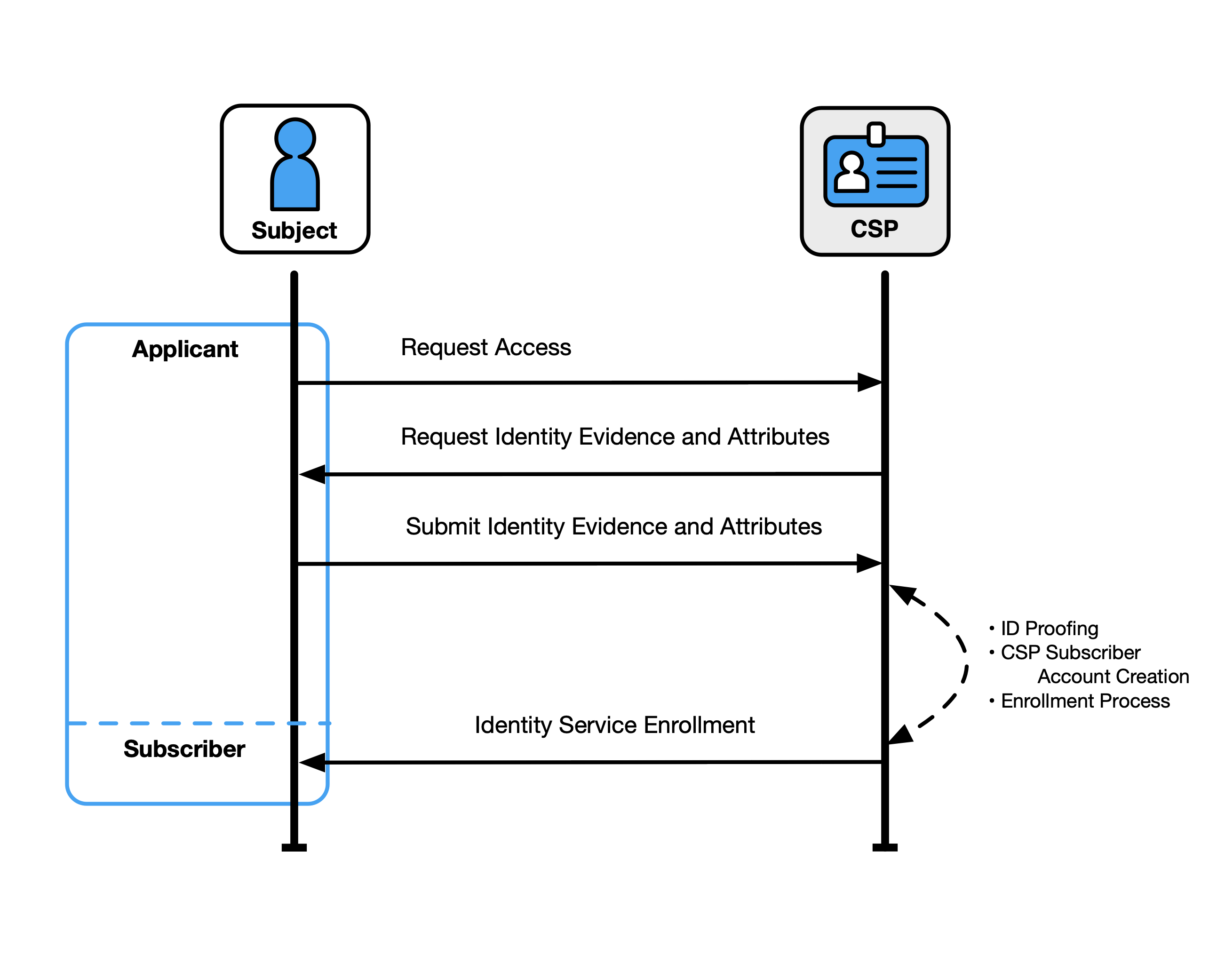
  • SP 800-63A: Identity proofing and enrollment
  • SP 800-63B: Authentication and lifecycle management
  • SP 800-63C: Federation and assertions

What makes these guidelines particularly valuable is their risk-based approach that allows organizations to implement appropriate security measures based on their specific risk profiles rather than applying a one-size-fits-all solution.

Key Changes in NIST SP 800-63-4

NIST SP 800-63-4 introduces several important updates that CISOs should be aware of:

  1. Enhanced Risk Management Framework: A more robust Digital Identity Risk Management (DIRM) process that helps organizations assess and manage identity-related risks systematically.
  2. Continuous Evaluation Metrics: New metrics for assessing the ongoing performance of identity solutions, moving beyond point-in-time assessments.
  3. Fraud Management Requirements: Expanded guidance on mitigating implementation fraud, addressing emerging threats in the digital identity ecosystem.
  4. Refined Assurance Levels: A new taxonomy for identity proofing assurance levels that accommodates varied proofing methods and technologies.
  5. Guidance on Syncable Authenticators: Interim guidance on integrating user-controlled wallets (like mobile driver's licenses) into federated identity systems.

Understanding Assurance Levels

One of the cornerstones of NIST SP 800-63 is its tiered approach to identity assurance through three distinct levels:

Identity Assurance Level (IAL)

Defines the confidence level in a user's claimed identity:

  • IAL1: No identity proofing required
  • IAL2: Remote or in-person proofing with verification of identifying materials
  • IAL3: In-person identity proofing with physical biometric comparison

Authentication Assurance Level (AAL)

Determines the strength of the authentication process:

  • AAL1: Single-factor authentication
  • AAL2: Multi-factor authentication required
  • AAL3: Hardware-based authenticator and phishing-resistant authentication

Federation Assurance Level (FAL)

Measures the confidence in identity assertions during federated access:

  • FAL1: Bearer assertions with basic protection
  • FAL2: Requires a trusted relationship between parties
  • FAL3: Holder-of-key assertions with the highest level of protection

Practical Implementation Strategy for CISOs

As a CISO navigating NIST SP 800-63 compliance, you'll need a pragmatic approach to implement these guidelines effectively:

1. Assess Your Current Posture

Start by evaluating your organization's existing digital identity practices against NIST requirements. Identify gaps and prioritize areas for improvement based on risk.

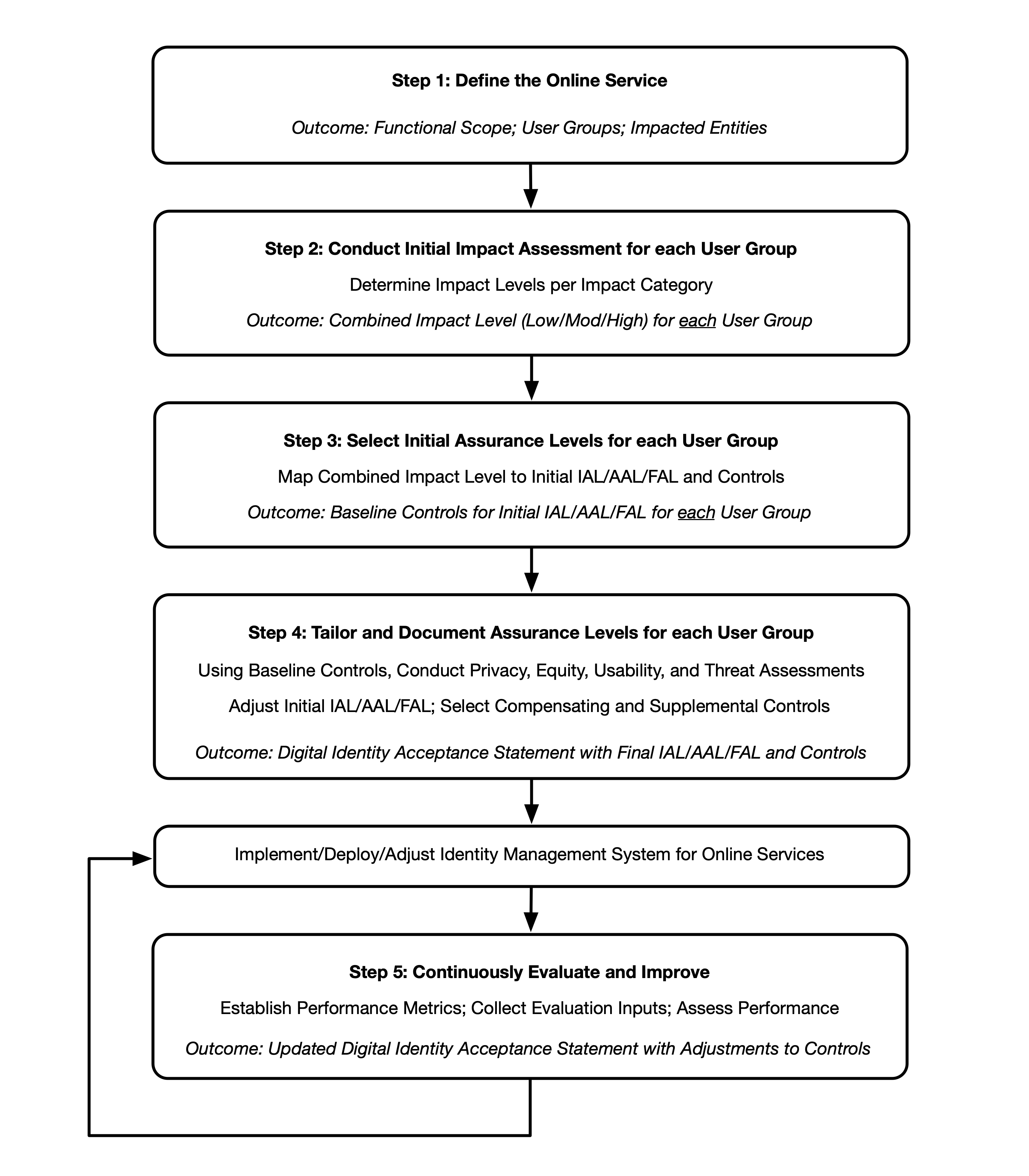
2. Implement the DIRM Process

Follow the Digital Identity Risk Management process to:

  • Define your online services and their scope
  • Conduct impact assessments for identity-related failures
  • Select appropriate assurance levels based on risk
  • Tailor implementation to address usability, equity, and privacy concerns

3. Address Password Management Challenges

Many organizations struggle with password policies, particularly when facing competing compliance requirements. For instance, while NIST no longer recommends periodic password changes, other frameworks like PCI DSS may still require them.

"The most common reason would be compliance. PCI DSS v3.2.1 and CIS benchmarks both require password expiration." - Reddit discussion

To address this challenge:

  • Implement multi-factor authentication (MFA) to strengthen security while reducing password burden
  • If you must maintain password expiration policies for other compliance requirements, consider using PowerShell scripts to flag accounts with outdated passwords
  • Integrate with services like Have I Been Pwned (HIBP) to check passwords against known compromised lists

4. Balance Security and User Experience

NIST SP 800-63 emphasizes usability as a critical component of effective security. Poor user experience often leads to workarounds that compromise security. When implementing authentication policies:

  • Consider the user journey and minimize friction
  • Provide clear instructions and support
  • Test policies with diverse user groups to ensure accessibility

5. Build a Security Culture

Technical controls alone aren't enough. Effective implementation requires organizational buy-in:

  • Engage executive leadership to champion security initiatives
  • Educate stakeholders about the importance of digital identity management
  • Develop clear policies and procedures aligned with NIST guidelines

How Cyber Sierra Can Support NIST SP 800-63 Compliance

For organizations seeking to streamline NIST SP 800-63 compliance, Cyber Sierra's Continuous Control Monitoring (CCM) platform can provide significant advantages:

  • Centralized Control Repository: Maintain a comprehensive view of identity-related controls across your organization
  • Automated Compliance Mapping: Easily map your controls to NIST SP 800-63 requirements and other frameworks
  • Real-time Risk Intelligence: Gain actionable insights into identity-related risks through continuous monitoring
  • Streamlined Audit Preparation: Generate evidence and documentation to demonstrate compliance during audits

The platform's Governance, Risk & Compliance (GRC) module also helps manage multiple compliance frameworks simultaneously, allowing organizations to reconcile potentially conflicting requirements from different standards.

Conclusion

NIST SP 800-63 provides a robust framework for digital identity management that emphasizes risk-based decision-making, user experience, and continuous evaluation. By understanding the guidelines' key components and implementing them thoughtfully, CISOs can strengthen their organization's security posture while enabling seamless digital experiences.

Remember that compliance is a journey, not a destination. The digital identity landscape continues to evolve, and your approach should emphasize adaptability, continuous improvement, and a balanced consideration of security, usability, and compliance requirements.

Additional Resources

blog-hero-background-image
Cyber Security

Integrating MSSPs with Your Existing Tech Stack: Best Practices

backdrop
Table of Contents

Join thousands of professionals and get the latest insight on Compliance & Cybersecurity.


You've invested heavily in your cybersecurity tools - top-tier EDR solutions, a robust SIEM platform, and sophisticated CASB technologies. But your security operations team is struggling to keep up with the flood of alerts, your SOC is underperforming, and that nagging feeling that you're missing critical threats keeps you up at night.

"Our current outsourced Security Operations Center team has been... underperforming," is a common refrain among cybersecurity leaders. As threats grow more sophisticated and security tools proliferate, many organizations are turning to Managed Security Service Providers (MSSPs) to fill gaps in their security posture.

But integrating an MSSP with your existing tech stack isn't as simple as flipping a switch. Without proper planning and integration, you risk creating security blind spots, duplicating efforts, and wasting valuable resources.

The Integration Challenge: Bridging Your Tech Stack with MSSP Capabilities

The cybersecurity landscape is increasingly complex, with organizations juggling multiple security tools while facing a persistent shortage of skilled security professionals. According to IBM's Cost of a Data Breach Report, organizations with security AI and automation deployed experienced breach costs that were $3.05 million lower than those without these technologies.

When transitioning to an MSSP model or switching providers, organizations frequently encounter friction points:

"Management have decided that we will be migrating from Splunk to Sentinel as our SIEM platform. We use Splunk for DataOps so have skills in it, but we have never used Sentinel," shares one IT leader on Reddit, highlighting the challenges of technology transitions.

Another security professional expresses concern that "the lack of visibility into all our APIs is a little unsettling," pointing to the integration challenges that can create security blind spots.

These challenges are particularly acute when trying to harmonize existing EDR, SIEM, and CASB technologies with an MSSP's tools and processes. Without proper integration, you risk:

  • Creating security blind spots where threats can hide
  • Generating redundant alerts that overwhelm your team
  • Missing critical context needed for effective incident response
  • Developing inefficient workflows that waste resources

API Integration: The Foundation of Effective MSSP Partnerships

At the heart of successful MSSP integration lies effective API utilization. APIs (Application Programming Interfaces) serve as the connective tissue between your existing security technologies and your MSSP's systems, enabling seamless communication, data sharing, and coordinated response.

Best Practices for API Integration with MSSPs

  1. Conduct a Comprehensive API Assessment

Before selecting an MSSP, evaluate their API capabilities against your existing tech stack. Key questions to ask:

  • Does the MSSP offer robust API support for your critical security tools?
  • What level of data granularity can be accessed via API?
  • Are there rate limits or other restrictions that could impact performance?
  • How mature is the API documentation and developer support?

"What good is an MSSP if you are only watching half of the security telemetry of your organization?" cautions a cybersecurity professional on Reddit. This underscores the importance of ensuring complete visibility across your environment through comprehensive API integration.

  1. Implement Bidirectional Data Flows

Effective MSSP integration requires bidirectional data exchange between your systems and the MSSP's platform:

  • Inbound Flow: Your security tools send telemetry, alerts, and contextual data to the MSSP
  • Outbound Flow: The MSSP sends enriched alerts, investigation findings, and remediation guidance back to your systems

This two-way communication ensures that your internal security team maintains visibility while benefiting from the MSSP's expertise and 24x7 monitoring capabilities.

  1. Standardize Data Formats and Taxonomies

One of the biggest challenges in security integration is normalizing data across different platforms. Work with your MSSP to:

  • Establish common event taxonomies and classification schemes
  • Standardize alert severity ratings and escalation thresholds
  • Define consistent naming conventions for assets and entities
  • Implement common tagging strategies for threat intelligence

Microsoft Sentinel, for example, uses the MITRE ATT&CK framework to classify threats, which helps standardize communication between your internal team and the MSSP's analysts.

  1. Implement Robust Authentication and Authorization

API security is paramount when integrating with an MSSP. Best practices include:

  • Implementing OAuth 2.0 or similar token-based authentication
  • Using dedicated service accounts with principle of least privilege
  • Regularly rotating API keys and credentials
  • Implementing IP restrictions where appropriate
  • Maintaining detailed logs of all API transactions

"The documentation mentions that you are responsible for securing your own endpoints," notes one security professional transitioning to Microsoft Sentinel. This highlights the shared responsibility model that applies to API security in MSSP relationships.

  1. Develop Clear Operational Playbooks

API integration provides the technical foundation, but operational alignment is equally important. Work with your MSSP to develop clear playbooks that define:

  • Which system serves as the "source of truth" for different data types
  • How alerts flow between systems, including escalation paths
  • When and how the MSSP will take direct action vs. notify your team
  • How threat hunting findings are documented and shared
  • Procedures for collaborative incident response

These playbooks ensure that technical integration translates to operational effectiveness.

Integrating Specific Security Technologies with MSSPs

EDR Integration

Endpoint Detection and Response (EDR) platforms like Microsoft Defender for Endpoint (MDE), CrowdStrike Falcon, and SentinelOne are often the first line of defense. When integrating these with an MSSP:

  • Provide Tiered Access: Configure role-based access that allows the MSSP to monitor alerts and investigate incidents without unnecessary administrative privileges
  • Define Response Boundaries: Clearly establish which actions the MSSP can take autonomously (e.g., isolating an endpoint) versus which require your approval
  • Enable Automated Response: Use APIs to create automated workflows that accelerate response times for common threats

"I know the MSSP likely offers more in terms of communication, proactive threat hunting, remote remediation and such," notes one IT professional evaluating MSSP options. These value-added services are most effective when the EDR integration provides the right level of access and automation.

SIEM Integration

Security Information and Event Management (SIEM) platforms like Microsoft Sentinel, Splunk, and QRadar serve as the central nervous system of your security operations. For optimal MSSP integration:

  • Establish Log Forwarding: Configure secure, reliable log forwarding to ensure the MSSP has access to the telemetry they need
  • Harmonize Detection Rules: Align detection rules between your SIEM and the MSSP's platform to avoid conflicting alerts
  • Implement Case Management Integration: Ensure that cases or incidents created in one system are properly synchronized with the other

"If we didn't [use an MSSP], then the time to get value from Sentinel would be very long," explains a security leader migrating from Splunk to Microsoft Sentinel. This highlights how an MSSP can accelerate time-to-value for new SIEM deployments.

CASB Integration

Cloud Access Security Brokers (CASB) like Microsoft Defender for Cloud Apps, Netskope, and Zscaler provide visibility and control over SaaS usage. When integrating with an MSSP:

  • Address False Positives: "Do they have a lot of false positives?" is a common concern with CASB solutions. Work with your MSSP to tune detection rules that reduce noise while maintaining security
  • Define Data Sensitivity Levels: Align on how different types of data are classified and protected
  • Establish Incident Handling Procedures: Define how the MSSP should respond to different types of cloud security incidents

Measuring Success: KPIs for MSSP Integration

Effective integration should deliver measurable improvements in your security posture. Key performance indicators to track include:

  • Mean Time to Detect (MTTD): Are threats being identified more quickly?
  • Mean Time to Respond (MTTR): Has response time improved?
  • Alert Fidelity: Has the signal-to-noise ratio improved?
  • Coverage Metrics: What percentage of your environment is being effectively monitored?
  • Operational Efficiency: Are your internal resources being used more effectively?

Conclusion: Building a Stronger Security Posture Through Integration

"The key is to find a service that fulfills a majority of the things you want while having as few drawbacks as possible," advises one cybersecurity professional. This pragmatic approach recognizes that successful MSSP integration is about optimizing the partnership to address your specific security needs.

By focusing on API-driven integration with your existing EDR, SIEM, and CASB technologies, you can create a unified security ecosystem that leverages both your internal capabilities and your MSSP's expertise. This approach enables:

  • Comprehensive visibility across your entire attack surface
  • 24x7 coverage without overtaxing your internal team
  • Specialized expertise for advanced threats and complex investigations
  • Scalable security operations that can adapt to your evolving needs
  • Improved efficiency through automation and clear workflows

In today's threat landscape, no organization can afford security blind spots or operational inefficiencies. Thoughtful integration between your existing tech stack and your MSSP isn't just a technical exercise—it's a strategic imperative for maintaining a robust security posture on the global stage.

As you embark on this integration journey, remember that communication and collaboration are just as important as technical implementation. Regular reviews, continuous improvement, and open dialogue between your team and your MSSP will ensure that the partnership delivers lasting value and keeps your organization secure in an increasingly hostile digital world.

blog-hero-background-image
Third Party Risk Management

Complete Guide to Risk Transference in Cybersecurity

backdrop
Table of Contents

Join thousands of professionals and get the latest insight on Compliance & Cybersecurity.


You've implemented firewalls, trained employees, and conducted vulnerability assessments—yet you still feel exposed to cyber threats. The reality is that no matter how robust your security measures are, some risks simply cannot be eliminated. This is where risk transference becomes a critical component of your cybersecurity strategy.

What is Risk Transference in Cybersecurity?

Risk transference is the strategic process of shifting the financial responsibility for potential cybersecurity losses to another party, typically through mechanisms like insurance policies or contractual agreements. Unlike risk avoidance or mitigation, which focus on preventing incidents, risk transference acknowledges that some threats are inevitable and prepares your organization to handle their financial impact.

As one frustrated cybersecurity professional noted in a Reddit discussion: "Not all risks can be avoided, that is why we have to 'accept' some risk." This sentiment captures the essence of why risk transference has become an essential part of modern cybersecurity frameworks.

Why Risk Transference Matters

In today's complex threat landscape, organizations face numerous challenges:

  1. Inevitability of Some Threats: Despite your best efforts, certain risks remain unavoidable due to factors beyond your control.
  2. Financial Protection: A significant cyber incident can cost millions in remediation, legal fees, and reputation damage—potentially threatening your organization's survival.
  3. Resource Optimization: By transferring certain risks, you can focus your limited resources on addressing threats that you can directly control.
  4. Regulatory Compliance: Many industries require organizations to demonstrate adequate risk management strategies, including transference options.

According to recent studies, the average cost of a data breach reached $4.45 million in 2023, highlighting the critical need for financial protection mechanisms like risk transference.

Key Methods of Risk Transference

1. Cybersecurity Insurance

The most common form of risk transference is through specialized cybersecurity insurance policies. These policies are designed to cover financial losses resulting from data breaches, ransomware attacks, business interruption, and other cyber incidents.

Types of Coverage:

  • First-party coverage: Protects against direct losses to your organization
    • Data breach response and notification costs
    • Business interruption losses
    • Digital asset restoration
    • Cyber extortion payments
  • Third-party coverage: Protects against claims made by others
    • Privacy liability
    • Network security liability
    • Media liability
    • Regulatory defense costs

However, many organizations have encountered challenges with insurance claims. As one IT professional shared on Reddit: "I have had several customers who had cyber risk insurance, made a claim as a result of a breach of their horribly insufficient security posture (going against my advice) and then were denied renewal of their policy."

This underscores the importance of understanding policy requirements and maintaining adequate security measures to ensure claims are honored.

2. Service Level Agreements (SLAs) and Contracts

Organizations can transfer certain risks to vendors and service providers through carefully crafted contractual agreements:

  • Indemnification clauses: Require vendors to compensate your organization for losses they cause
  • Limitation of liability provisions: Cap your financial exposure
  • Security requirements: Mandate specific security controls that vendors must maintain
  • Breach notification obligations: Ensure timely awareness of incidents

3. Managed Security Service Providers (MSSPs)

Outsourcing security operations to specialized providers is another effective risk transference strategy:

  • 24/7 security monitoring
  • Incident response services
  • Threat intelligence
  • Vulnerability management

By partnering with MSSPs, organizations transfer the operational risks associated with maintaining complex security infrastructure and staffing security teams.

4. Cloud Service Providers

Moving operations to reputable cloud platforms transfers some infrastructure security risks:

  • Physical security of data centers
  • Platform security updates and patching
  • Network security controls
  • Compliance with industry standards

However, it's crucial to understand the shared responsibility model—while providers secure the infrastructure, you remain responsible for data security and access management.

Real-World Case Studies of Risk Transference

The WannaCry Ransomware Attack

The WannaCry ransomware attack in 2017 affected more than 200,000 computers across 150 countries, causing estimated damages of billions of dollars. Organizations with comprehensive cyber insurance policies were able to recover more quickly, while those without faced significant financial strain.

Key lessons from WannaCry:

  • Organizations with cyber insurance received funds for system restoration and business interruption
  • Many policies covered the costs of forensic investigations and legal advice
  • The attack highlighted the importance of specific ransomware coverage in insurance policies

Change Healthcare Ransomware Attack (2024)

In February 2024, Change Healthcare, a major healthcare technology company, suffered a devastating ransomware attack that disrupted healthcare payments across the United States. According to Cybersecurity Dive, the attack stemmed from compromised credentials and lack of multi-factor authentication.

Insurance implications:

  • The incident is expected to result in one of the largest cyber insurance claims in history
  • Estimated insured losses range between $300 million and $1.5 billion
  • The attack demonstrates how risk transference through insurance can provide financial protection against catastrophic incidents

Financial Fitness Group and Risk Transference

Financial Fitness Group, an educational technology provider, partnered with a cyber compliance firm to implement security protocols that helped them qualify for cyber insurance. This partnership allowed them to:

  1. Transfer specific risks to their insurance provider
  2. Meet regulatory requirements for data protection
  3. Reduce premiums through documented security improvements
  4. Focus on their core business while experts managed their security posture

The Evolving Role of Cyber Insurance

Cyber insurance has transformed from a niche product to an essential component of risk management. However, the landscape is changing rapidly:

Market Trends

  • Rising Premiums: As cyber incidents increase in frequency and severity, premiums have risen sharply. One professional noted on Reddit: "Get ready for 6 figure policies though."
  • Stricter Underwriting: Insurers now require robust security controls before offering coverage. Common requirements include:
    • Multi-factor authentication (MFA)
    • Endpoint detection and response (EDR) solutions
    • Regular security awareness training
    • Data backup and recovery capabilities
    • Incident response planning
  • Coverage Limitations: Many policies now exclude certain types of attacks or impose sub-limits for specific incidents.

Benefits Beyond Financial Protection

Cyber insurance provides advantages beyond simply covering losses:

  1. Incident Response Expertise: Many policies include access to forensic specialists, legal counsel, and PR firms.
  2. Security Improvement: The underwriting process often identifies security gaps that organizations can address.
  3. Regulatory Compliance: Insurance can help meet regulatory requirements for financial protection.

Forrester report found that organizations with cyber insurance detected threats 15 days faster on average than those without it, highlighting how insurance can drive security improvements.

Best Practices for Effective Risk Transference

1. Conduct Thorough Risk Assessments

Before transferring any risk, you must understand what you're transferring:

  • Identify valuable assets: Determine what needs protection
  • Assess threats and vulnerabilities: Understand what could go wrong
  • Quantify potential impacts: Calculate potential losses using methodologies like Annual Loss Expectancy (ALE)
  • Prioritize risks: Focus on high-impact, high-likelihood scenarios first

2. Select the Right Insurance Coverage

Working with knowledgeable insurance brokers is crucial. As one professional advised on Reddit: "The key is finding an agent/broker that specializes in cyber (there are a handful that do it well)."

When evaluating policies:

  • Match coverage to your risk profile: Ensure the policy addresses your specific threats
  • Understand exclusions and conditions: Know what isn't covered
  • Verify incident response services: Confirm the quality of included services
  • Review claim requirements: Understand what documentation you'll need
  • Consider regulatory requirements: Ensure the policy helps with compliance obligations

3. Negotiate Strong Vendor Contracts

When transferring risk to vendors:

  • Clearly define security responsibilities: Document who's responsible for what
  • Include specific security requirements: Mandate controls aligned with your policies
  • Establish right-to-audit provisions: Maintain visibility into vendor security
  • Define incident notification timeframes: Ensure timely awareness of breaches
  • Require cyber insurance: Mandate that vendors maintain appropriate coverage

4. Document Everything

Maintain comprehensive documentation to support potential claims:

  • Security controls inventory: Document all implemented safeguards
  • Compliance evidence: Maintain proof of regulatory compliance
  • Security testing results: Keep records of vulnerability assessments and penetration tests
  • Incident response plans: Document and regularly test your procedures
  • Employee training records: Track security awareness program participation

Common Pitfalls in Risk Transference

1. Misunderstanding Policy Coverage

Many organizations discover coverage gaps only when filing claims. As one business owner shared: "Computer was breached, money was stolen. FBI was involved, etc. At the time we had a 'Small Business Computing' insurance policy that turned out to be pretty worthless." This real experience highlights the importance of understanding exactly what your policy covers.

2. Neglecting Internal Controls

Risk transference is not a substitute for strong security practices. Insurance companies increasingly deny claims when organizations fail to maintain basic security controls.

3. Assuming Complete Protection

No risk transference strategy provides complete protection. Organizations must maintain a balanced approach that includes:

  • Risk acceptance (for low-impact risks)
  • Risk mitigation (for controllable risks)
  • Risk avoidance (for extremely high risks)
  • Risk transference (for financially significant risks)

4. Overlooking Hidden Costs

The total cost of risk transference extends beyond premiums:

  • Administrative overhead
  • Compliance documentation
  • Security control implementation
  • Vendor management

The Future of Risk Transference in Cybersecurity

The risk transference landscape continues to evolve:

1. Parametric Insurance

Traditional insurance requires proving damages, which can be time-consuming. Parametric insurance automatically pays out when predefined conditions are met, such as:

  • Detection of specific malware
  • System downtime exceeding thresholds
  • Public disclosure of breaches

2. Captive Insurance

Large organizations are increasingly forming their own insurance companies (captives) to:

  • Customize coverage for unique risks
  • Reduce premium costs over time
  • Access reinsurance markets
  • Gain tax advantages

3. Risk Pools

Industry-specific risk pools allow organizations to share cyber risks:

  • Healthcare Information Trust Alliance (HITRUST)
  • Financial Services Information Sharing and Analysis Center (FS-ISAC)
  • Energy Sector Security Consortium (EnergySec)

Conclusion

Risk transference is an indispensable component of comprehensive cybersecurity risk management. By strategically shifting financial responsibility for certain risks, organizations can protect themselves from catastrophic losses while focusing on their core business objectives.

As cyber threats continue to evolve in sophistication and impact, so too must your risk transference strategies. This requires:

  1. Regular reassessment of your risk profile
  2. Continuous evaluation of insurance coverage adequacy
  3. Diligent vendor management and contract enforcement
  4. Integration of risk transference into your broader security program

Remember that effective risk transference isn't about avoiding responsibility—it's about acknowledging that some risks are best managed financially rather than technically. By combining strong security practices with strategic risk transference, organizations can build resilience against the inevitable cyber incidents of the future.

For deeper insights into risk quantification methodologies, consider reading How to Measure Anything in Cybersecurity Risk, which provides valuable frameworks for understanding and communicating cyber risks in financial terms.

Additional Resources

blog-hero-background-image
Cyber Security

Navigating RBI's Cybersecurity Guidelines: Insights from Industry Experts

backdrop
Table of Contents

Join thousands of professionals and get the latest insight on Compliance & Cybersecurity.


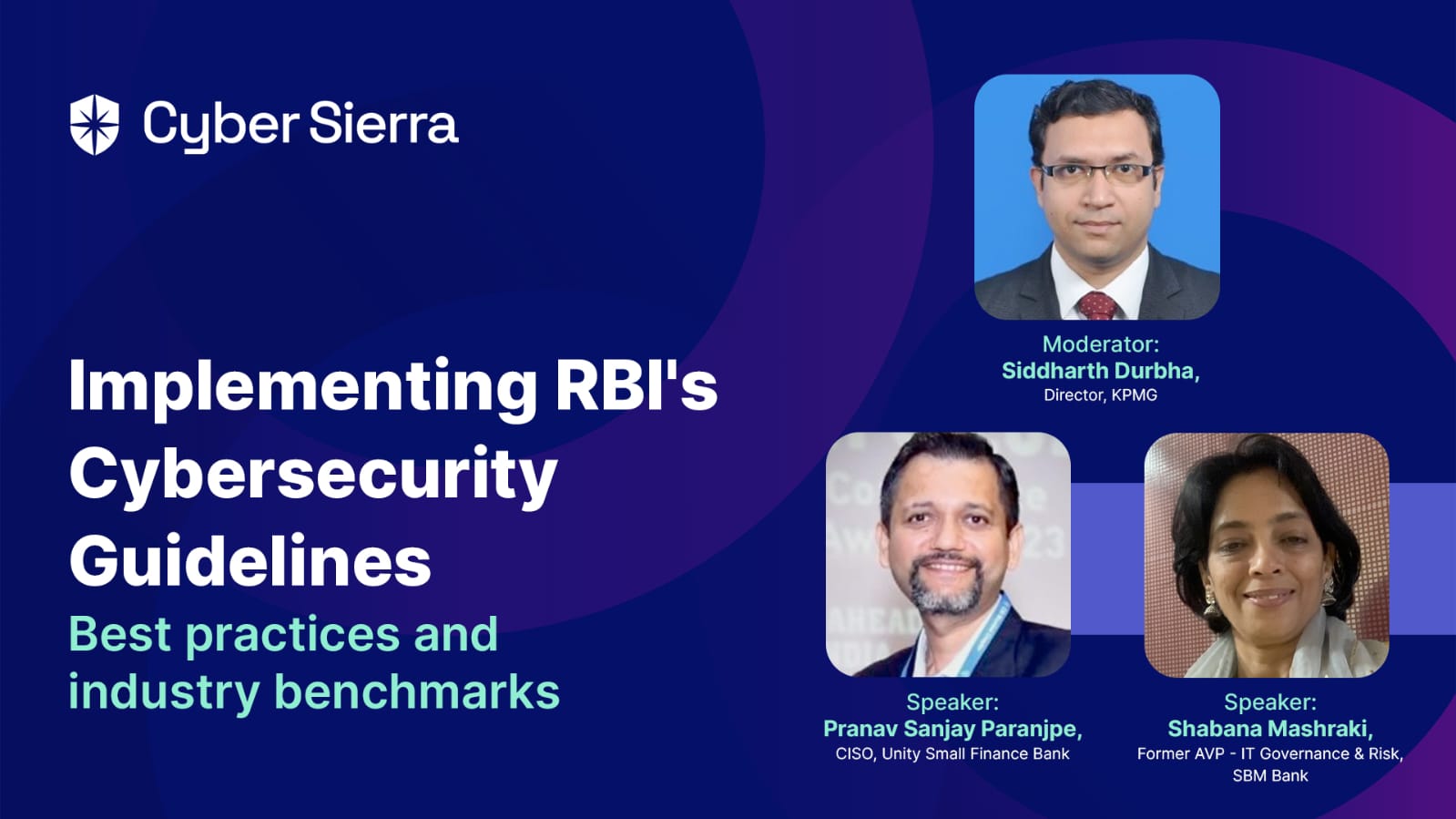
Staying compliant with regulatory guidelines is paramount for businesses, especially those operating in the banking and financial services sector. India’s central bank, the Reserve Bank of India (RBI) has taken proactive measures to address this critical issue, releasing a series of guidelines to help organizations implement effective cybersecurity protocols. In a recent panel discussion organized by Cyber Sierra, industry experts shared their experiences and insights on how to navigate these guidelines successfully.


Navigating RBI's Cybersecurity Guidelines: Insights from Industry Experts


The Roller Coaster Ride of Compliance

For Unity Small Finance Bank, a relatively new player in the industry, the journey of compliance has been akin to a roller coaster ride. As a young bank, they had to learn and adapt quickly to the plethora of guidelines and advisories issued by the RBI. With limited resources at their disposal, managing cybersecurity while ensuring smooth business operations posed a significant challenge. However, with time and the guidance provided by regulatory bodies like RBI, they made significant strides in enhancing their cybersecurity posture.


Keeping Track of Regulatory Guidelines

To help banks and financial institutions keep abreast of the ever-changing cybersecurity landscape, RBI has established a dedicated team responsible for sharing insights and drafting guidelines. Additionally, the introduction of the Daksh portal has proved instrumental in simplifying the compliance process. This self-help portal provides access to comprehensive information on the guidelines, allowing organizations to better understand the expectations and requirements set forth by the regulator.


The Role of Knowledge Sharing

The panel discussion served as a platform for knowledge sharing among industry experts. This collaborative approach has proven invaluable in helping organizations tackle the challenges posed by cybersecurity guidelines. By bringing together professionals from different backgrounds, experiences, and expertise, the session fostered an environment of exchanging thoughts, ideas, and best practices. The collective wisdom gained from such interactions can significantly contribute to the successful implementation of RBI’s cybersecurity guidelines.


Learnings from Compliance

The speakers highlighted the importance of leveraging their collective experiences to navigate the complex landscape of compliance effectively. They emphasized the need for caution and a balanced approach when managing cybersecurity in a fast-paced business environment. Furthermore, the introduction of technology risk guidelines and outsourcing risk guidelines has necessitated a deeper understanding of smart contracts and cloud service providers. By sharing their insights, the panelists aimed to help organizations enhance their compliance strategies and avoid potential pitfalls.


Key Takeaways

  • How can banks and financial institutions keep tabs on the latest RBI cyber security guidelines and directives?
  • What are some of the best practices that banks can follow to be audit ready?
  • How can maintaining a controls catalogue, RBI obligations register, and using RBI’s DAKSH portal help in meeting cybersecurity compliance requirements?


In an era where cybersecurity threats are constantly evolving, organizations must remain vigilant and compliant with regulatory guidelines. The RBI’s proactive approach in releasing cybersecurity guidelines has helped banks and financial institutions strengthen their cybersecurity architecture. By leveraging knowledge sharing platforms, such as panel discussions, industry experts can collectively learn from each other’s experiences and navigate the complex landscape of compliance successfully. As organizations continue to work towards implementing RBI’s cybersecurity guidelines, collaboration and knowledge exchange will play a crucial role in achieving a robust cybersecurity framework.

To watch the full video, click here.

  • Cyber Security
  • CISOs
  • CTOs
  • Cybersecurity Enthusiasts
  • Enterprise Leaders
  • Startup Founders
Srividhya Karthik

Srividhya Karthik is a seasoned content marketer and the Head of Marketing at Cyber Sierra. With a firm belief in the power of storytelling, she brings years of experience to create engaging narratives that captivate audiences. She also brings valuable insights from her work in the field of cybersecurity and compliance, possessing a deep understanding of the challenges and pain points faced by customers in these domains.

A weekly newsletter sharing actionable tips for CTOs & CISOs to secure their software.


Thank you for subscribing!

Please check your email to confirm your email address.

Find out how we can assist you in
completing your compliance journey.

blog-hero-background-image
Cyber Security

From the Acronym Aficionados to the Zen Masters: A Playful Dive into CISO Archetypes

backdrop
Table of Contents

Join thousands of professionals and get the latest insight on Compliance & Cybersecurity.


From the Acronym Aficionados to the Zen Masters: A Playful Dive into CISO Archetypes

Throughout my career, I’ve had the privilege of encountering numerous CISOs. In doing so, I’ve discerned distinct CISO personas— archetypes, if you will—that a significant number of CISOs tend to embody. 

While I meticulously compile the genuine and businesslike CISO archetypes (will share that soon), here’s a lighthearted perspective on the matter. 

After all, a touch of humor has the remarkable ability to uplift us all!

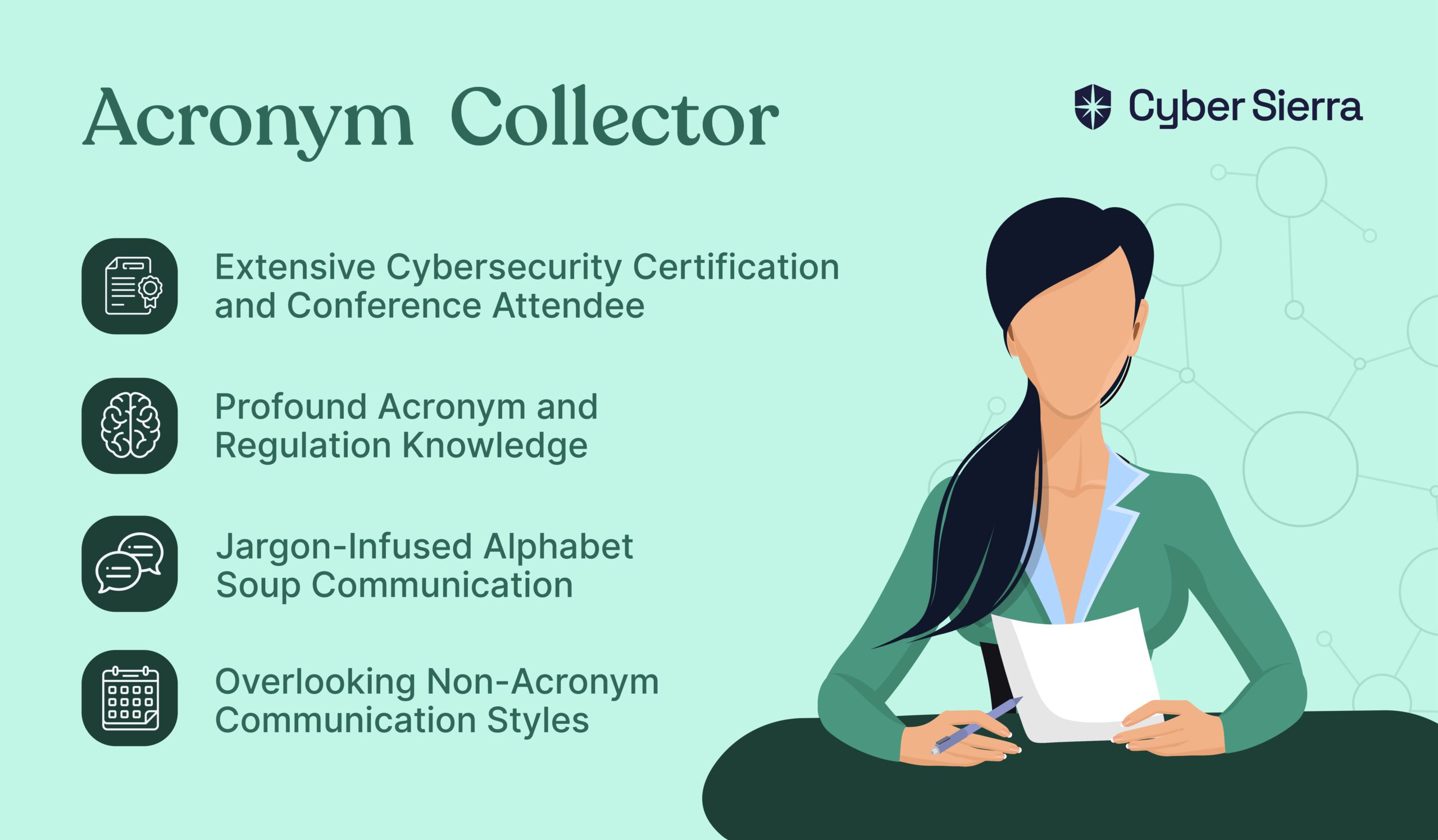
The Acronym Collector

Acronym Collector

  • Background: They’ve been to every conference, workshop, and seminar in the cyber world and have a certification from each one to prove it. Their email signature is longer than most people’s CVs.
  • Strengths: Fluent in the complex language of cybersecurity. If there’s an acronym they don’t know, it probably doesn’t exist. From CISSP, CISM, and CEH to GDPR, CCPA, and NIST – they’ve got it all covered.
  • Approach: Every sentence they utter sounds like they’re reciting a new kind of alphabet soup: “Well, according to the ISO in conjunction with GDPR, our SLA for this PII breach, post a DPIA, needs a BCP ASAP!”
  • Challenges: While impressively credentialed, sometimes gets so caught up in the jargon that they forget not everyone speaks in letters. The team might need an “acronym of the day” calendar just to keep up.


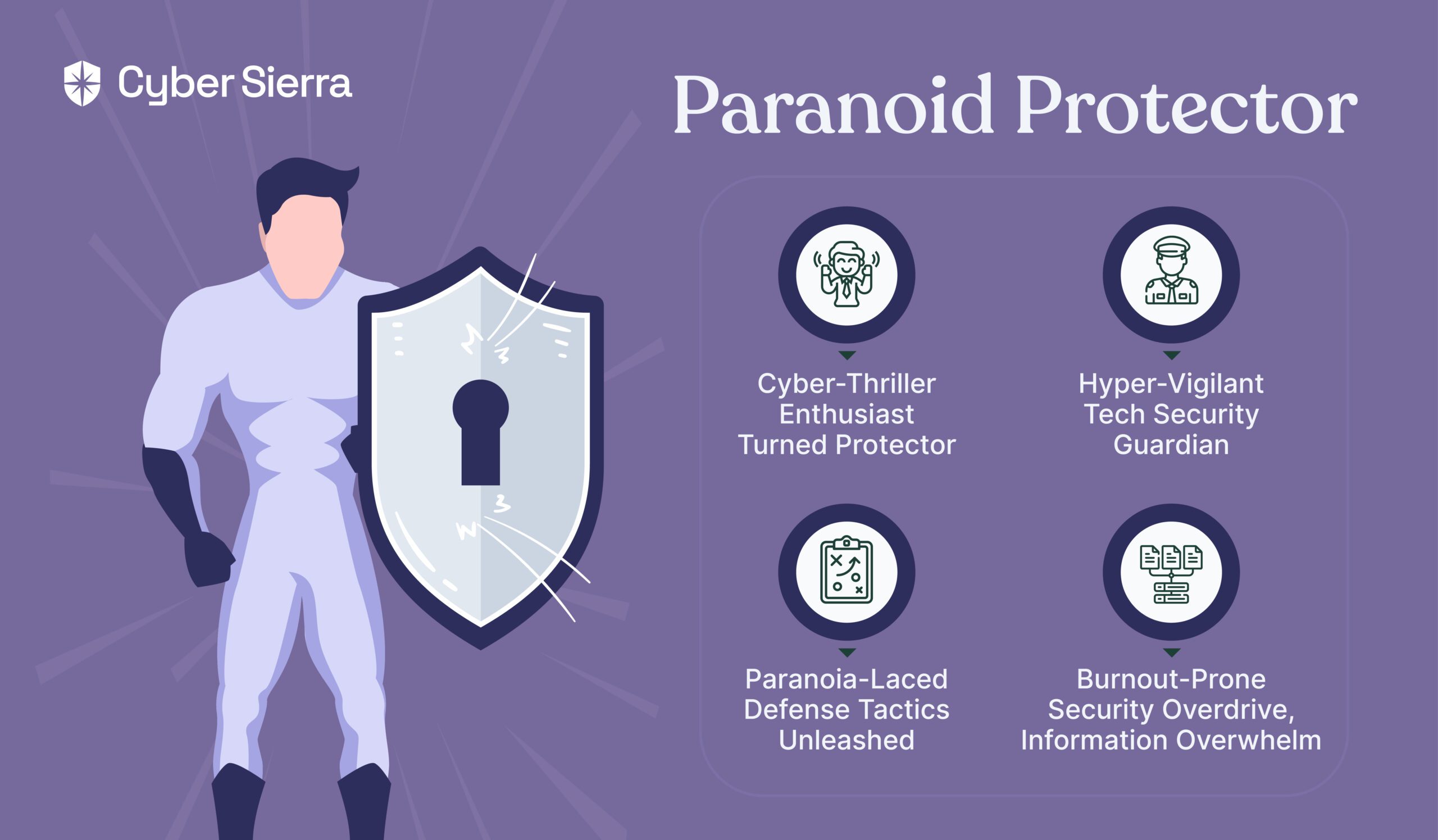
The Paranoid Protector

Paranoid Protector

  • Background: Watched way too many cyber-thriller movies and maybe believes they were Neo in a past life.
  • Strengths: Always on high alert. Has probably implemented two-factor authentication for their home’s coffee machine.
  • Approach: “Trust nobody!” May occasionally be seen scanning the office plants for hidden microphones and checking the integrity of the firewall at 3 a.m.
  • Challenges: Constant vigilance can lead to burnout, and the team may feel a bit overwhelmed by the daily “Security Apocalypse” briefings.


The Zen Master

Zen Master

  • Background: Rumor has it they once found enlightenment while meditating on a server’s heat sink.
  • Strengths: Keeps calm under pressure. When a major breach happens, you’ll find them calmly sipping tea, chanting “This too shall pass.”
  • Approach: Believes in a holistic approach to cybersecurity – it’s all about balance. Holds team meetings in the zen garden they installed in server room three.
  • Challenges: While their stress-relief workshops are highly attended, some team members are still wondering if burning incense really is the best way to protect against malware.


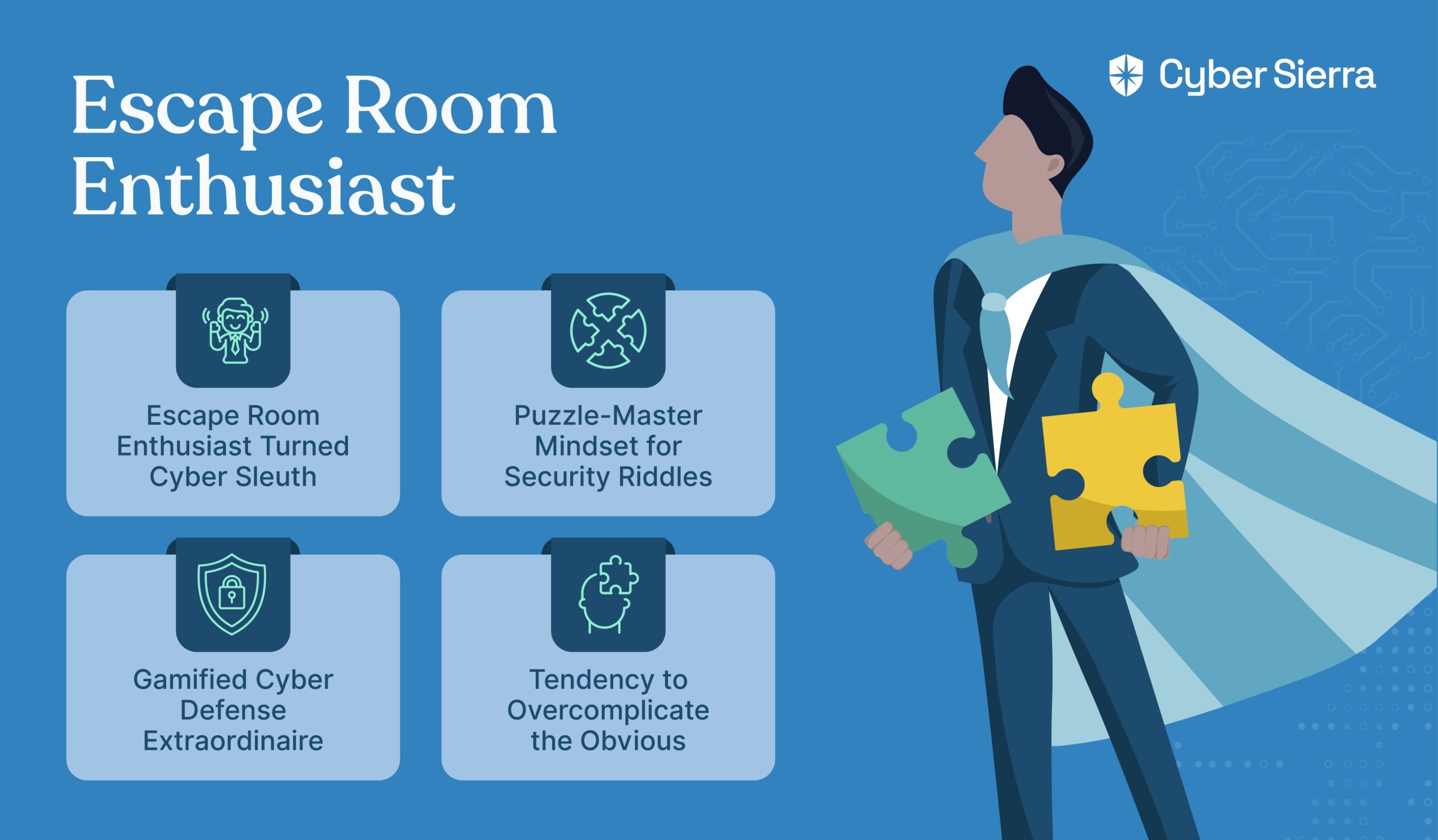
The Escape Room Enthusiast

Escape Room Enthusiast

  • Background: Has a record time at every escape room in town and thinks cybersecurity is just one big puzzle to be solved.
  • Strengths: Loves a challenge and approaches every cyber threat as a clue to be unraveled. Probably has a treasure map of the organization’s network.
  • Approach: Turns security training into escape room adventures, making them incredibly engaging. “To get today’s Wi-Fi password, solve this cipher!”
  • Challenges: Sometimes overly complicates simple processes. Not everyone thinks finding the quarterly security report should involve a scavenger hunt.


Join the Conversation: Share Your Encounters with CISO Archetypes

From the Acronym Collector who deciphers the secret language of cybersecurity to the Paranoid Protector who never misses a beat, and the Zen Master who finds balance amid chaos, to the Escape Room Enthusiast who turns every challenge into an engaging puzzle – these archetypes remind us that CISOs are not just titles; they are vibrant personalities navigating a complex landscape.

As I conclude our light-hearted exploration, I invite you to join in the conversation. Have you encountered CISOs who fit these archetypes, or do you know of other captivating personas that I’ve missed? 

Share your stories and insights with us, and let’s continue to celebrate the diverse world of cybersecurity leadership. After all, it’s these very personalities that infuse the industry with vitality, resilience, and a touch of humor. 

  • Cyber Security
  • CISOs
  • CTOs
  • Cybersecurity Enthusiasts
  • Enterprise Leaders
  • Startup Founders
Pramodh Rai

Meet Pramodh Rai, a technology aficionado and Cyber Sierra's co-founder, whose zest for innovation is fuelled by a cupboard stacked with zero-sugar Redbull. With a nimble footwork through the tech tulips across Asia Pacific, he's donned hats at Hmlet (the proptech kind) and Funding Societies | Modalku, building high-performing teams and technologies. A Barclays prodigy with dual degrees from Nanyang Technological University, Pramodh is a treasure trove of wisdom, dad jokes, and everything product/tech. He's the Sherpa in sneakers you need.

A weekly newsletter sharing actionable tips for CTOs & CISOs to secure their software.


Thank you for subscribing!

Please check your email to confirm your email address.

Find out how we can assist you in
completing your compliance journey.

toaster icon

Thank you for reaching out to us!

We will get back to you soon.