How to Conduct a Vendor Risk Assessment (A Complete Guide)


Join thousands of professionals and get the latest insight on Compliance & Cybersecurity.
Conducting vendor risk assessments is essential to successful third-party management programs. In order to arrive at sustainable third-party solutions, it is important to understand potential risks posed by vendors to the smooth functioning of your company or organization.
This can cover numerous categories, including but not limited to data privacy and cyber security among various other operational, reputational, and financial risks. Thus, learning how to conduct a thorough vendor risk assessment can greatly help in mitigating these risks throughout the vendor life-cycle.
This article will help you navigate your way through conducting a successful vendor risk assessment, thus enabling you to critically identify risk and improve your organization's overall risk management strategy as part of due diligence.
Before we understand the vendor risk assessment process in detail, let us first define what vendor risk assessment actually entails.
What is Vendor Risk Assessment?
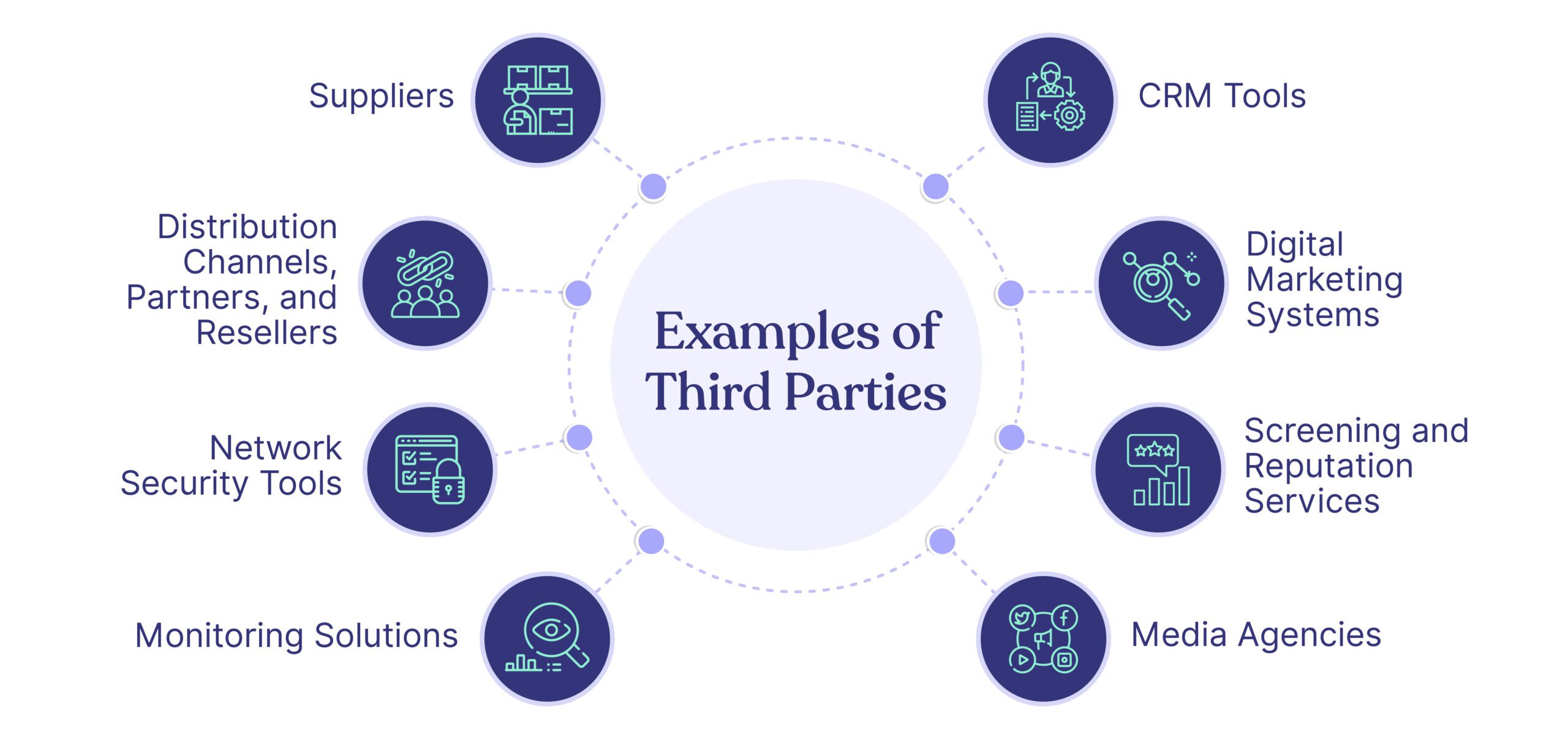
Vendor risk assessment is a process that firms, companies, and organizations use to identify possible risks when working with third parties such as suppliers, contractors, vendors, or other business partners.
Vendor risk assessment evaluates potential risks during different stages of the vendor relationship, including sourcing, selection, off-boarding, as well as contract termination. The process typically involves gathering data about the vendor’s security, privacy controls, policies, and other financial and operational data, by administering relevant surveys or questionnaires.
Once risks are identified, they can then be rated according to multiple factors such as severity, likelihood, and time sensitivity, to be further compared with regulatory requirements, compliance automation, and established security frameworks like ISO and NIST.
Prior to conducting vendor risk assessment, it is crucial to familiarize yourself with the different types of vendor risk assessment and determine the pathway most suited to your company’s requirements. Read on to know more!
Types of Vendor Risk Assessment

Vendor risk assessment can be categorized into three types on the basis of various risks posed to your company or organization when dealing with third parties. The three types of risk assessments are briefly outlined below and can help you narrow your areas of investigation:
1. Profiled Risk Assessment
Profiled risk refers to the vendor’s direct relationship with your organization. A good profile risk assessment takes into account that certain vendors pose more risk than others. This can be determined by the type of vendor that your organization deals with and the level of security they can access. For example, vendors from the financial sector may pose a larger threat than vendors from the marketing sector, simply because of the nature of their work and the data required in the process.
Conducting a profiled risk assessment allows you to prioritize organizations with a higher level of profiled risk and dedicate extra scrutiny to them during the process of vendor selection.
2. Inherent Risk Assessment
Inherent risks are those posed by your company or organization as a consequence of the vendor's own financial, operational, cyber security, and other related business practices that are separate from the vendor's direct relationship with your organization.
An inherent risk assessment gives you the vendor’s inherent risk score arrived at through the administration of detailed vendor assessment questionnaires as well as external threat monitoring. It is crucial to understand various risks posed by vendors before implementing any organization-specific controls from your end.
3. Residual Risk Assessment
Lastly, residual risk assessment gauges the level of leftover risk after the relationship between your organization and the vendor has been established. At this point, organization-specific controls as stipulated in your contract have been implemented by the vendor, and it is your job to assess any residual risk that might still require mitigating in the aftermath.
While residual risk can never be entirely eliminated or accurately predicted, a thorough residual risk assessment can manage the level of leftover risk such that it is at least acceptable to your company or organization to undertake that risk.
Purpose of Vendor Risk Assessment
As mentioned above, vendor risk assessment helps you ensure that any risk associated with a third-party vendor is accounted for and considered before moving forward with the business relationship between your organization and the vendor.
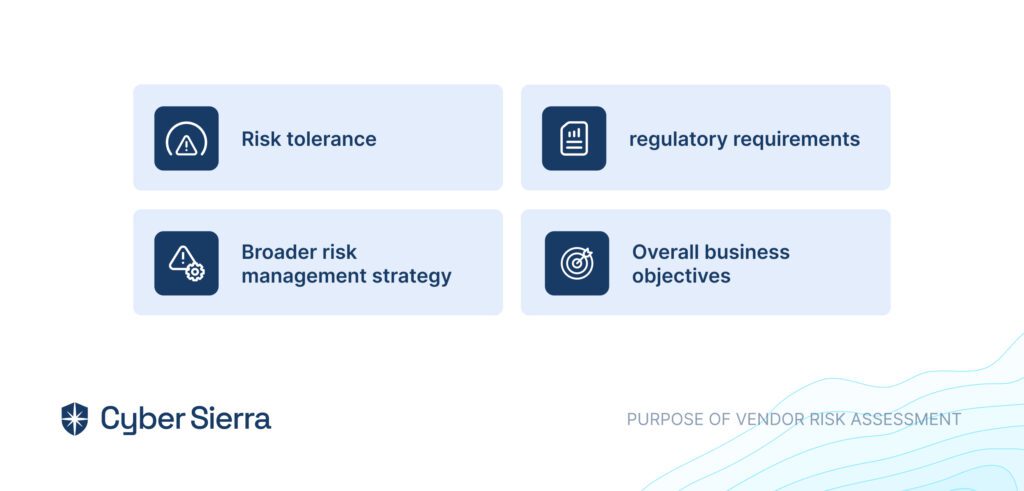
In line with this primary purpose, a robust vendor risk assessment framework also takes into account your
- regulatory requirements,
- risk tolerance,
- broader risk management strategy, and
- overall business objectives.
Thus, vendor risk assessment can benefit from being carried out throughout your company or organization’s association with the vendor under study.
Stages of Vendor Risk Assessment

It is important to note that vendor risk assessment is not only limited to the vetting of potential vendors prior to your contractual relationship. A good vendor risk assessment spans the different stages of the entire vendor management life cycle. Vendor risk management is a continuous process that can take place during all the following stages:
1. Sourcing and Selection
Vetting vendors during sourcing and selection is helpful in identifying and shortlisting low risk vendors that your organization can then consider entering a business relationship with.
2. Onboarding
As mentioned above, gauging inherent risk is part of vendor risk assessment, and this is best done during onboarding as part of due diligence before granting your vendor access to critical systems and company data.
3. Contractual Relationship
Continuing the process of vendor assessment throughout the contractual relationship between the vendor being assessed and your company or organization is important because you can evaluate contract adherence, decide the flexibility of your audit requirements, and periodically check service level agreements (SLAs).
4. Offboarding
During the offboarding process, vendor risk assessment can look like enjoying that security and system access granted to the vendor is thoroughly terminated and that your company data has been protected or destroyed according to regulations or conditions stipulated in your contract.
5. Incident Response
Vendor risk assessment is essential during incident response to determine the severity and potential long-term impact of security breaches that have been detected or predicted.
Why Is Vendor Risk Assessment Important?
Vendor risk assessment is important because managing vendor risk effectively forms the crux of a robust cybersecurity framework. A thorough vendor risk assessment ensures that your company or organization is cognizant of the risk before it gets out of hand, thus ensuring business continuity and regulatory compliance.
If you’re still unconvinced about the necessity of vendor risk assessments, here are some timely reminders:
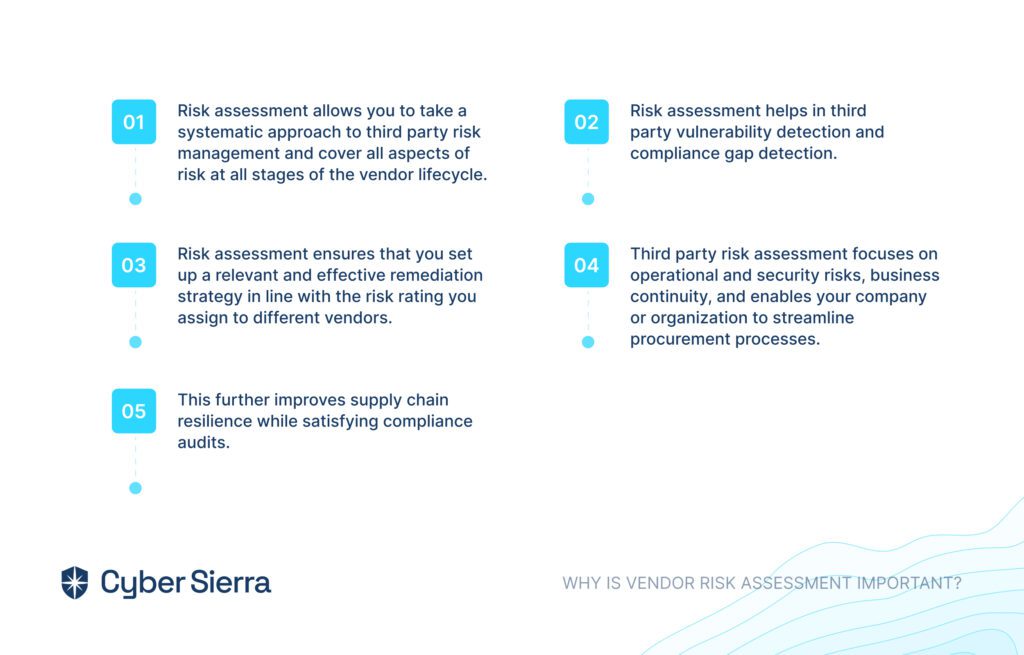
- Risk assessment allows you to take a systematic approach to third party risk management and cover all aspects of risk at all stages of the vendor lifecycle.
- Risk assessment helps in third party vulnerability detection and compliance gap detection.
- Risk assessment ensures that you set up a relevant and effective remediation strategy in line with the risk rating you assign to different vendors.
- Third party risk assessment focuses on operational and security risks, business continuity, and enables your company or organization to streamline procurement processes.
- This further improves supply chain resilience while satisfying compliance audits.
It is also important to note that organizations with effective third party risk management (TPRM) programs are markedly better at mitigating unforeseen risks - such as major business and supply chain disruptions stemming from the COVID-19 pandemic, which led to operational breakdowns and financial losses across the world.
What to Include in a Vendor Risk Assessment Report?

A vendor risk assessment report should provide a complete understanding of the risk posed by vendors who have completed risk assessments. A comprehensive vendor risk assessment report is key to
- driving decision making,
- speeding up vendor due diligence,
- flagging high-risk vendors for termination,
- guide vendor remediation process,
- fostering senior management and stakeholder communication, and
- giving vendors an idea of their security positioning.
A detailed vendor risk assessment report must typically include the following:
1. Vendor Profile
This includes the vendor’s
- overall history,
- business model,
- service level agreements (SLAs), and
- a market-based overview of reliability.
2. Compliance Report
This refers to a comprehensive outline of the vendor’s adherence to stipulated regulatory requirements and industry standards, such as GDPR and HIPAA.
3. Cybersecurity Defenses
You must include a thorough understanding of the vendor’s cybersecurity measures in the event of a threat such as a data breach. How powerful is their firewall or encryption software? How often has it been breached before? These are some questions that you must answer in your report.
4. Data and Privacy Report
How does the vendor manage their data? What are their data security measures? Do they have the requisite privacy practices in place to reduce the likelihood of cyberattacks? A data and privacy report must be included in your risk assessment to answer these questions.
5. Vendor Risk Assessment
This includes a detailed explanation of the vendor’s resources and procedures when it comes to identifying and mitigating risks. Understanding your vendor’s due process will in turn help your company or organization align their combined risk management efforts, in the event of the successful establishment of a contractual relationship.
6. Third Party Audit Report
All external audits and security certifications that are related to the vendor should be compiled, to confirm that the vendor adheres to industry best practices.
7. Access Control and Identity Management
This section outlines the vendor’s policies for identity access management and data protection with respect to third party data as well as the vendor’s storage database.
8. Supply Chain Risks
This involves the identification of the vendor’s third party involvements so that your company can determine the level of concentration risk posed by your Nth-party vendors through the tertiary business relationship you might go on to establish.
9. Continuous Risk Monitoring Report
This includes your proposal for the continued monitoring of the risks posed by the vendor. It involves the detailing of how you plan to stay updated throughout the entirety of the vendor relationship, and outlines the basic framework for follow up reporting.
How to Conduct Vendor Risk Assessment?
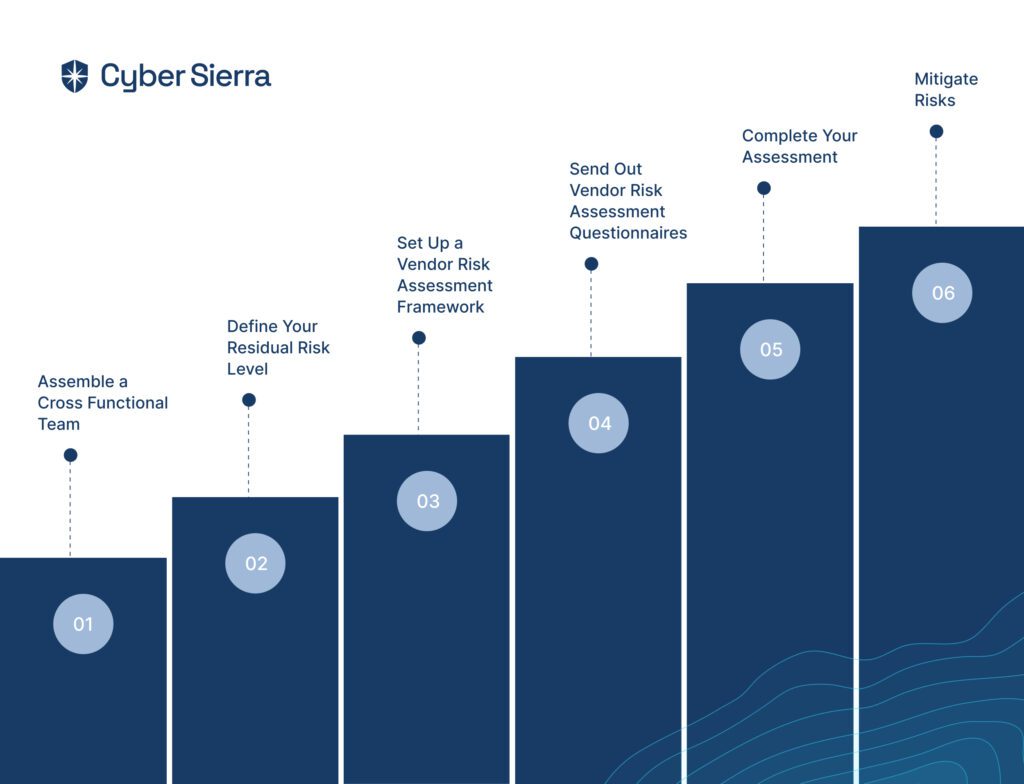
Now that you know what to include in your report, let’s take a detailed look at all the steps involved in assessing vendor risk.
1. Assemble a Cross Functional Team
First and foremost, it is important to involve multiple stakeholders in the process of vendor risk assessment. Input from the following teams is crucial in order to create a risk assessment framework that is holistic and relevant:
- Risk management team - to unify vendor assessments with broader organizational risk management initiatives,
- Procurement and sourcing teams - to source low risk vendors, assess supplier performance, and conduct pre-contractual due diligence,
- Security and IT teams - to identify, analyze, and mitigate cybersecurity risks,
- Audit and compliance teams - to understand and report on vendor risk in the context of industry frameworks, and
- Data privacy teams - to conduct privacy impact assessments
2. Define Your Residual Risk Level
When it comes to third-party risk management, residual vendor risk can never be entirely eliminated. Therefore, the best course of action is to communicate the possibility of this risk to all involved stakeholders and come to a reasonable agreement about the level of residential risk that is permissible in your company or organization.
This process not only helps you eliminate vendors that cannot stay within the limits of the set residual risk level but also allows you to clarify your company's controls before entering a business relationship.
3. Set Up a Vendor Risk Assessment Framework
Once you have defined your level of acceptable residential risk, You can set up a vendor risk assessment framework accordingly. While it is recommended to implement the process with standardized controls and requirements, there is no universal template for vendor risk assessment. This is why it is important to read your vendors according to the risk they pose.
Vendor risk rate can depend on multiple factors such as:
- The vendor's importance in your supply chain, especially if their services or products are not interchangeable or easily replaceable.
- The kind of access the vendor has to sensitive company data, including protected health information (PHI), personally identifiable information (PII), or commercially sensitive information (CSI).
- The vendor's level of vulnerability to unforeseen circumstances, such as natural disasters or political conflicts.
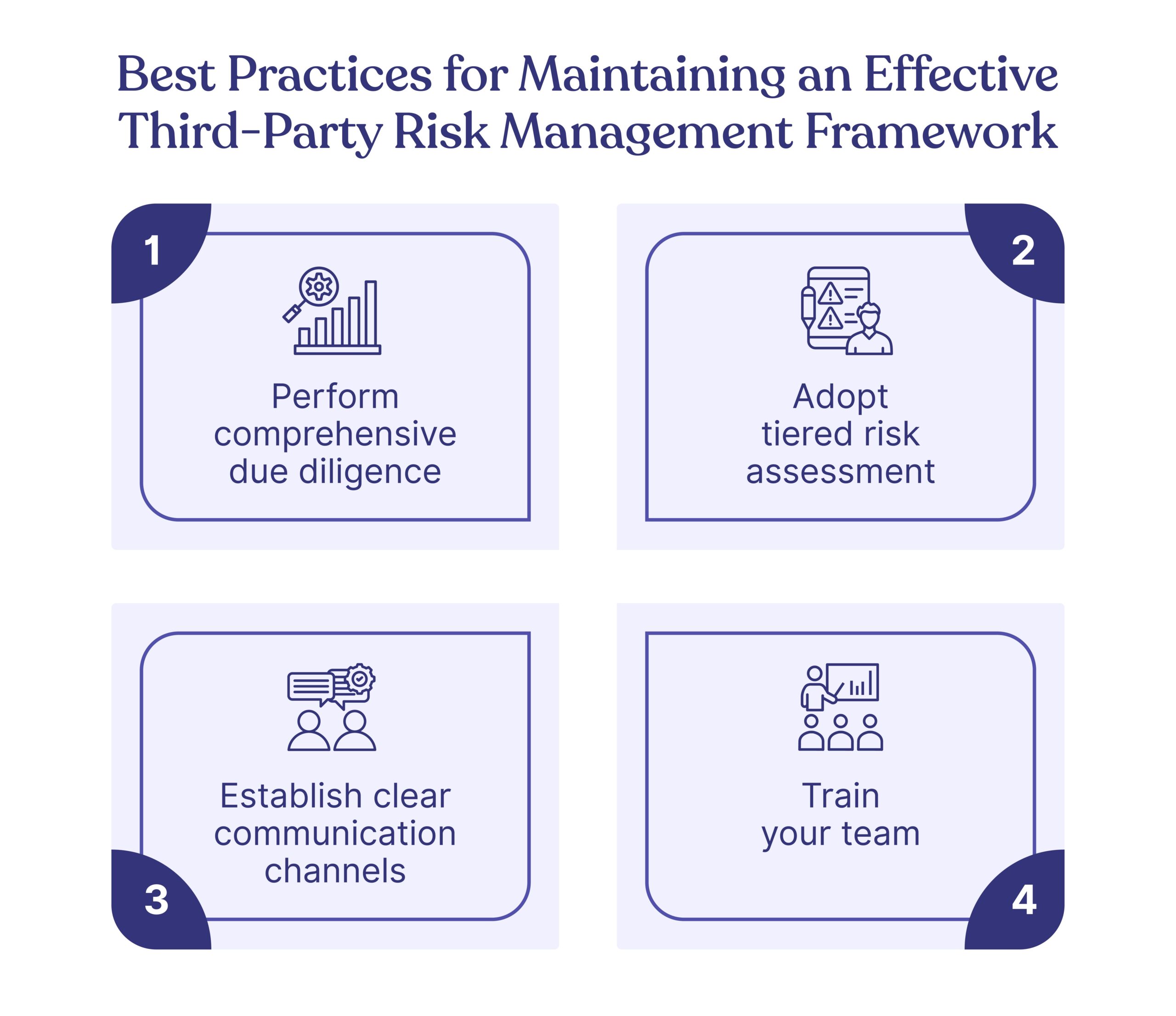
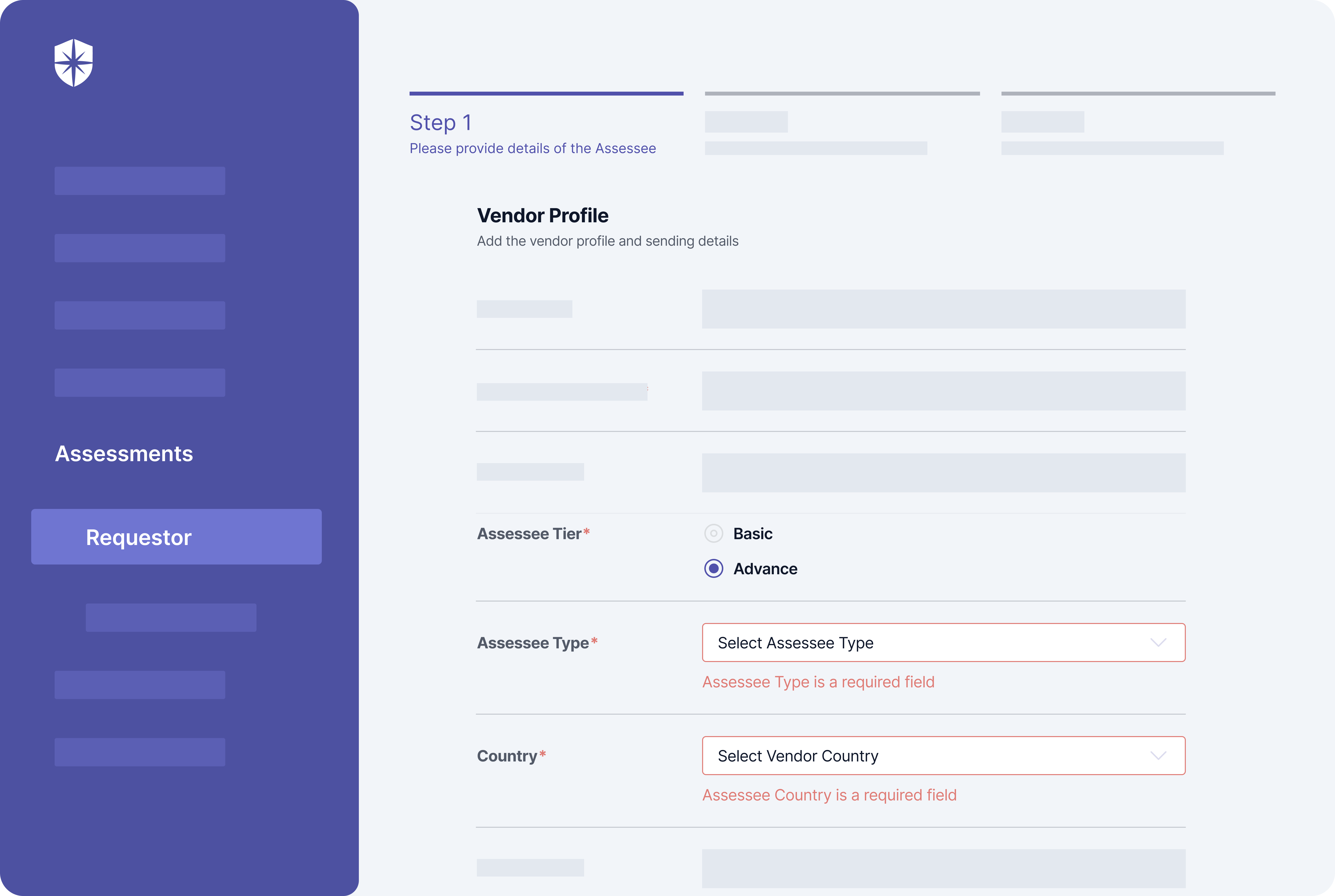
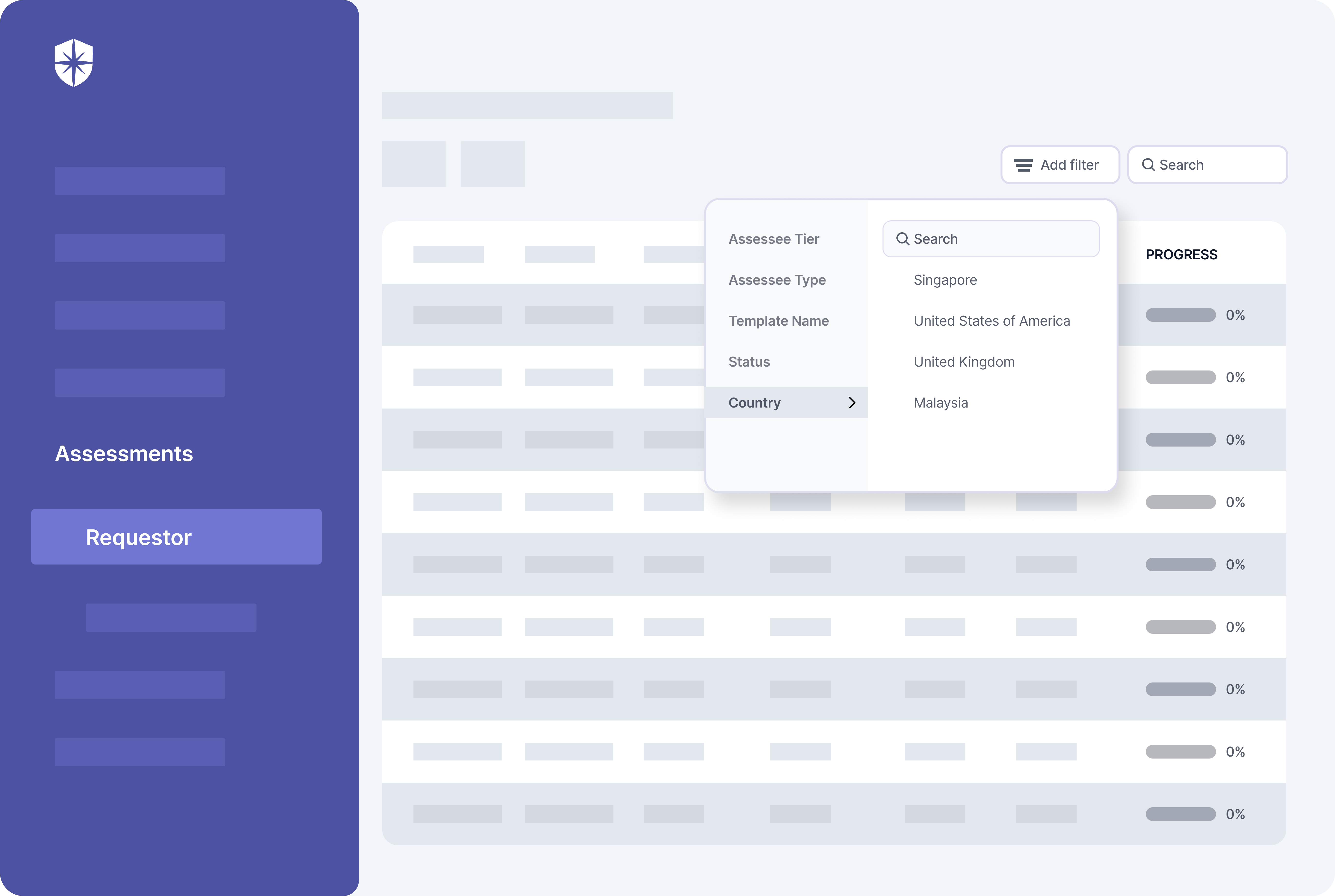
A good vendor risk assessment framework involves the internal profiling and tiered assessment of vendors by type, scope, and frequency of assessment needed for each group. For instance, vendors that pose a high risk to your company or organization require more thorough due diligence than those with low risk to your business.
Thus, vendor risk rating helps categorize your vendors and allows you to set up a structured process for each vendor category that streamlines your third-party risk management program as a whole!
4. Send Out Vendor Risk Assessment Questionnaires
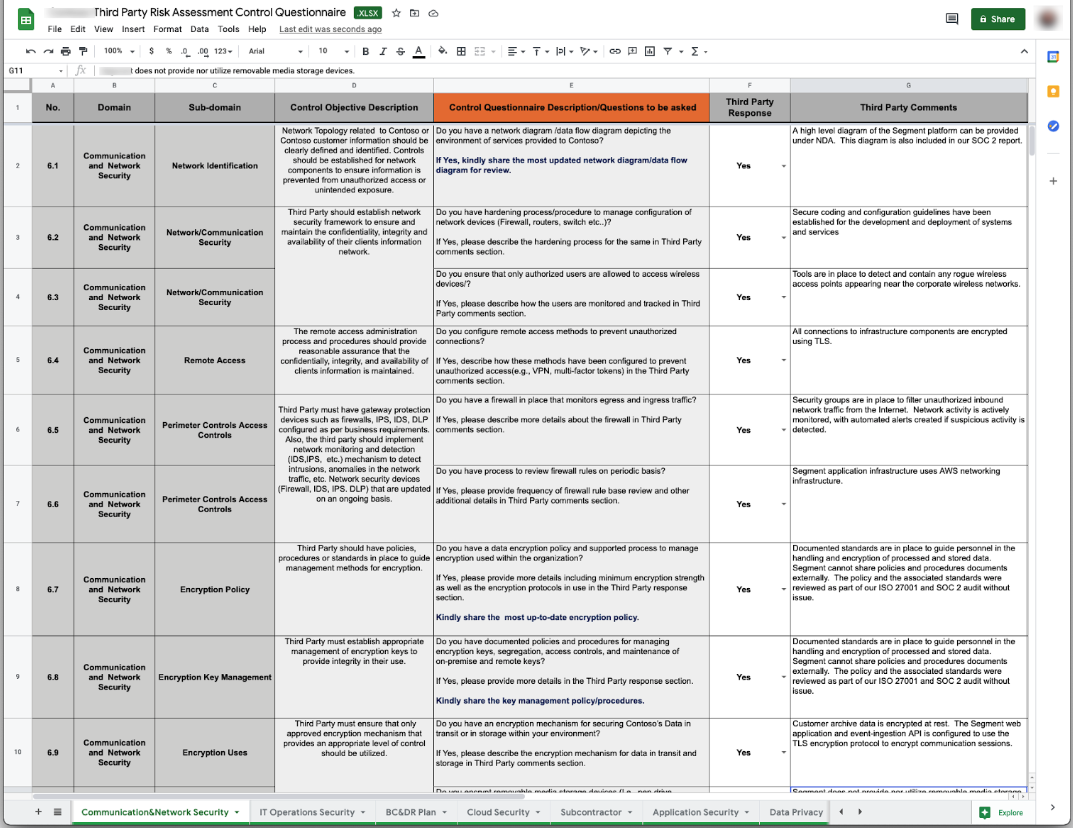
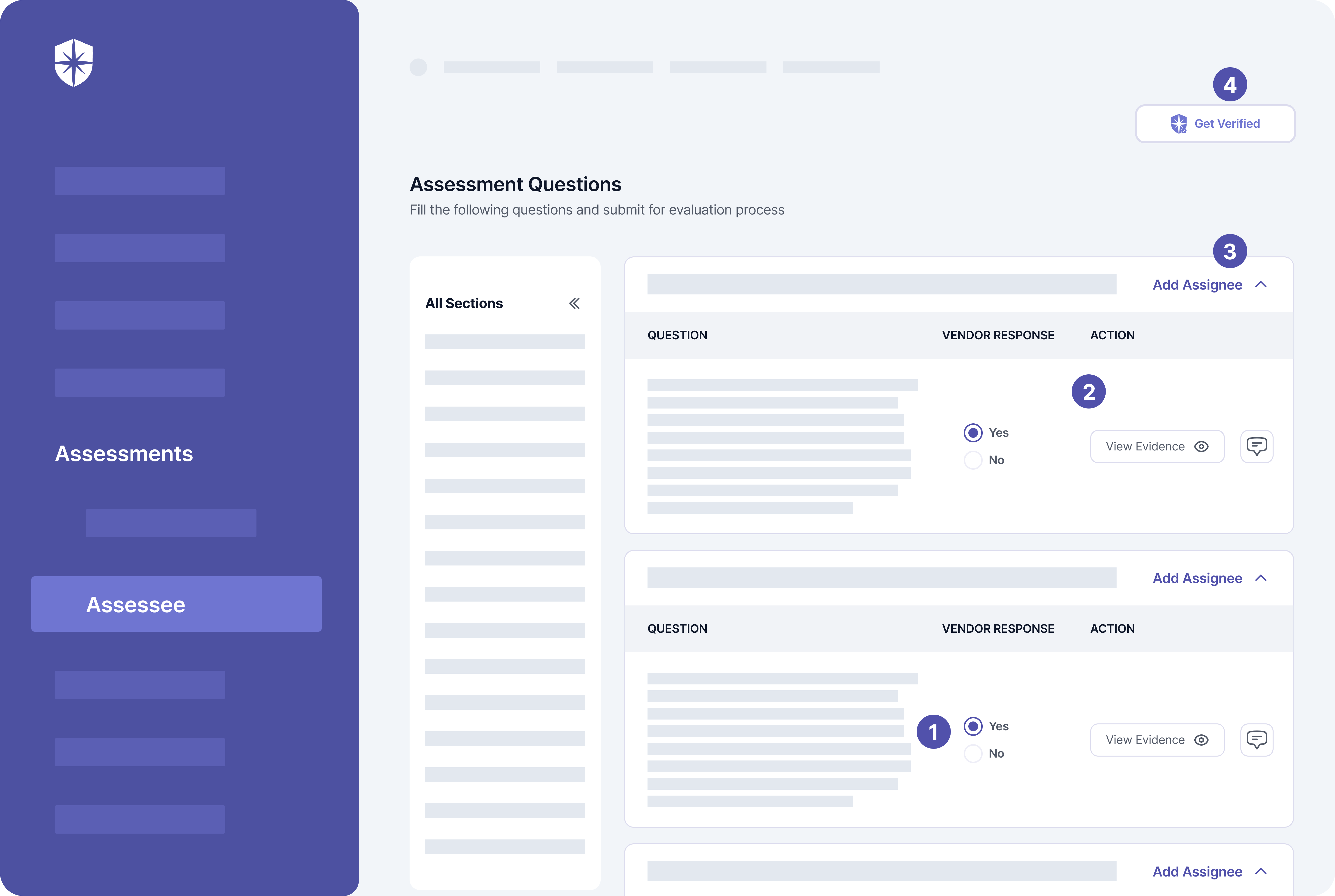
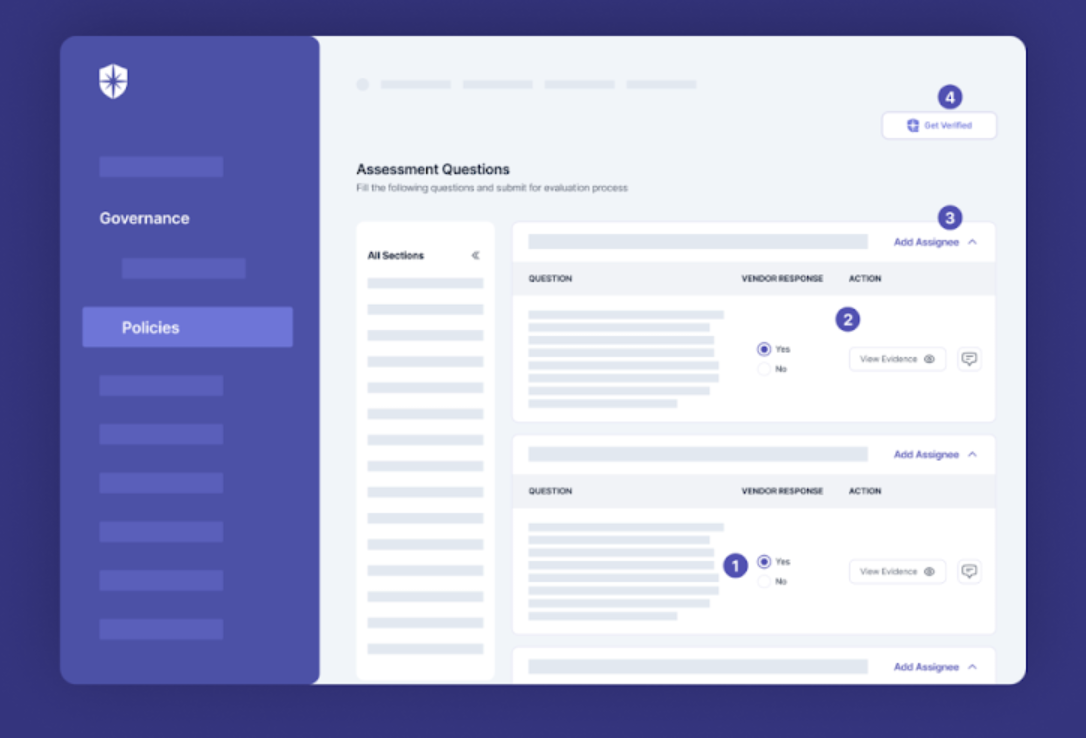
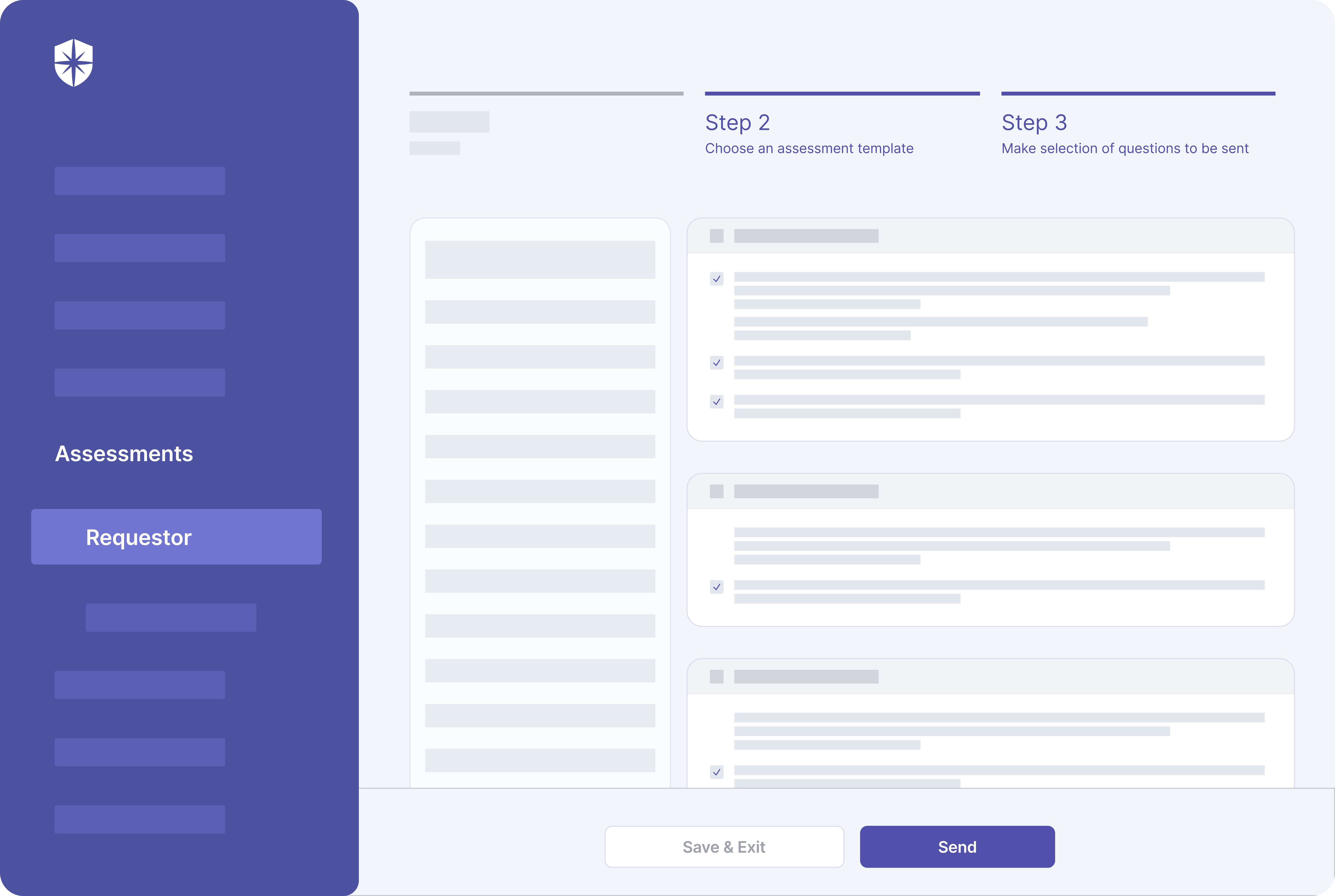
After setting up your framework, it is time to formulate and circulate questionnaires to your vendors. Questionnaires help you acquire important information about each vendor’s necessary internal controls.
There are two choices available when deciding on the perfect questionnaire for your primary risk assessment endeavors. You can choose from:
- An industry standard questionnaire, such as the Standard Information Gathering (SIG) questionnaire, or
- A proprietary questionnaire
You can also choose to forgo the questionnaire entirely if your vendor has an information security certification such as CMMC or SOC 2. If required, you can stick to a simple proprietary or ad-hoc assessment to obtain information about specific controls.
Next, you need to decide on a suitable framework for your questionnaires. Some frameworks that are standard across supply chains are
- NIST Cybersecurity Framework,
- ISO 27001, and
- NIST 800-30.
Lastly, remember to take into account specific regulations such as GDPR or PCI DSS and include questions about those standards in your questionnaires if you need your vendors to comply with them.
5. Complete Your Assessment
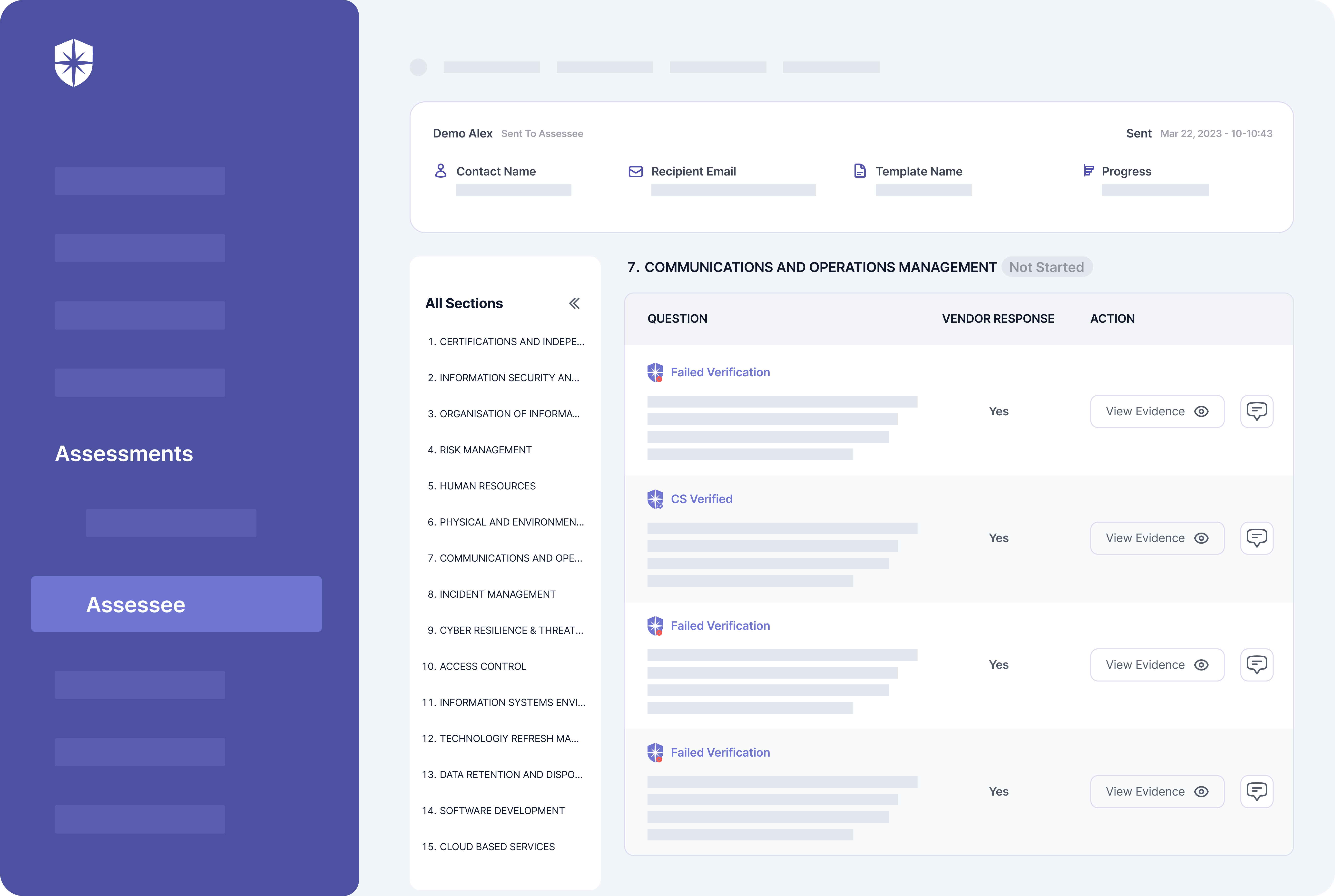
It is now time to complete your assessment! Continuous risk monitoring is key to a complete and thorough vendor risk assessment. Additionally, keep an eye out for
- Vendor data breaches - credential exposures, web application vulnerabilities, typosquatting, and ransomware attacks are some cybersecurity risks that you must keep monitoring.
- Supplier finances, business practices and reputation - a good vendor risk assessment takes into account any bad press or operational disruptions from the supply side as well.
- A good monitoring strategy - consider using an automated vendor threat monitoring software for risk identification and scoring for the best results!
6. Mitigate Risks
To effectively mitigate risk, you must first classify them into acceptable or unacceptable risks. Since unacceptable risks are the priority, they can be remediated prior to entering a business relationship by asking potential vendors to
- show a valid security certification such as SOC 2,
- cease their other tertiary business relationships with Nth party vendors, or
- change business practices that could cause disruptions in your supply chain.
Remember, organizations must be equipped with a third party incident response strategy in cases of disruptions or data breaches. You can greatly streamline and increase the efficiency of your response to the materialization of certain risks if your company or organization is prepared for any eventuality beforehand.
Vendor Risk Assessment: Best Practices

To get the best results and maintain the relevancy of your vendor risk assessment process, the following recommendations and reminders must be followed:
1. Don’t overlook any vendors
Cross-check your vendor list with your organization’s accounts department to ensure that you have not missed any vendors. Vendor assessment cannot be complete unless you evaluate every existing and potential vendor for risk.
2. Group your vendors
Sort your vendors into different groups based on the product or service they offer such as
- Processing agencies
- Marketing agencies
- Cloud storage providers, etc.
This will ease your organizational process as you go further into the risk assessment process.
3. Carefully risk rate your vendors
Risk assessment involves the internal process of conducting an inherent risk assessment of your vendors, which helps you determine the level of risk posed by them. Remember to be careful about the division of vendors into low risk, moderate risk, and high risk, according to the product or service they offer.
If a vendor offers two moderate risk and one low risk service, it is a no-brainer to rate them as a moderate risk. However, even if a vendor provides two low risk and one high risk product or service, it is best to err on the side of caution and assign a high-risk label.
4. Identify critical vendors
Critical vendors are those that can cause significant negative impacts to your operations or customers in case of failure. Identifying how critical your vendor is can involve asking the following questions:
- Will the abrupt loss of the vendor inconvenience your organization and threaten its smooth functioning?
- Will the ensuing disruption impact your customers?
- If the disruption of the vendor’s product or service lasted for over a twenty four hour time period, would your organization be severely negatively impacted?
If the answer to these questions is yes, then you’re dealing with a highly critical vendor.
5. Determine the scope of due diligence for every vendor
Risk rating and vendor criticality will determine the nature of your due diligence. Various types of risks such as
- Transactional and financial risks,
- Strategic and concentration risks,
- Operational and reputational risks,
- Compliance risk, and
- IT security and cyber security risks
must be thoroughly covered when setting up risk management controls when it comes to high risk or critical vendors.
6. Continuous assessment and evaluation of risk is key
- Reassess and evaluate all critical and high risk engagements on an annual basis.
- Reassess and evaluate moderate risk engagements every 1.5 to 2 years, depending on the product or service.
- Low risk engagements can be assessed at a slower pace of once every 2-3 years, or right before contract renewal.
7. Stay updated on regulatory changes
New regulations can be introduced or existing regulations undergo changes, both of which must be incorporated by your organization, especially if they affect third-party risk management processes. Ensuring that you have a system in place that identifies shifting needs, assesses, impacts, communicates changes, and manages transitions with minimal disruption can go a long way in keeping your risk management processes updated with regulatory requirements.
Keep in mind that this includes updating governance documents, including specific policies and programs!
8. Keep lines of communication open
Your company’s senior management and board should be regularly updated about third-party risk assessment, including the overall progress of the risk management program, notes on critical vendors, and any regulatory changes or incident responses you must deal with along the way!
Challenges of Vendor Risk Assessment

The most common challenges you might face while conducting a vendor risk assessment are:
1. Maintaining an updated vendor list
Many organizations do not use a central system to track their vendors, which can lead to some confusion while coming up with a master list of all vendors.
Keeping this list up to date is yet another hurdle, as vendors may not fill out questionnaires to your satisfaction. This can create further problems while structuring an effective risk management strategy.
2. Formulating a relevant security questionnaire
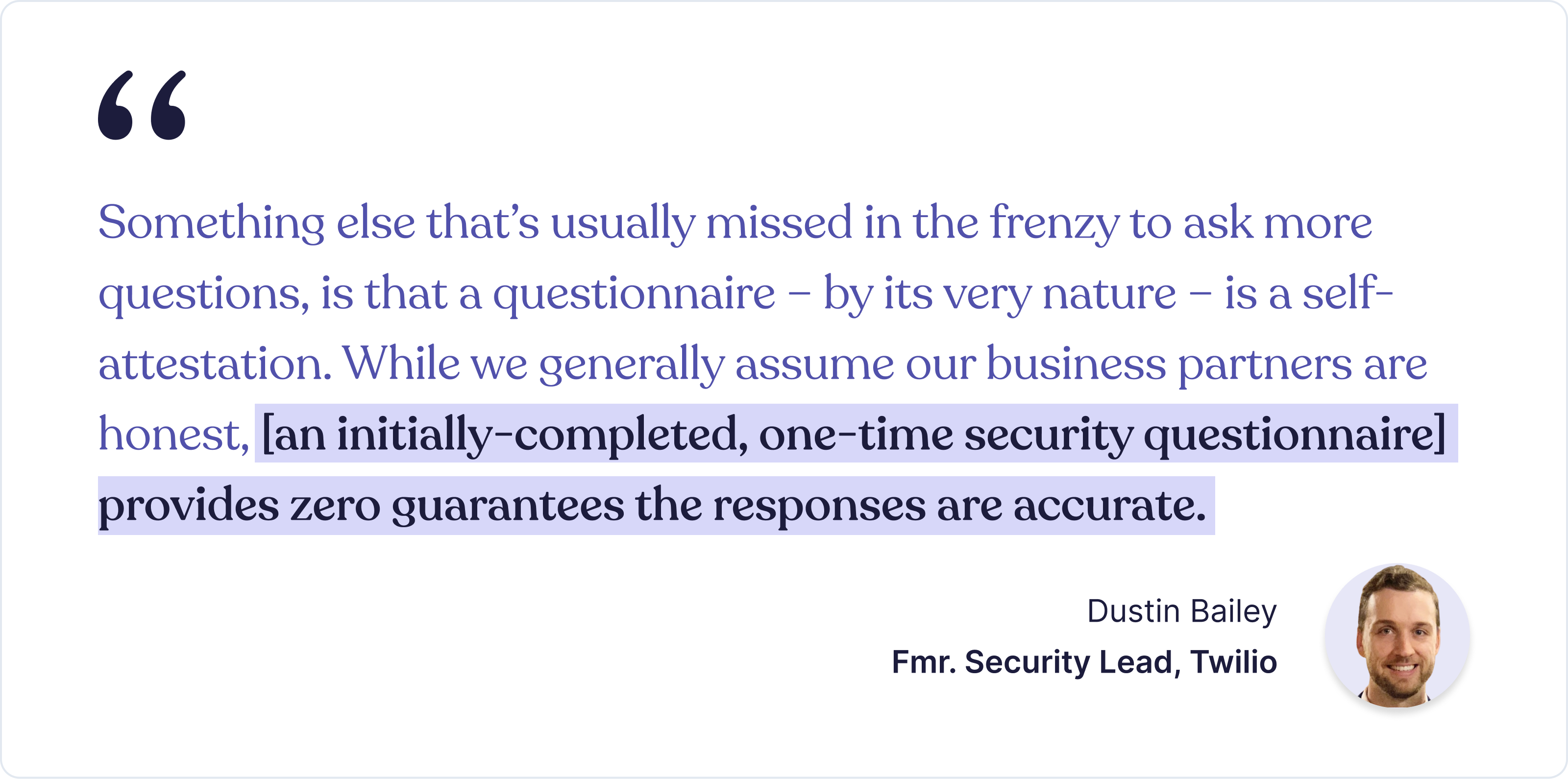
In order to get the best insights into your potential vendor’s business practices, it is important to craft a hyper-specific questionnaire. This is easier said than done.
Formulating a relevant security questionnaire is a long and difficult process. You need to be aware of the legal and compliance risks involved in each and every vendor relationship from the vendor master list, and coordinate with relevant personnel from the other side to get your responses.
The time crunch that most IT risk and security professionals work under does not allow them the luxury to craft each question personally. Thus, information obtained tends to lack the necessary nuance and depth for a substantial risk assessment report.
3. Evidence collection for compliance purposes
The lack of a centralized system can complicate the evidence collection process and important documents such as
- vendor questionnaire responses,
- additional tickets to track remediations, and
- secondary contracts
can easily be lost in the flood of information. Since a huge chunk of this data will be required during compliance audits, it is important to find a foolproof process to stay on top of all available proofs as part of your vendor risk management activities.
4. Monitoring vendors after onboarding
Monitoring vendors post onboarding to ensure that risk remediations are underway and that vendor risk levels stay within acceptable limits can be difficult. This is because most organizations don’t have automated tools to collect this data as it is updated, and cannot allot the necessary manpower required to carry out this mammoth task manually.
Failing to effectively monitor vendors after onboarding can affect your organization’s ability to adjust risk management strategies according to evolving risk level assessments.
Most organizations opt for third-party vendor monitoring platforms such as CyberSierra to ease these common hurdles to conducting a smooth and effective risk assessment process.
How Can Cyber Sierra Help Streamline Your Third Party Risk Management?
Cyber Sierra is an AI-powered vulnerability scanner designed to identify and address potential risks in digital environments. It performs comprehensive vendor risk assessment across various systems, including applications and networks, to detect security vulnerabilities effectively.
Cyber Sierra's capabilities in risk assessment and continuous monitoring make it a critical component for organizations aiming to secure their attack surface, meet ISO certification requirements, and maintain robust security practices.
Here are several reasons why cybersecurity professionals, security teams, and compliance management personnel in both private sector organizations and government agencies swear by Cyber Sierra’s risk assessment capabilities:
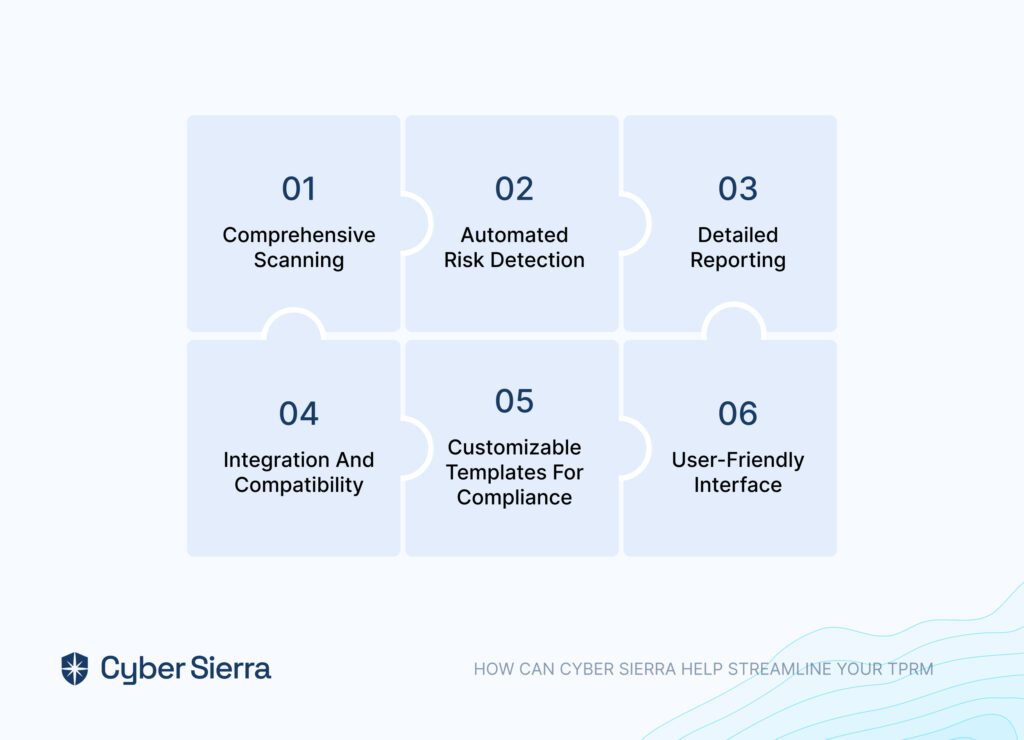
- Comprehensive scanning: Cyber Sierra performs in-depth scans of an organization's entire attack surface, including networks, servers, endpoint devices, and third-party applications.
- Automated risk detection: The software automates the vulnerability scanning process, reducing the burden on IT teams and minimizing the risk of human error. This automation is crucial for the timely identification of potential security risks.
- Detailed reporting: Cyber Sierra generates detailed reports that highlight discovered vulnerabilities along with their severity levels and potential impact.
- Integration and compatibility: It integrates seamlessly with various development and security tools, supporting DevOps teams in embedding security into their workflows.
- Customizable templates for compliance: Cyber Sierra offers a set of pre-built and customizable templates based on well-recognized compliance standards such as GDPR, HIPAA, PCI-DSS, and ISO 27001. Each template includes a set of checks and controls tailored to the specific requirements of the compliance standard.
- User-friendly interface: Its user-friendly interface and intuitive design make it accessible to users of all skill levels, from cybersecurity consultants to IT administrators. The software’s ease of use accelerates the vulnerability detection and management process, enabling quick response to emerging threats.
To know more about Cyber Sierra’s third party risk management efforts, you can read up on how their automated TPRM helped a global bank monitor the security health of its SaaS vendors.
Schedule a demo now to see how Cyber Sierra can streamline your TPRM processes. Our platform effectively mitigates third-party risks so you can focus on driving business growth through strategic partnerships.