blog-hero-background-image
Third Party Risk Management

A Quick Guide for CISOs to Automate Third Party Risk Management

backdrop
Table of Contents

Join thousands of professionals and get the latest insight on Compliance & Cybersecurity.


A Quick Guide for CISOs to Automate Third Party Risk Management

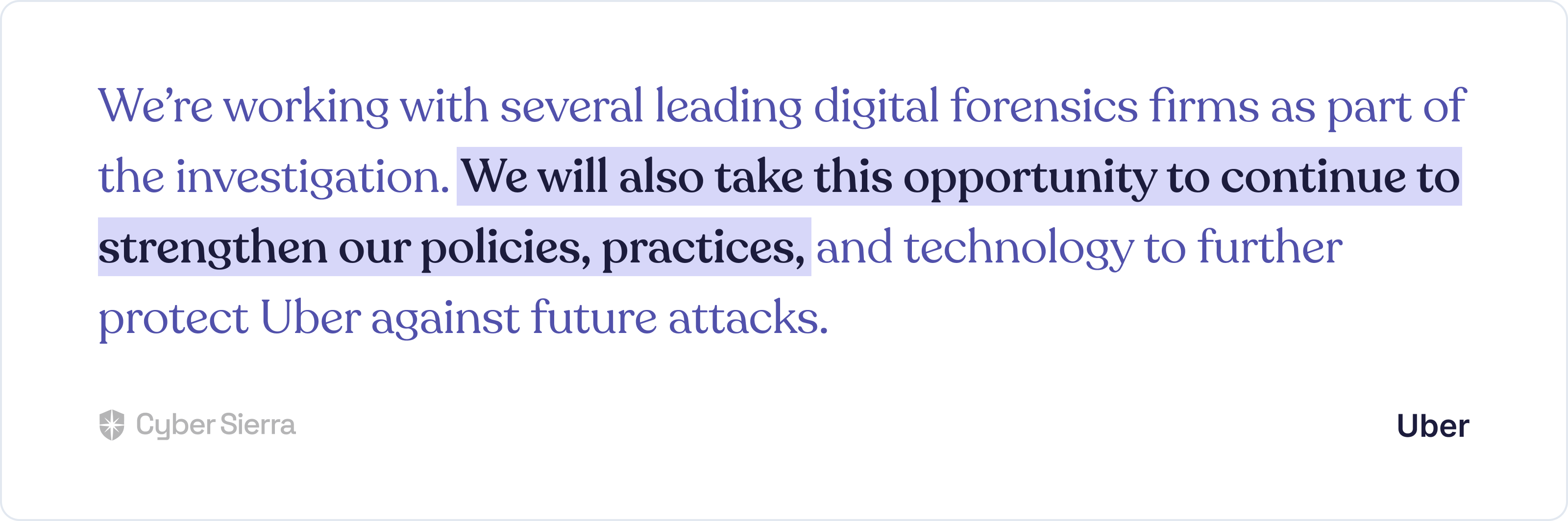
After its Sep. 2022 data breach, Uber wrote: 
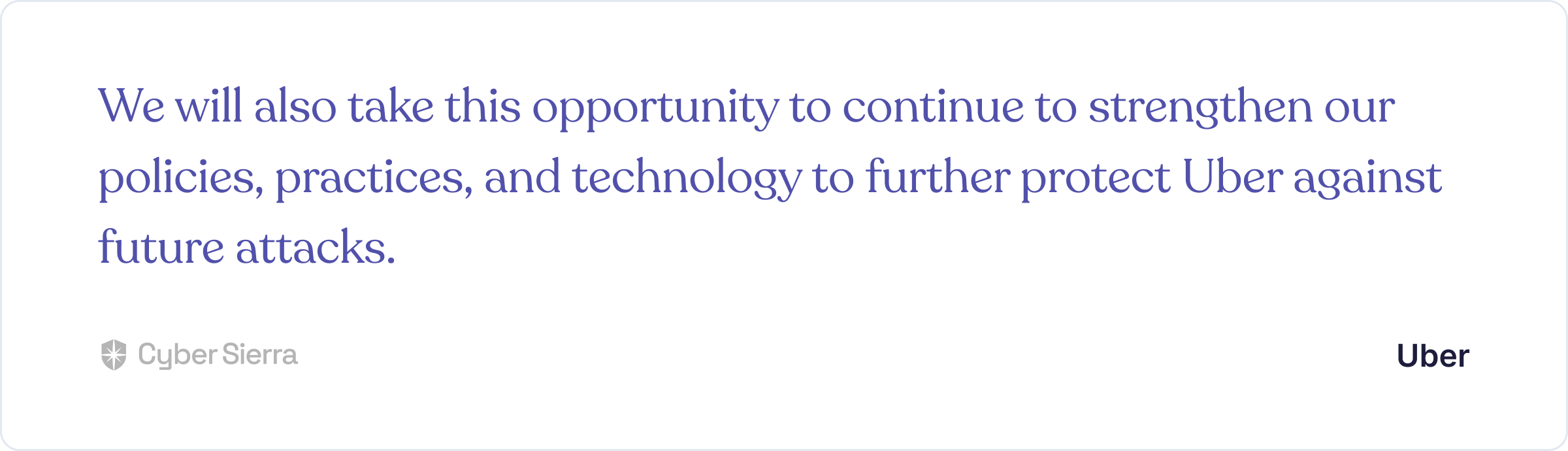
 

After its Sep. 2022 data breach, Uber wrote:


The response was swift, as you’d expect from an enterprise company. Latha Maripuri, Uber’s CISO, in a New York Times’ report, confirmed the move to tighten internal security, so such attacks don’t happen again. 


But just two months later in December, it happened again. Despite tightening internal cybersecurity measures, Uber suffered another cyberattack. This time through a third-party vendor, Teqtivity


Their case has a crucial lesson for CISOs. 


Tightening internal data security measures is a must, but it’s not enough. In trying to breach companies’ data, going through 3rd-party vendors has become a hot shot window for cybercriminals:
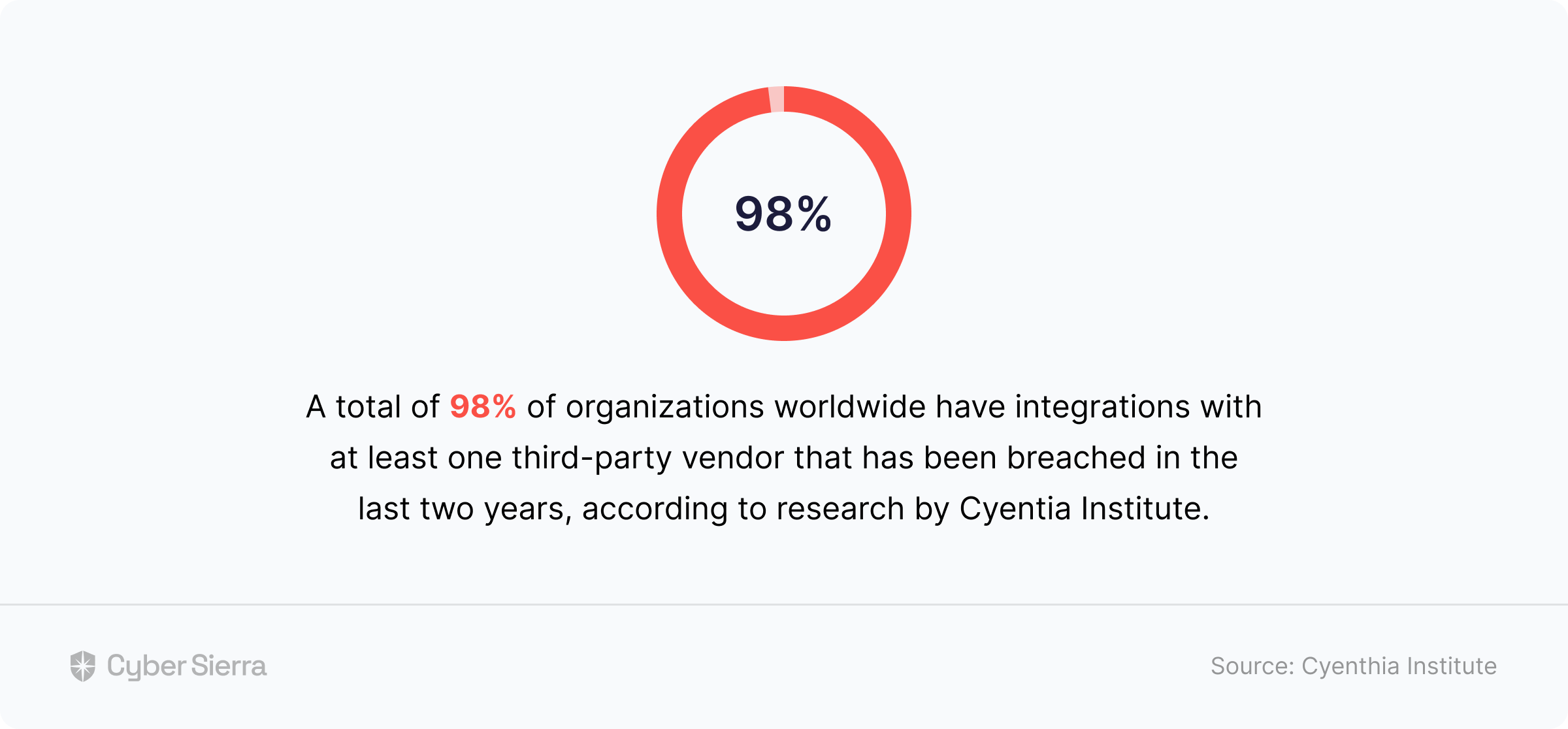
 

Company needs third-party vendors to expand capabilities


Unfortunately, the reality is that your company needs third-party vendors to expand capabilities. So since they can’t be cut off, CISOs must rise to the occasion of managing third-party vendor risks.


And it starts with understanding your role.

The Role of CISOs in Vendor Risk Management


The CISO role is evolving. 


In the past, operating as tactical manager per the CXO’s direction was enough. It was enough because being reactive —dealing with minor threats when they emerged or implementing a few security needs —was enough. 


As Uber’s case showed, being reactive isn’t enough. 


Modern CISOs have evolved from reactive —constantly playing defense —to strategic. They are getting more involved in the overall operation of the business. And this involves ensuring internal security awareness while managing possible external vendor threats.


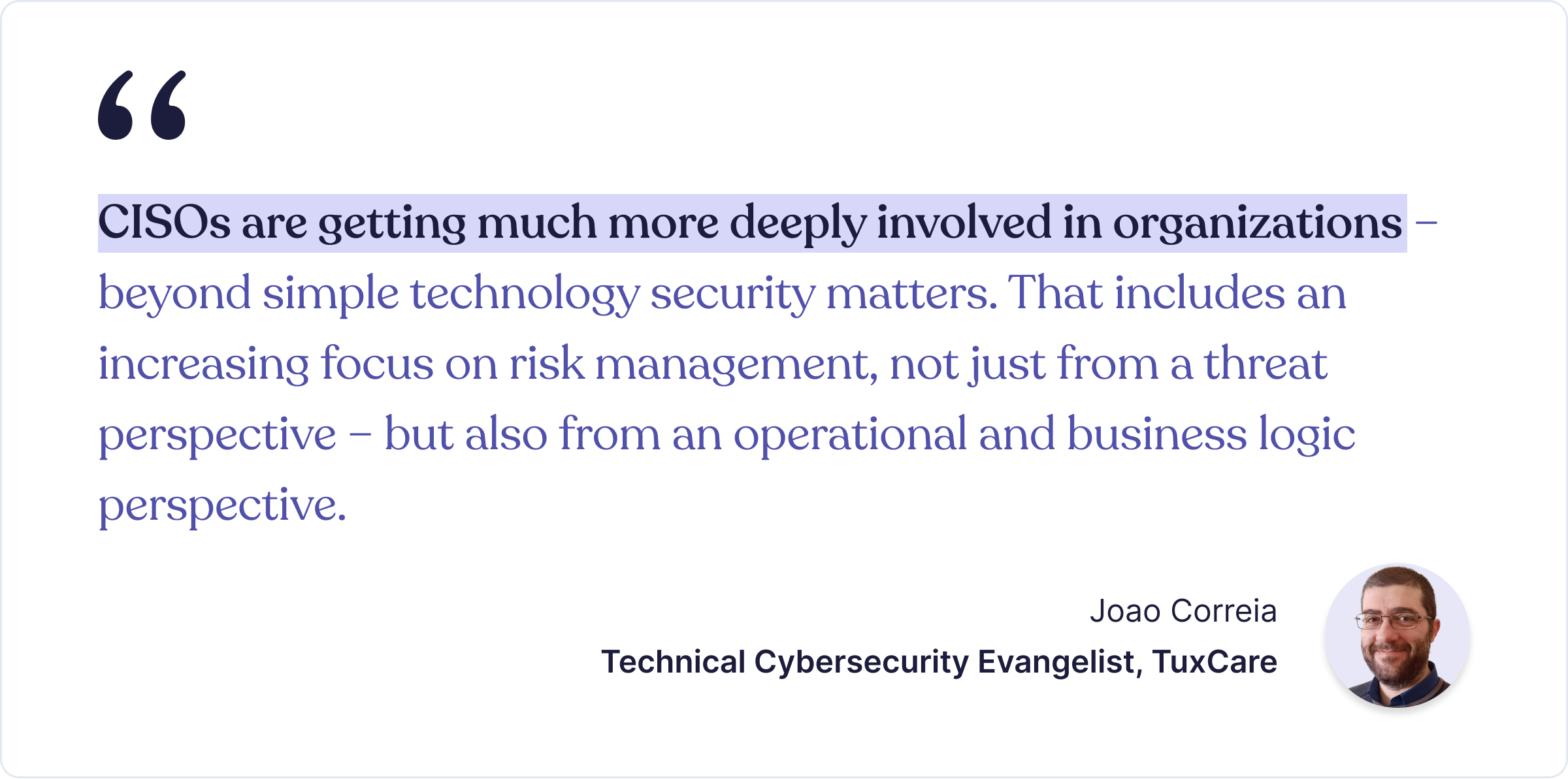
Joao Correia corroborates


Joao Correia - Quote


The need to also evolve your role to a more strategic focus on managing vendor risks cannot be overstretched. 


That’s because doing otherwise can lead to significant financial losses for your company and organizations connected to you. To give you a clue, when SolarWinds witnessed a cyberattack, all third-party companies affected lost up to USD12 million on average:
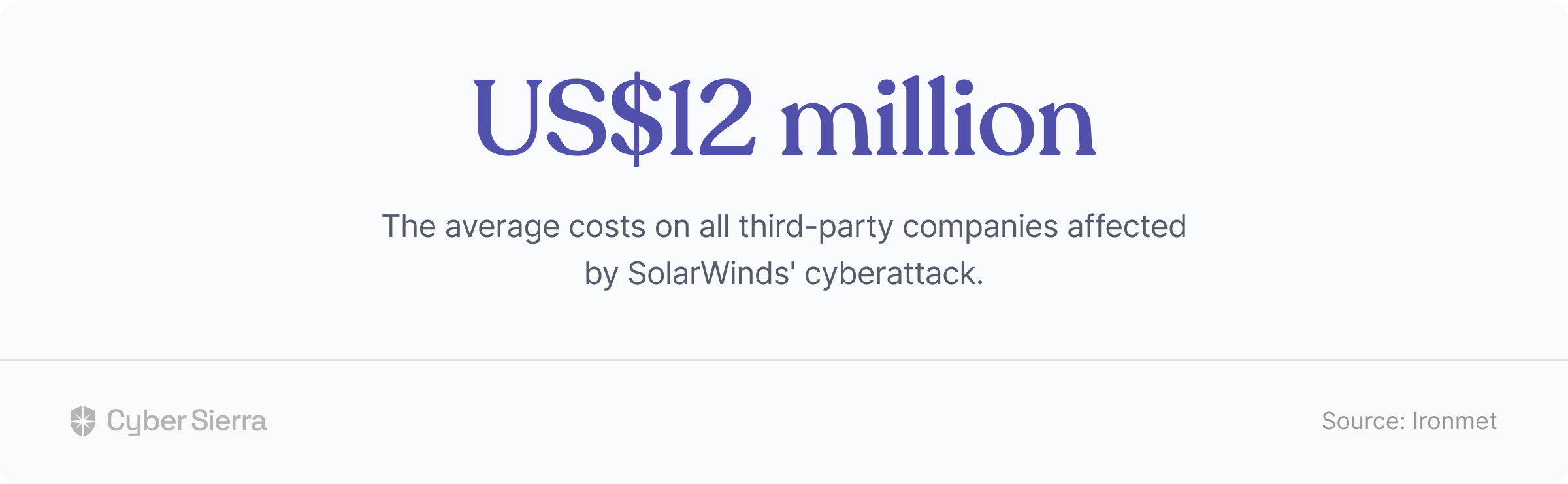
 

USD 12 MIllion


Talking about being more strategic to curb such losses… 


It’s crucial that you know: 

  • Common third-party vendor risks to prioritize, and
  • How to manage them without increasing your workload. 


We’ll cover both in this guide, but before we dive in:

illustration background

Join Secure My Software Weekly

Actionable cybersecurity insights helping CISOs, CTOs, and security pros secure their software weekly.

Common Third-Party Vendor Risks CISOs Should Prioritize


Here’s why the onus is on you, the CISO. 


You can’t rely on third-party vendors to notify you when they get breached, let alone possible ways they could be attacked. For context, out of more than 1,000 IT security professionals surveyed, only 34% were confident a 3rd party vendor would notify them of a data breach: 
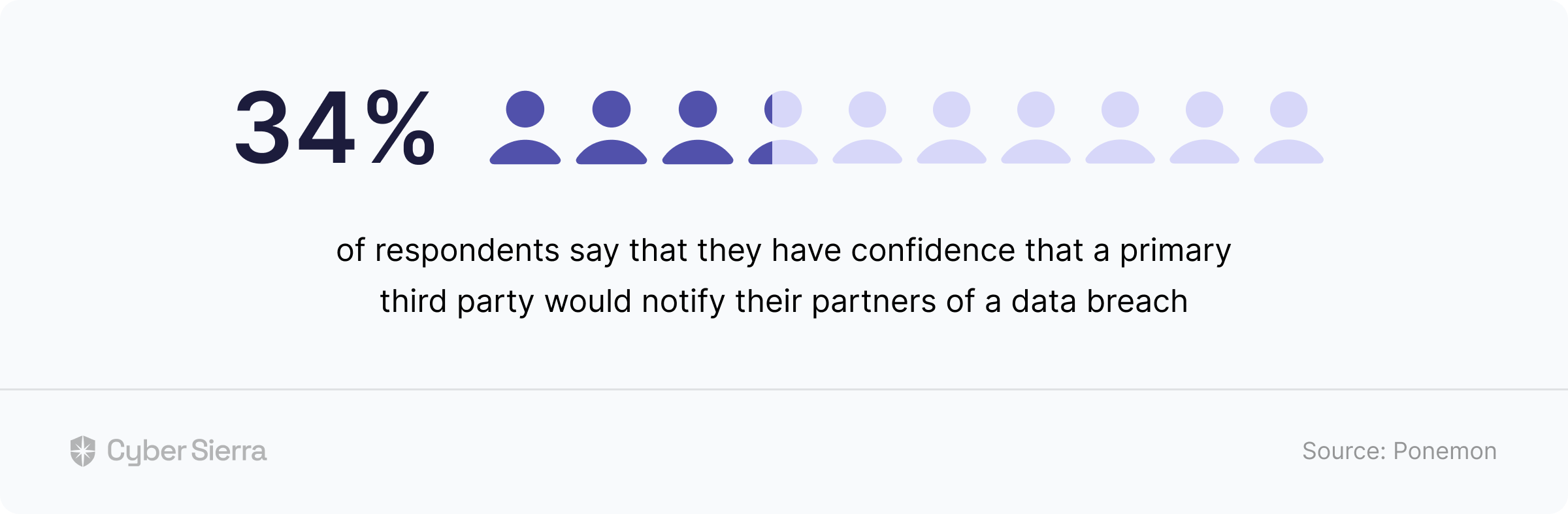
 

Common Third-Party Vendor Risks CISOs Should Prioritize


This insight is instructive: Know the common risks to manage based on their likely impact on your business, without relying on third-party disclosures. 


Some of them are as follows. 


1. Information Security Risks


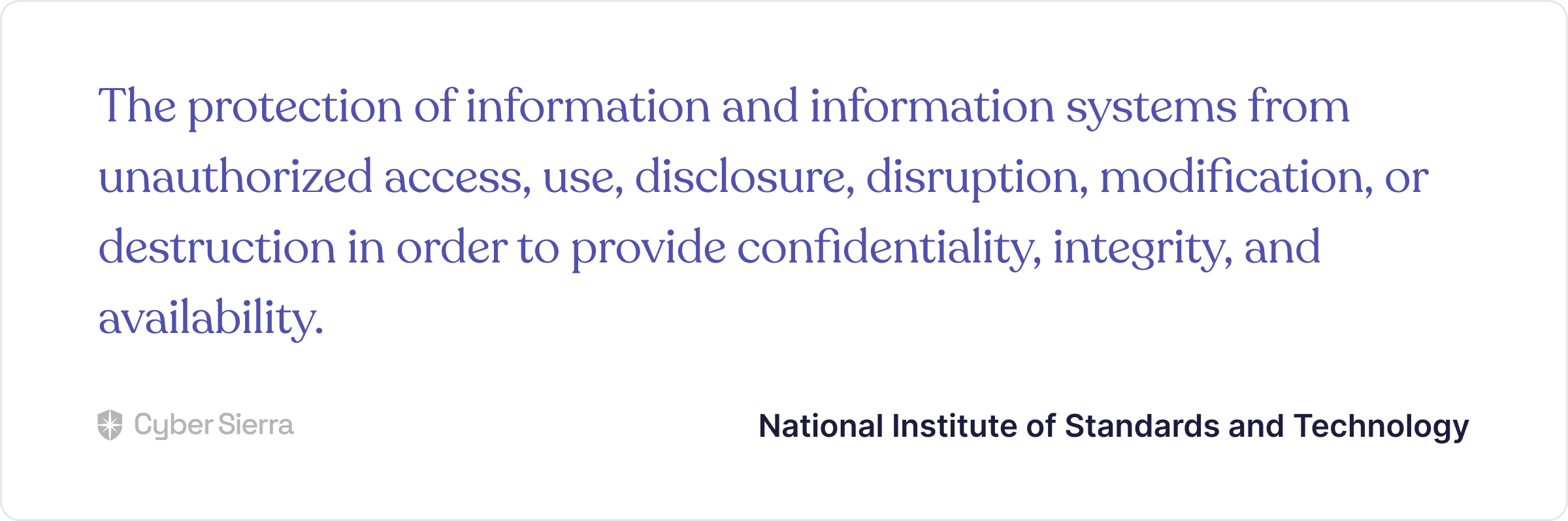
NIST defines information security or infosec as:
 

Information Security Risks


As the definition highlights, infosec risks arise when 3rd-parities’ can’t provide confidentiality, integrity, and availability of data your company grants them access to. 


In other words, can the management of a third-party vendor secure your company’s data in their possession from unauthorized access?


If they answer no, that’s a loophole for cybercriminals. 


Unauthorized network access, to give you a perspective, caused over 40% of third-party vendor attacks that had a cascading effect on companies:
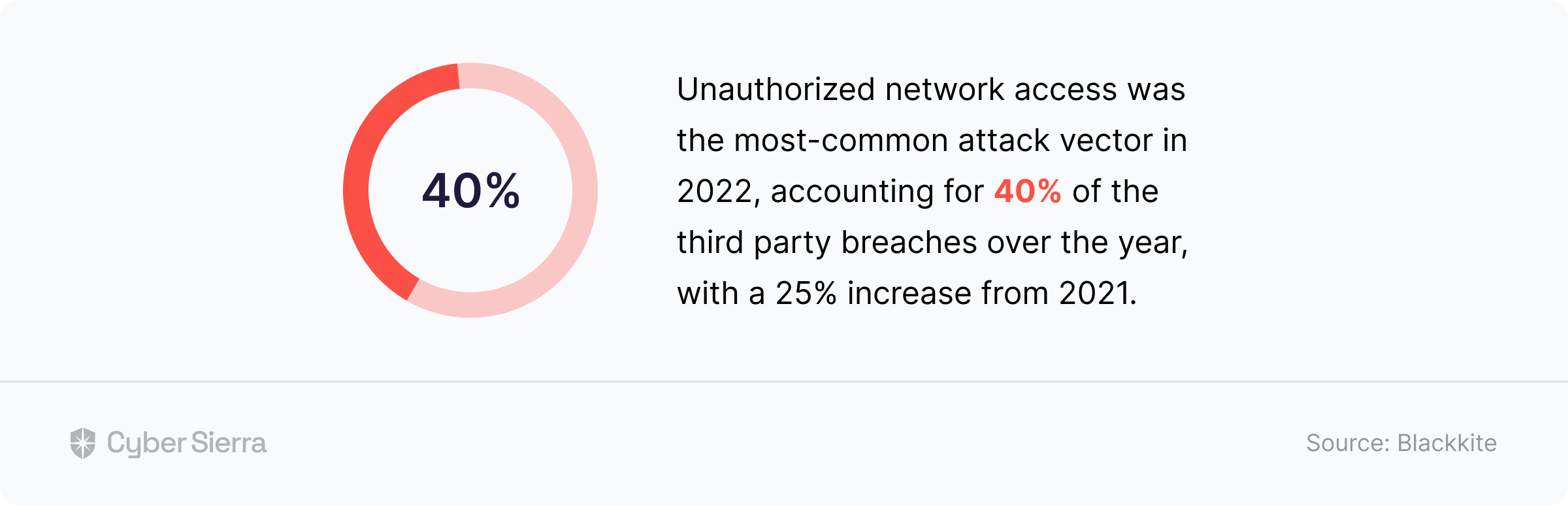
 

Unauthorized network access


The issue, as noted earlier, is vendors won’t point out this weakness. Not when they’re eager to win your company’s business. So to manage and curtail infosec threats, collect and verify as much evidence as necessary before approving the onboarding of a vendor. 


Better if you can do this from one platform: 
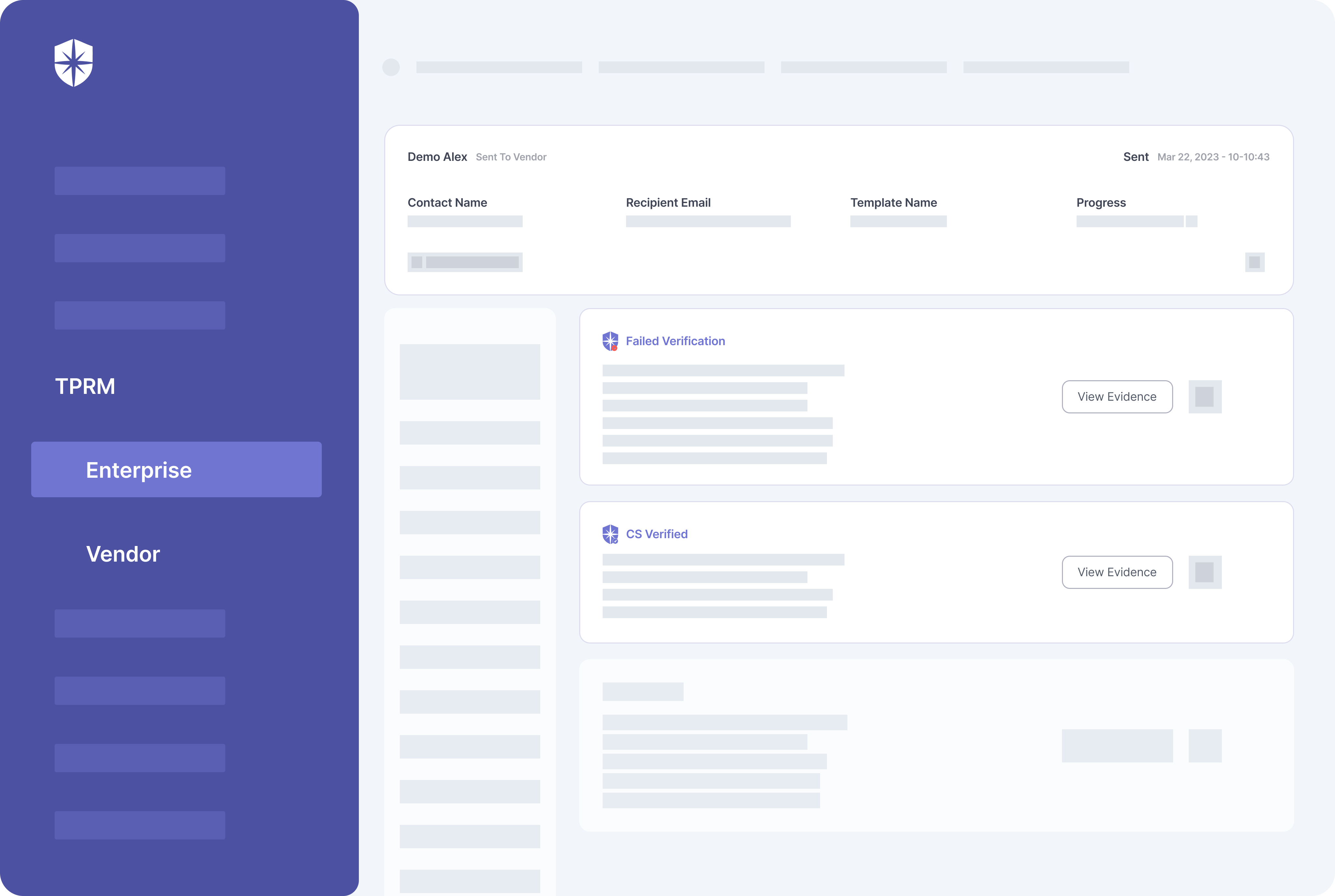
 

onboarding of a vendor


More on this later. 


2. Cybersecurity Risks


Consider this scenario.


A third-party vendor with access to your company’s data witnesses a malware or ransomware cyberattack. Assume also that you’d verified them on the information security front, and they actually protected your data. 


If they safeguard your data from breaches, but cannot secure themselves from cyberattacks, your company is still at risk. That’s how cybersecurity risks differ a bit from information security, infosec:
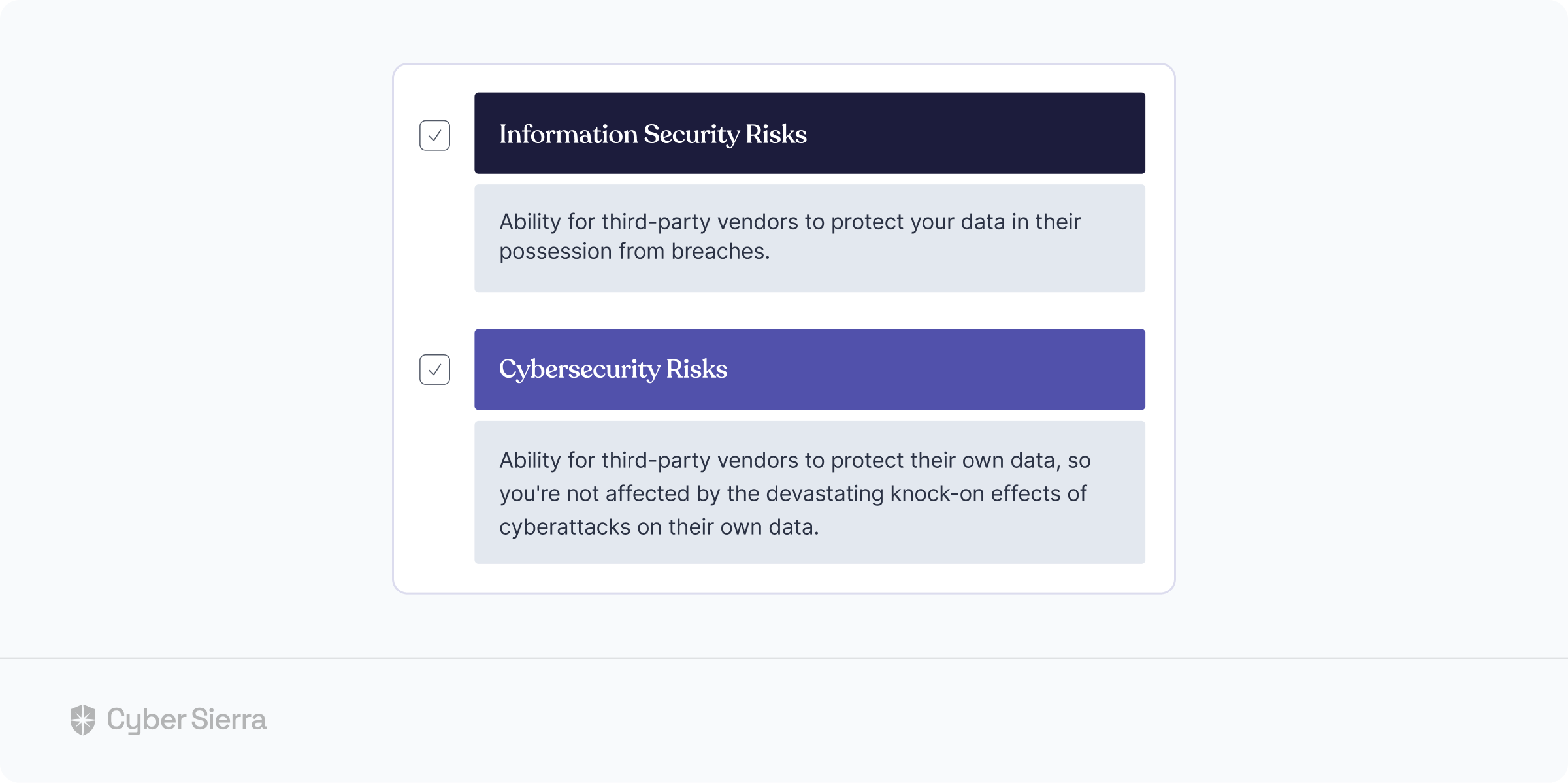
 

Cybersecurity Risks


A third-party vendor’s inability to protect themselves poses serious threats —cybersecurity risks— to your company, too. In short, the knock-on effect can also be devastating as infosec risks. 


Cyenthia Institute’s study highlights: 
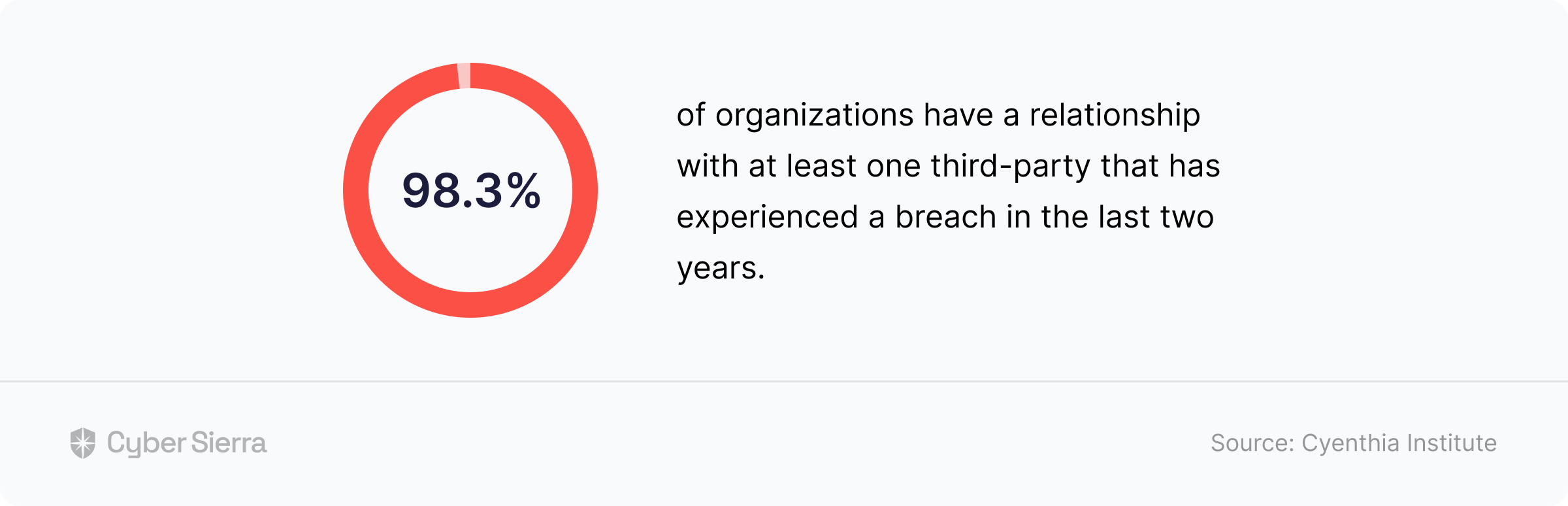
 

Cyenthia Institute’s study highlights:


As you would when trying to manage infosec risks, don’t expect 3rd parties to willingly disclose they can’t protect themselves from cyberattacks. Collect and verify as much evidence as possible. 


Specifically, request evidence for things like: 

  • Risk management 
  • Communications and operations management
  • Cyber resilience & threat intelligence
  • Access control
  • And others. 


Again, better to request and verify these in one place:
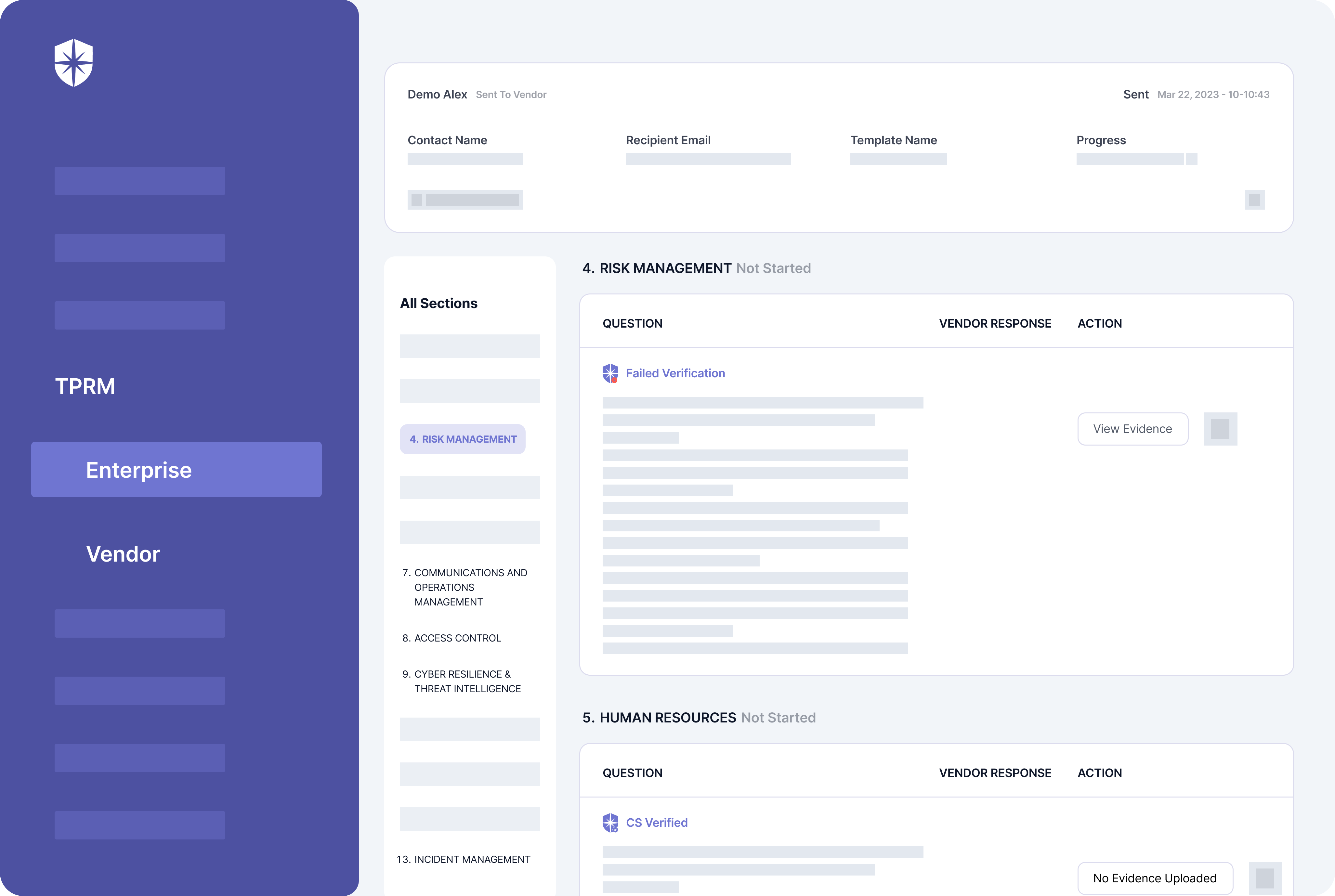
 

Risk management


3. Operational Risks


Imagine a third-party vendor shuts down. 

  • How much will it affect your company’s operations? 
  • Can you trust them to correctly dispose of your data?
  • What levels of risk will it expose your organization to? 


It’s crucial to ensure that 3rd-party operations won’t expose your company to risks, per the concerns above. More so in today’s digitally-driven business climate of cloud-based software and API integrations. 


Talking about security threats from the operations of third-party vendor software or APIs integrated into yours, a Gartner study advised:
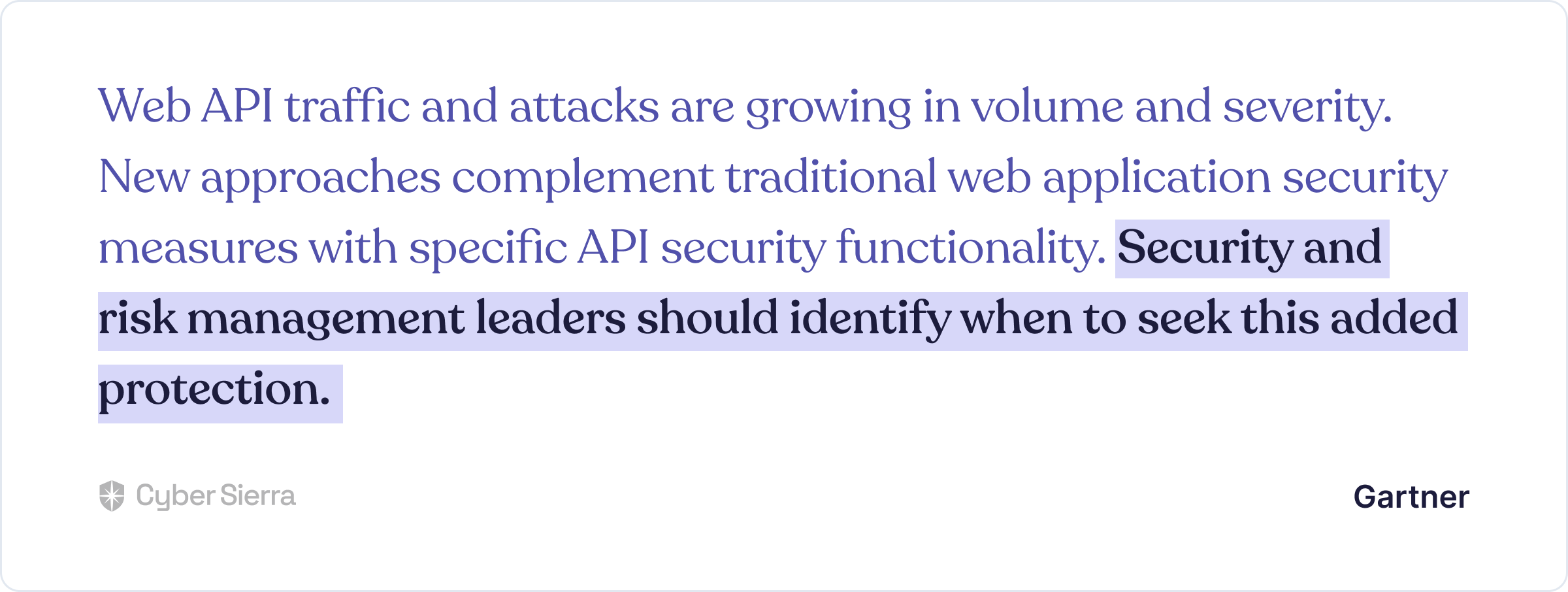
 

Web API


The challenge: 


How do you know which vendors to seek such added protection from?


By requesting and verifying things like: 

  • Software development lifecycle
  • Cloud based services information
  • Technology refreshment management
  • And others. 


Operational Risks


4. Compliance Risks


Are 3rd-party vendors your company works with compliant with standards, laws, policies, and regulations in a given industry or jurisdiction? 


IT security executives must ask this crucial question. 


That’s because if they aren’t, they could expose your organization to legal and regulatory compliance penalties. According to Deloitte, this is a common 3rd-party risk enterprise organizations face:
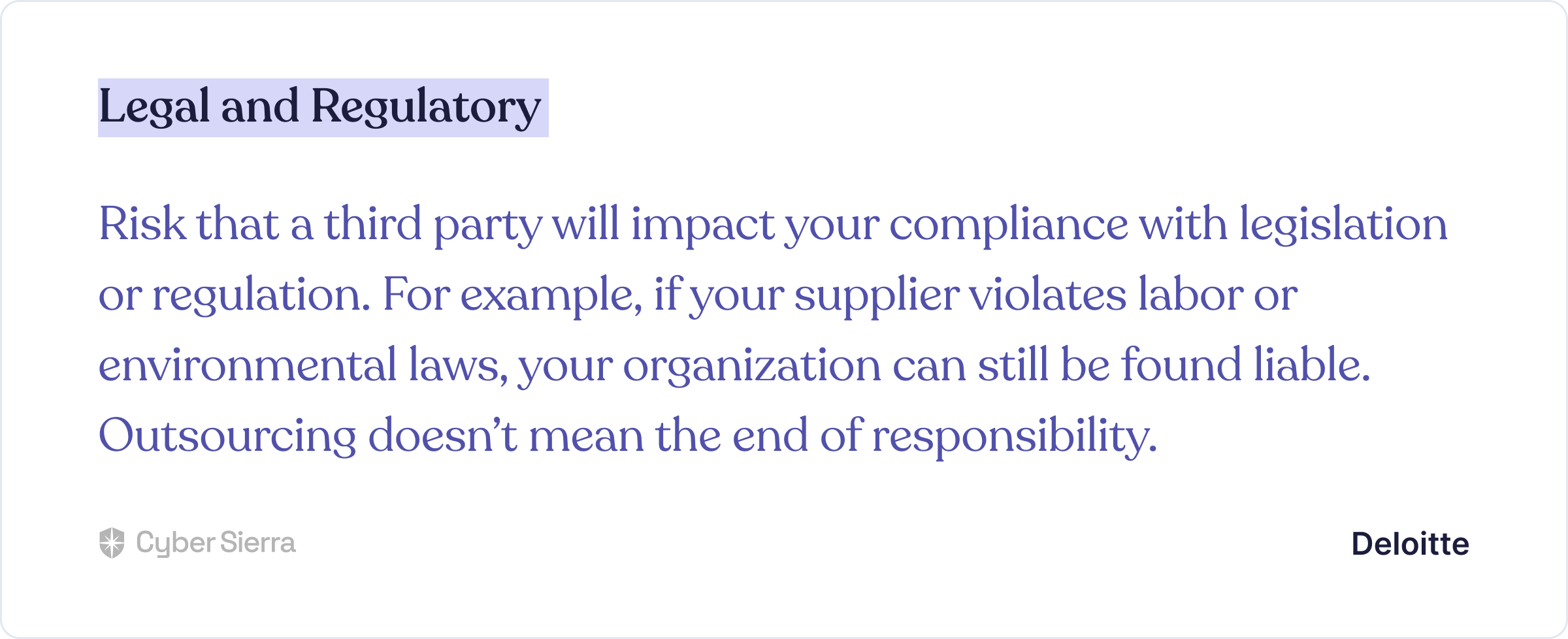
 

Compliance Risks


Compliance automation with standard frameworks like SOC 2, ISO27001, HIPAA, GDPR, PCI DSS, etc., are all necessary. Also, confirm a third-party vendor is compliant with regulations specific to their industry and exact location. 


Here’s an excellent way to do that. 


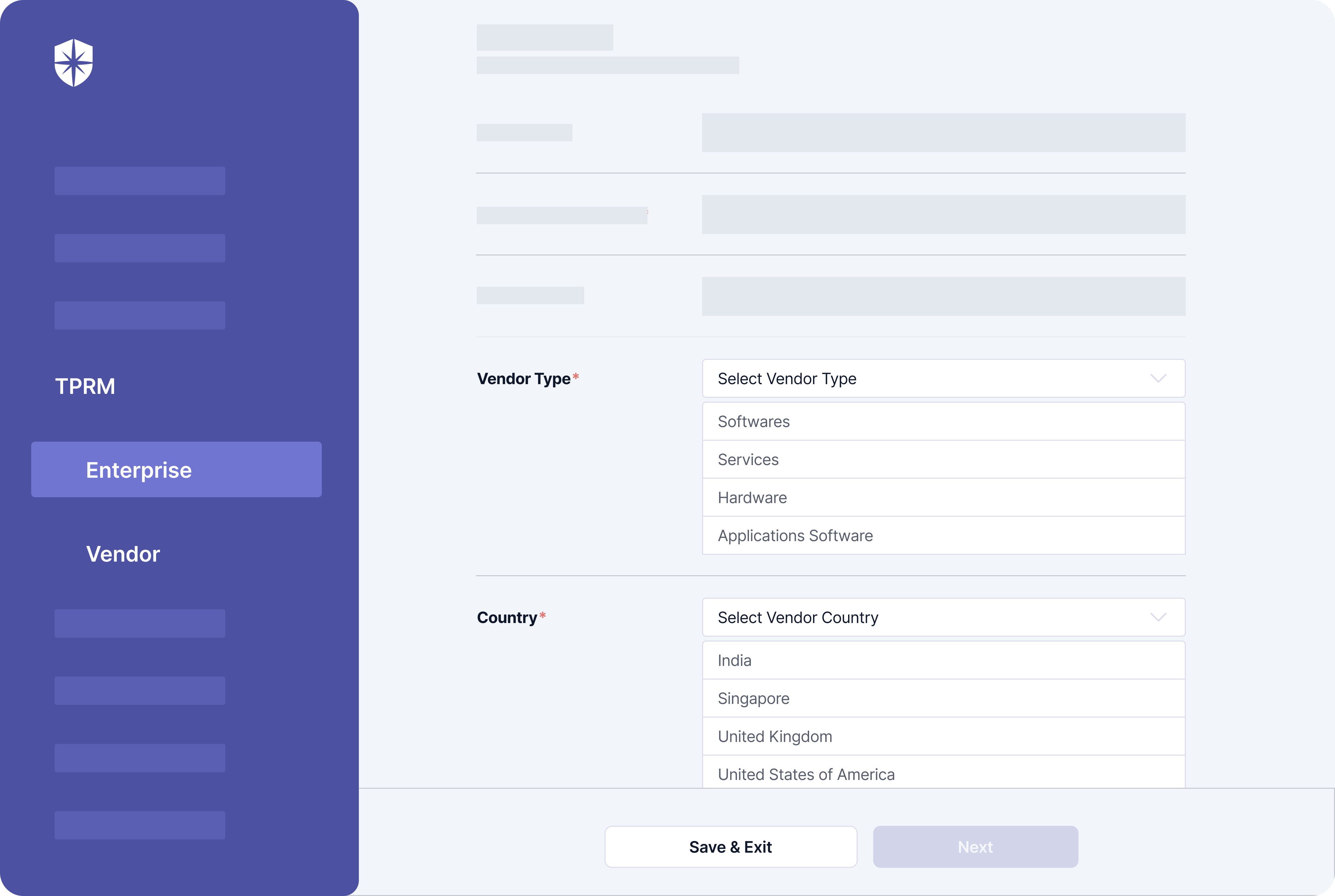
When onboarding a third-party vendor:

  • Choose the right vendor type: This will help you know the industry-specific regulatory compliance to request and verify. 
  • Select their location: This will help you know the local laws and regulations they must be compliant with to avoid risks. 


Both are some crucial TPRM workflows built into our platform:
 

Compliance Risks


As shown above, Cyber Sierra simplifies vendor categorization, so you can assess them seamlessly from the get-go. Our software also automates most processes involved with third-party vendor risk management.

illustration background

Cutoff Endless Manual Work

Automate third-party vendor risk management, right from the get-go.

How CISOs Automate Vendor Risk Management


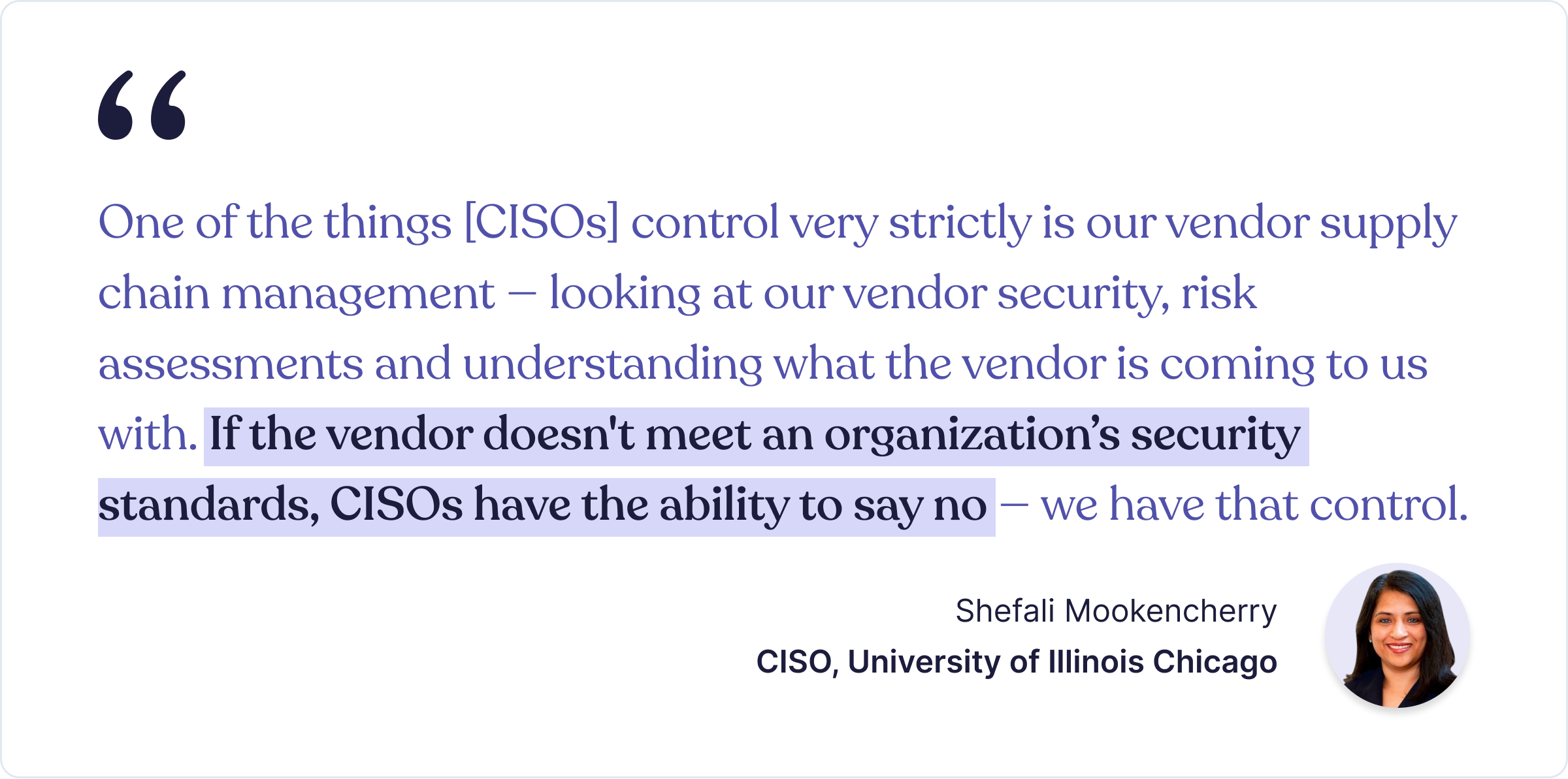
UIC’s CISO, Shefali Mookencherry, once said


Shefali Mookencherry - Quote


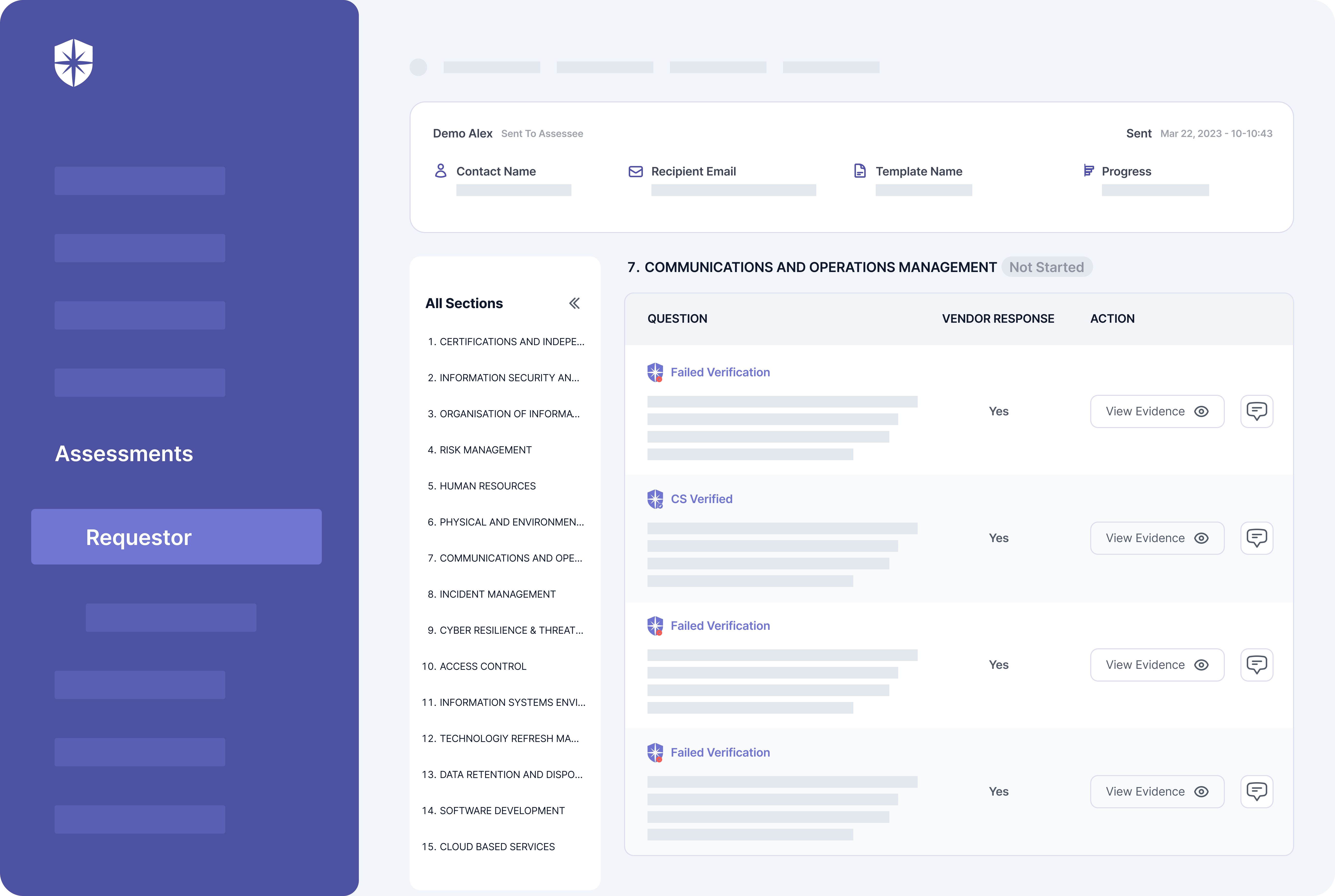
Unpack that, and you’ll notice categories of assessments to be carried out on third-party vendors before CISOs should give the greenlight: 

  • Information security profile
  • Possible cybersecurity threats
  • Operational and regulatory risks


All three categories involve a lot of standard and custom security questionnaires and ongoing risk assessments. Each must be sent to vendors with due dates, received back, resent to them for failing to meet requirements, sent back to you, and so-on-and-so forth. 


This manual back-and-forth isn’t optimal, and that’s where automation comes in. With the right platform, you can automate TPRM in three steps:


1. Streamlining Vendor Risk Assessments


In the US, for instance, it is required to assess a 3rd-party’s infosec and cybersecurity risks, using policies specific to SOC and NIST. 


And there are about 35 standard assessments across both.


If you’ve ever tried to assess just one vendor, manual back and forth can be a real nightmare. Using software to streamline the process allows for quicker and more cost-effective vendor assessments in less time.


Let’s stay with our US-based third-party vendor example. 


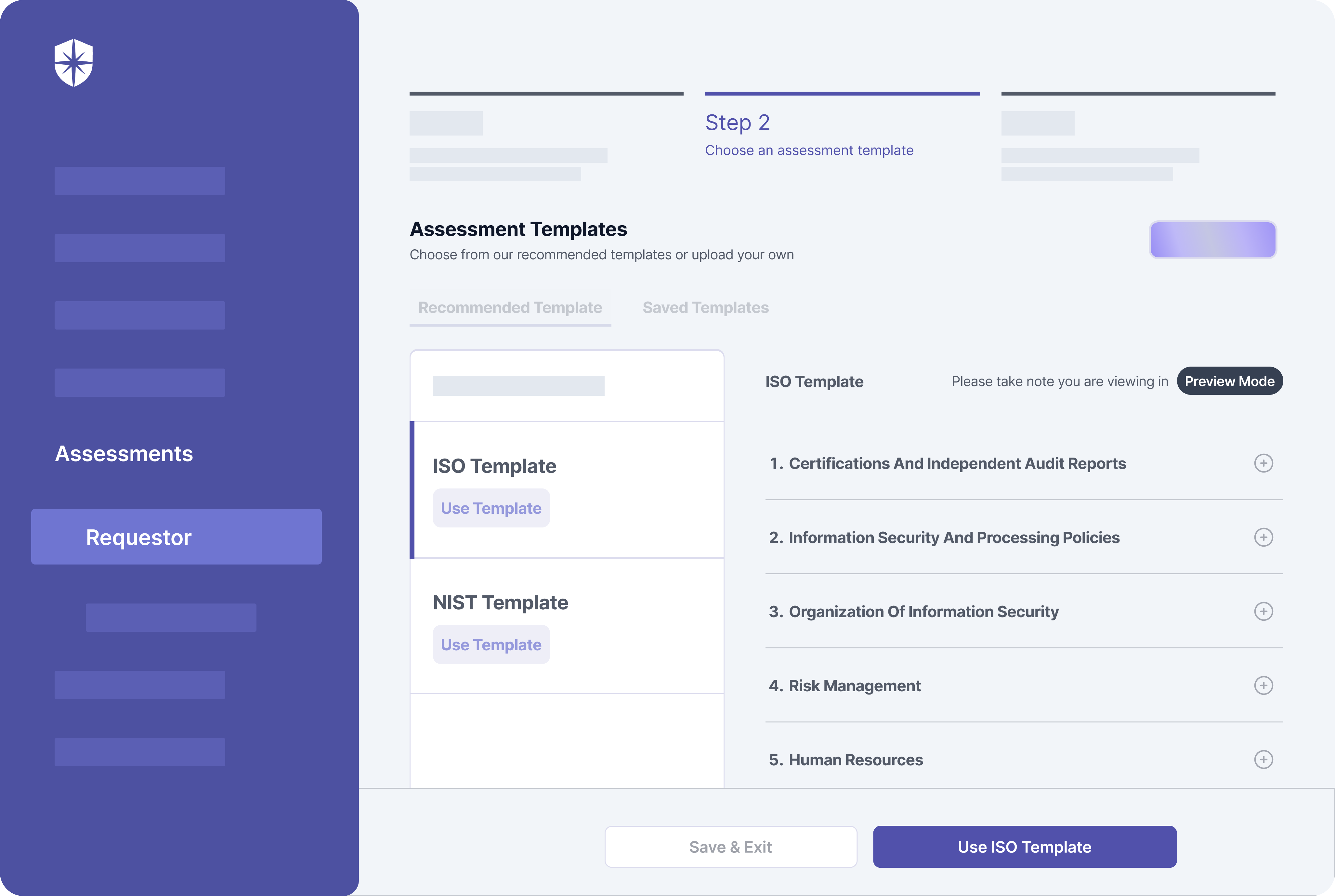
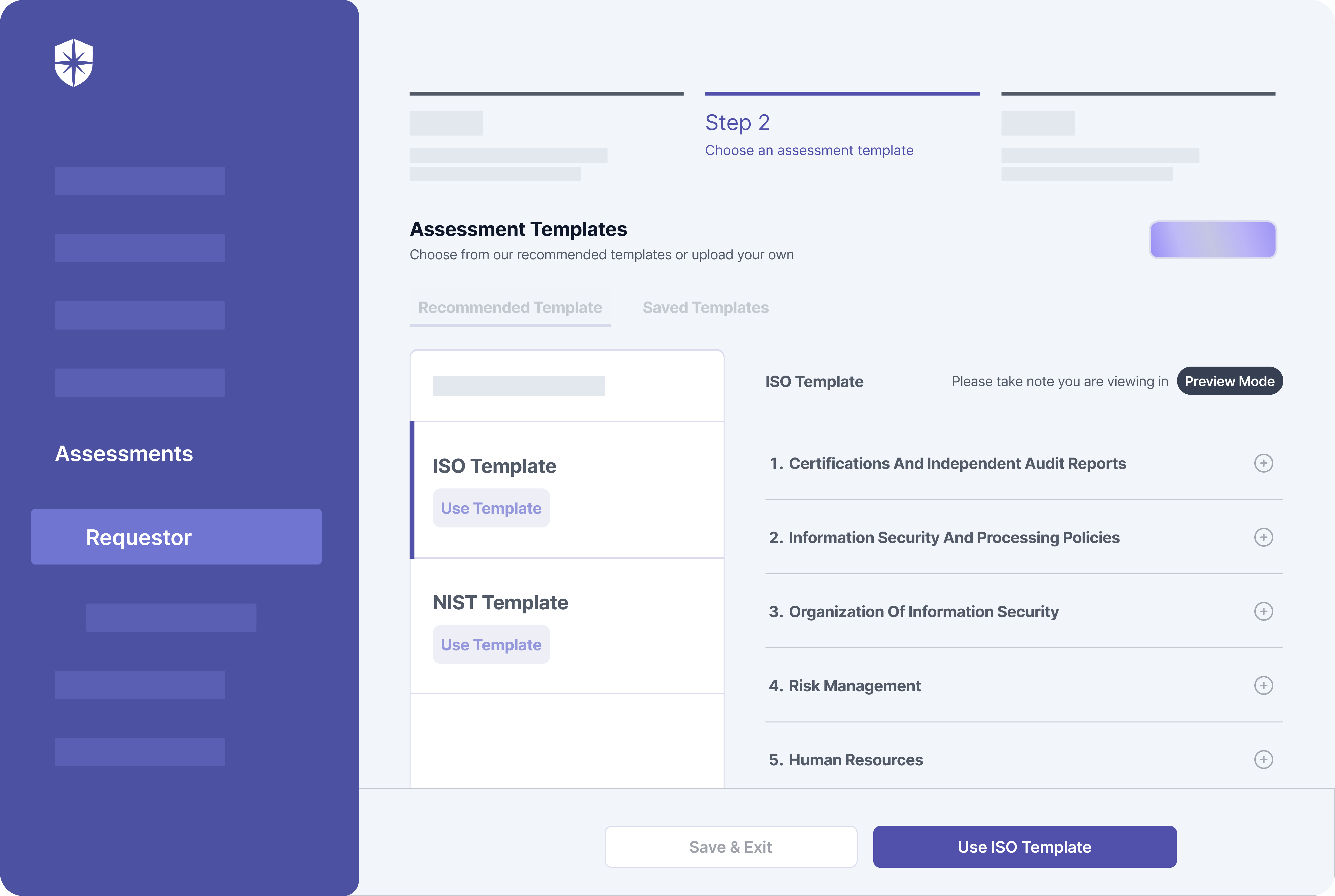
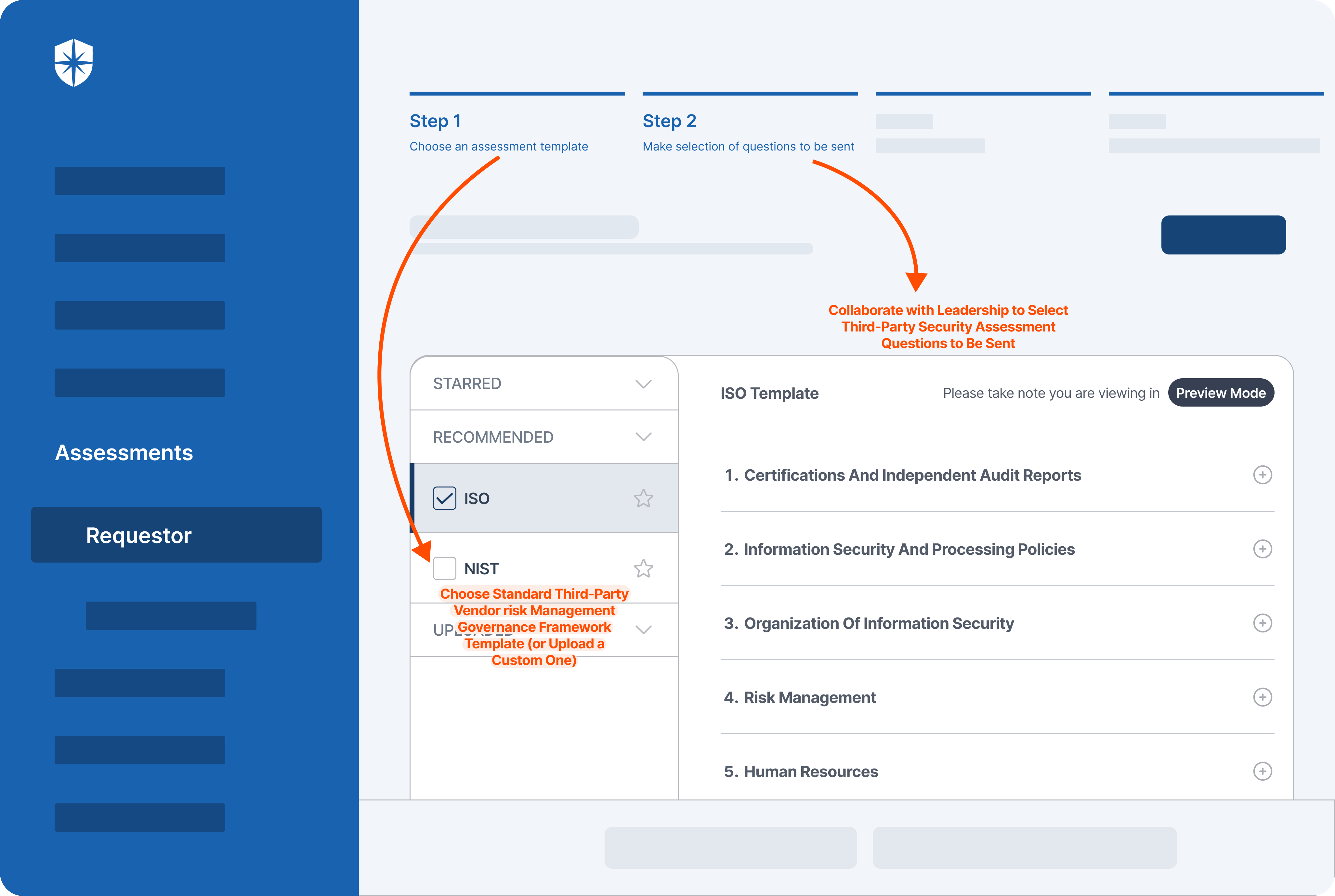
Cyber Sierra streamlines the entire process to just three steps. Choose the vendor’s industry in the 1st, and in the 2nd step, the policy templates for SOC and NIST are already pre-built (and updated regularly). 


All you have to do is select the one you want to use:
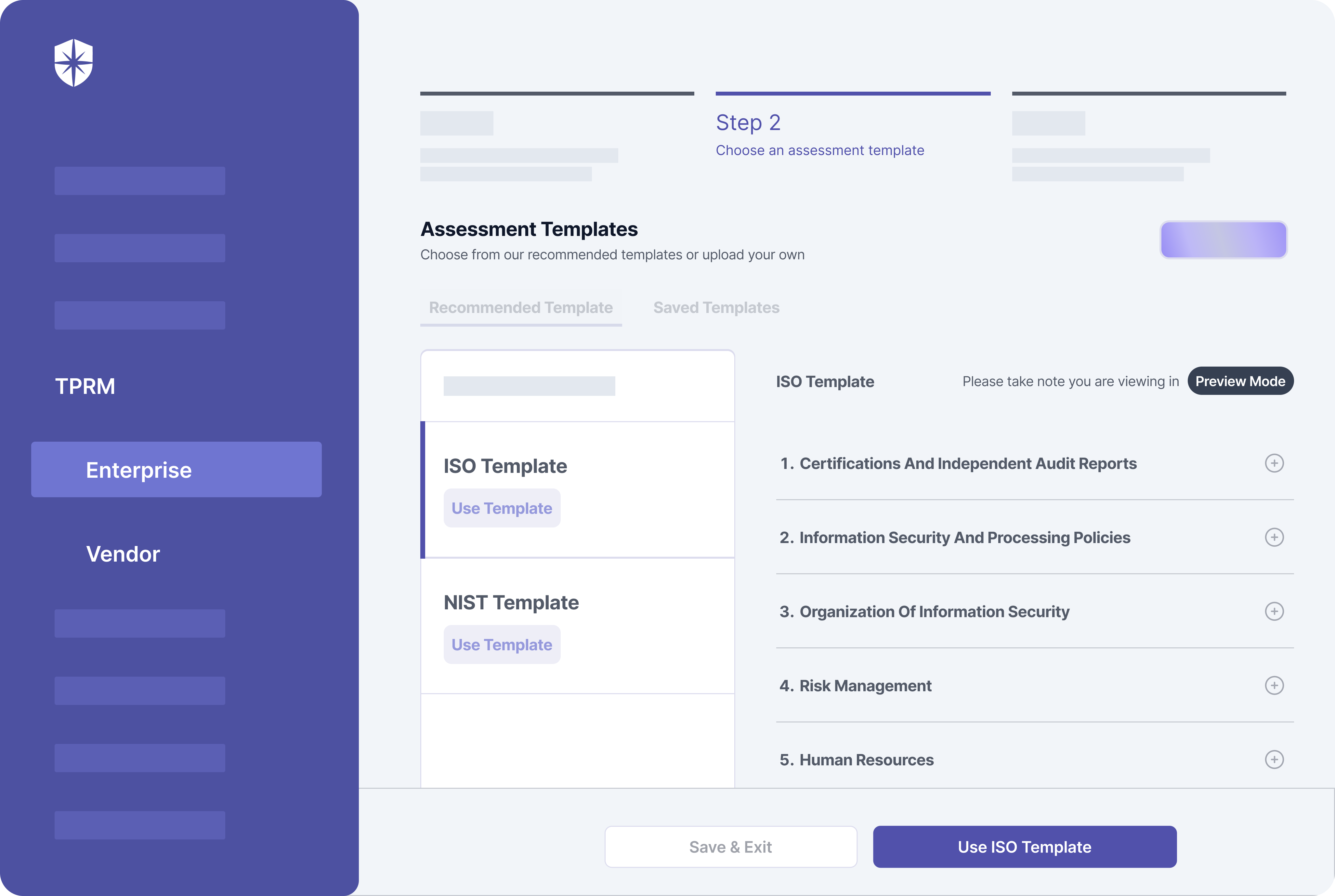
 

Streamlining Vendor Risk Assessments


As indicated above, you can also upload and send custom assessment policies. Either way, the entire assessment processes are streamlined. 


2. Facilitating Due Diligence & Verifications


Vendor risk management doesn’t end with sending security questionnaires and risk assessments. After that, security executives must perform: 

  • Due diligence on uploaded documentation, and 
  • Verify that they have the correct security controls.  


Both processes can also be hectic. 


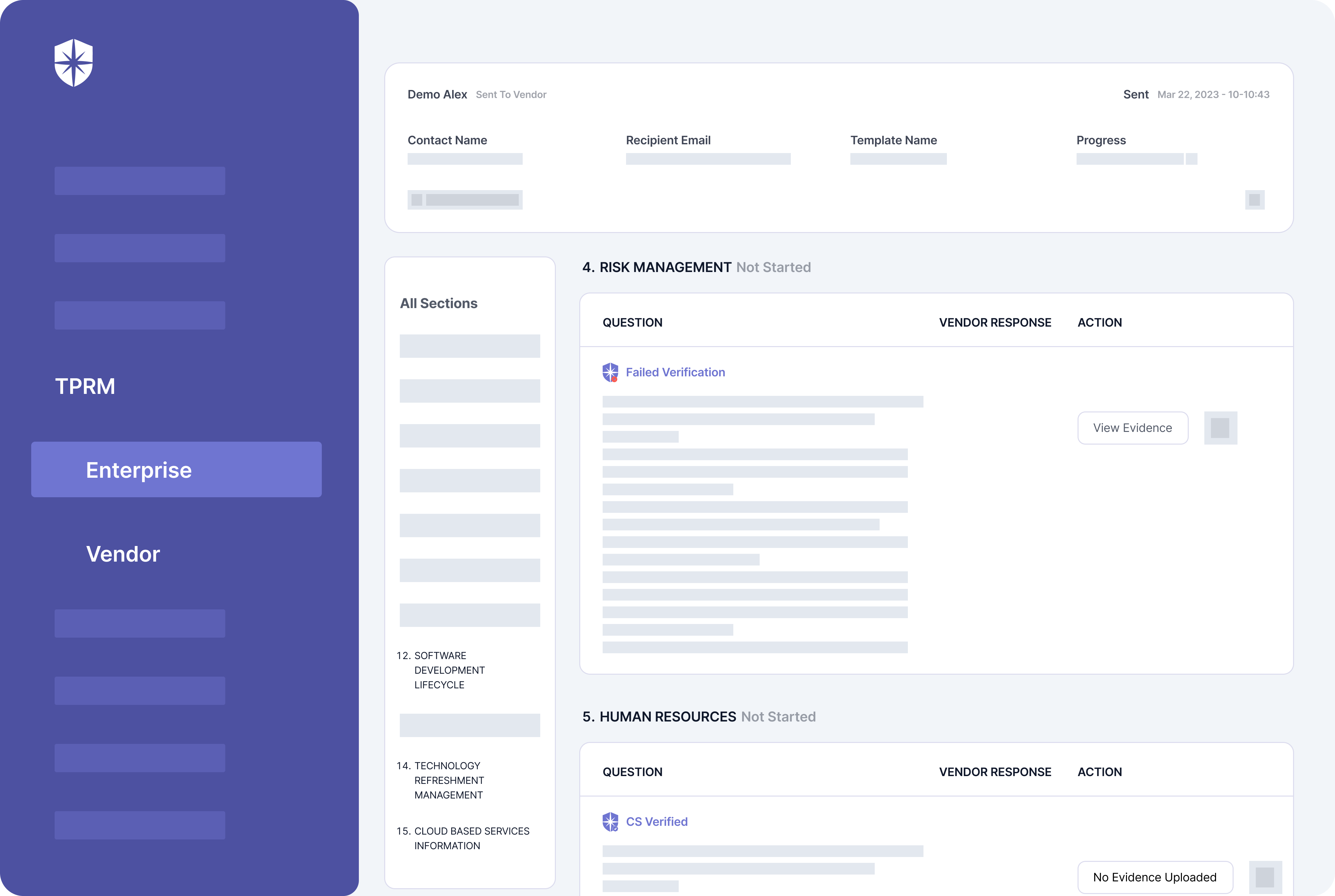
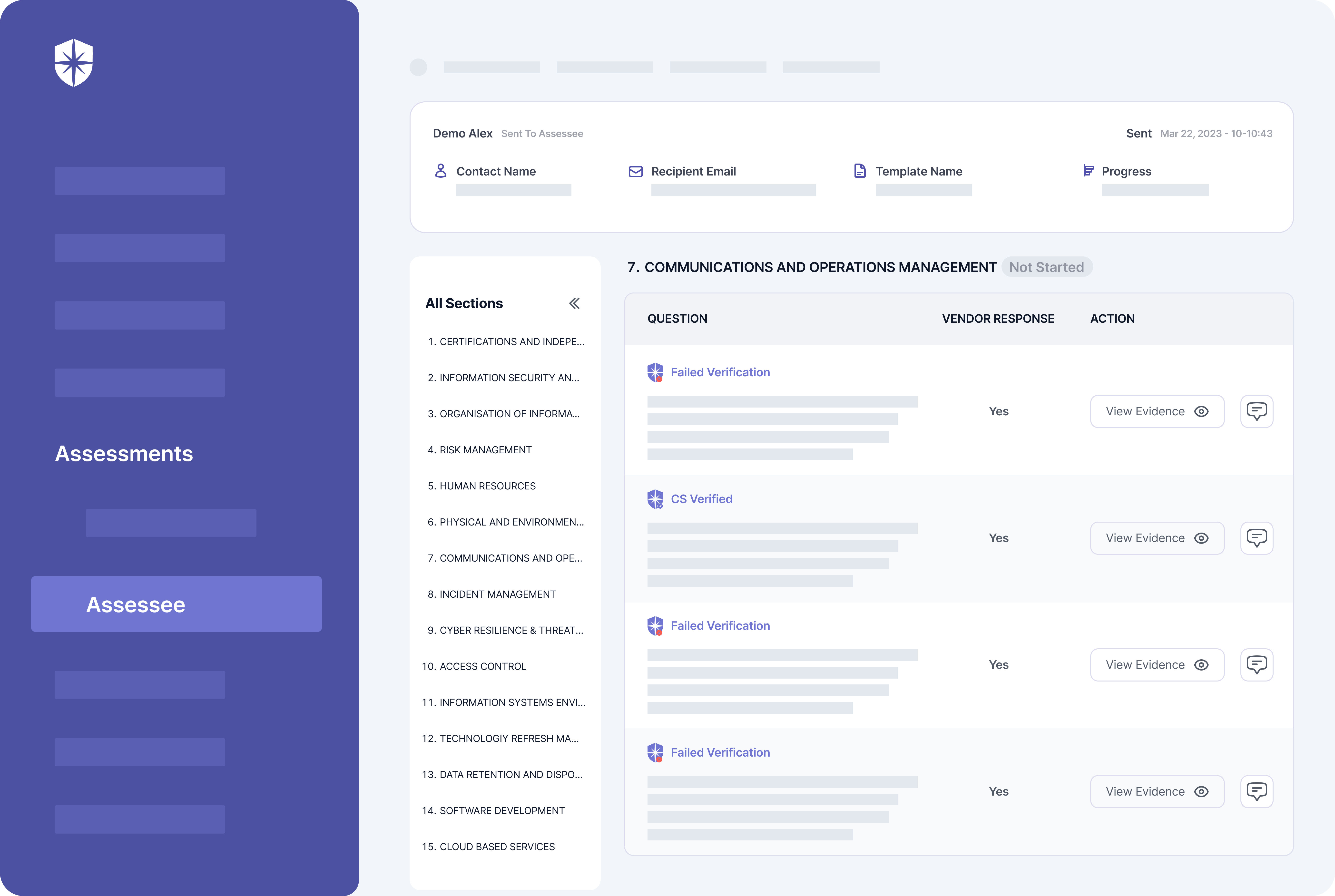
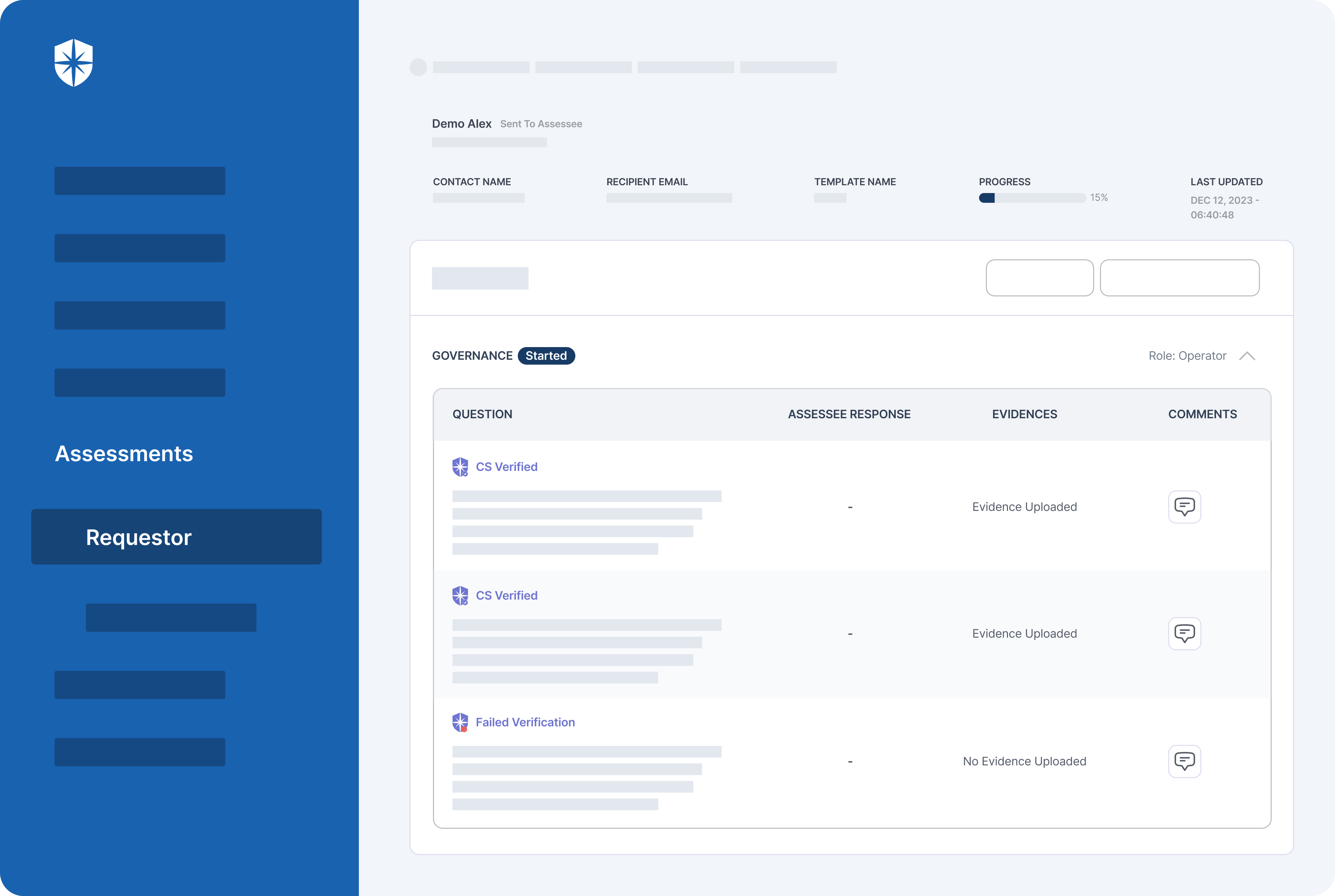
But with the right software, you can automate this crucial step by facilitating due diligence and verifying controls. Cyber Sierra, for instance, autoverifies vendor-uploaded documentation that meets due diligence thresholds. Our software can also flag those that fail verification. 


It doesn’t end there. 


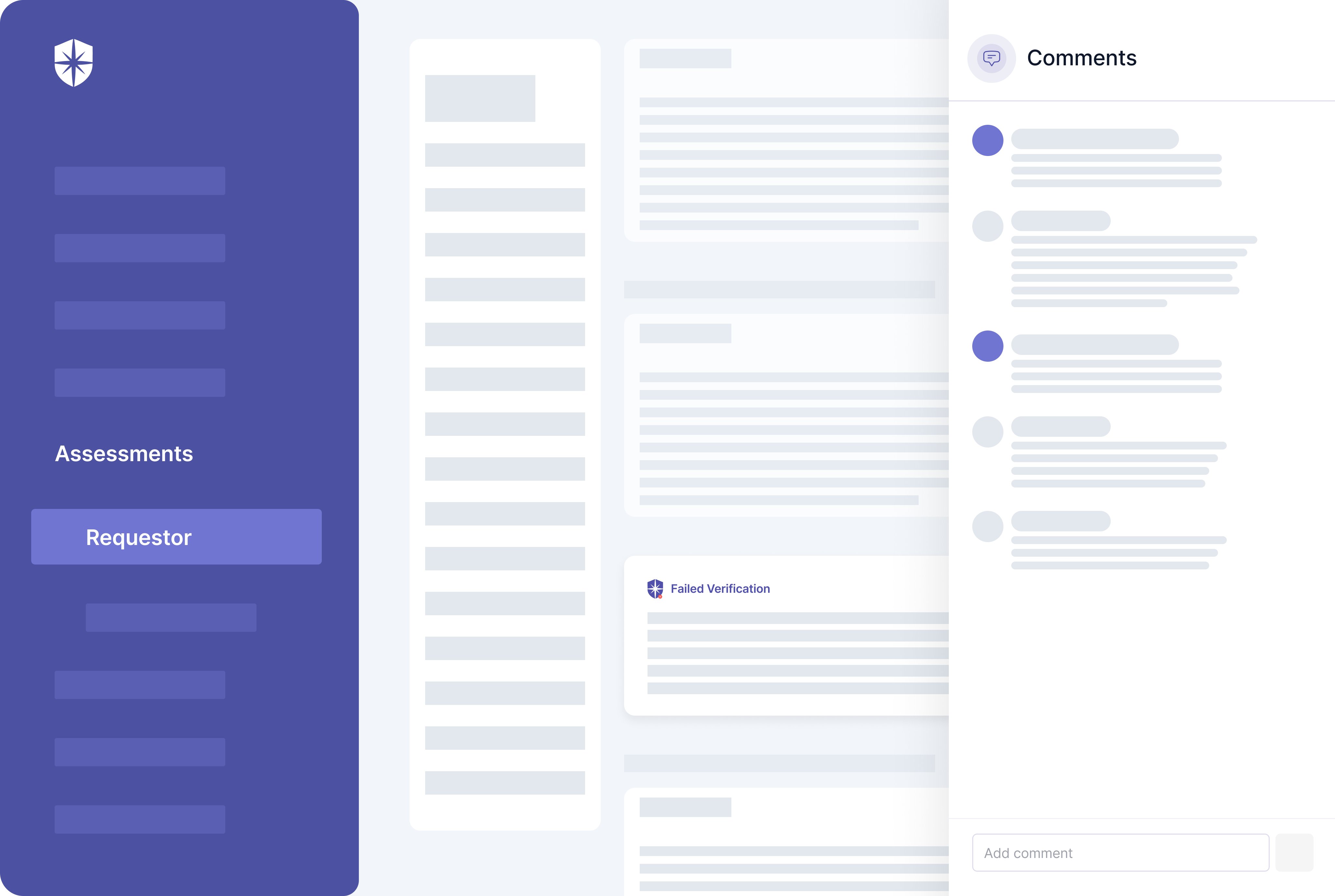
You can chat with a third-party vendor, flagging unacceptable security controls and why a document they uploaded failed verification: 
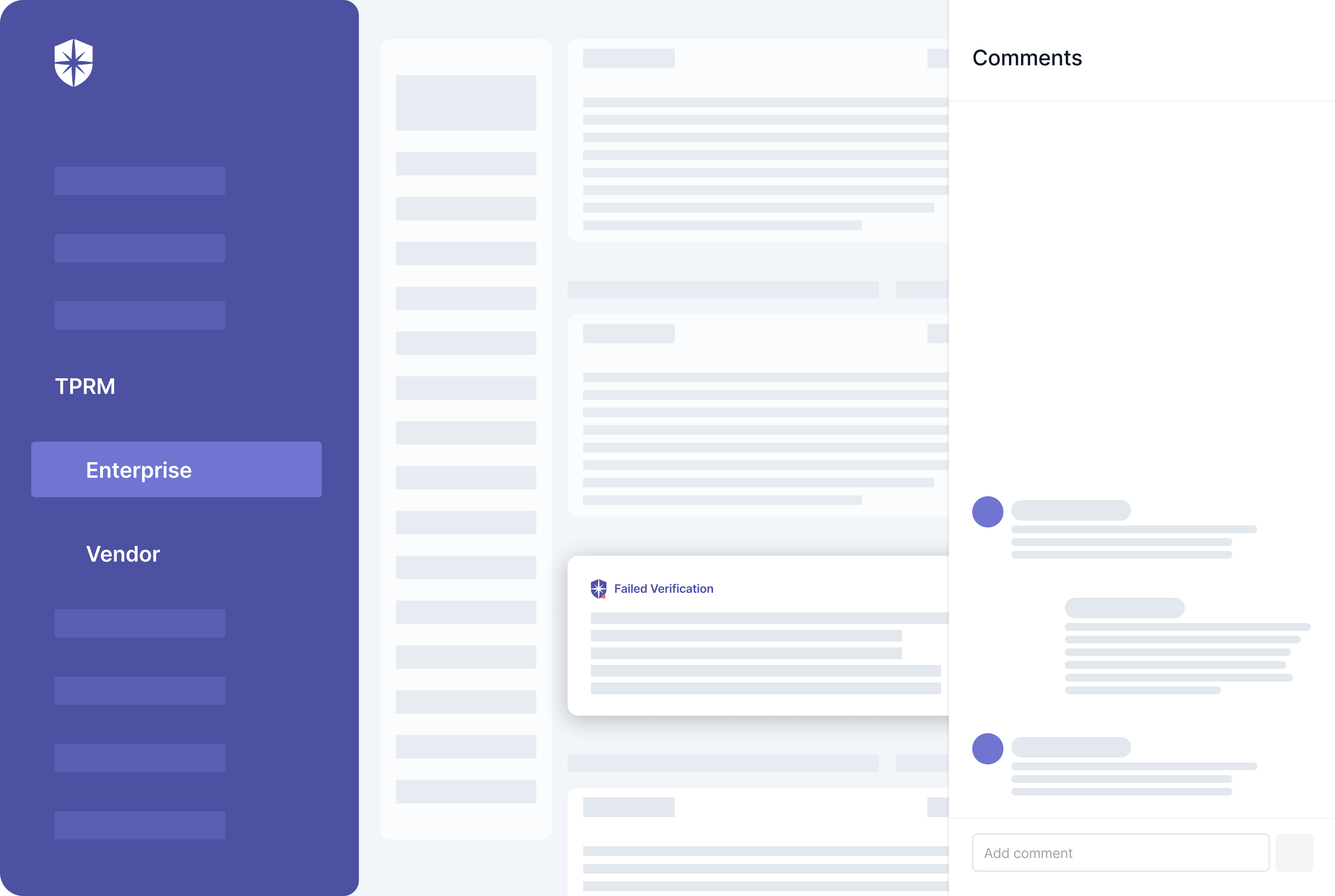
 

Facilitating Due Diligence & Verifications


Simplifying due diligence and verifying controls this way has benefits.


Some are: 

  1. Accurate and faster verifications, without context-switching.
  2. Third-party vendors you’re about to work with will know exactly how to improve their cybersecurity posture, making our entire ecosystem safer. 
  3.  Everyone saves time (and money). 


3. Monitoring Controls Continuously


Recall Uber’s data breach through Teqtivity.


It’s likely Uber, being a large enterprise, completed necessary third-party infosec and cybersecurity assessments when integrating them into their software. Still, the cyberattack on Teqtivity, which happened after both companies worked for long, affected Uber.


Imagine Uber had regularly monitored Teqtivity’s security controls.


Chances are, they would’ve spotted possible cyber threats that could also affect them and flagged for mitigation. Continuous security controls on third-party vendors are necessary for this. 


But it’s not just that. 


As cybercriminals become more sophisticated, compliance regulations, both standard, industry, and location-specific ones, are also evolving. Continuous monitoring of 3rd-party security controls is therefore also crucial to avoid business operations being stalled by regulatory sanctions. 


A veteran infosec and cybersecurity expert corroborates:
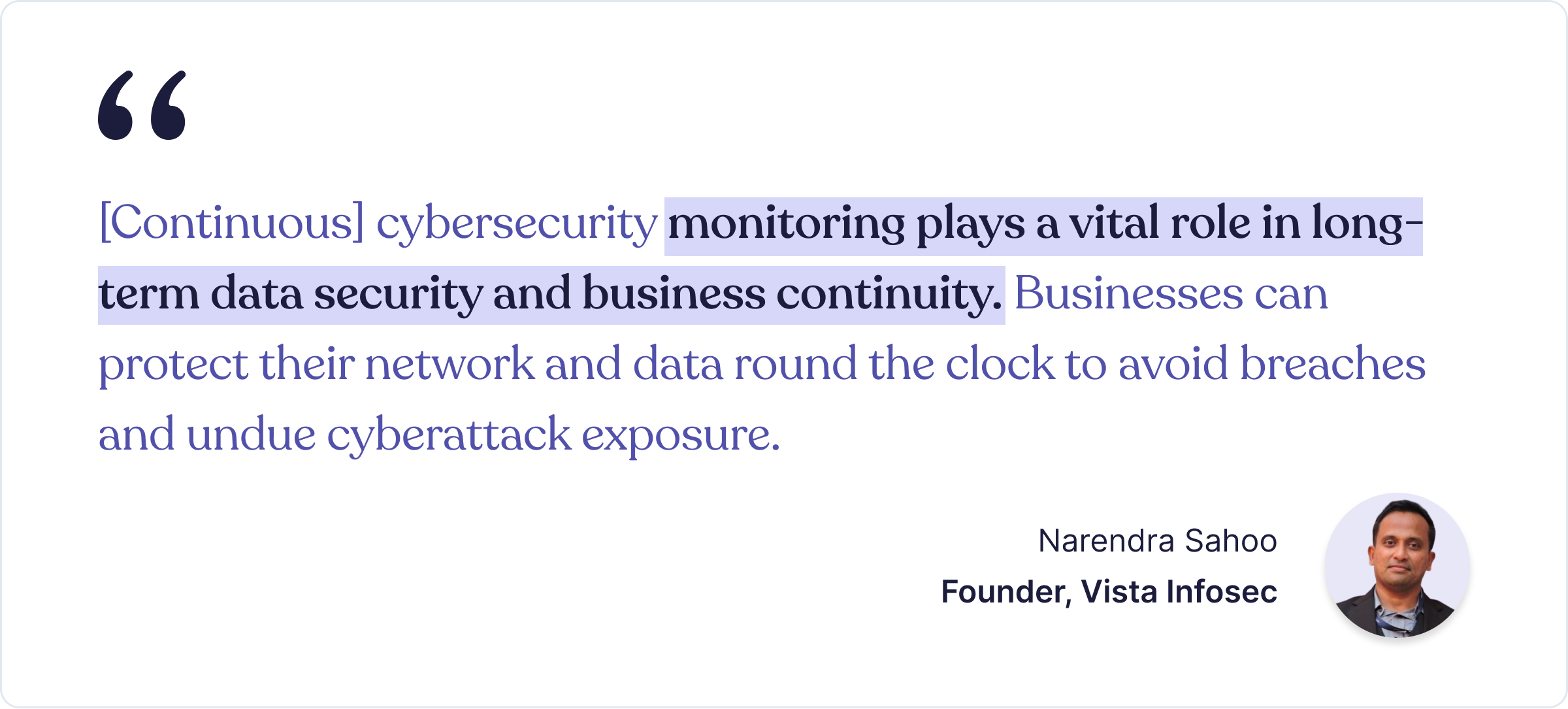
 

Narendra Sahoo - Quote

Choose More Than a TPRM Platform


An excellent third-party risk management (TPRM) platform automates a chunk of the processes, saving you from manual labor. But in choosing the right one, there are crucial things CISOs must also look out for.


Here’s what Delta Air’s Global CISO looks out for:
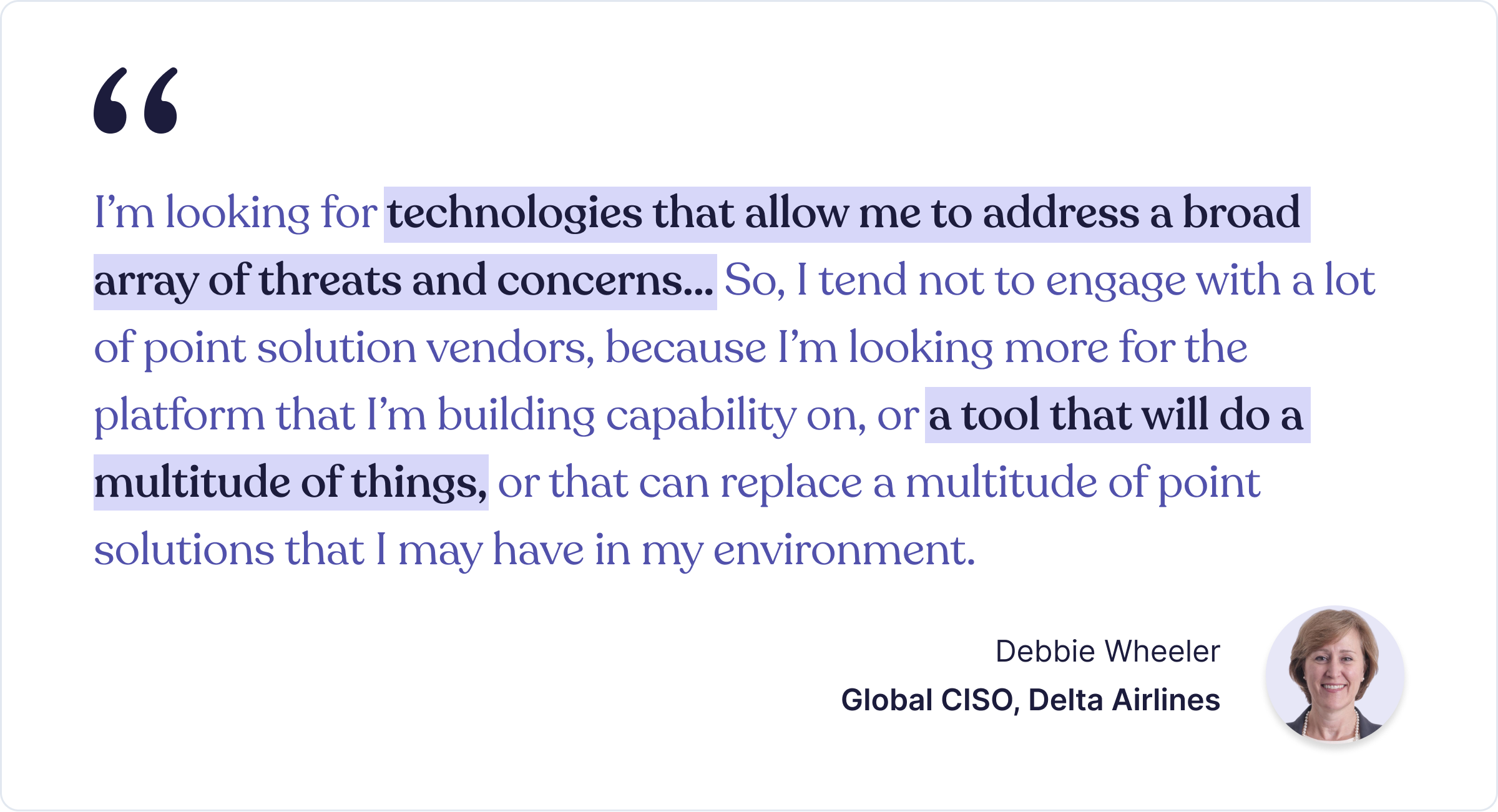
 

Debbie Wheeler - Quote


It’s easy to imagine Debbie’s stand. 


As we’ve seen, managing 3rd-party vendor risks involves a lot:

  • Ascertaining their information security capabilities
  • Assessing them for possible cybersecurity threats
  • Monitoring their security controls continuously


Ticking all these boxes already takes a lot of back and forth without the right TPRM solution. However, it is just one bit of what CISOs need to proactively implement internal and external security measures. 


For instance, you also need to streamline things like:

  • Ongoing employee security awareness training 
  • Staying up to date with regulatory compliance 
  • Dealing with cloud misconfigurations, and 
  • Securing and renewing cyber insurance. 


Achieving all these in one, interoperable solution is optimal. 


And that’s where Cyber Sierra comes in: 

illustration background

Ditch Point Solutions

Schedule a demo now to see how Cyber Sierra can streamline your TPRM processes. Our platform effectively mitigates third-party risks so you can focus on driving business growth through strategic partnerships.

  • Third Party Risk Management
  • CISOs
  • CTOs
  • Cybersecurity Enthusiasts
  • Enterprise Leaders
  • Startup Founders
Pramodh Rai

Meet Pramodh Rai, a technology aficionado and Cyber Sierra's co-founder, whose zest for innovation is fuelled by a cupboard stacked with zero-sugar Redbull. With a nimble footwork through the tech tulips across Asia Pacific, he's donned hats at Hmlet (the proptech kind) and Funding Societies | Modalku, building high-performing teams and technologies. A Barclays prodigy with dual degrees from Nanyang Technological University, Pramodh is a treasure trove of wisdom, dad jokes, and everything product/tech. He's the Sherpa in sneakers you need.

A weekly newsletter sharing actionable tips for CTOs & CISOs to secure their software.


Thank you for subscribing!

Please check your email to confirm your email address.

Find out how we can assist you in
completing your compliance journey.

blog-hero-background-image
Third Party Risk Management

How to Choose (and Implement) Relevant TPRM Frameworks

backdrop
Table of Contents

Join thousands of professionals and get the latest insight on Compliance & Cybersecurity.


What is TPRM Frameworks?

A third-party risk management (TPRM) framework is a structured approach for identifying, assessing, and mitigating risks associated with your third-party vendors, service providers, and partners. It involves evaluating vendors' security practices, compliance, and financial risks to minimize data breaches, enhance cyber resilience, and ensure regulatory compliance. Key components include risk assessment, monitoring, and governance. By employing a TPRM framework, organizations can make informed decisions about third-party relationships, protect sensitive data, and maintain trust with customers and stakeholders.

What do Toyota, Okta, and Keybank have in common? 

On the surface, not much, given they operate in different sectors —car manufacturing, B2B software, and banking, respectively. But review recent cyberattacks that made the news, and you’ll see the commonality: They all suffered major data breaches in 2022 through third-party vendors. Given these are global enterprises, one would argue they had some kind of Third-Party Risk Management (TPRM) framework in place. 

It begs the question: 

Why do companies suffer data breaches through third-parties, despite having some way to manage risks?

If you’re a CISO or an enterprise security exec pondering over that question, here’s the likely answer. First, choosing the right TPRM framework is crucial, but it’s not enough. This is because no matter how good one may be, it is only useful if effectively implemented. 

And that brings us to the rest of this article. 

We’d explore the top enterprise TPRM frameworks you can choose from. More importantly, you’ll see how our interoperable cybersecurity platform, Cyber Sierra, effectively streamlines their implementation. 

illustration background

Join SMSW

Join CISOs, CTOs, and enterprise security execs subscribed to Secure My Software Weekly (SMSW) for actionable cybersecurity, risk and compliance insights.

card image

The Top Enterprise TPRM Frameworks


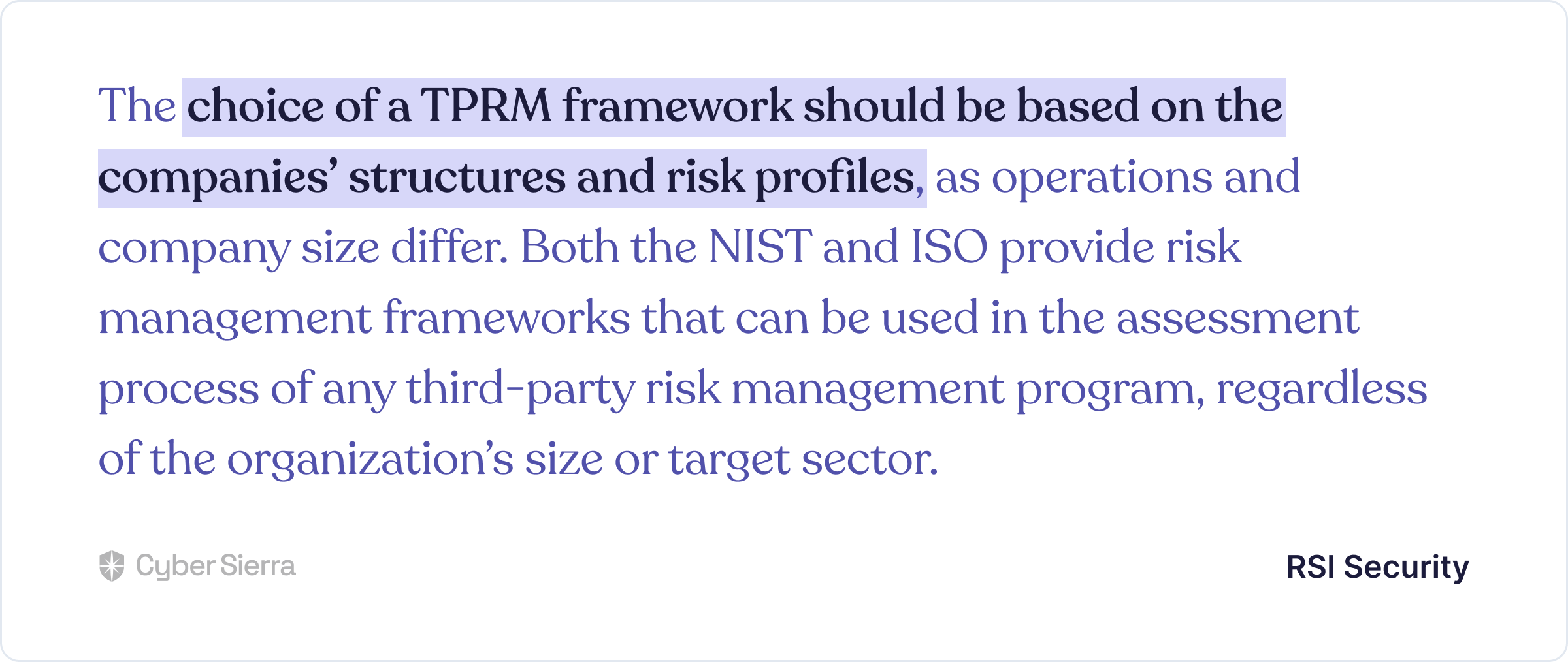
According to a report by RSI Security


RSI Security - Quote


In other words, TPRM frameworks developed by NIST and ISO come recommended. But there are variations of these, so choosing which ones to implement should be based on your company’s specific needs. 

To help you do that, below are the various frameworks designed by both institutions and their relevance to enterprise TPRM. 


1. NIST Supply Chain Risk Management Framework (SCRMF) 800-161


NIST 800-161 was developed to supplement the NIST 800-53 designed specifically to help federal entities manage supply chain risks. 

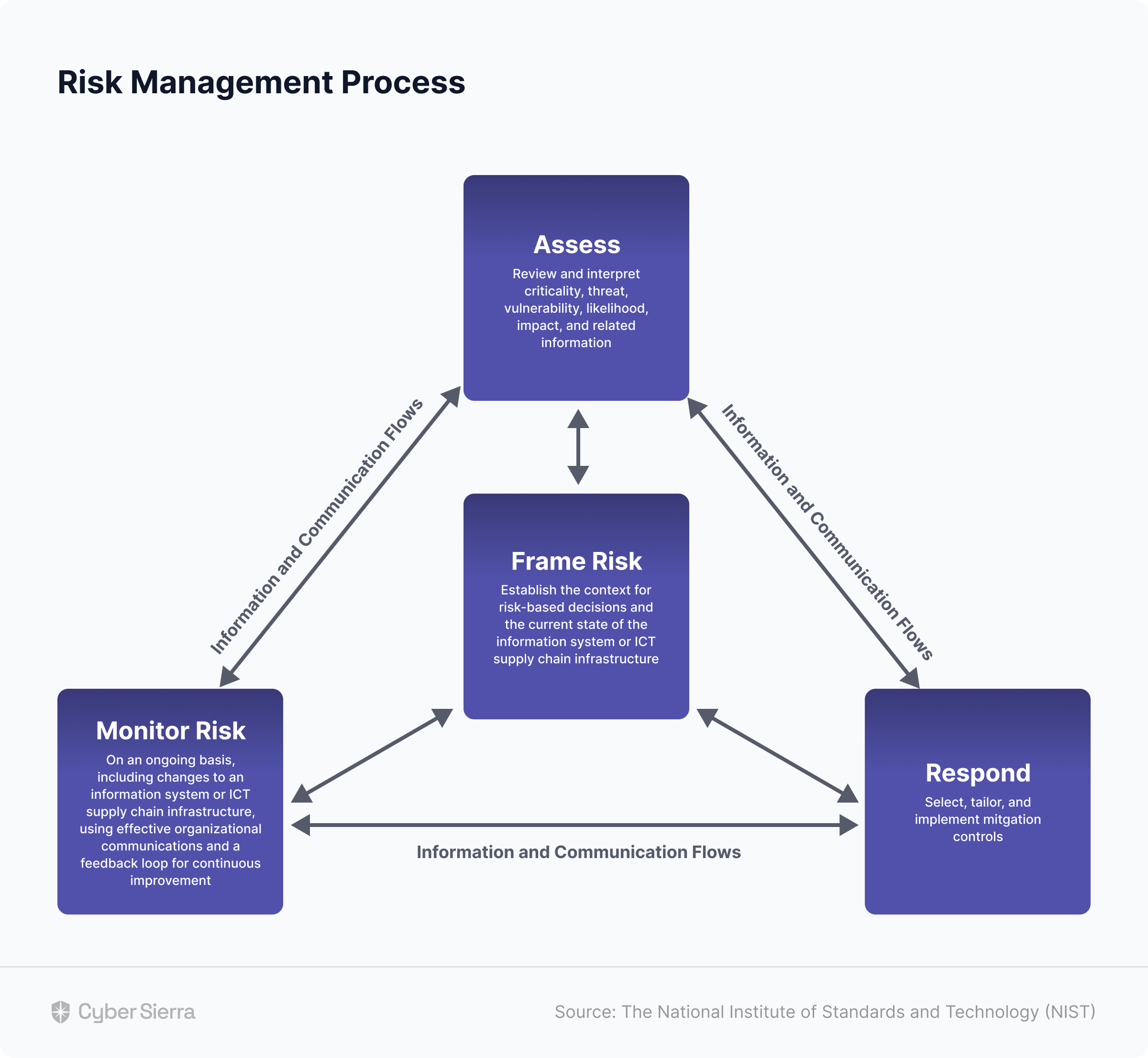
However, given the large number of 3rd parties enterprise organizations now work with, private sector organizations can also adopt NIST 800-161. This framework breaks down the supply chain or vendor risk management process into four phases: 

  1. Frame, 
  2. Access, 
  3. Respond, and
  4. Monitor: 


Risk Management Process


Across these phases, there are 19 data security control themes, ranging from employee training to systems and service acquisition.


2. NIST Vendor Risk Management Framework (RMF) 800-37


Originally developed in 2005, the National Institute of Standards and Technology (NIST) revised this framework in 2018. 

Generally, the NIST 800-37 RMF outlines steps companies can take to protect their data and systems. This includes assessing the security of systems, analyzing threats, and implementing data security controls. For vendor risk management purposes, section 2.8 of the framework specifically fits the bill. It is invaluable as it helps security teams consider relevant risk mitigation tactics for onboarding new third-parties. 


3. NIST Cybersecurity Framework (CSF)


Considered the gold standard for building robust data security programs, the NIST Cybersecurity Framework can also be used when designing third-party risk management processes. Specifically, this framework outlines the best practices for creating vendor risk assessment questionnaires

Base your third-party risk assessment questionnaires on security controls in the NIST CSF framework, and your team can accurately assess potential vendors’ cyber threat profiles. This is especially useful for enterprise organizations with strict privacy or regulatory compliance concerns.


4. ISO 27001, 27002, and 27018


The International Organization for Standardization (ISO) developed the ISO 27001, 27002, and 27018 standards. Although known more for implementing governance, risk, and compliance (GRC) programs, these standards can also be used in creating frameworks for evaluating third-party risks. 

Specifically, each of these standards have sections guiding security teams to ensure their vendor risk assessments are thorough. This is in addition to each standard helping your team manage a broader information security program across your organization.  


5. ISO 27036


Unlike other ISO standards focused more on companies’ overall GRC programs, ISO 27036 series helps organizations manage risks arising from the acquisition of goods and services from suppliers. 

ISO 27036 has provisions for addressing physical risks arising from working with professionals such as cleaners, security guards, delivery services, etc. It also has more standard processes for working with cloud service providers, data domiciles, and others. 


Elements of an Effective Vendor Risk Management Framework


Notice something in the frameworks above? 


Each addresses an element of the TPRM implementation process. For instance, NIST 800-37 enforces risk mitigation tactics for onboarding vendors while the ISO 27001 standard helps security teams design comprehensive risk assessment questionnaires. 


This means two things: 


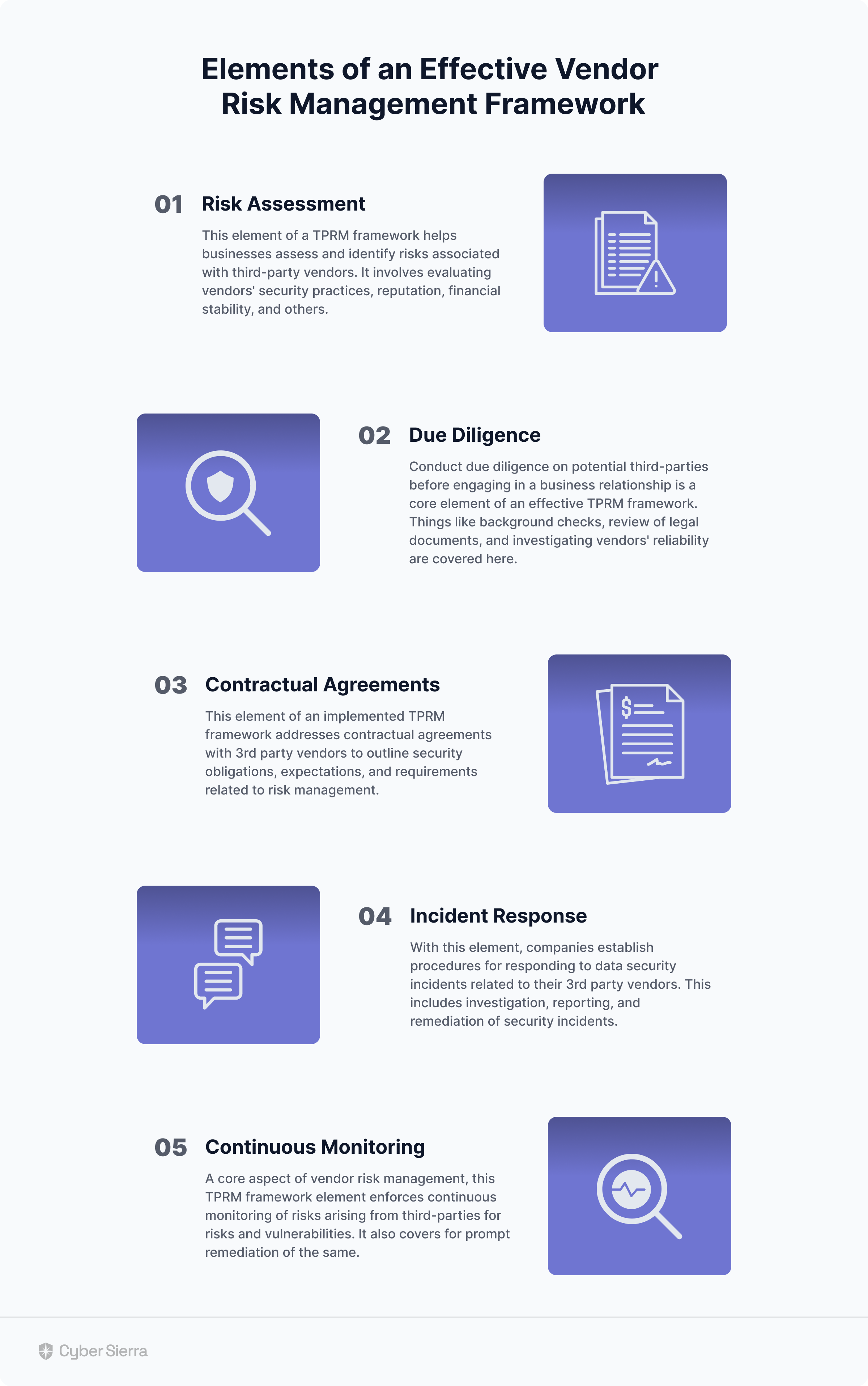
First, for effective vendor risk management, companies may need to combine elements from various TPRM frameworks. The elements (or components) to keep in mind are illustrated below: 


Elements of an Effective Vendor Risk Management Framework


Secondly, because trying to cut off sections of various frameworks to achieve all necessary elements is too much manual work, there’s a need to streamline the process with a TPRM tool

This is where Cyber Sierra comes in: 


streamline the process with a TPRM tool.


As shown above, our interoperable cybersecurity platform integrates NIST and ISO TPRM frameworks into easy-to-use templates for streamlined implementation. 


How to Streamline Third-Party Risk Management Framework Implementation


Effective implementation of an enterprise TPRM framework must have all elements illustrated above. Specifically, it must include components for ongoing risk assessment, due diligence, contractual agreements, incidence response, and continuous monitoring. 

Here’s how Cyber Sierra automates the critical ones. 


1. Risk Assessment


This element of a TPRM framework focuses on assessing risks associated with potential third-party vendors. It involves using security questionnaires to evaluate vendors’ security practices, reputation, financial stability, and others. 


But there’s a caveat. 


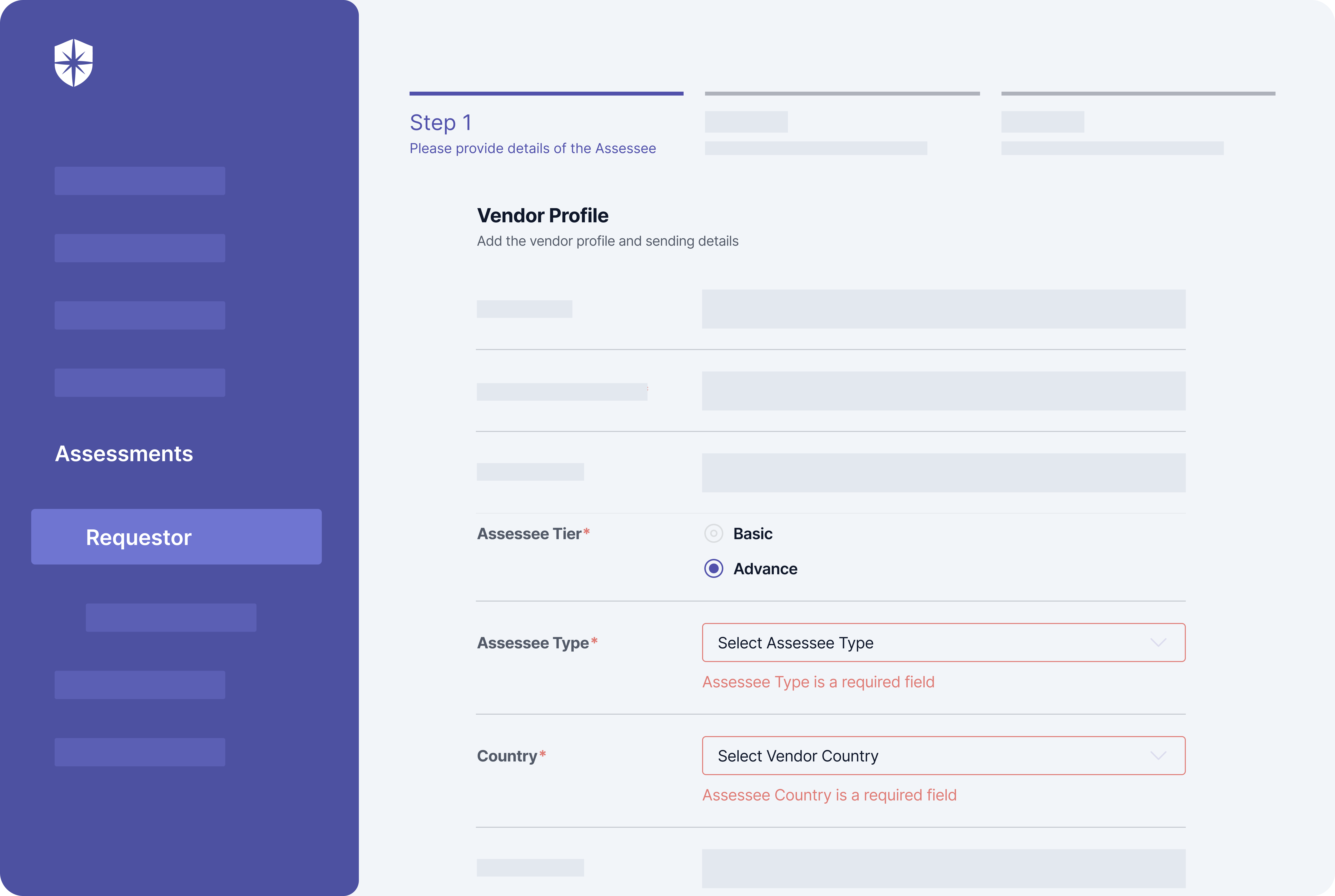
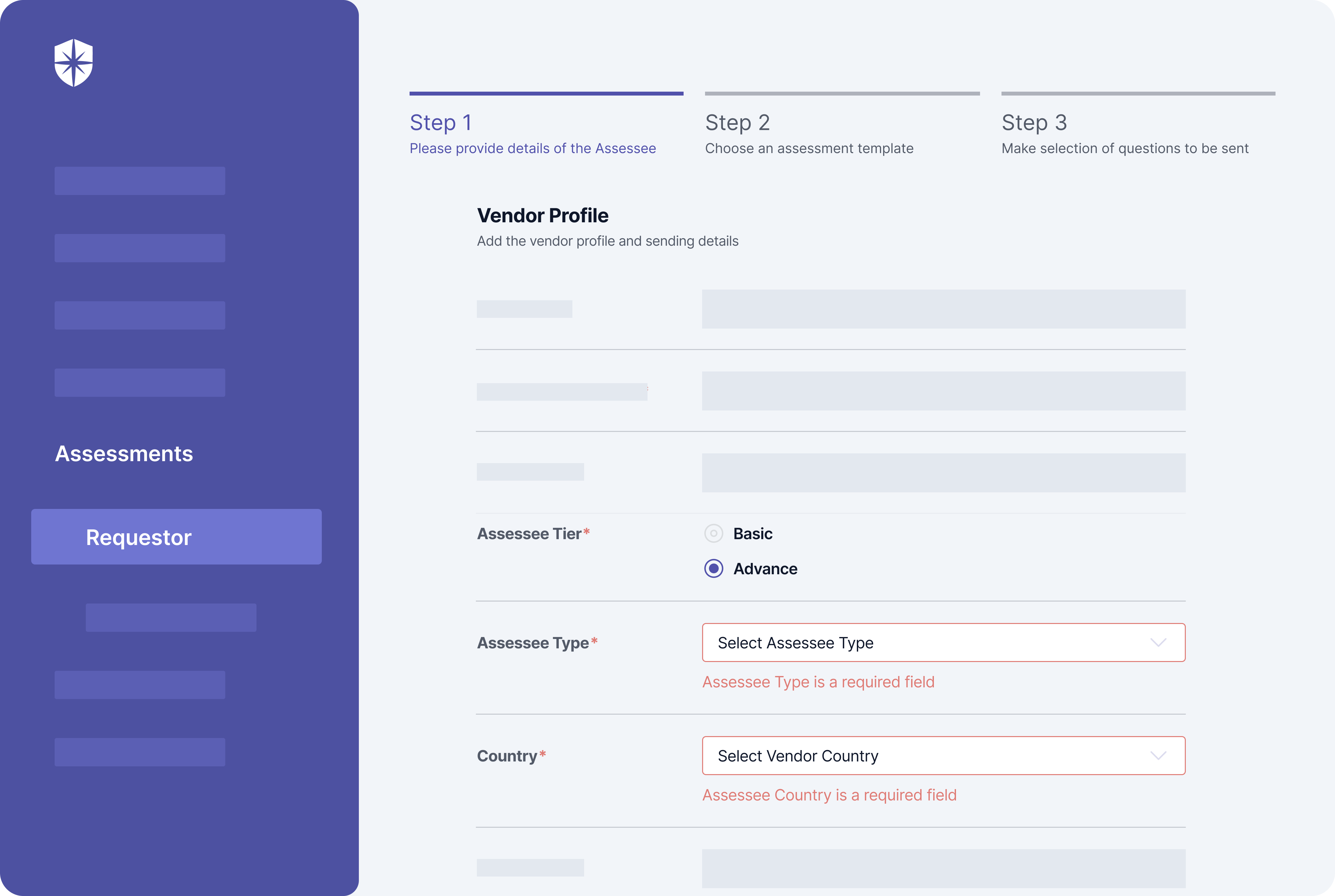
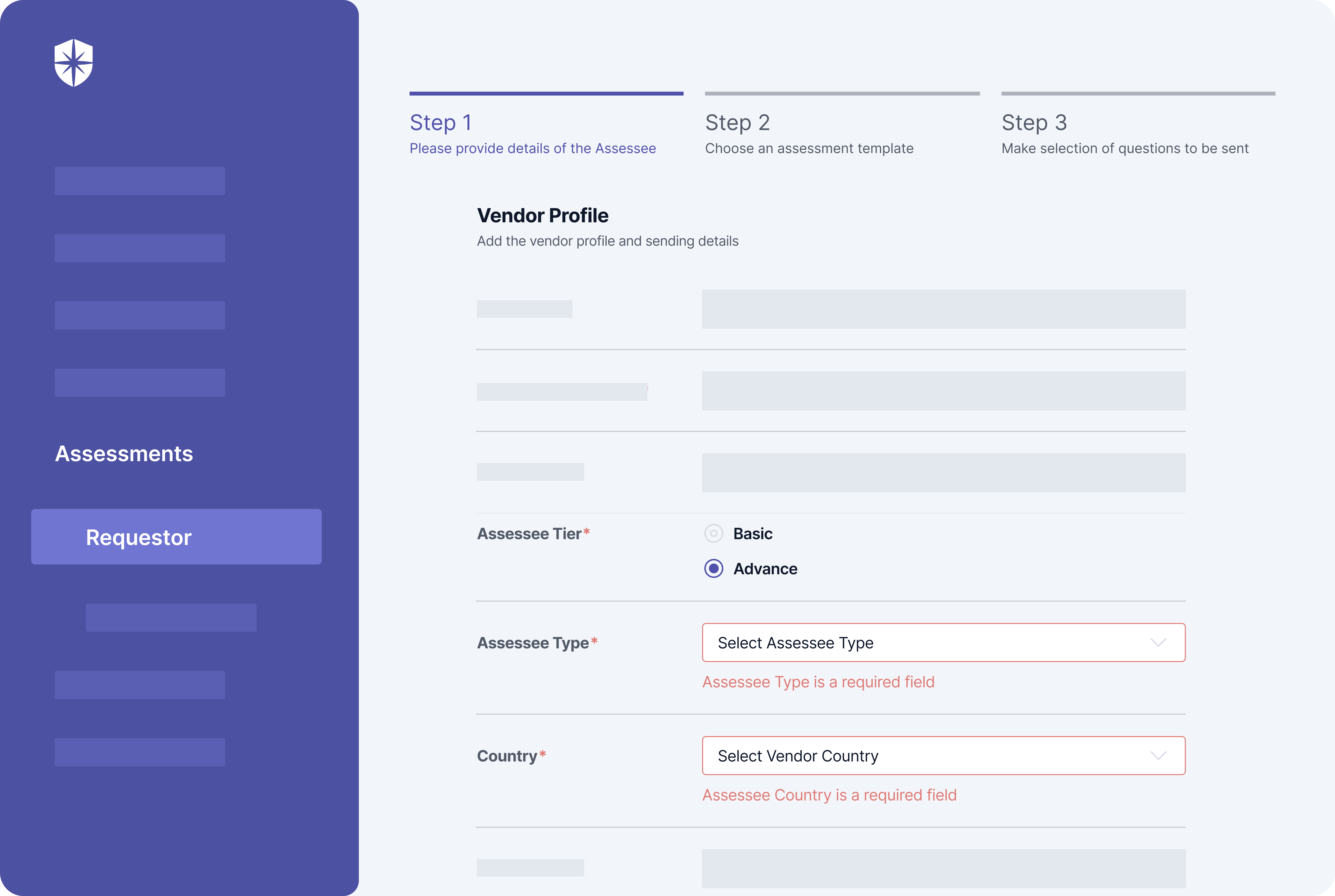
Assessee tier (basic or advanced) and possible threats to deal with often depends on a vendor type and their geographic location. To this end, Cyber Sierra enforces security teams to choose a vendor type, geographic location, and if an advanced assessment is needed when initiating each third-party risk assessment flow:


Risk Assessment


2. Due Diligence


A study by the Ponemon Institute revealed why due diligence is a core component of an effective-implemented TPRM framework. 

They found that: 


why due diligence is a core component of an effective-implemented TPRM framework


In other words, don’t expect 3rd parties to be honest about responses to risk assessments on their threat profiles. Instead, use a TPRM platform like Cyber Sierra to auto-verify and automate due diligence on evidence uploaded for each security assessment question: 


3. Contractual Agreements


This component of implementing a TPRM framework requires working with trained legal and compliance professionals. Such expertise is needed for designing custom contractual agreements that effectively outline each 3rd party’s security obligations, requirements, and expectations relative to risk management. 


4. Incidence Response


How will your security team respond to cyber risks and security threats that emerge from vendors in your supply chain network? 


This element of an implemented TPRM framework addresses that crucial question. It involves establishing proactive measures for remediating data threats and cyber risks arising from 3rd party vendors in your entire supply chain network. 


But to respond to incidents, your security teams must first identify them before they lead to a data breach. This requires proper implementation of the fifth element of a TPRM framework. 


5. Continuous Monitoring


This element of a TPRM framework entails: 

  • Monitoring third-party security controls based on implemented risk management, governance, and compliance policies.
  • Verifying third-parties’ uploaded evidence of meeting their obligation of having required risk management controls.
  • Identifying and flagging vendors in your supply chain network without that fail to meet data security requirements. 


Cyber Sierra streamlines these gruesome processes for vendors and organizations. First, our platform enforces ongoing third-party risk monitoring by auto-verifying 3rd parties’ uploaded evidence of having required security controls. 


You can enforce this by asking vendors managed with the Cyber Sierra platform to click on “Get Verified,” say, monthly: 


assessment questions


On your team’s dashboard view, our platform automatically verifies vendors’ uploaded evidence of having mandated security controls. 


It also flags evidence that fails verification and your team can work with vendors to resolve them on the same pane:


Assessment Request


Implement TPRM Frameworks In One Place


As demonstrated in the steps above, you can implement critical elements of an enterprise vendor risk management program with Cyber Sierra. More importantly, our platform lets you choose between the NIST or ISO TPRM frameworks: 


streamline the process with a TPRM tool.


This means whichever recommended framework makes more sense for assessing and managing third-party vendor risks in your supply chain, you can do it with our platform without jumping loops. 

You can even use both for specific vendors. 

illustration background

Choose (and Implement) Recommended Enterprise TPRM Framework In One Place

Book a free demo to see how Cyber Sierra easily streamlines TPRM Programs for enterprise organizations.

card image
  • Third Party Risk Management
  • CISOs
  • CTOs
  • Cybersecurity Enthusiasts
  • Enterprise Leaders
  • Startup Founders
Pramodh Rai

Meet Pramodh Rai, a technology aficionado and Cyber Sierra's co-founder, whose zest for innovation is fuelled by a cupboard stacked with zero-sugar Redbull. With a nimble footwork through the tech tulips across Asia Pacific, he's donned hats at Hmlet (the proptech kind) and Funding Societies | Modalku, building high-performing teams and technologies. A Barclays prodigy with dual degrees from Nanyang Technological University, Pramodh is a treasure trove of wisdom, dad jokes, and everything product/tech. He's the Sherpa in sneakers you need.

A weekly newsletter sharing actionable tips for CTOs & CISOs to secure their software.


Thank you for subscribing!

Please check your email to confirm your email address.

Find out how we can assist you in
completing your compliance journey.
blog-hero-background-image
Third Party Risk Management

Here’s How to Automate Ongoing Vendor Risk Monitoring

backdrop
Table of Contents

Join thousands of professionals and get the latest insight on Compliance & Cybersecurity.


First impressions matter. 

You wouldn’t approve a third-party vendor if they posed a single cybersecurity threat at first sight. They know this. It’s why they all come prepared with a good first impression to pass even the most rigid third-party vendor assessment questionnaires. 

So while having a strict security questionnaire to score and clear 3rd parties of bringing zero risk to your organization is crucial, it’s never enough. You also need to know the risks that arise from using vendors —something positive first impressions can never detect. 

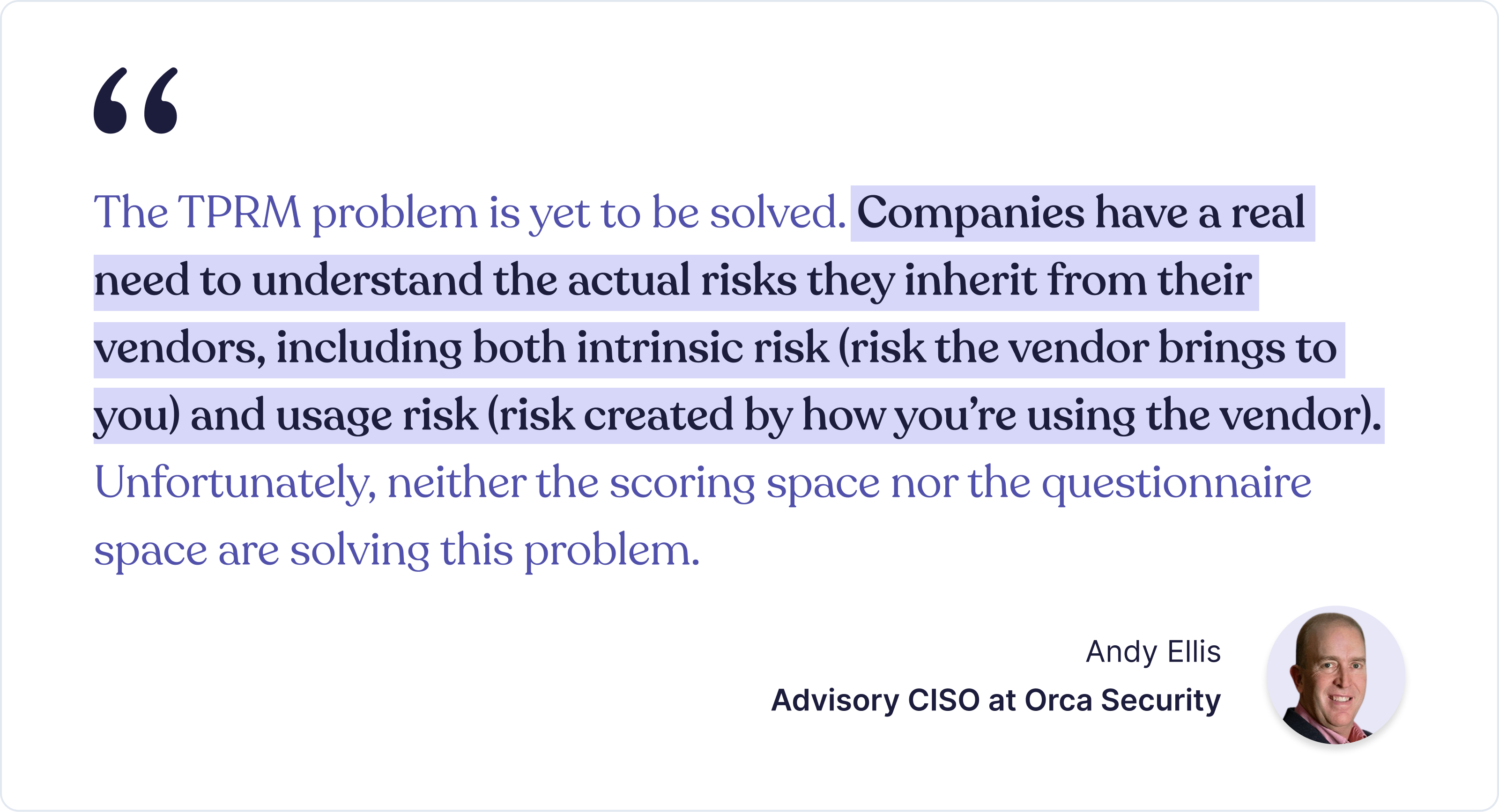
Says Andy Ellis, Advisory CISO at Orca Security:


Andy Ellis - Quote (1)


Here’s what CISOs and security executives must draw from this: Strict security assessment questionnaires have their place, but to make your third-party risk management (TPRM) processes more effective…


You Need Ongoing Vendor Risk Monitoring 


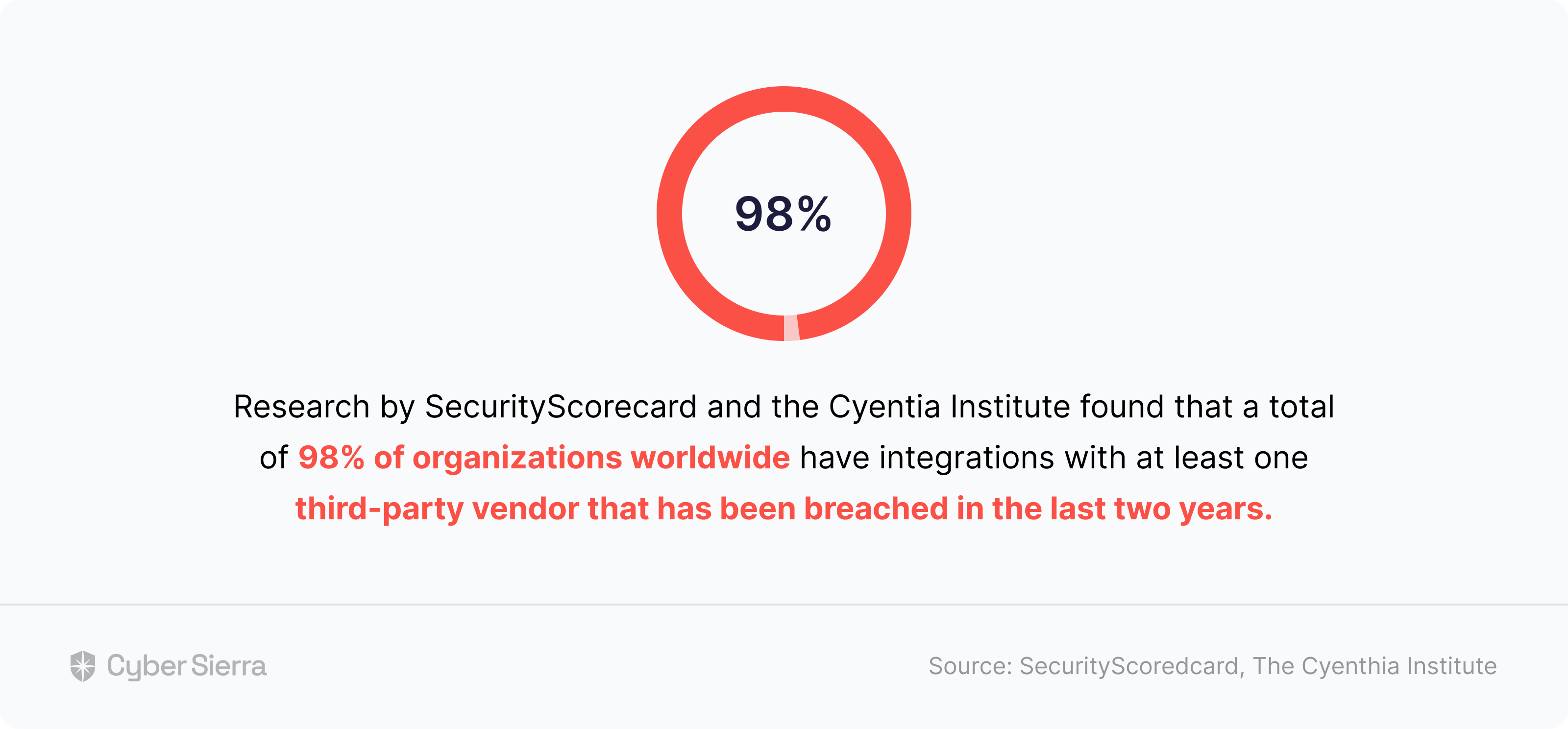
Consider this stat:

CISOs and enterprise security managers must take this finding seriously as it tells a crucial story.

And this one, too:

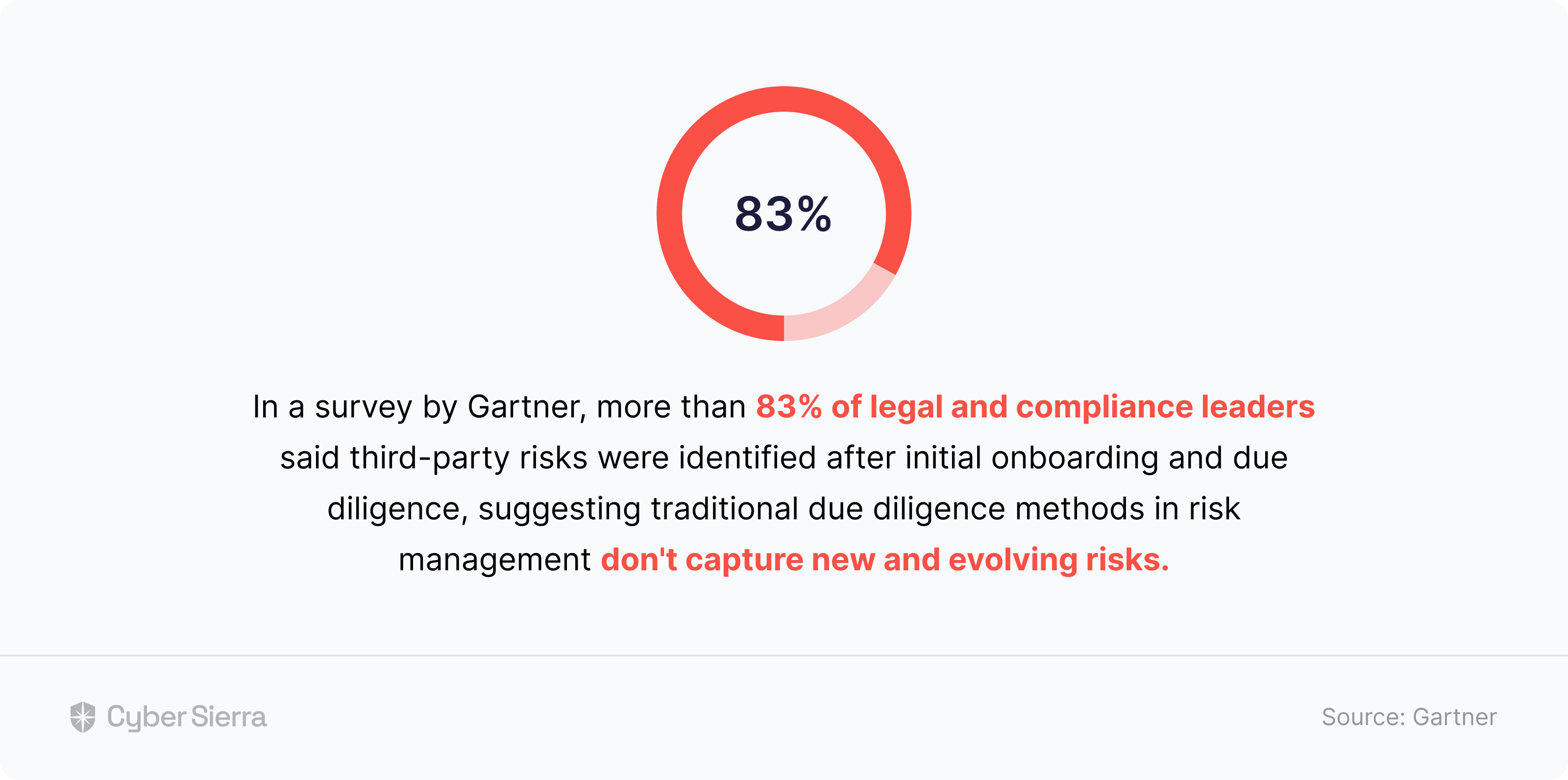
a whopping 83% of those risks aren’t discovered during initial security assessments.

As these alarming data points clearly indicate, ignoring ongoing vendor risk monitoring can have serious consequences. First, about 98% of risk suffered by companies in recent years came from 3rd parties in their vendor ecosystem. Worse, a whopping 83% of those risks aren’t discovered during initial security assessments. 

Continuous monitoring is therefore no longer a nice thing to have, but a core necessity. If you’re like me when I first realized this, you may be thinking: So how do CISOs and IT executives achieve continuous third-party risk monitoring?

The rest of this article will explore how. Specifically, you’ll also see how our interoperable cybersecurity and compliance automation platform, Cyber Sierra, streamlines the entire process. 

But before we proceed…

illustration background

Join SMSW

Get actionable insights on mitigating cybersecurity, compliance, and cyber risks sent to your inbox weekly.

card image

Categorize Vendors; Ease Continuous Risk Monitoring


When Uber suffered a breach in September 2022 through a third party vendor, they moved quickly to block security loopholes. In their press release on the attack, the enterprise company wrote:

uber Quotes

But just two months later, it happened again. 

In December of the same year, cybercriminals stole sensitive data from Uber through another 3rd-party vendor, Teqtivity. This attack revealed that Uber may have improved their vendor risk policies, but it still wasn’t enough to detect imminent breaches. 

And the reason isn’t far-fetched. Growing startups and large enterprises like Uber work with a lot of outside vendors. According to a Gartner report, over 1,000. This can make it hard for security teams to know which ones pose the most risks and need constant attention. 


Vendor Categorization Solves this Problem


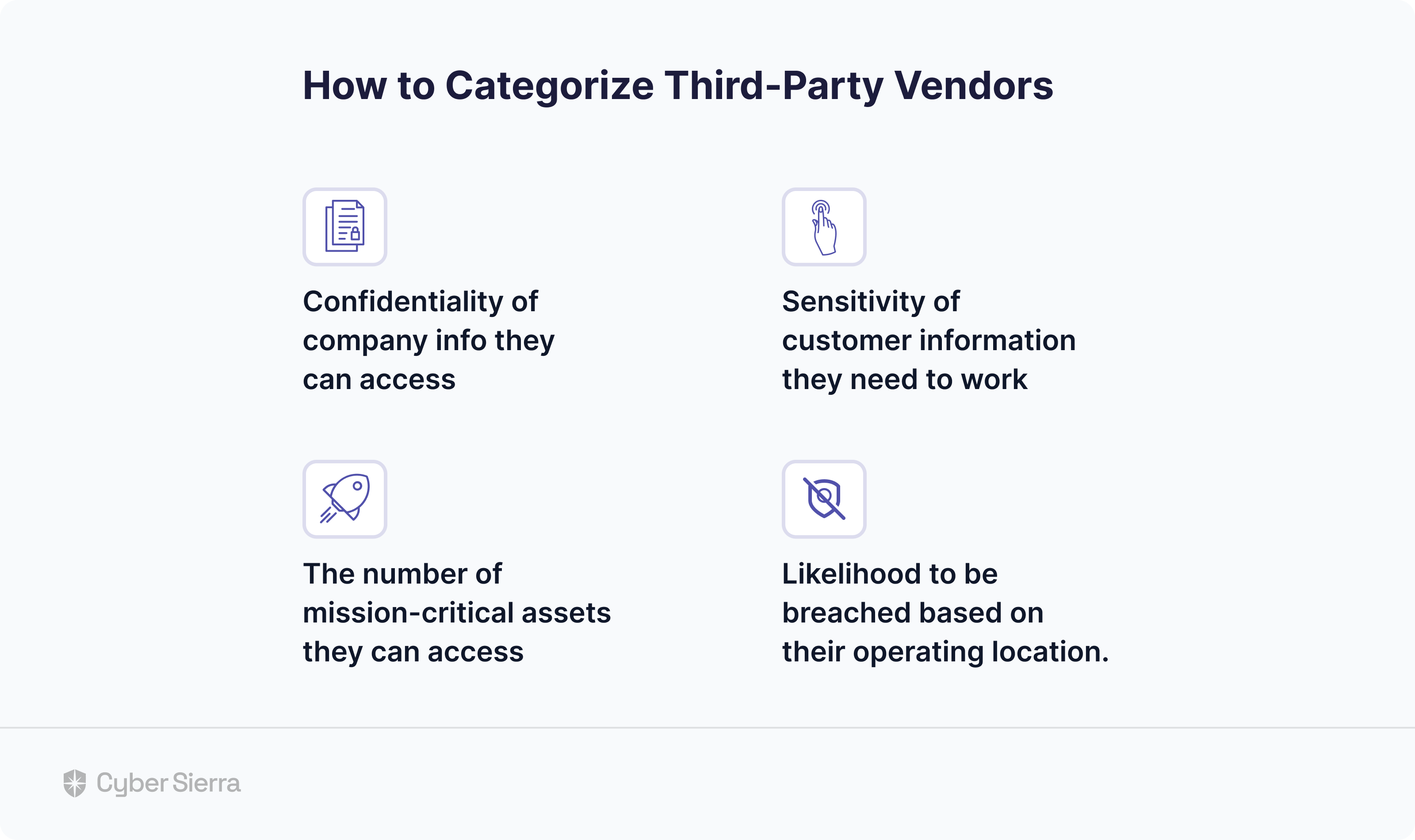
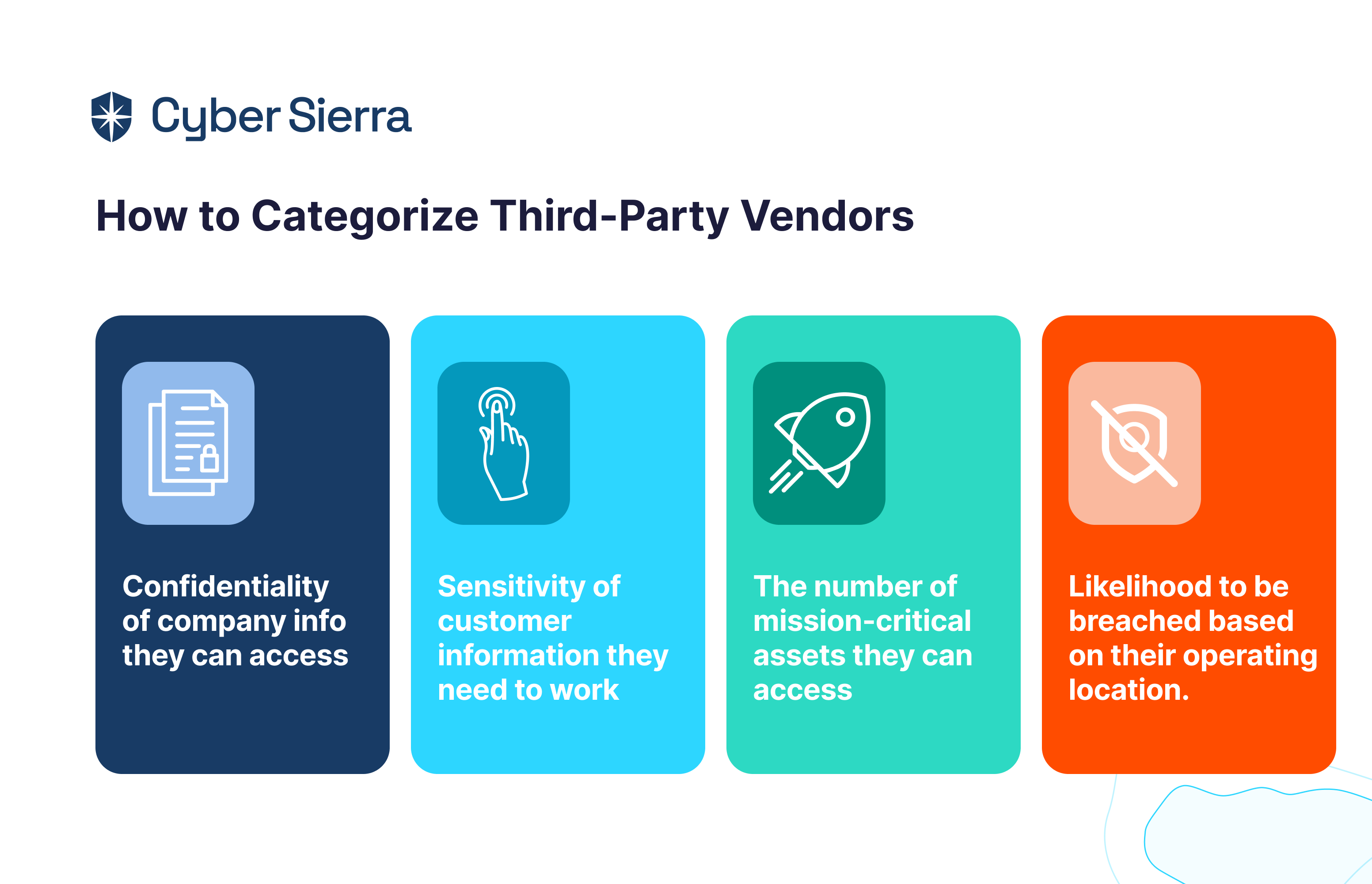
For instance, imagine Uber’s security team categorized third-parties in their vendor ecosystem on criteria such as: 

  • Confidentiality of company info they can access
  • Sensitivity of customer information they need to work
  • The number of mission-critical assets they can access 
  • Likelihood to be breached based on their operating location: 

Uber’s security team categorized third-parties in their vendor ecosystem on criteria

Categorizing 3rd parties in this way simplifies ongoing monitoring of vendor risks. That’s because your security team can laser-focus on those that must be tracked 24/7, as Uber should have. 

And the best place to start? 

When sending assessment questionnaires.

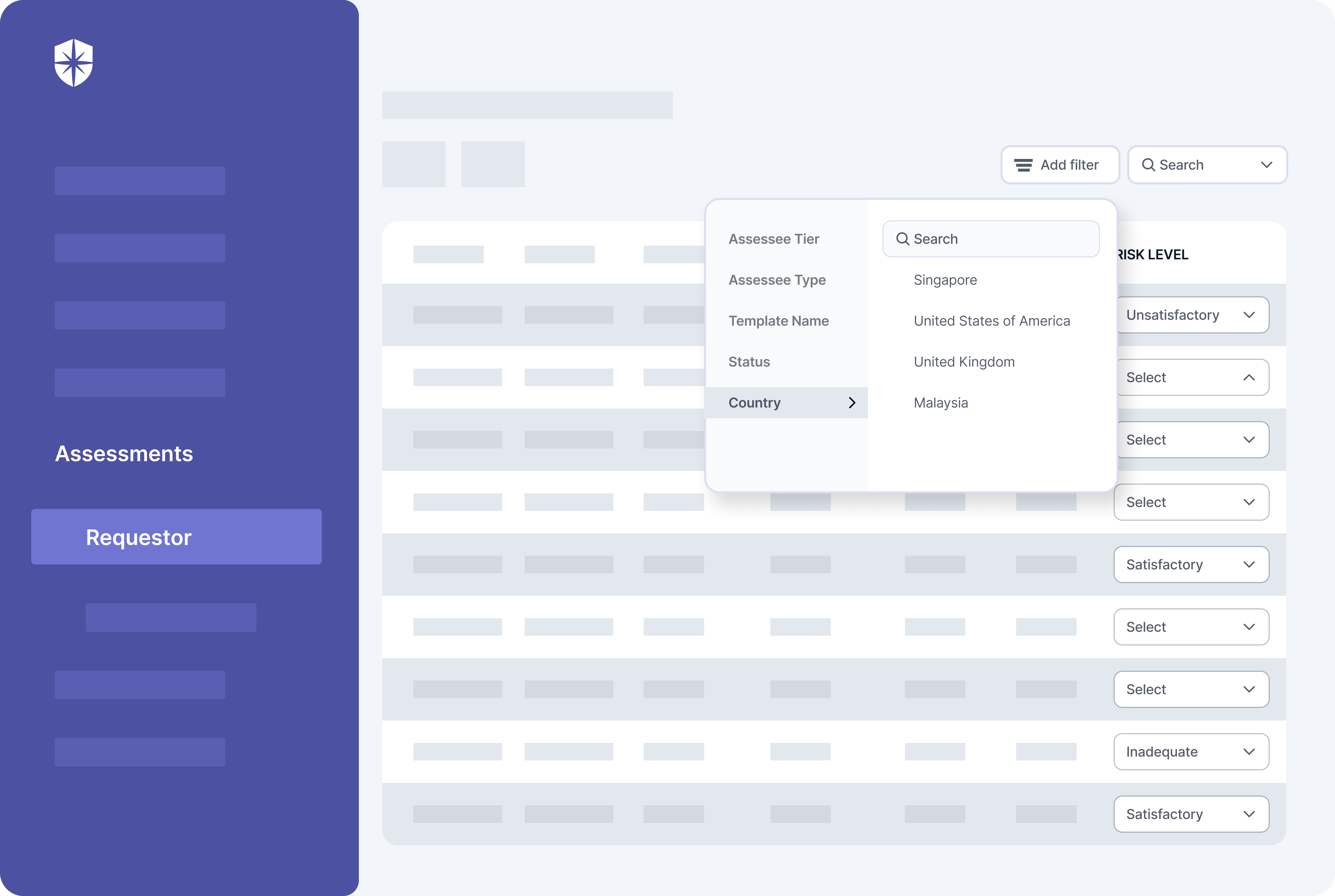
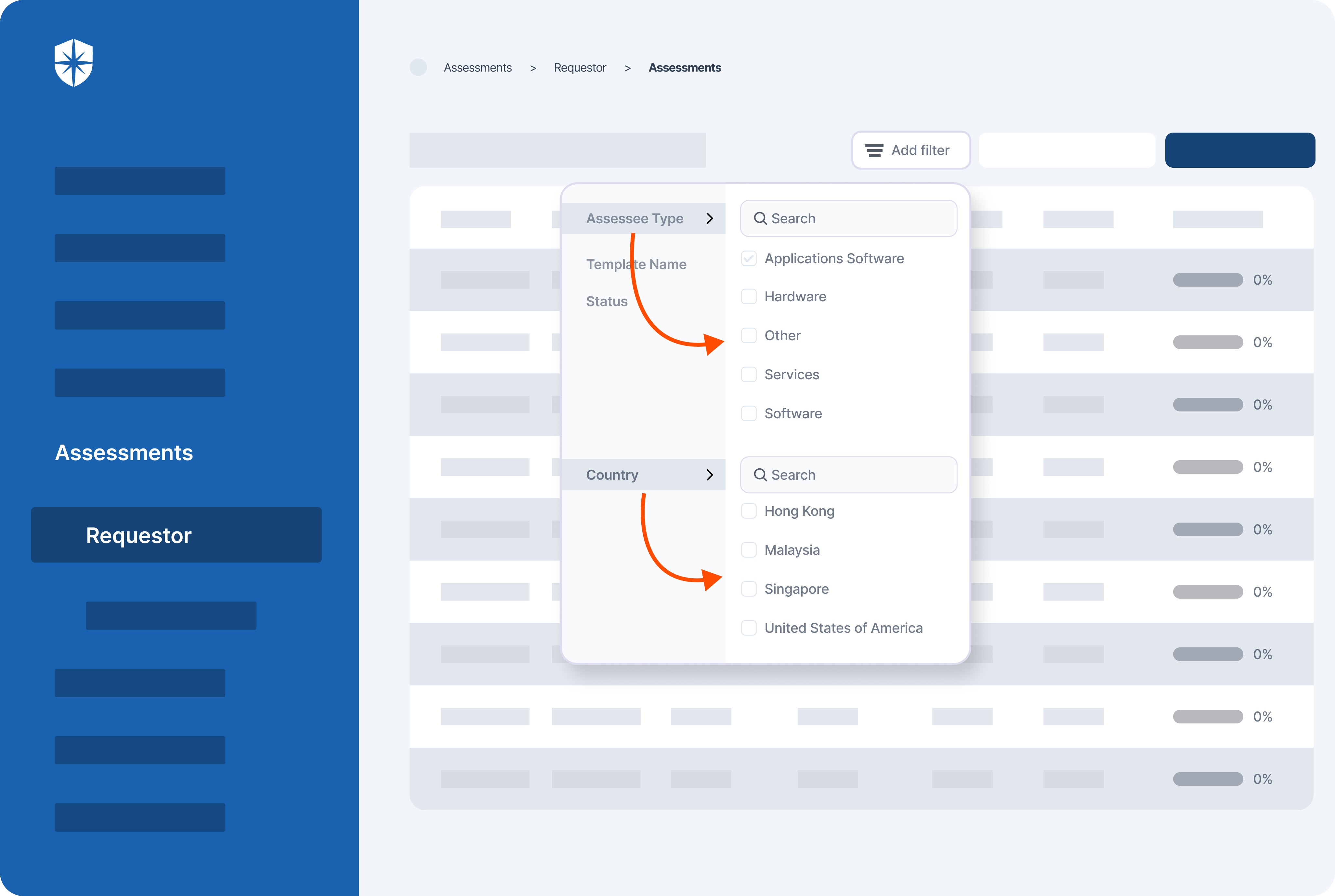
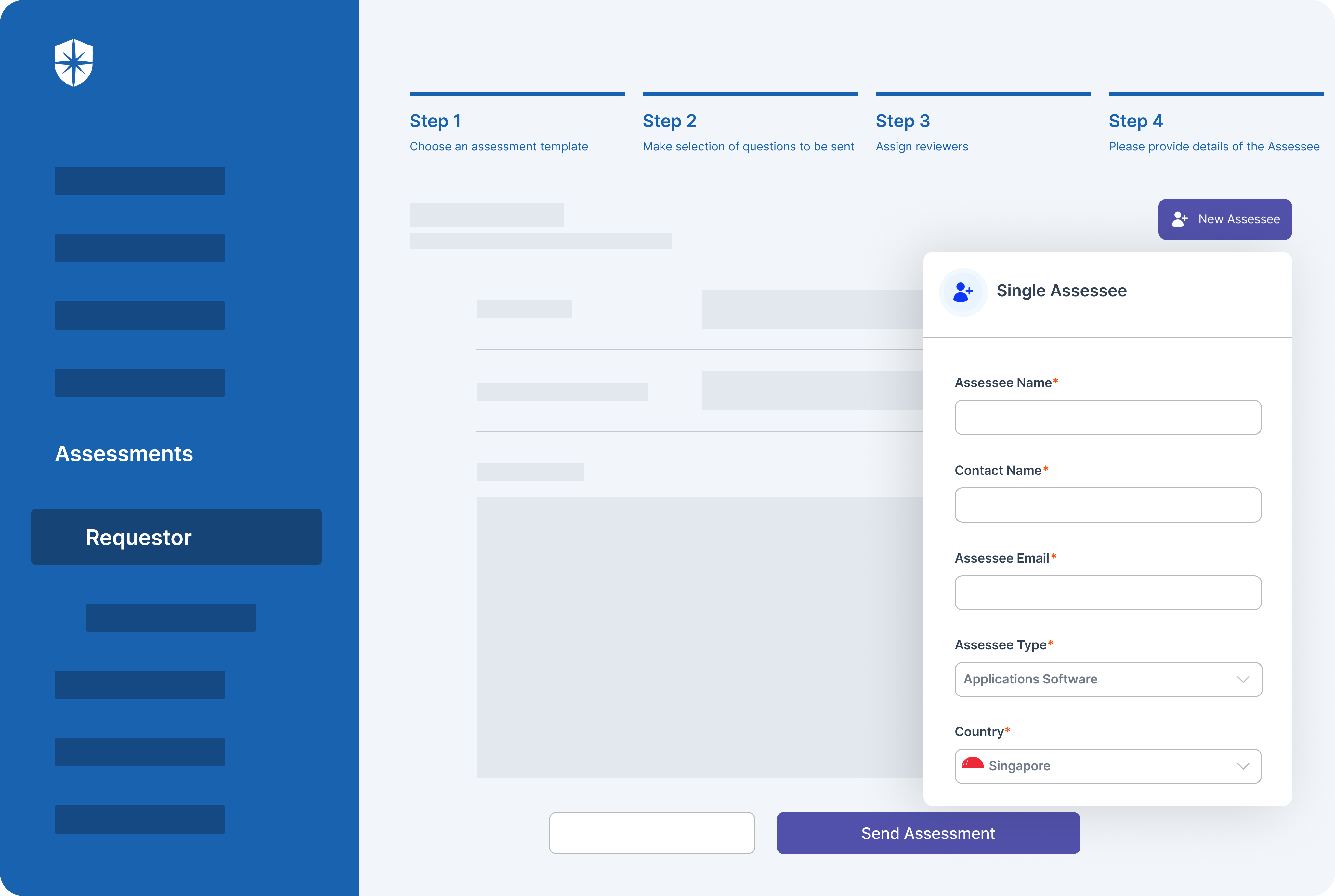
By enforcing the categorization of vendors when sending security assessment questionnaires, your team can easily profile those that: 

  • Require advanced assessments (based on the confidentiality of your company info they’ll access)
  • Can access sensitive customer info or mission-critical assets (based on their assessee type –service, software, etc.) 
  • Are more likely to get breached (based on the vendor’s country of operation): 

Achieving this level of categorization is automated with Cyber Sierra’s cybersecurity and compliance automation platform assessment suite: 

level of categorization is automated with Cyber Sierra’s cybersecurity and compliance automation platform assessment suite

And it doesn’t end there. 

Once categorized with our software, your security team gets a central dashboard to search and continuously monitor specific vendors for risks. 

illustration background

Automate Third-Party Risk Assessments

Streamline sending and management of security questionnaires. Continuously enforce and auto-verify uploaded vendor assessment evidence, all in one place.

card image

Third-Party Risk Management Challenges Solved By Ongoing Monitoring


Typical third-party risk management is complex. 

Because everywhere you turn, there are third parties potentially involved. From network servers to operating systems, to software installed on workstations, to the service-based vendors that make the business and software work. The list goes on, up to the vendors delivering office supplies. Without ongoing vendor risk monitoring, it’s almost impossible for security teams to overcome the challenge of identifying threat-carrying or at-risk vendors.  

But that’s not the only challenge it solves. 


1. It Reduces Wasted Costs


After the data breaches on Uber in September and December 2022, both Uber and the affected third-party vendors hired digital forensic firms to investigate. They also incurred costs, launching massive PR campaigns to communicate both incidents and save the cost of losing brand reputation and customer trust. 

How much do all such costs come to? 

A lot. 

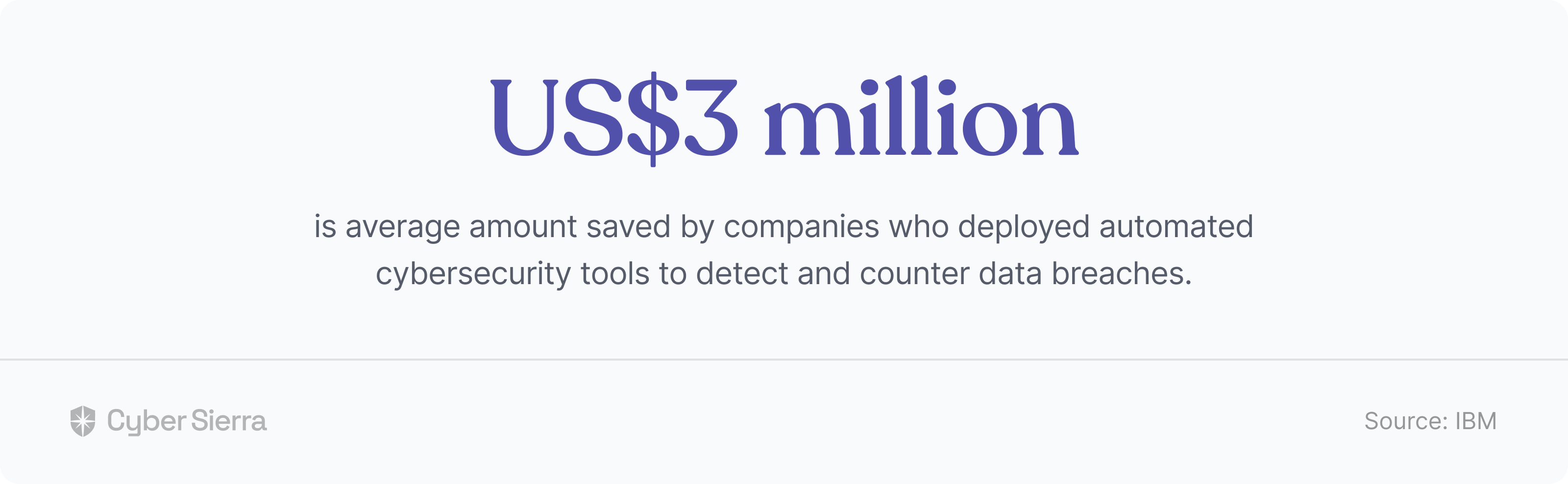
On average, a data breach costs companies a whopping US$4.35 million, according to IBM’s 2022 research. This amount almost doubled for US-based organizations, the study revealed. But here’s what the same study found of companies using automated tools to monitor and identify risks beforehand across the board: 

On average, a data breach costs companies a whopping US$4.35 million, according to IBM’s 2022 research.

Ongoing vendor risk monitoring helps your team reduce costs from third-party data breaches. As IBM’s study found, this is because your security team would be more likely to identify and mitigate them. 


2. It Removes TPRM Vendor Threat Blind spots


When you’re dealing with hundreds of vendors, as is the case with most organizations today, identifying threats is hard. This leads to blind spots, which, when accumulated, make your TPRM process a threat black box waiting to be data-breached.

But with ongoing vendor risk monitoring, especially when done with an automated tool, your security team can remove such threat blind spots with prompt alerts. For instance, with Cyber Sierra, you can achieve continuous monitoring by auto-verifying all evidence uploaded during the vendor security assessment phase. 

Our system runs continuously in the background to identify vendors with weak, outdated, or no security controls in place, based on uploaded evidence.  Your security team gets alerted on controls that fail verification and can follow up with vendors to fix them on the same dashboard: 

Your security team gets alerted on controls that fail verification and can follow up with vendors to fix them on the same dashboard


3. It Removes the Need for Sample-based Analysis


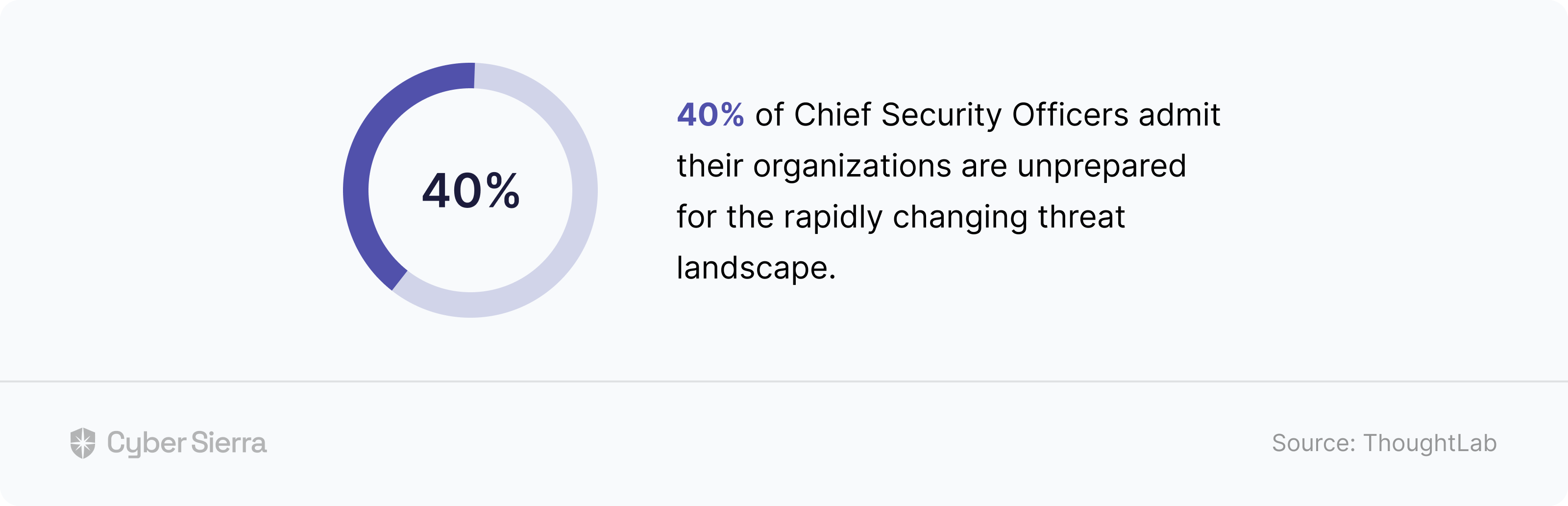
Consider this research finding by ThoughtLab

Consider this research finding by ThoughtLab:

The top two reasons given for this include: 

  1. Complexity of supply chains (44%), 
  2. Fast pace of digital innovation (41%). 

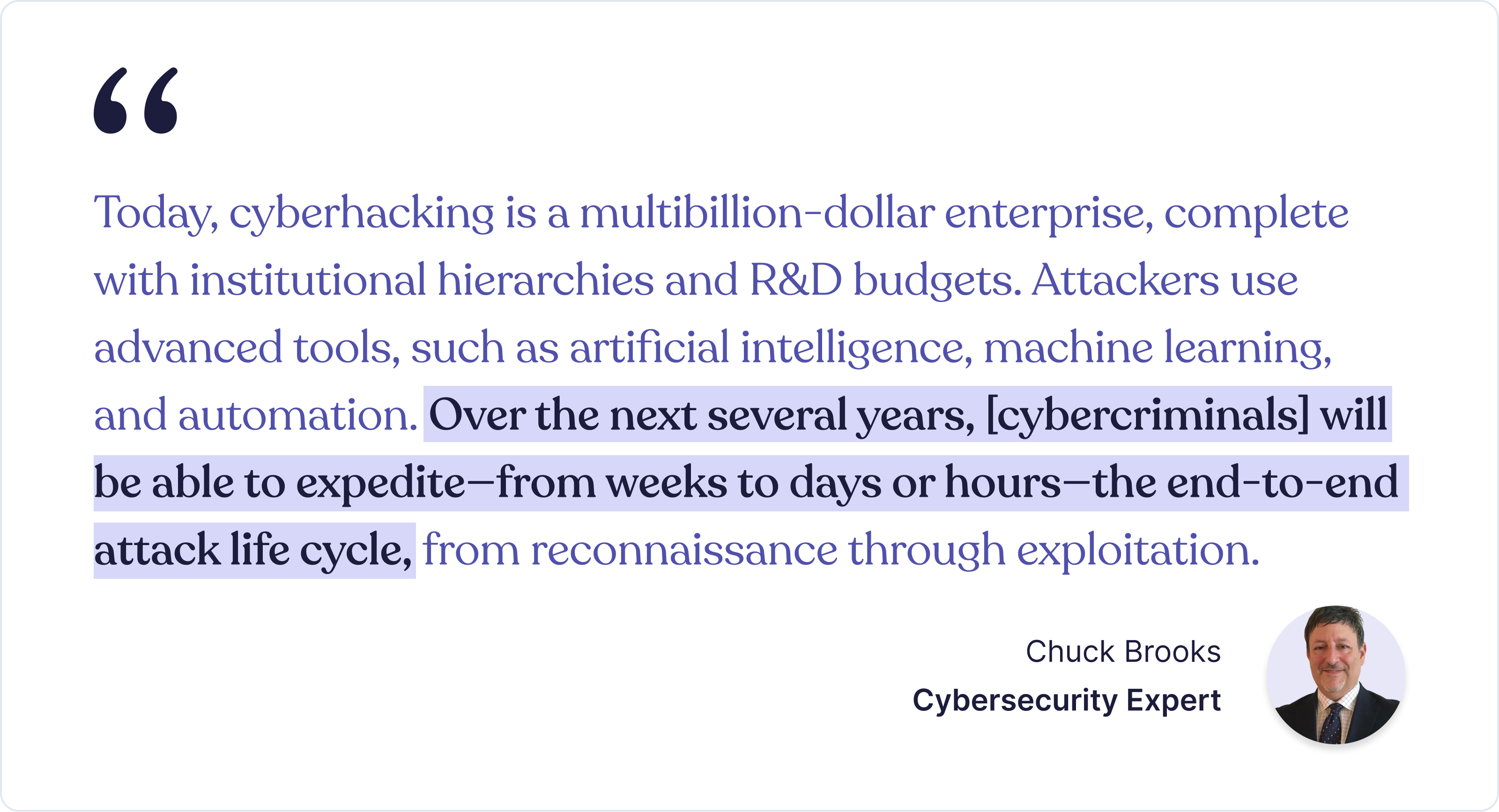
It’s a different story on the side of cybercriminals. While security executives are grappling with emerging risks in their supply chains and vendor ecosystems, threat actors are getting even more equipped to strike. Chuck Brooks, a cybersecurity expert, observed this in a Forbes’ article. 

He wrote

Chuck Brooks Quote

At this pace, identifying vendor risks through periodic, sample-based analysis just can’t keep up. Imagine waiting for external analyst firms, which are usually expensive, to sample a segment of your vendors, say yearly. With cybercriminals now hacking companies in days and hours, of what use would that be?

Not so much.  

Ongoing vendor risk monitoring removes the need for such sample-based analysis. But more importantly, as we’ve stressed so far in this article, your security team can automatically identify and mitigate cybersecurity risks from third-parties in real-time. 


Automate Ongoing 3rd Party Vendor Risk Monitoring


Imagine a central place where you can easily profile vendors when onboarding and sending security assessment questionnaires. From the same dashboard, your security team gets an automatic categorization of vendors they must monitor constantly. 

This categorization could be:

  1. Vendor tier (i.e., level of integration into private/customer information or vitality to your company’s operations).
  2. Vendor type (i.e., service, software, application software, etc., and the level of mission-critical assets they can access). 
  3. Vendor location (i.e., those based out of location with strict or weak cybersecurity regulation that requires more attention).

Cyber Sierra enables this advanced level of categorization to the third-party risk management process. Most importantly, our platform automates ongoing vendor risk monitoring. This is because your security team can quickly search and track 3rd-parties’s risk level in real-time, and in a few clicks:


security team can quickly search and track 3rd-parties’s risk level in real-time, and in a few clicks

illustration background

Automate Ongoing Vendor Risk Monitoring

Automatically categorize vendors from the get-go when sending assessments, and simplify ongoing vendor risk monitoring.

card image
  • Third Party Risk Management
  • CISOs
  • CTOs
  • Cybersecurity Enthusiasts
  • Enterprise Leaders
  • Startup Founders
Pramodh Rai

Meet Pramodh Rai, a technology aficionado and Cyber Sierra's co-founder, whose zest for innovation is fuelled by a cupboard stacked with zero-sugar Redbull. With a nimble footwork through the tech tulips across Asia Pacific, he's donned hats at Hmlet (the proptech kind) and Funding Societies | Modalku, building high-performing teams and technologies. A Barclays prodigy with dual degrees from Nanyang Technological University, Pramodh is a treasure trove of wisdom, dad jokes, and everything product/tech. He's the Sherpa in sneakers you need.

A weekly newsletter sharing actionable tips for CTOs & CISOs to secure their software.


Thank you for subscribing!

Please check your email to confirm your email address.

Find out how we can assist you in
completing your compliance journey.
blog-hero-background-image
Third Party Risk Management

Enterprise TPRM Buyer’s Guide for CISOs

backdrop
Table of Contents

Join thousands of professionals and get the latest insight on Compliance & Cybersecurity.


You deserve a pat on the back.


In case you’re wondering why, here goes. Taking the time to explore enterprise TPRM software buyer’s guide before buying one reminds me of this famous Abraham Lincoln-attributed quote:


Abraham Lincoln-attributed quote


All things being equal, a sharpened ax will chop down a tree more effectively and efficiently. But you need some time to sharpen it, as Lincoln wisely opined. Similarly, the right third-party risk management (TPRM) tool is like having processes pre-sharpened to be more effective and efficient at tackling all 3rd party risks. But due to the ever-changing cyber threat landscape, choosing the right one requires investing some time to know what works best today.


And the first step is to…


Understand Today’s TPRM Lifecycle


To stay competitive, Gartner’s research found that up to 60% of organizations now partner with over 1,000 3rd party vendors. This number, the study noted, will only increase, giving security teams like yours more work to do. But the most worrying part is what the same research also found: A whopping 83% of organizations identify third-party risks long after performing initial due diligence.


This insight is instructive for chief information security officers (CISOs) and tech executives like you. It calls for a need to rethink the old way of assessing and managing vendor risks. Specifically, it means you must go beyond initial due diligence and perform ongoing categorization, swift remediation, and ongoing monitoring of third party vendors partnering with your company to be able to deal with risks promptly.


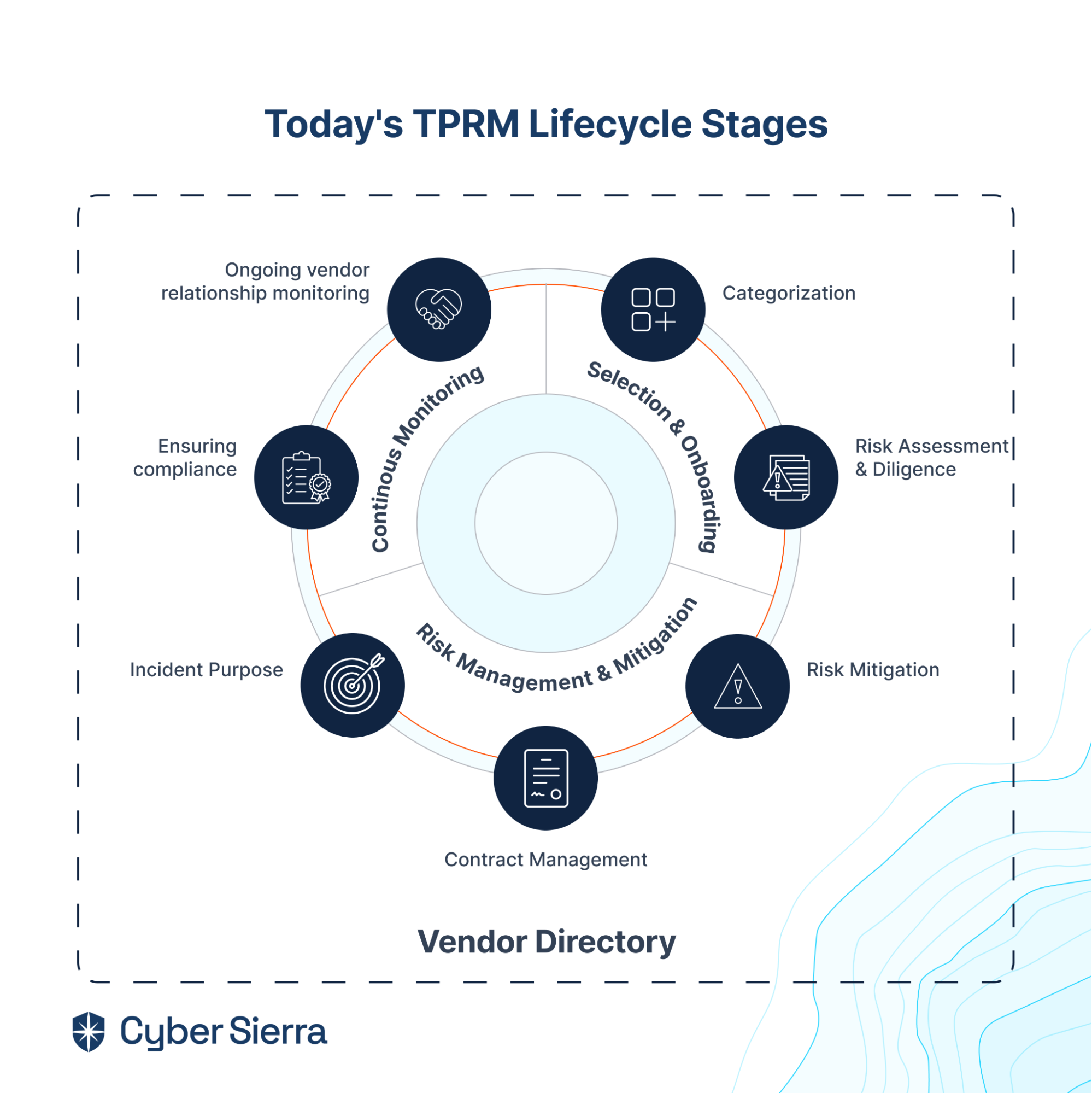
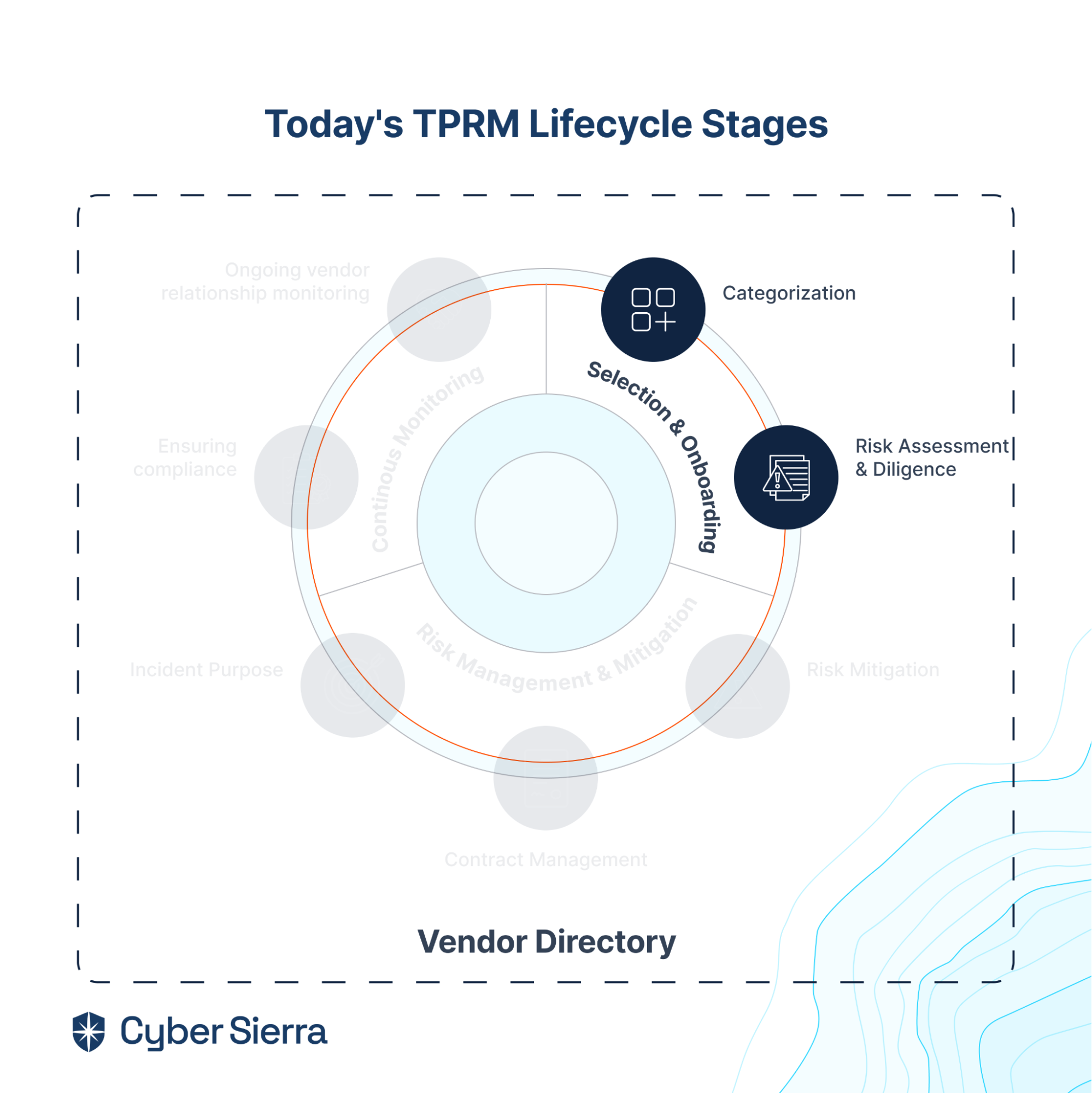
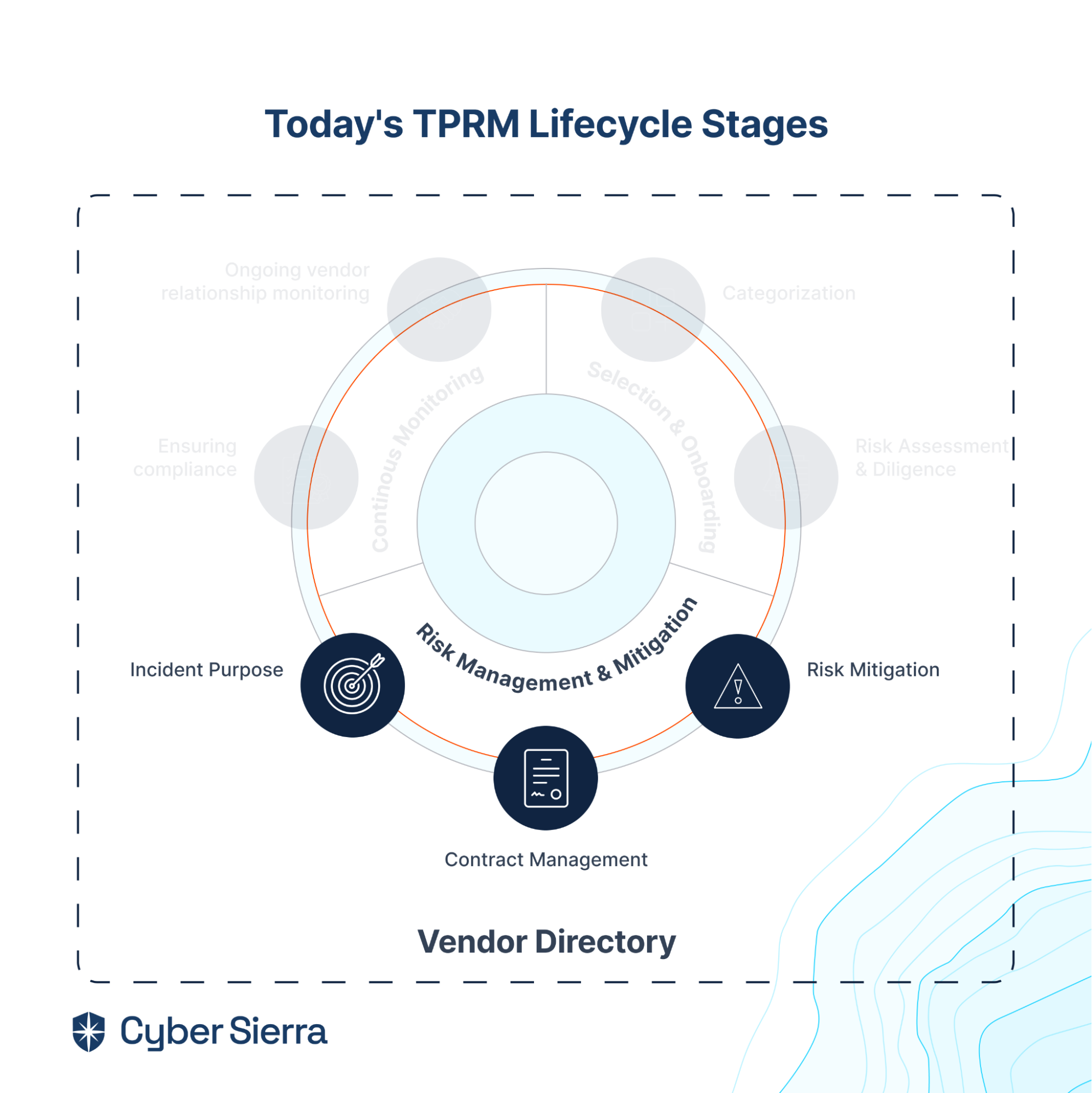
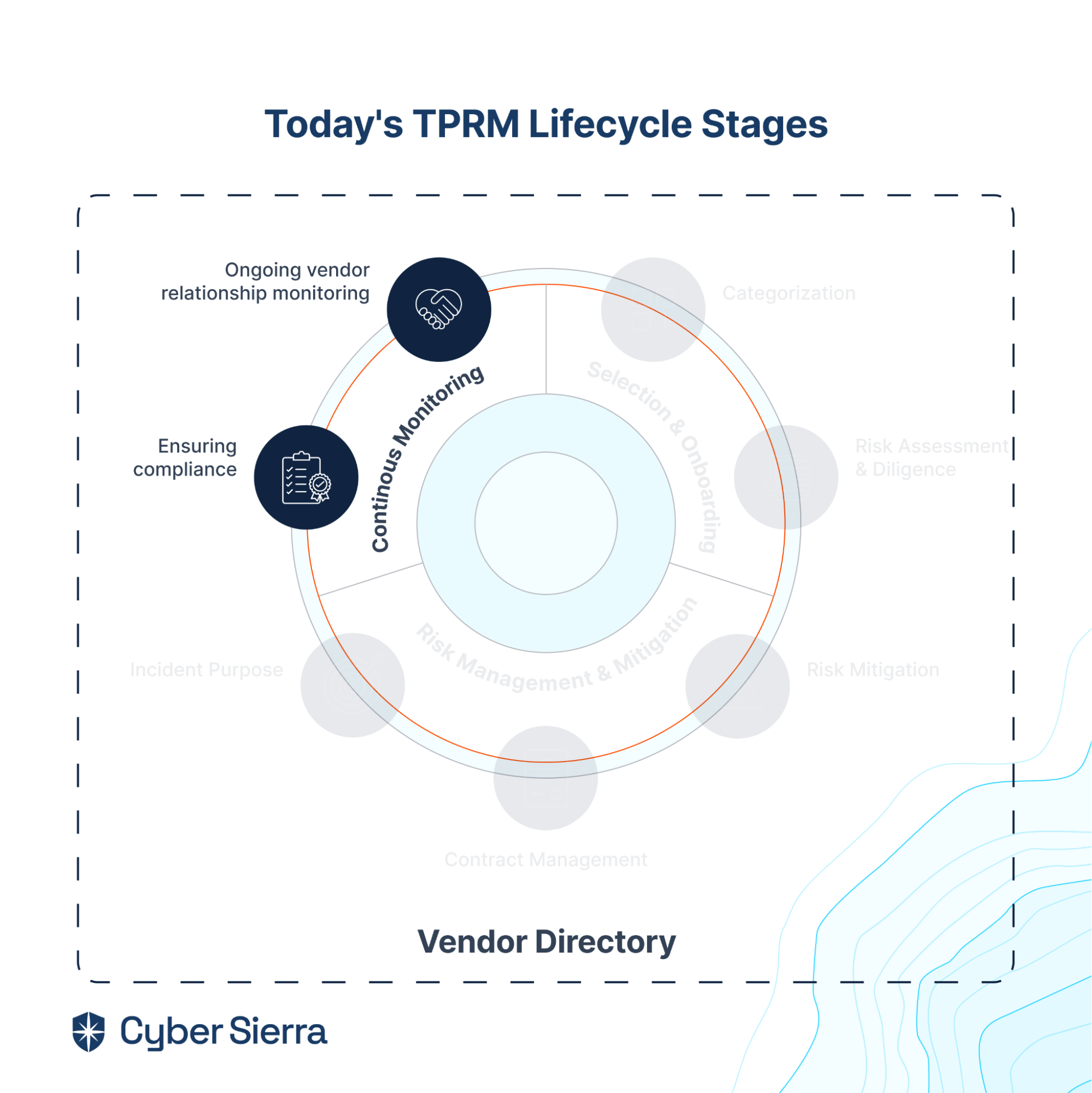
That’s what today’s TPRM lifecycle entails:


Enterprise TPRM Life Cycle


A great way to address each stage and step of the TPRM lifecycle illustrated above is through a unified platform with holistic vendors’ directory management capabilities. With that, at every step of the process, your security team can implement and maintain an effective and efficient TPRM program without losing context of other steps.


Which brings us to…


What is Enterprise Third-Party Risk Management?


Enterprise third-party risk management is a strategic framework for identifying, assessing, and mitigating risks associated with third-party vendors, suppliers, and partners. It encompasses evaluating the security, compliance, and operational capabilities of these entities to protect an organization’s assets and reputation. Effective enterprise TPRM involves continuous monitoring and due diligence throughout the lifecycle of third-party relationships ensuring that potential risks including cybersecurity threats and regulatory compliance issues are proactively managed to minimize disruptions and financial losses.


What to Look Out for in an Enterprise TPRM Solution


Irrespective of your organization’s unique situation, there are must-haves to look out for in an enterprise TPRM platform given today’s precarious threat landscape. The rest of this guide explores those crucial features, so you can make a more informed decision as you embark on buying and adopting an enterprise TPRM solution.


1. Holistic Vendor Directory


Imagine waking up to the news that a severe cyberattack has breached the data of many tech companies located in Singapore. Knowing your company partners with third-party vendors located in Singapore, you’d want to ensure they aren’t among those affected.


Doing that would be a stretch without a TPRM platform with holistic vendor directory capabilities. If the tool you choose lacks this feature, your vendor risk management team will rely on a mishmash of spreadsheets —with disconnected and disorganized pieces of information about the vendors your company is working with.


And it’d be difficult for you, the security leader or tech executive, to quickly filter and find specific lists of vendors any time the need arises. A holistic vendor directory solves that in three ways:


  • All vendors’ info management: From documents, to risk profiles, and policies in a centralized cloud-based platform.


  • Automatic segmentation: Leverages attributes like vendor location, vendor tiers, and others to automatically segment third-parties in your overall vendor ecosystem.


  • Easy searchability: Ability to quickly filter and find vendors that match whatever criteria relevant to you at any given time.


Based on what’s itemized above, here’s how to view a holistic vendor directory. It is a central place where all details of past and existing third-party vendors working with your organization can be easily filtered and retrieved by authorized persons.


2. Selection & Onboarding


Each time a new 3rd party is allowed into your vendor ecosystem, varying degrees of new cyber risks are introduced. The extent to which your team can know which vendors are likely to introduce more risks depends so much on how well you select and onboard them.


This is why vendor selection and onboarding is the first stage of the TPRM lifecycle. It sets your cybersecurity team up to manage each third-party allowed into your vendor ecosystem successfully:


Selection & Onboarding


As shown, the two steps in this stage, categorization and risk assessment and due diligence, helps your team tier vendors to be prioritized for ongoing risk monitoring. So vendor selection and onboarding capabilities a TPRM platform should have are:


  • Pre-onboarding risk analysis: Streamline the risk-profiling process for new vendors through security assessment surveys.


  • Customizing assessments: Enable leveraging standard vendor assessment templates like NIST and ISO, and the ability to customize them per your organization and vendor needs.


  • Pre-contract due diligence: Automate the cybersecurity due diligence processes before vendor contracts are approved.


  • Multiple vendor tiering: Automatically segmenting vendors into multiple tiers such as those with inherent or critical risks.


An easy way to simplify achieving the steps above is to start with standard cybersecurity assessment frameworks like NIST and ISO. Once you can customize any of these to your company’s specific needs, the other things can easily fall into place.


3. Risk Management & Remediation


To win your company’s business, third-party vendors will do everything within their power to pass initial security assessments. But once most are in, they become lackluster about security. This is why you shouldn’t rely on the first, positive impressions of vendors.


It’s also why your cybersecurity team needs processes in place for managing and remediating vendor risks should they emerge. This TPRM lifecycle stage ensures that, and its importance is shown in the fact that it has the most steps compared to other two stages:


Risk Management & Remediation


So after guiding vendors through onboarding and performing due diligence, seek a TPRM platform that also helps your team to:


  • Track security assessment progress: Streamline the process of tracking the due dates and review statuses of sent security assessment questionnaires across all vendors.


  • Re-populate questionnaires: Use answers previously submitted by vendors to re-populate questionnaires for what has changed.


  • Auto-score assessment responses: Automatically score responses and evidence provided by vendors to security assessment questions to understand possible risks.


  • Get swift incident response insights: Access actionable, in-context insight for responding to and remediating risks.


  • Adjust vendor contracts: Append changing risk profiles of vendors to relevant sections of their contracts and streamline the processes of using the same to request contract adjustments.


Even with all these in place, in most cases, managing and remediating risks requires vendors to make adjustments to their internal systems that are outside your team’s control. This requires collaborating with vendors whenever the need arises. And to be effective, communicating with them should be streamlined and in-context of specific risks. As you’d see below, the TPRM comments’ feature on Cyber Sierra enables that.


4. Continuous Vendors’ Monitoring


As the cyber threat landscape evolves, so would 3rd parties in your company’s vendor ecosystem need to adjust to changing regulatory requirements. But the onus is on your security team to ensure vendors are staying compliant with those changing compliance regulations. Failure to do this can result in collateral data breach damages and the hefty regulatory fines that come with them.


Avoiding such requires continuous vendor monitoring. First to ensure adherence to evolving compliance requirements. And second to reap the added advantage of identifying and proactively remediating risks from all vendor relationships before it’s too late.


This stage of the TPRM lifecycle addresses both:


Continuous Vendors’ Monitoring


TPRM capabilities needed here are:


  • Real-time vendor monitoring: Track vendors’ posture against compliance failures and cybersecurity risks in real-time.


  • Continuous risk trends’ visibility: Gain comprehensive, continuous visibility into vendors’ statuses against evolving risk trends and regulatory compliance requirements.


  • Auto-risk flagging and scoring: Flag all risks and automatically assign scores to each, enabling your team to prioritize.


  • Actionable remediation insights: Provide useful insights your team can use to prevent data breaches and compliance failures.


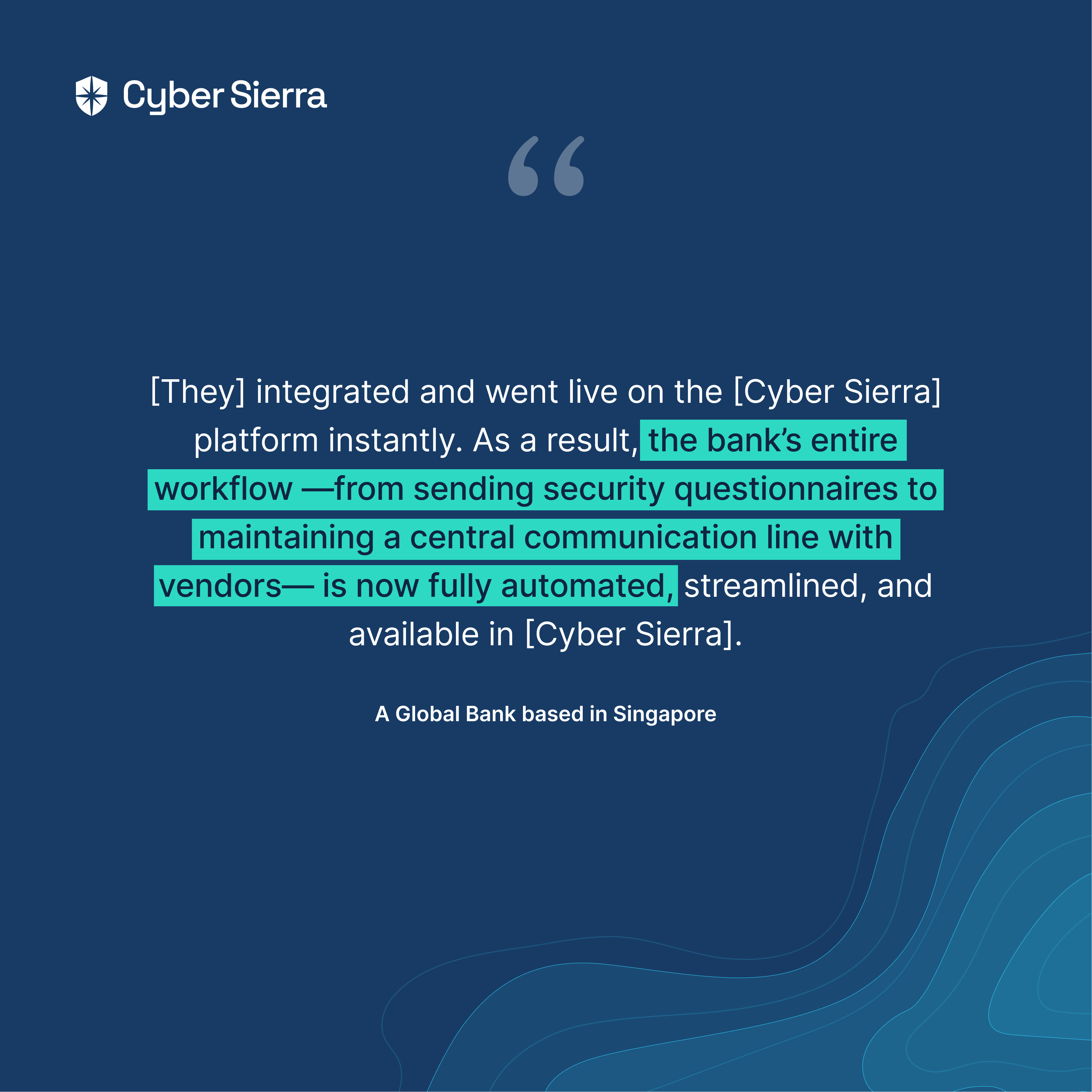
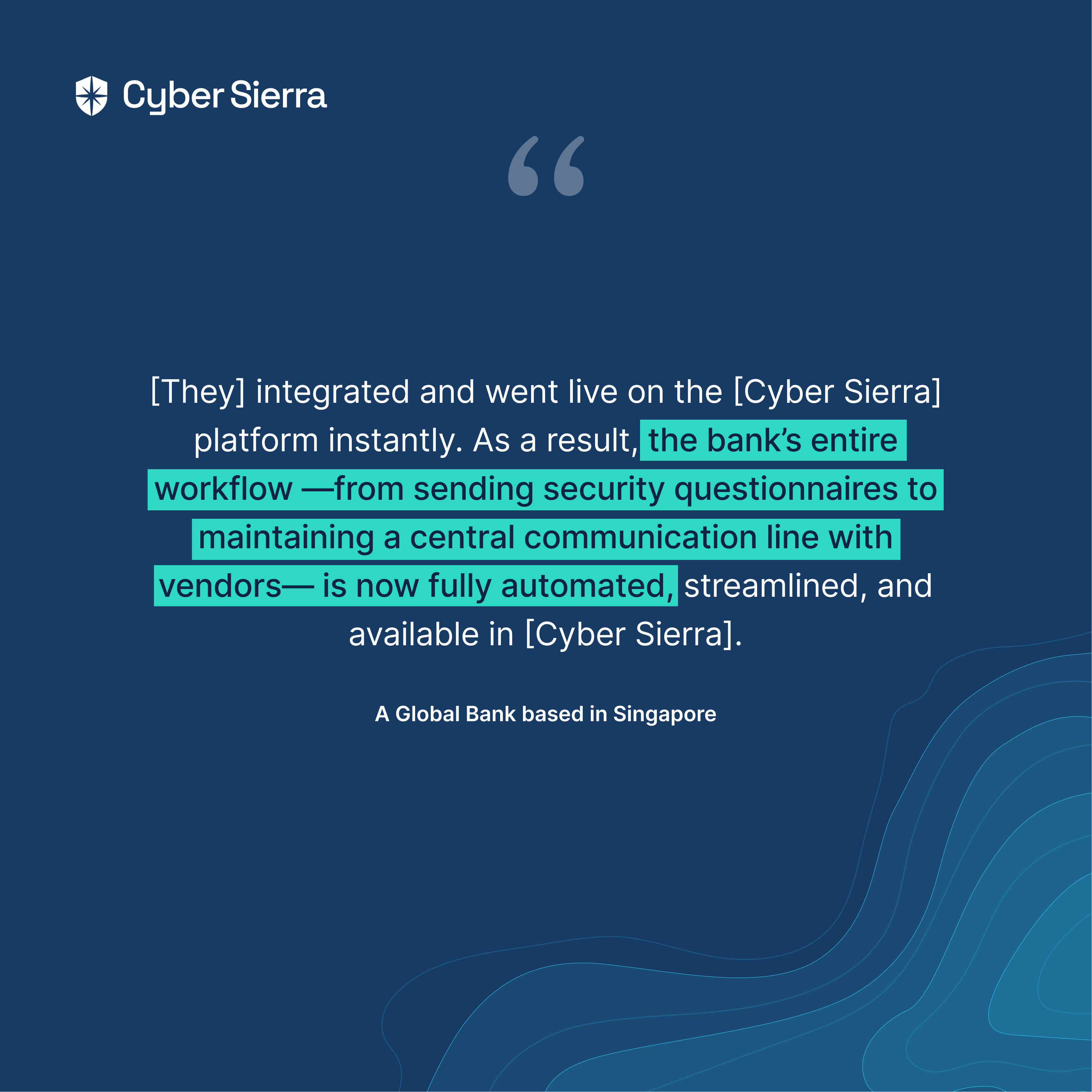
These continuous vendor risk monitoring capabilities are pre-built into Cyber Sierra’s TPRM suite. And it’s one of the reasons a global bank headquartered in Singapore relies on us for its TPRM needs.


More on that below.


Choosing the Right TPRM Tool


Even with everything above checked, are there other things to consider before choosing an enterprise TPRM platform?


There are, so let’s discuss them.


1. Adaptability


This one goes both ways.


As much as vendors need your organization’s business, your organization also needs vendors to stay competitive. The implication of this is that a TPRM platform must be adaptable to both parties.


On the one hand, it should streamline your team’s processes of managing risks posed by vendors. On the other hand, it should also streamline the steps vendors need to answer security assessment questions and provide necessary compliance evidence.


No party should feel like it’s extra work.


2. Interoperability


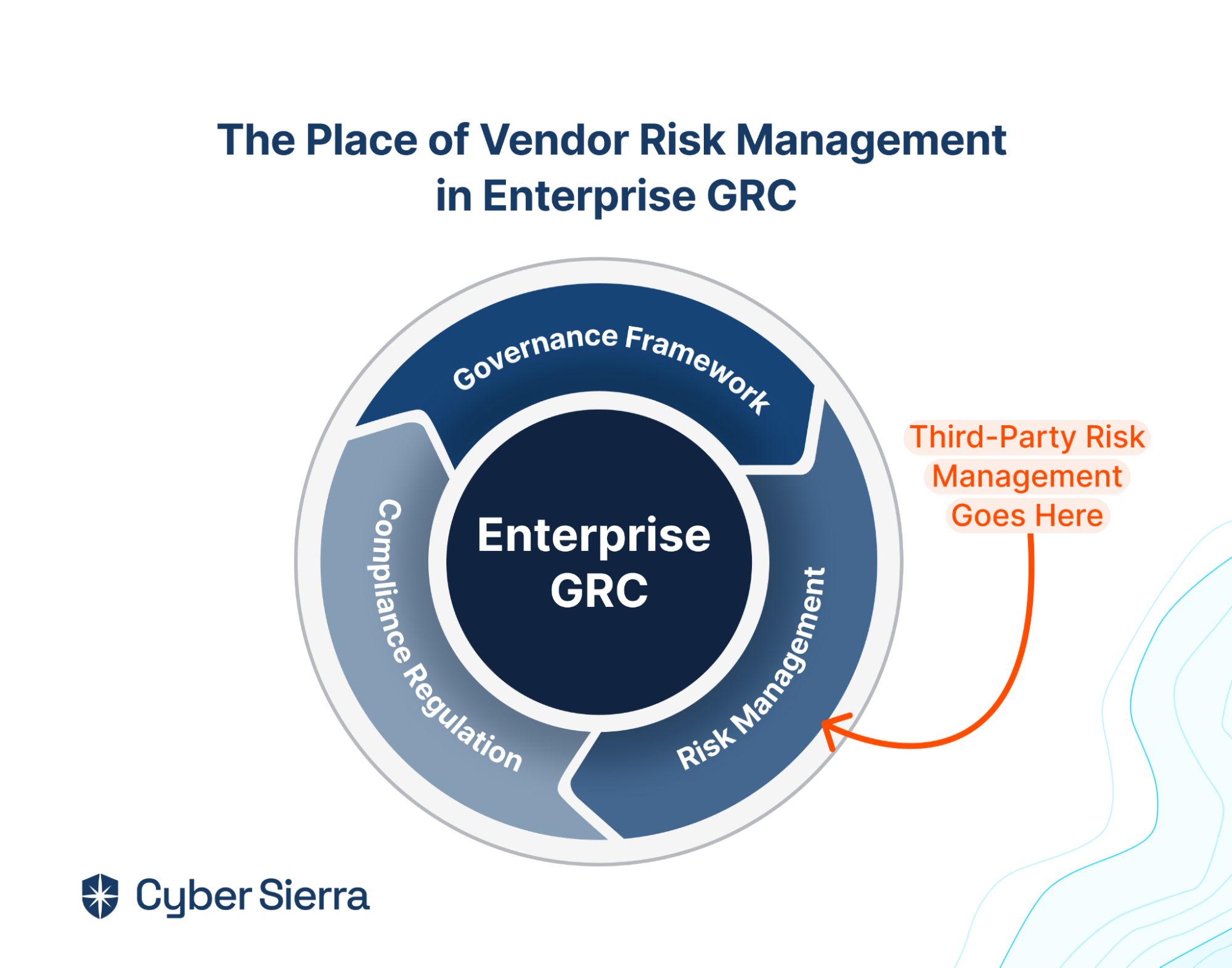
Third-party risk management is crucial. But it is one piece of risk management in the overall enterprise governance, risk management, and regulatory compliance (GRC) pie:


Choosing the Right TPRM Tool


Consider this when choosing a TPRM solution. Because if you choose a point TPRM tool, you’d also need to spend hard-earned resources on other tools for cybersecurity governance and compliance. In addition to wasted spend, point cybersecurity solutions have other downsides.


Says Matt Kapko of CybersecurityDive:


Matt Kapko of CybersecurityDive


To avoid these issues, seek a platform where your team can tackle vendor risks in the context of your company’s security governance, overall risk management, and regulatory compliance, all in one place.


This is why interoperability is crucial and should be prioritized.


3. Value


While price is a major consideration with any enterprise software purchase, what you really want to focus on is the value you’d get. And staying with the need for interoperability over a point tool, it makes sense to prioritize a TPRM solution with full-fledged capabilities for tackling interrelated, enterprise cybersecurity needs.


Some things to look out for are:


  • Beyond TPRM, does it provide a centralized solution suite for addressing other cybersecurity concerns from one place?


  • Is there unlimited access, so your core security team and employees can collaborate in tackling cybersecurity?


  • Can you integrate all tools and services across your organization for continuous scanning for threats and cyber risks?


  • Can you customize the platform, per your organization’s specific cybersecurity needs?


  • Is the platform enterprise-ready and built to scale as teams across your organization, cybersecurity, regulatory compliance, and vendor risk management needs grow?


The correct answers to these questions varies from one company to another and will ultimately depend on a company’s unique needs. So to get the most value out of a TPRM solution, it’s best to reach out and see if it can be tailored to your needs before talking about pricing.


Try Cyber Sierra, the Interoperable TPRM Platform


All TPRM solutions aren’t created equal.


Most are built to be pure-play or point TPRM tools. As stressed in this guide, the downside is that your team can end up with more vulnerabilities if a tool doesn’t work well with other tools in your tech stack. This is why to get the most value, consider a comprehensive, interoperable cybersecurity platform with full-fledged enterprise TPRM capabilities.


If that sounds inviting, here are just two reasons to try Cyber Sierra.


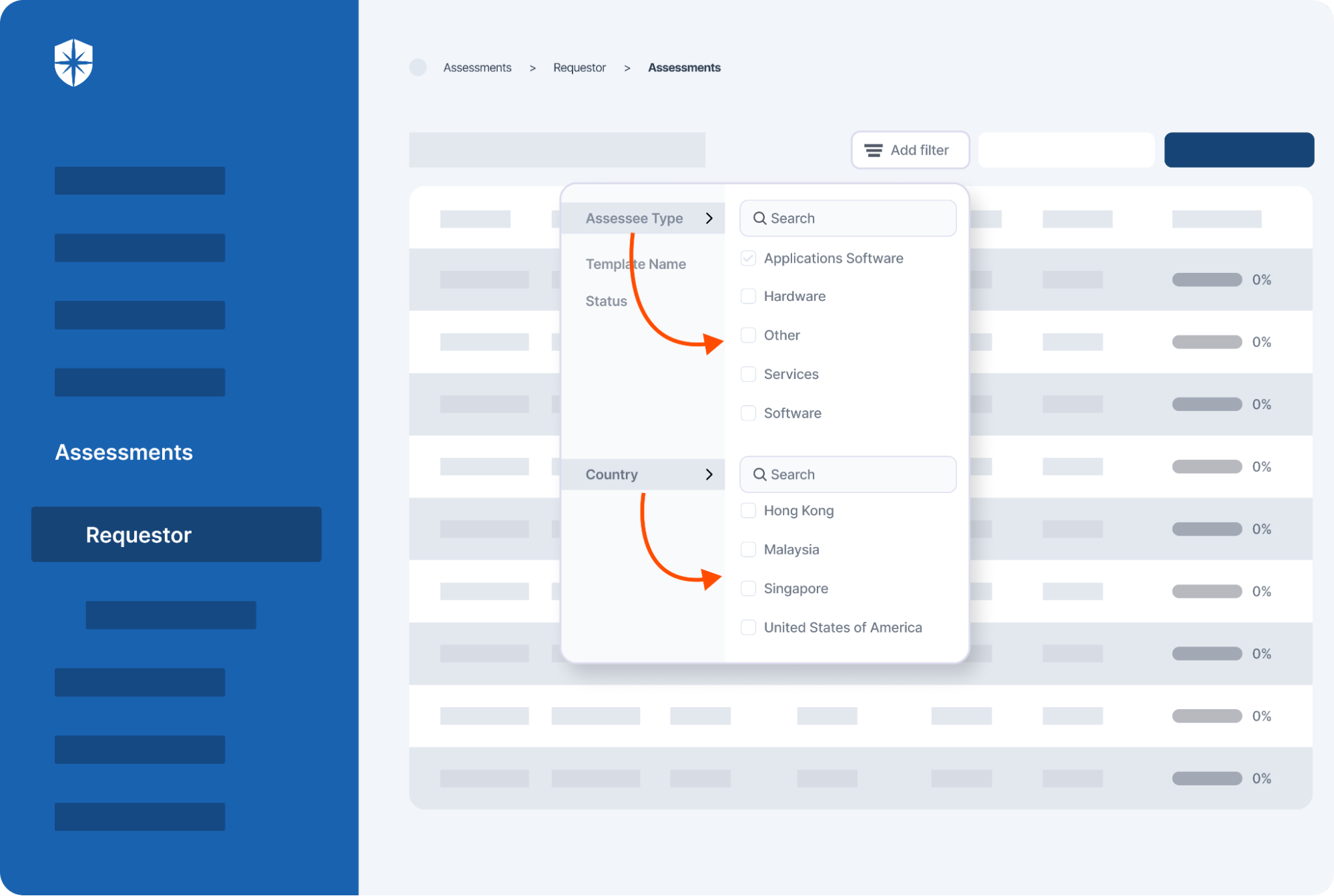
First, our TPRM suite has a holistic vendor inventory directory that automatically updates once a new 3rd party enters your vendors’ ecosystem. This capability enables authorized persons in your team and across the company to filter specific vendors at any time, using various filtering options like location, vendor type, status, and so on:


Try Cyber Sierra, the Interoperable TPRM Platform


Second, and this is crucial, is how our platform removes lots of back and forth when managing and remediating vendor risks. Automating the various processes involved in selecting and onboarding vendors is usually pre-built into most TPRM tools. But even with this, most tools still require you to send back and forth emails, requiring vendors to do their bit in staying compliant or remediating threats and cybersecurity risks.


Not with Cyber Sierra.


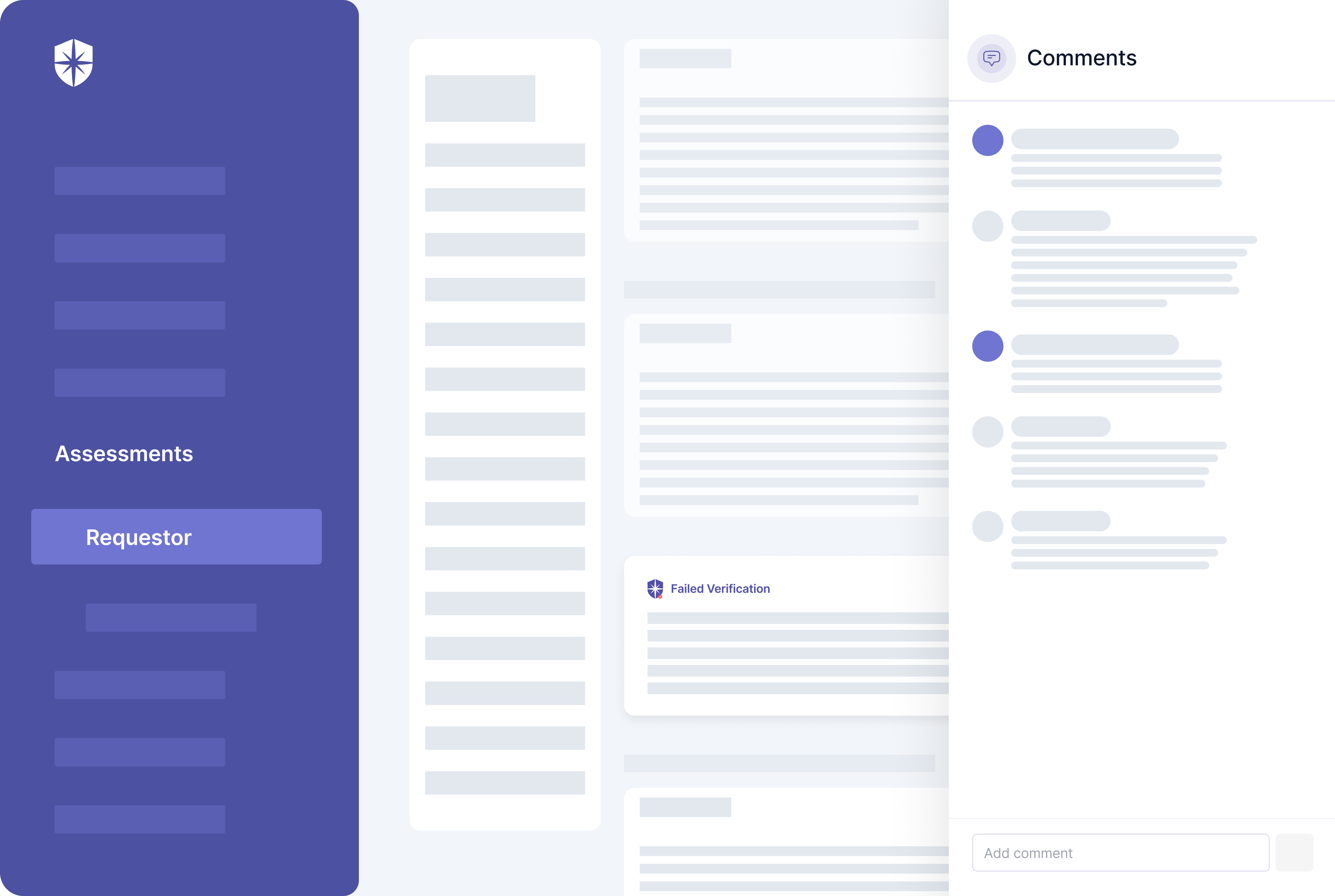
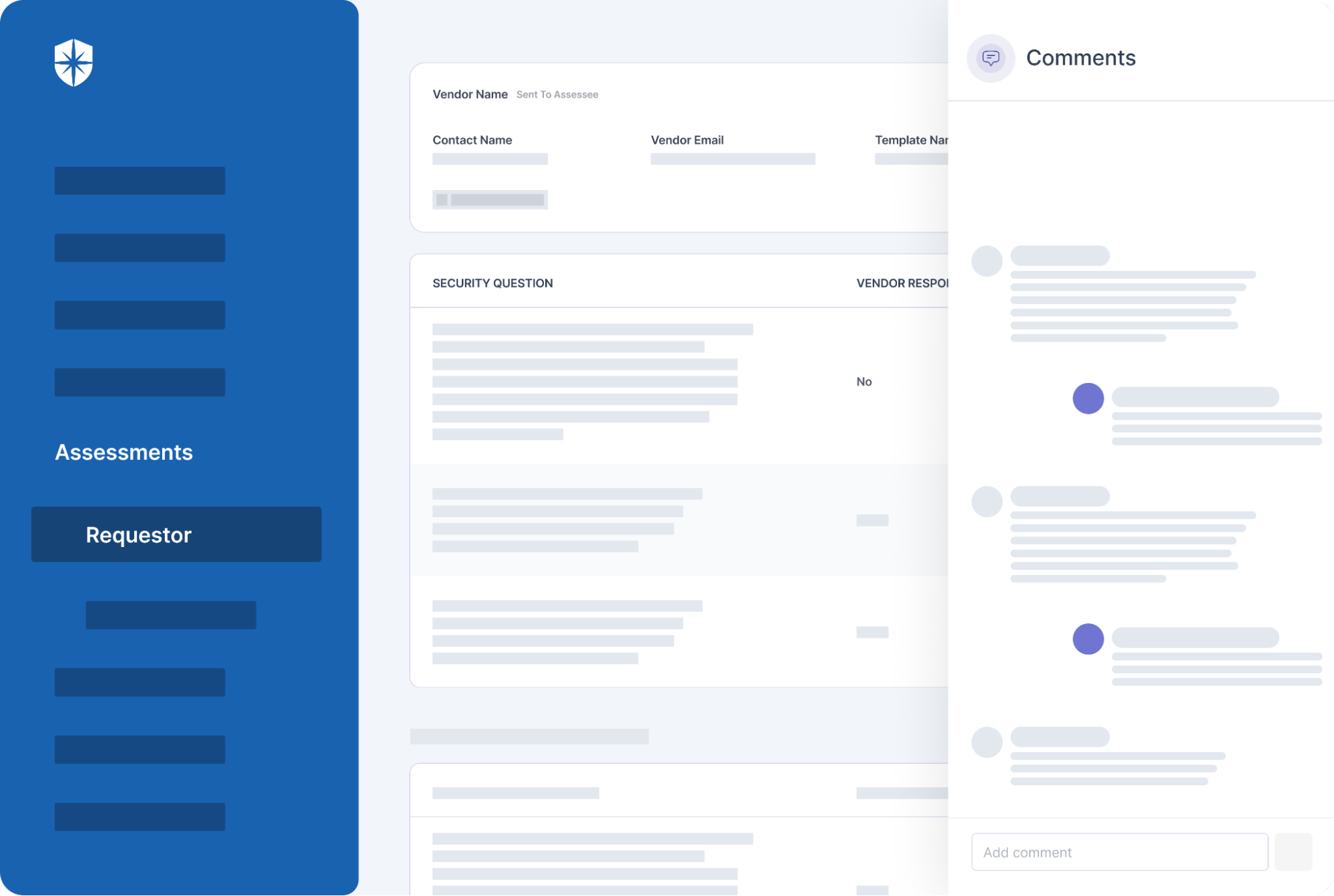
In many, if not all, cases, managing and remediating risks requires vendors to adjust internal systems outside your team’s control. This requires real-time collaboration whenever the need arises. And to be effective, communication should be streamlined and in-context of specific risk-remediation tasks.


Our TPRM comments’ feature enables that:


Our TPRM comments’ feature


There are other reasons to consider an interoperable, cybersecurity suite with enterprise TPRM capabilities like Cyber Sierra.


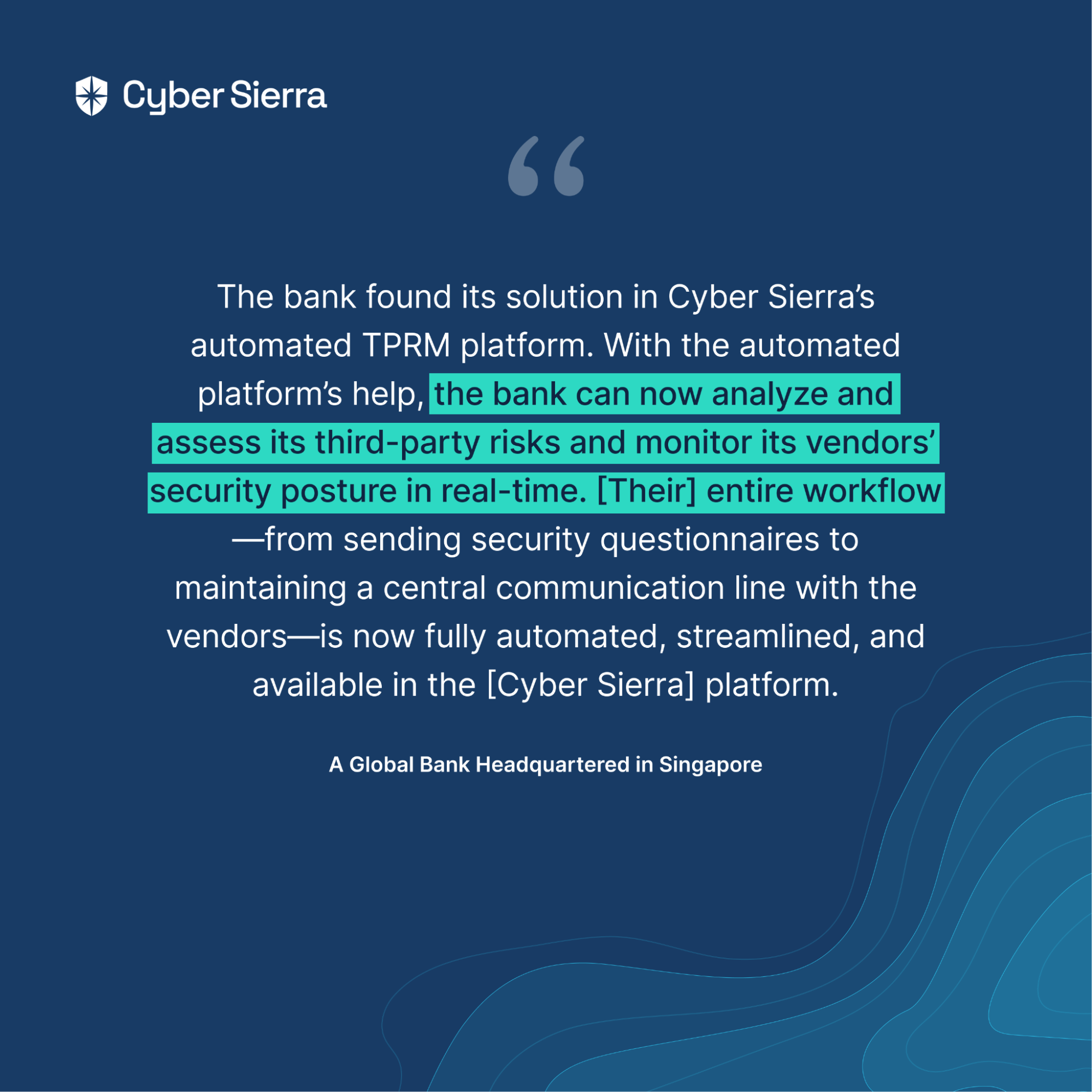
But the two reasons shown above is why a global bank in Singapore relies on us for its extensive TPRM needs:


extensive TPRM needs


Read their success story here.


If that sounds inviting, give Cyber Sierra a try:


give Cyber Sierra a try


Schedule a demo now to see how Cyber Sierra can streamline your TPRM processes. Our platform effectively mitigates third-party risks so you can focus on driving business growth through strategic partnerships.

  • Third Party Risk Management
  • CISOs
  • CTOs
  • Cybersecurity Enthusiasts
  • Enterprise Leaders
  • Startup Founders
Pramodh Rai

Meet Pramodh Rai, a technology aficionado and Cyber Sierra's co-founder, whose zest for innovation is fuelled by a cupboard stacked with zero-sugar Redbull. With a nimble footwork through the tech tulips across Asia Pacific, he's donned hats at Hmlet (the proptech kind) and Funding Societies | Modalku, building high-performing teams and technologies. A Barclays prodigy with dual degrees from Nanyang Technological University, Pramodh is a treasure trove of wisdom, dad jokes, and everything product/tech. He's the Sherpa in sneakers you need.

A weekly newsletter sharing actionable tips for CTOs & CISOs to secure their software.


Thank you for subscribing!

Please check your email to confirm your email address.

Find out how we can assist you in
completing your compliance journey.
blog-hero-background-image
Third Party Risk Management

Cyber Sierra Roundtable on Managing Software Supply Chain Risk

backdrop
Table of Contents

Join thousands of professionals and get the latest insight on Compliance & Cybersecurity.


Supply chain risk in the world of information security gains notoriety with every new breach. 2020’s SolarWinds breach is a never-ending saga, with news of impacted entities continuing to come up. Vulnerabilities in open source are another headache, with log4j dominating headlines.


How does the information security team prepare for such unknowns, with only one certainty in mind, that such unknowns exist and can come up suddenly on any given day?


A team of experts convened during the Singapore Fintech Festival 2022 to discuss supply chain risk from a cybersecurity perspective. This meeting was facilitated by Cyber Sierra in Singapore. Please find below a summary of questions, panelists, and discussion points.

  1. What are some impacts of third-party vendor risks? How do you manage such risks?
  2. Have you experienced first-hand such supply chain attacks? Can you share your learnings and experiences?
  3. Do you classify vendors by their potential severity of risks?
  4. Are you able to isolate or ring fence a problematic system or solution (from a vendor) from the rest of your systems?
  5. How can companies guard against misleading declarations from vendors?
  6. Is there a role for regulators to play in terms of enforcing certain best practices in containing supply chain risk?
  7. What is your opinion of a mandatory cyber insurance policy?


Panelists (Reference)


Guarding against third-party risks amid an evolving cyber security landscape


Getting cybersecurity right can be extraordinarily complex given the constantly evolving landscape of new threat vectors and security vulnerabilities. In many cases, the weak link is human, and even senior executives have found themselves tricked through social engineering, noted Stephen Barnham, a senior technology leader in the Banking and Financials Service Industry (BFSI).


Speaking at a recent roundtable discussion organised by Cyber Sierra with IT and cybersecurity practitioners, he shared an anecdote of how a General Manager was tricked by someone purporting to be the CEO to transfer tens of thousands of dollars for a non-existent company initiative.


While the natural propensity might be to dismiss or ignore potential cybersecurity weaknesses as something that will not happen to us, Barnham urged businesses to establish a culture of awareness around cybersecurity and to make it everyone’s responsibility.


The risks from without 


As the world becomes more interlinked and businesses digitalise, one growing risk would undoubtedly be from third-party organisations. At the root of this are digital systems that are increasingly integrated, including with external vendors and partners. When ignored, this can lead to a variety of cybersecurity breaches including bad actors gaining entry through them or supply chain attacks. Silvia Thom, who was formally the CTO at Zalora, shares that vendor security is a common problem.


“You send out a security questionnaire [to the third party] and you get back the answers. There’s that pressure to get the contract from the other side. And, you know, if it’s a two, three-year-old vendor, how much security could they have built up?” said Silvia.


But is third-party risk management crucial? Pramodh Rai, co-founder and CEO of Cyber Sierra thinks so. He pointed to the prevalent use of automated hacking tools by threat actors, citing the example of how some Internet-accessible databases were hacked within minutes of going live. 


“Somebody somewhere has written a script that is looking for common vulnerabilities. That’s why it’s important to validate your cybersecurity posture first – because the other side is automating the process of hacking,” said Rai.


Security or speed? Choose one 


But why are so few organisations paying attention to third-party risk management? According to Anagat Pareek, ex-CISO of PayTm, third-party risk management is at the bottom of priorities at most organisations mainly due to a lack of time.


“There were instances where we had to turn [vendors] away because of the lengthy onboarding time. By the time we go through the laborious security checks, it would take too much time out of the project runway. In the absence of a [better solution], it can get to the point that we miss a business opportunity,” said Barnham of the time crunch when addressing third-party risk.


But keeping everything in-house is often not the solution either. Barnham explained: “You are in a world where you want to give your developers access to open source. You want them to go to publicly available code repositories. You are contracting external developers and have a hybrid team of developers.”


For many, the result is a compromise where security is reduced to a security checklist.


“We give out access to our systems to vendors. We check the compliance of these vendors by sending them security questionnaires with checklists. If they tick ‘no’, they don’t get the contract. So, everything is ‘yes’, of course. But how do you know that each one of them is compliant?” asked Pareek.


“How are they controlling access to data? Is their data encrypted at rest and in motion? Are they PCI-compliant? We rely a lot on paperwork to answer these questions, but really, nobody has the wherewithal to go out and look at 100 vendors. It’s impossible. We need a better solution.”


A better way with Cyber Sierra


There is where Cyber Sierra can make a difference, says Pareek. “Cyber Sierra can be deployed to scan the network and upload the report. Many vendors may not know what a security vulnerability is, or what a network scan is. And they don’t want to buy another commercial solution – they are trying to build a business after all. Cyber Sierra will also help them become more secure and give the clients they work with the confidence that they’re dealing with a secure organisation. I think it’s a win-win situation.”


Edwin Tan, Head of Information Security at Julius Baer concurred: “Cyber Sierra can provide efficient due diligence of a vendor setup based on measurable criteria. This allows us to take quick proactive action in working with the vendor to address the key concerns before engaging them.”


“My environment has become so much more complicated over the last 10 years; my attack surface has become significantly broader. This is where all my attention is going. If there is a solution that enables me to connect to third parties yet gives me peace of mind about who I’m connecting to, by verifying that they are compliant to whatever standards we want to hold them to. This would help me to use my time far more efficiently,” said Barnham.


Verify and insure 


Another benefit of automated checks lies in their ability to verify that a security declaration is indeed true. Barnham added: “When you have that automated tooling and knowledge that there is that automated tooling, it will disincentivise individuals from lying about their preparedness and compliance. Because now they know they are going to get caught. This allows you to get out of that vicious cycle of pointless checklists, and instead becomes a proactive collaboration.”


“Once people in the ecosystem know that you have this capability, they will not want to turn up at your doorstep, making false declarations,” Rai agreed.


And what role can cyber insurance play? Participants at the roundtable are uncertain if it should be mandatory but agreed that it can give companies a choice to mitigate risk, assuming the premium is affordable

  • Third Party Risk Management
  • CISOs
  • CTOs
  • Cybersecurity Enthusiasts
  • Enterprise Leaders
  • Startup Founders
Srividhya Karthik

Srividhya Karthik is a seasoned content marketer and the Head of Marketing at Cyber Sierra. With a firm belief in the power of storytelling, she brings years of experience to create engaging narratives that captivate audiences. She also brings valuable insights from her work in the field of cybersecurity and compliance, possessing a deep understanding of the challenges and pain points faced by customers in these domains.

Find out how we can assist you in completing your compliance journey.

blog-hero-background-image
Third Party Risk Management

TPRM Program Metrics Tracked by Successful CISOs

backdrop
Table of Contents

Join thousands of professionals and get the latest insight on Compliance & Cybersecurity.


I talk to a lot of CISOs. 


Most decry not having enough budget to hire talent and buy every tool needed to implement their desired third-party risk management (TPRM) framework. But even among those who don’t have such challenges, our chats often reveal a common, underlying question:


What metrics do I need to prove my TPRM program is successful? This question is valid to both sides of the spectrum. Because to secure more budget or get approval for next year’s budget, you must establish metrics demonstrating the success of your TPRM program. 


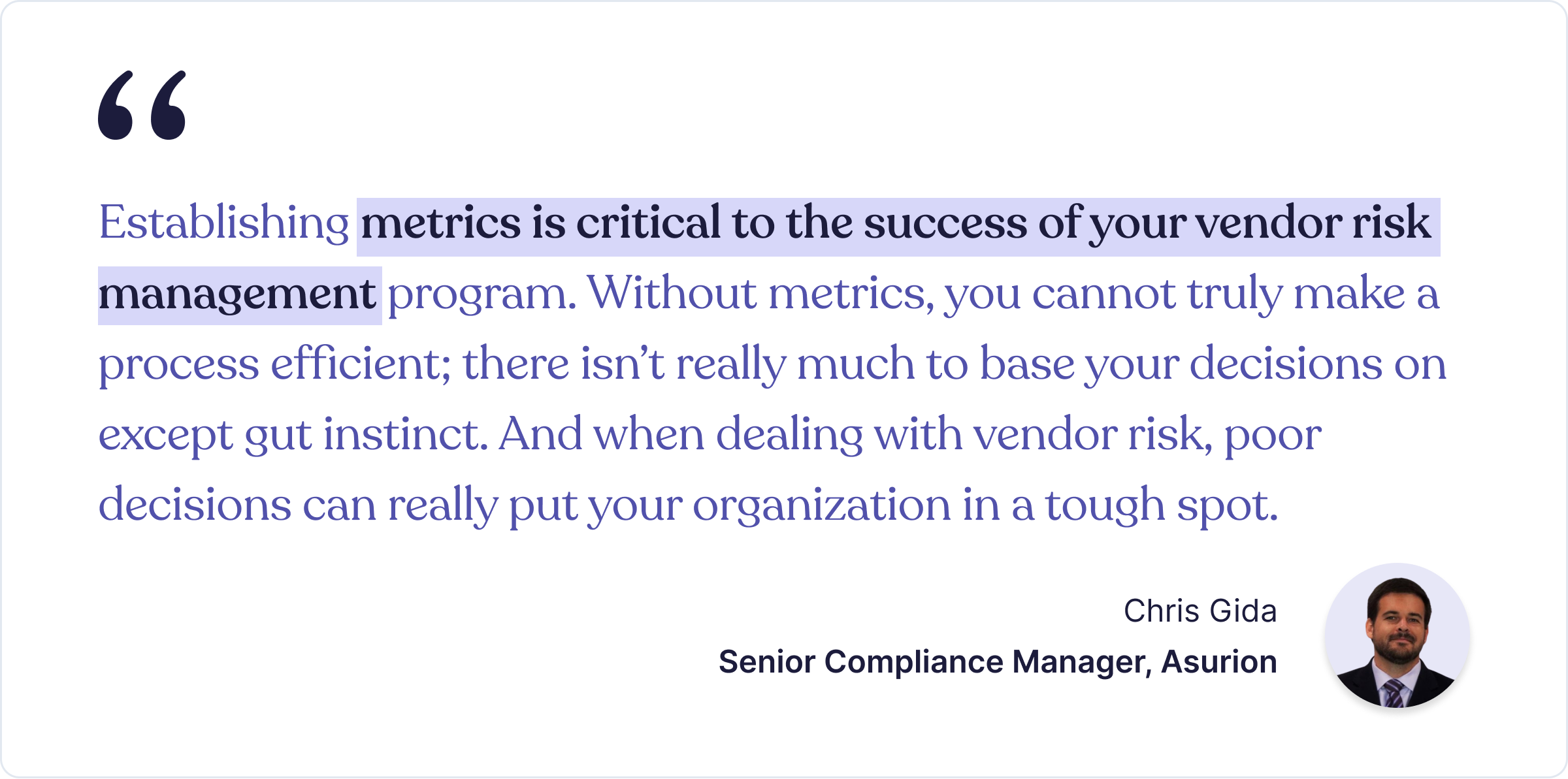
Says Chris Gida, Asurion’s Sr. Compliance Manager: 


Chris Gida - Quote


In other words, metrics are useful for more than just getting a TPRM program budget approved. They are also crucial for making decisions relative to securing your company from vendor risks. 


But the question remains: How do you choose them? 


Criteria for Choosing Vendor Risk Management Metrics


There’s no one-size-fits-all criteria. 


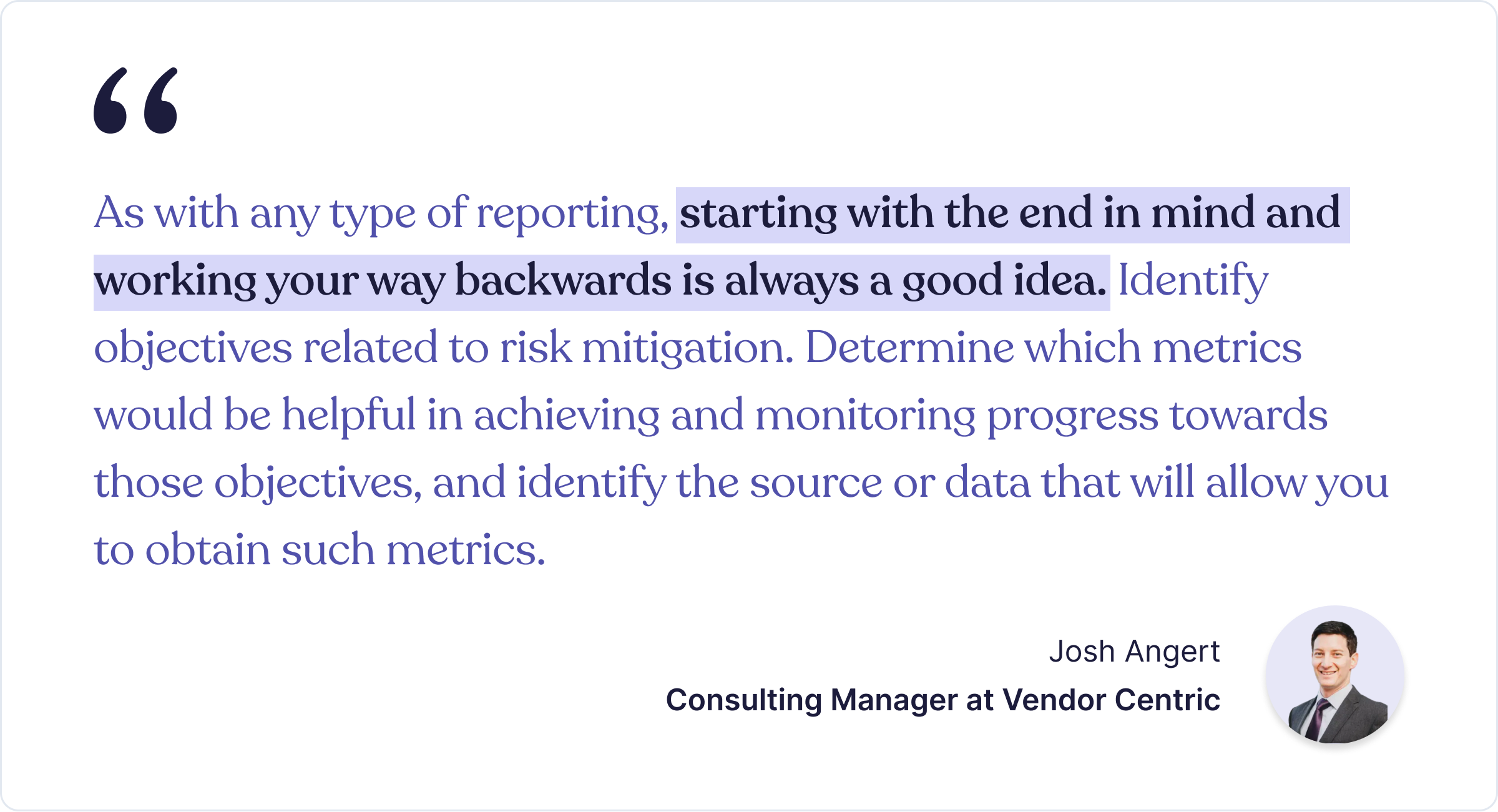
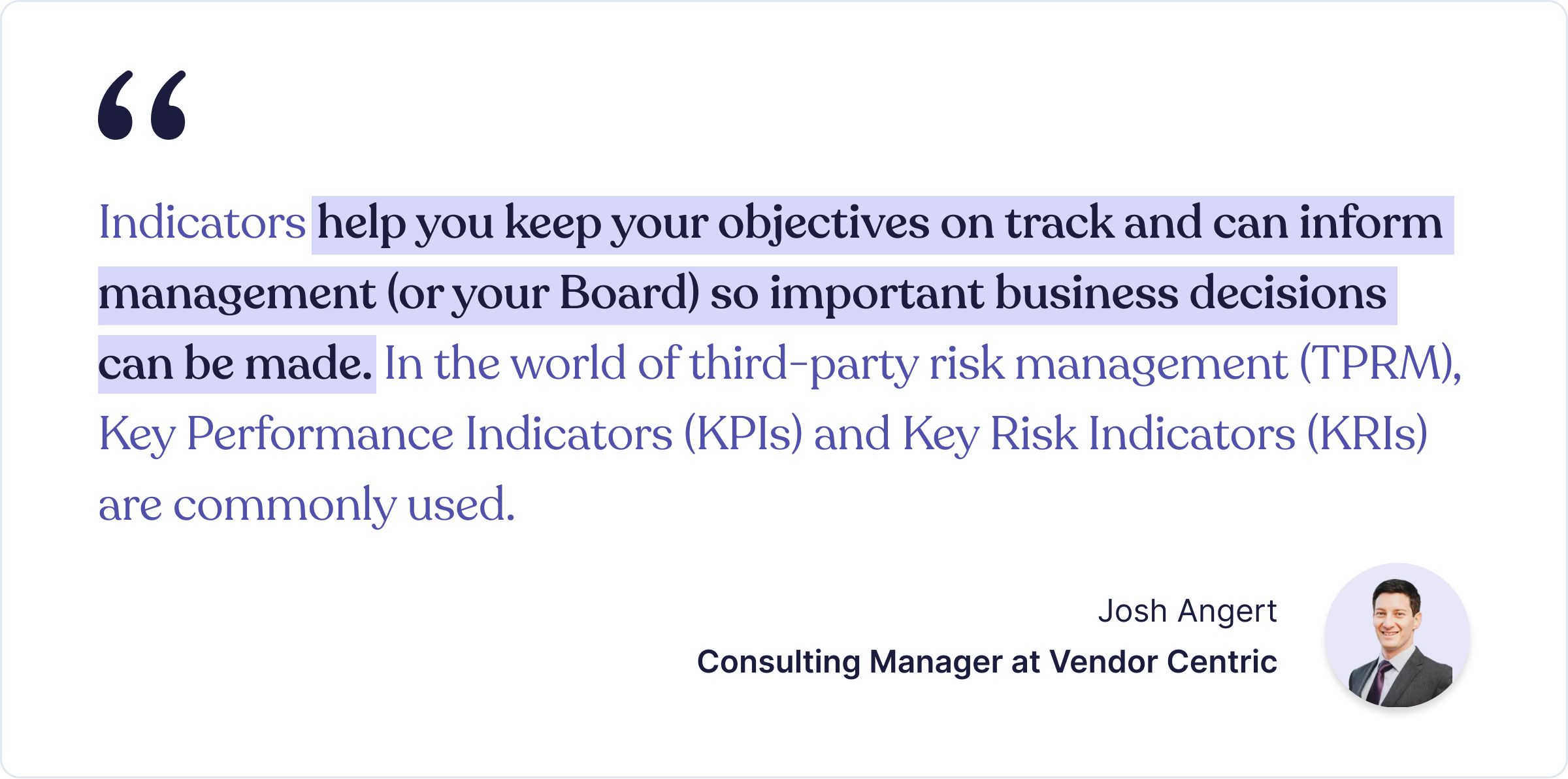
However, I like Josh Angert’s recommendation for Chief Information Security Officers (CISOs). He hammered on the need to always start with the end in mind when establishing TPRM program metrics. 


In his words:


Josh Angert - Quote


Based on Josh’s insight, the metrics you choose should cut across key performance indicators (KPIs) and key risk indicators (KRIs). KPIs keep your security team focused on aligning your organization’s TPRM program with business objectives. KRIs, on the other hand, track the prompt identification and mitigation of vendor risks. 


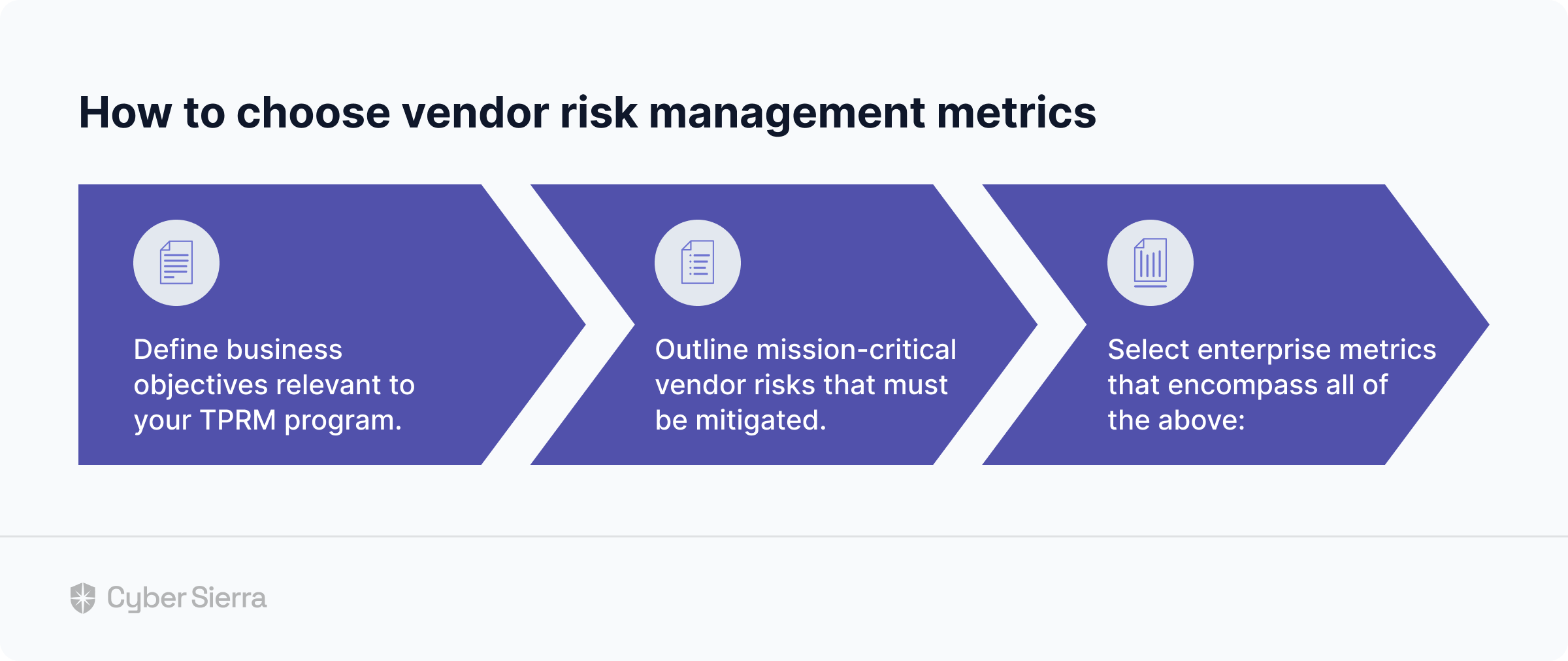
So to choose vendor risk management metrics: 


  • Define business objectives relevant to your TPRM program.
  • Outline mission-critical vendor risks that must be mitigated.
  • Select enterprise metrics that encompass all of the above:


How to choose vendor risk management metrics


The rest of this guide explores metrics I see enterprise CISOs using to ascertain the success of their TPRM programs. As we proceed, you’ll also see how our interoperable cybersecurity and compliance automation platform, Cyber Sierra, helps you achieve them. 


Before we dive in: 

illustration background

Join SMSW

Join CISOs, CTOs, and enterprise security execs subscribed to Secure My Software Weekly (SMSW) for actionable cybersecurity, risk and compliance insights.

card image

Enterprise Third-Party Risk Management Program Metrics 


By knowing what to measure (i.e., the TPRM metrics below), your security team can know what to improve and succeed. 


1. Number of Identified Vendor Risks


This metric measures how many 3rd party risks your security team identifies over time. The objective of this metric, relevant to most enterprise TPRM programs, is to identify as many risks as possible. 


As organizations add new vendors, they need to identify all risks and security threats brought into their ecosystems. So the more risks identified over time, the more your security team can demonstrate its understanding of 3rd party risks. 


2. Number of Reduced Risks


Identifying an appreciable number of risks over time is good. But demonstrating that they are reducing relative to when your program went into effect is more important. 


Say your organization hasn’t added new vendors in the last three months. This metric tracks changes in third-party risks within that period. Less risk means your security team is effective. 


3. Cost of Managing Third-Party Risks


Security teams should track this in twofold: 


  • Articulate all direct and indirect costs associated with managing vendor risks before implementing your TPRM program. 
  • Show how these costs have reduced over time relative to the negative business impact mitigated. 


Reporting this metric is critical because it’s a great way for board members to see your TPRM program as a value, and not a cost center. 


4. Time to Detect Vendor Risks


As the name suggests, this metric helps you track how long it takes your team to detect vendor risks on average. A shorter risk detection time shows that your security team is efficient. 


Board members would want to see risks being detected as soon as possible. This is why third-party security managers track and report on how their team has reduced their average risk detection time. 


5. Time to Mitigate Risks 


How long does your team take to mitigate vendor risks? 


This metric measures the answer to that question. Once your team detects risks, they must immediately mitigate them. The faster they do this, the more financial and reputational damage your vendor risk management program will save your company. 


The enterprise security managers I talk to use this metric to visualize how they are mitigating risks within a timeframe. By tracking it, you can set objectives for improving your time to mitigate risks over time. 


6. Time to Complete Risk Assessments


Vendors are business entities contracted to help achieve your company’s mission or business goals. Putting them through rigorous third-party risk assessment is critical for mitigating risks. 


However, it is also important to track how long it takes to completely assess vendors. Security managers should strive to reduce the time it takes to assess vendors for two reasons: 


  1. Give vendors a smooth assessment experience
  2. Demonstrate to management how efficiently they are risk-assessing and onboarding 3rd parties into their ecosystem. 


You can achieve these with software that streamlines the process of initiating and completing vendor risk assessments in three steps:


Time to Complete Risk Assessments


As shown above, this streamlined 3-step workflow is built into Cyber Sierra’s TPRM module. So instead of looping between spreadsheets or exchanging endless email threads, enterprise security teams can profile, assess, and manage vendor risks in one place. 

illustration background

Achieve Your TPRM Program Metrics

Profile, streamline vendor risk assessments, and manage third-party vendor risks in one place.

card image

Achieving Vendor Risk Management KPIs & KRIs


Tracking the metrics above is good.


But without context, metrics on a dashboard won’t show how effective your TPRM program is. Worse, they are not so helpful if you can’t tie them to noticeable business objective indicators. 


Josh Angert shared why indicators —key performance indicators (KPIs) and key risk indicators (KRIs) —are more important:


Josh Angert - Quote-1


Let me rephrase that. 


Choosing TPRM metrics is vital. It guides your security team. Management, on the other hand, concerns itself with indicators —KPIs and KRIs— tied to business objectives they can track and use to make decisions. Below are three you should prioritize. 


1. Resource Efficiency


Imagine using the perfect blend of ingredients to bake a batch of cookies without wasting anything. Resource efficiency is similar to that. It means using just the right amount of time, tools, people, and budget to implement an effective TPRM program. 


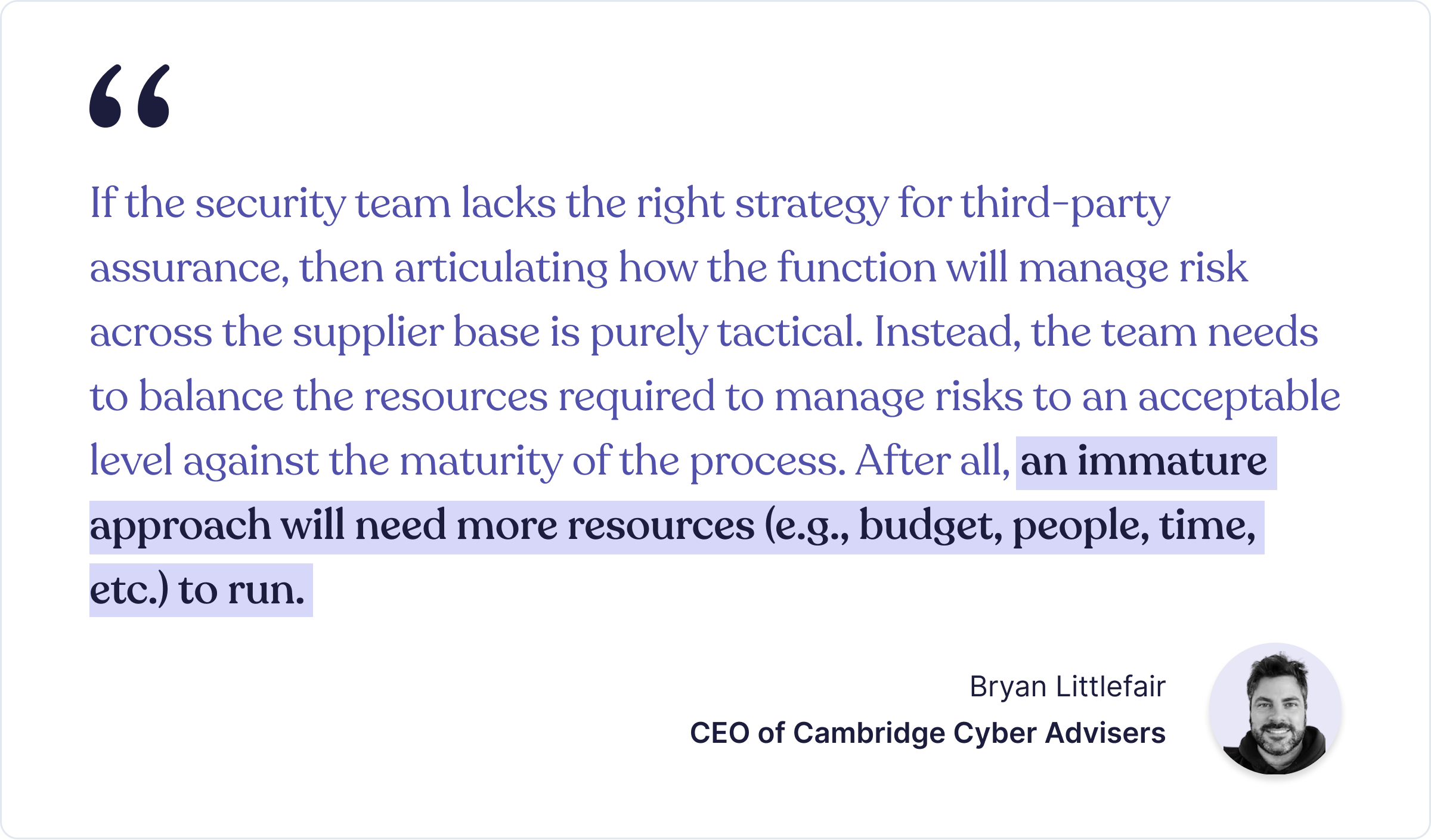
Resource efficiency indicates to management that your security team is doing a great job while saving time and money. According to Bryan Littlefair, the CEO of Cambridge Cyber Advisers, to improve this KPI, start by having a mature vendor risk management strategy. 


Bryan advised


Bryan Littlefair - Quote


2. Throughput


Say your company must address an average of 300 vendor risks per month. Throughput gives management an overview of how quickly your security team is able to do that over a given time period. 


This important KPI helps you identify and minimize bottlenecks in your vendor risk management processes, enabling your team to do more in less time. This is essential for achieving selected TPRM program metrics. 


3. Process Efficiency


Think of process efficiency like striking the right balance between operational effectiveness and risk mitigation. 


It helps management track the speed at which your security team assesses, manages, and mitigates third-party risks. While the first two required having the right strategy, this one is about streamlining core elements of third-party risk management


And this is where Cyber Sierra comes in. 


For instance, you can assess, onboard, and manage third-party vendors much faster with our platform. And for prompt risk mitigation, our software auto-verifies all evidence of security controls uploaded by vendors in response to assessment questionnaires. 


Unverified evidence indicates a lack of necessary security measures that could lead to data breaches. With Cyber Sierra, your team can follow up with vendors to resolve this on the same pane: 


Achieving Vendor Risk Management KPIs & KRIs


Achieve Key TPRM Program Metrics


As I’ve stressed, knowing what metrics to choose is how you demonstrate that your TPRM program is successful. But as you choose them, it is equally, if not more important to align efforts towards achieving visible KPIs and KRIs. 


Your team can do this by streamlining critical processes of your vendor risk management program with Cyber Sierra. For instance, you get the NIST and ISO TPRM assessment frameworks built into our interoperable cybersecurity platform. 


With these critical assessment frameworks in one place, your team can assess, onboard, manage, and mitigate vendor risks much faster:


Achieve Key TPRM Program Metrics

illustration background

Achieve Your TPRM Program Metrics

Profile, streamline vendor risk assessments, and manage third-party vendor risks in one place.

card image
  • Third Party Risk Management
  • CISOs
  • CTOs
  • Cybersecurity Enthusiasts
  • Enterprise Leaders
  • Startup Founders
Pramodh Rai

Meet Pramodh Rai, a technology aficionado and Cyber Sierra's co-founder, whose zest for innovation is fuelled by a cupboard stacked with zero-sugar Redbull. With a nimble footwork through the tech tulips across Asia Pacific, he's donned hats at Hmlet (the proptech kind) and Funding Societies | Modalku, building high-performing teams and technologies. A Barclays prodigy with dual degrees from Nanyang Technological University, Pramodh is a treasure trove of wisdom, dad jokes, and everything product/tech. He's the Sherpa in sneakers you need.

A weekly newsletter sharing actionable tips for CTOs & CISOs to secure their software.


Thank you for subscribing!

Please check your email to confirm your email address.

Find out how we can assist you in
completing your compliance journey.
blog-hero-background-image
Third Party Risk Management

How Should Enterprise CISOs Structure TPRM Teams?

backdrop
Table of Contents

Join thousands of professionals and get the latest insight on Compliance & Cybersecurity.


‘How do I mitigate vendor risks?’


That’s a common question in my chats with CISOs and IT executives. Being a tech enthusiast and as stressed in previous guides, my usual suggestion is: Leverage technology and streamlined processes to: 


These are all crucial factors.


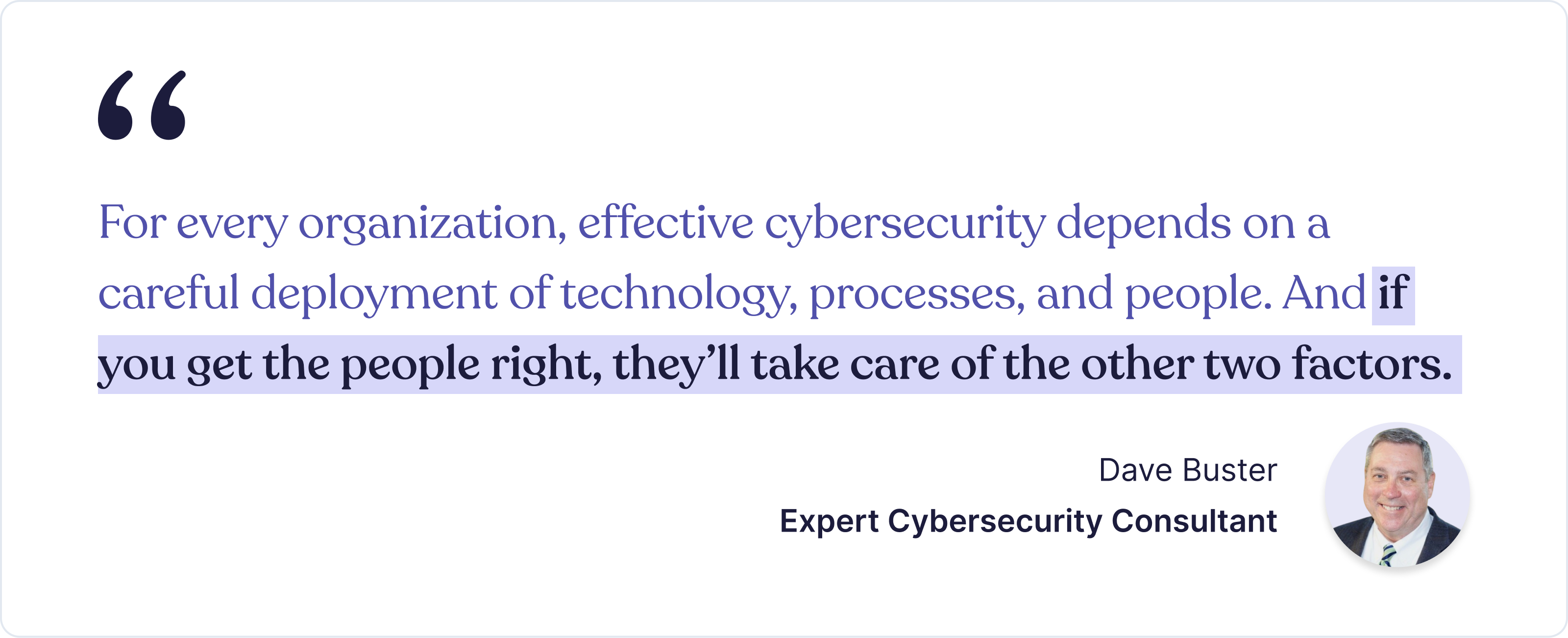
But often, CISOs come back seeking help on how best to build and structure their third-party risk management (TPRM) teams. Each time this happens, I’m reminded of these words by Dave Buster: 


Dave Buster - Quote


Dave couldn’t say it better. The right TPRM framework, technology, and automated processes won’t work on their own. So to mitigate risks in our ever-expanding vendor landscape, you need: 


  1. A dedicated vendor risk management team
  2. An effective TPRM reporting structure


Starting with the latter, I’d cover both in this guide. 


Third-Party Risk Management Reporting Structure


Get the right people, and you can rest assured your vendor risk management program is in good hands. Design an effective reporting structure for your TPRM team, and you can be sure the right info reaches you (and the C-Suite) at the right time. 


The challenge: 


What should such a TPRM reporting structure look like? 


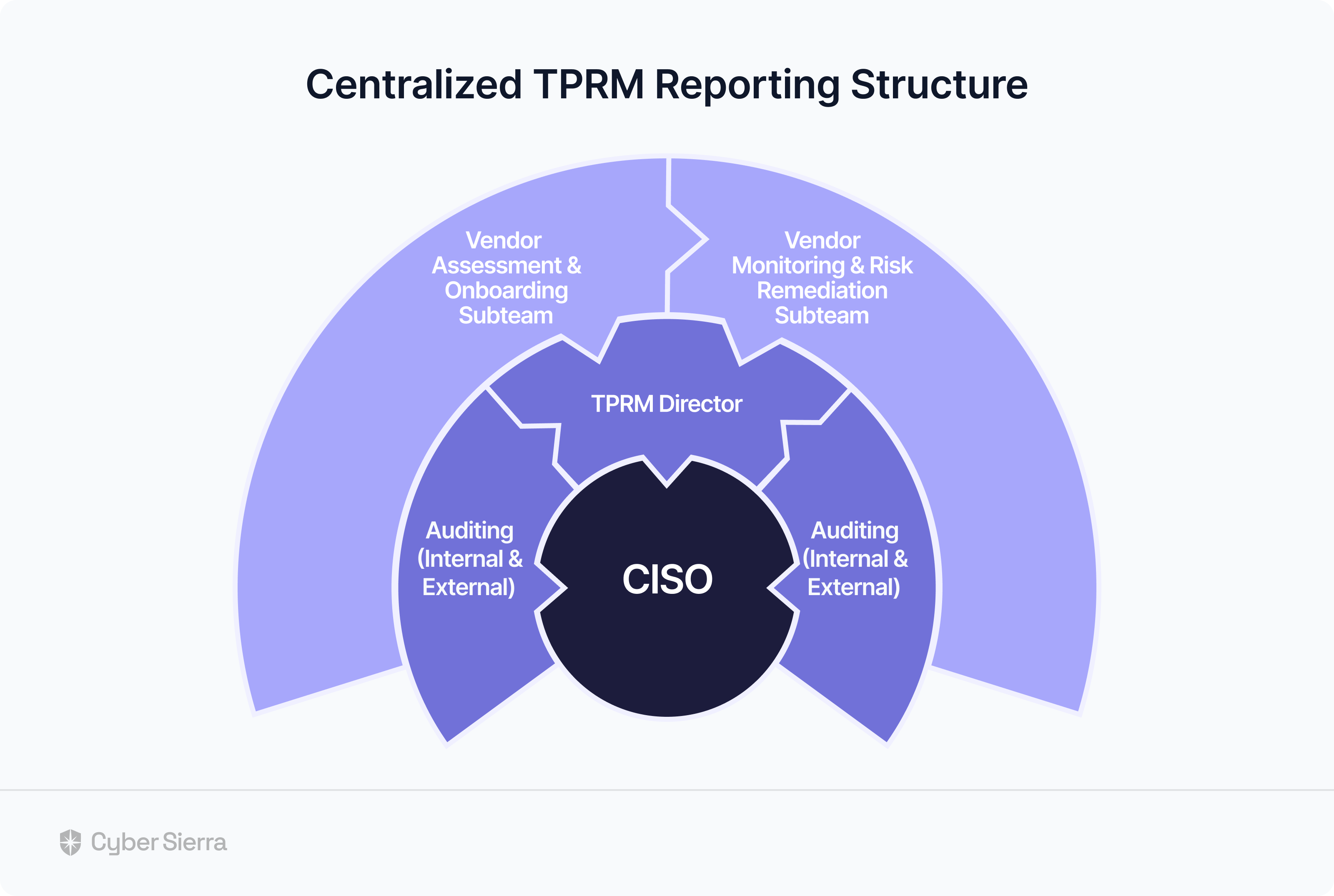
It ultimately depends on your organization type and overall size of your cybersecurity team. Generally though, experts recommend a centralized TPRM reporting structure:


centralized TPRM reporting structure


As illustrated above, a centralized structure eliminates silos and can be more effective for two reasons:


  1. The CISO and Senior Management get real-time insight into how subteams are implementing the TPRM program. 
  2. Subteams overseeing various aspects of your TPRM program can track teammates’ actions and act proactively.


If this reporting structure makes sense to you, as it does for most enterprise security execs, the next hurdle I often hear is: What are the roles and responsibilities of subteams dedicated to each step? 


The rest of this guide addresses that. As we proceed, you’ll also see how our interoperable cybersecurity platform helps enterprise security teams automate and report critical TPRM processes

Before we dive in… 

illustration background

Join SMSW

Join CISOs, CTOs, and enterprise security execs subscribed to Secure My Software Weekly (SMSW) for actionable cybersecurity, risk and compliance insights.

card image

Enterprise TPRM Team Roles and Responsibilities 


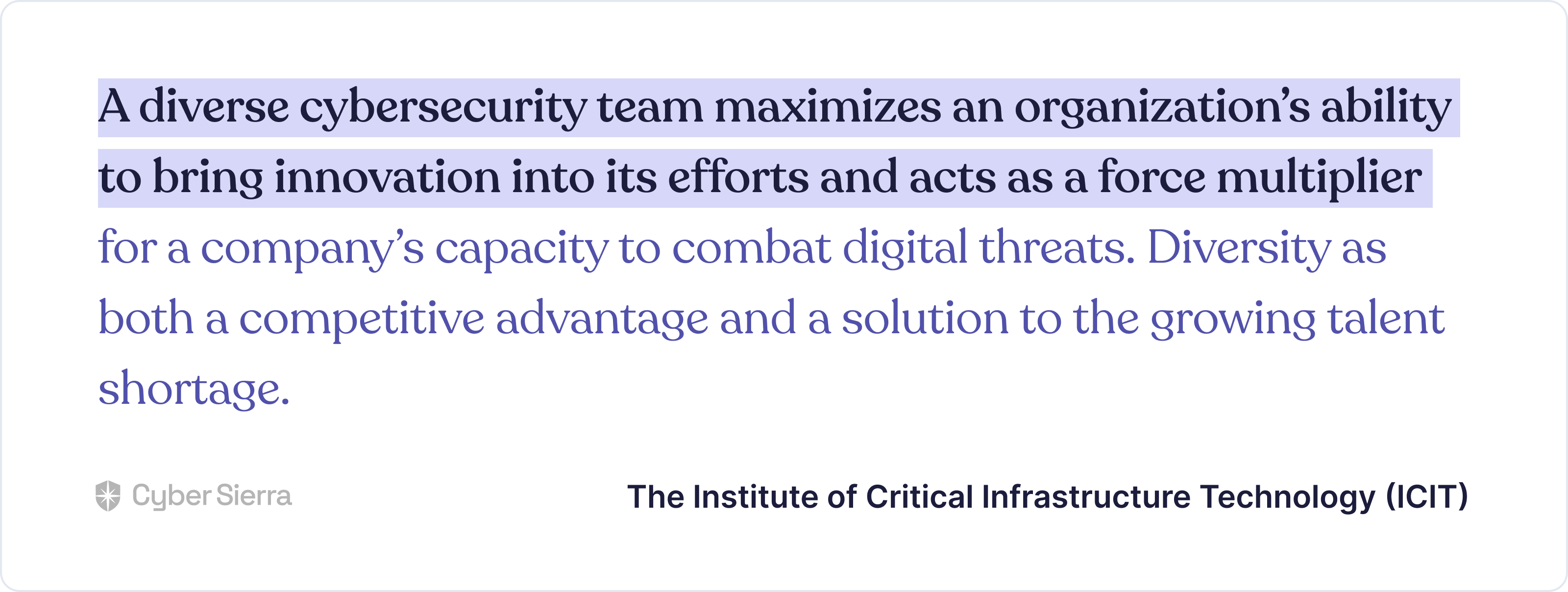
When filling critical roles in your TPRM team and assigning responsibilities, diversity is highly recommended. The Institute of Critical Infrastructure Technology, in a study titled, “The Business Value of a Diverse InfoSec Team,” reiterated this. 


According to their research


The-Institute-of-Critical-Infrastructure-Technology-ICIT


So while the centralized reporting structure above helps, it is crucial to keep diversity in mind as you fill the TPRM roles below. 


TPRM Program Director/Manager


This individual or team owns the TPRM program. 


High-performers have a balance of demonstrable risk management skills, extensive training, experience, and the ability to coordinate all subteams. They report to you, the CISO, and usually, their primary responsibilities would be to help you:


  • Champion and advocate for the maturity of your TPRM program and develop key partnerships across the org to ensure alignment with your company’s overall 3rd party strategy.
  • Design and oversee the implementation of your TPRM framework and operating procedures needed to integrate necessary security controls per your business functions. 
  • Establish relevant TPRM program metrics, Service Level Agreements (SLAs), Key Risk Indicators (KRIs), and Key Performance Indicators (KPIs) for managing all vendor risks. 
  • Design security guardrails for selecting vendors, and define security scores and controls 3rd parties must retain before they can be considered and let into your third-party ecosystem. 


Vendor Assessments & Onboarding Subteam


The core responsibility of specialist(s) on this subteam is enforcing the security guidelines defined by the TPRM Program Director, which new vendors must meet. Specifically, this includes: 


  • Vetting, profiling, and tiering vendors
  • Creating and implementing custom security audits or exams.
  • Choosing and right-sizing appropriate security assessment questionnaire templates for select vendors.
  • Onboarding vendors with acceptable security controls, etc. 


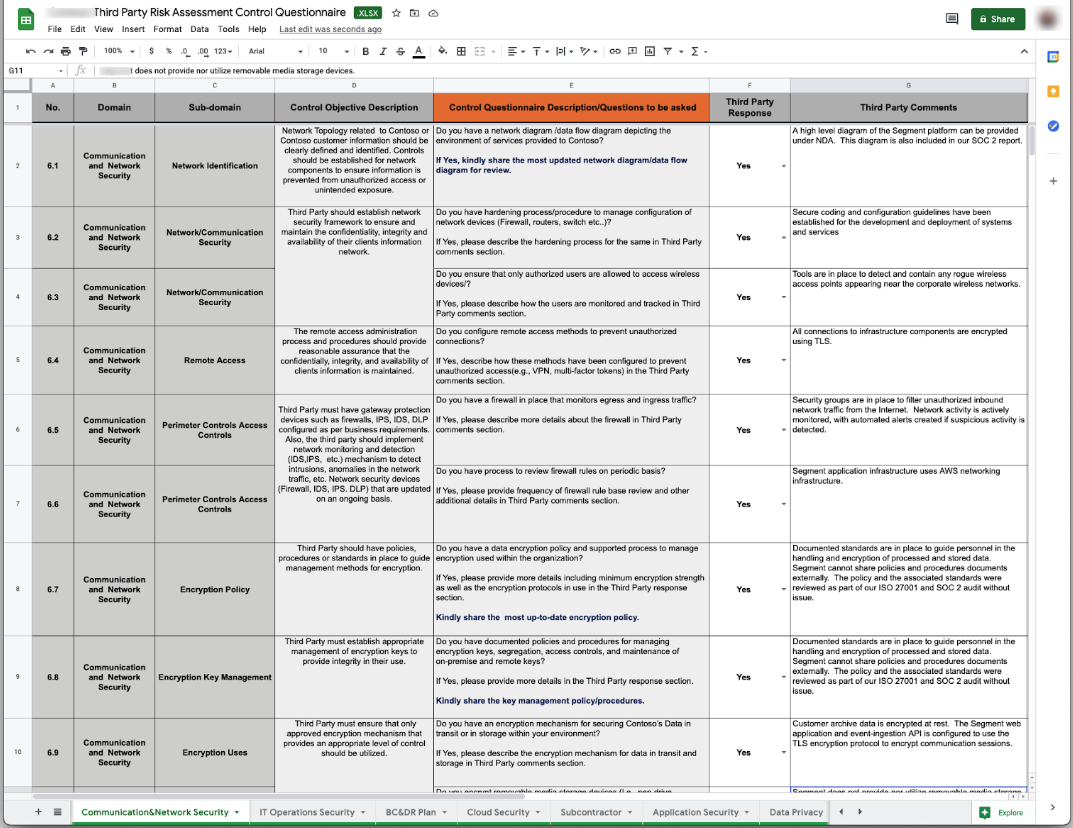
Imagine doing all that with this:


TPRM assessment Question


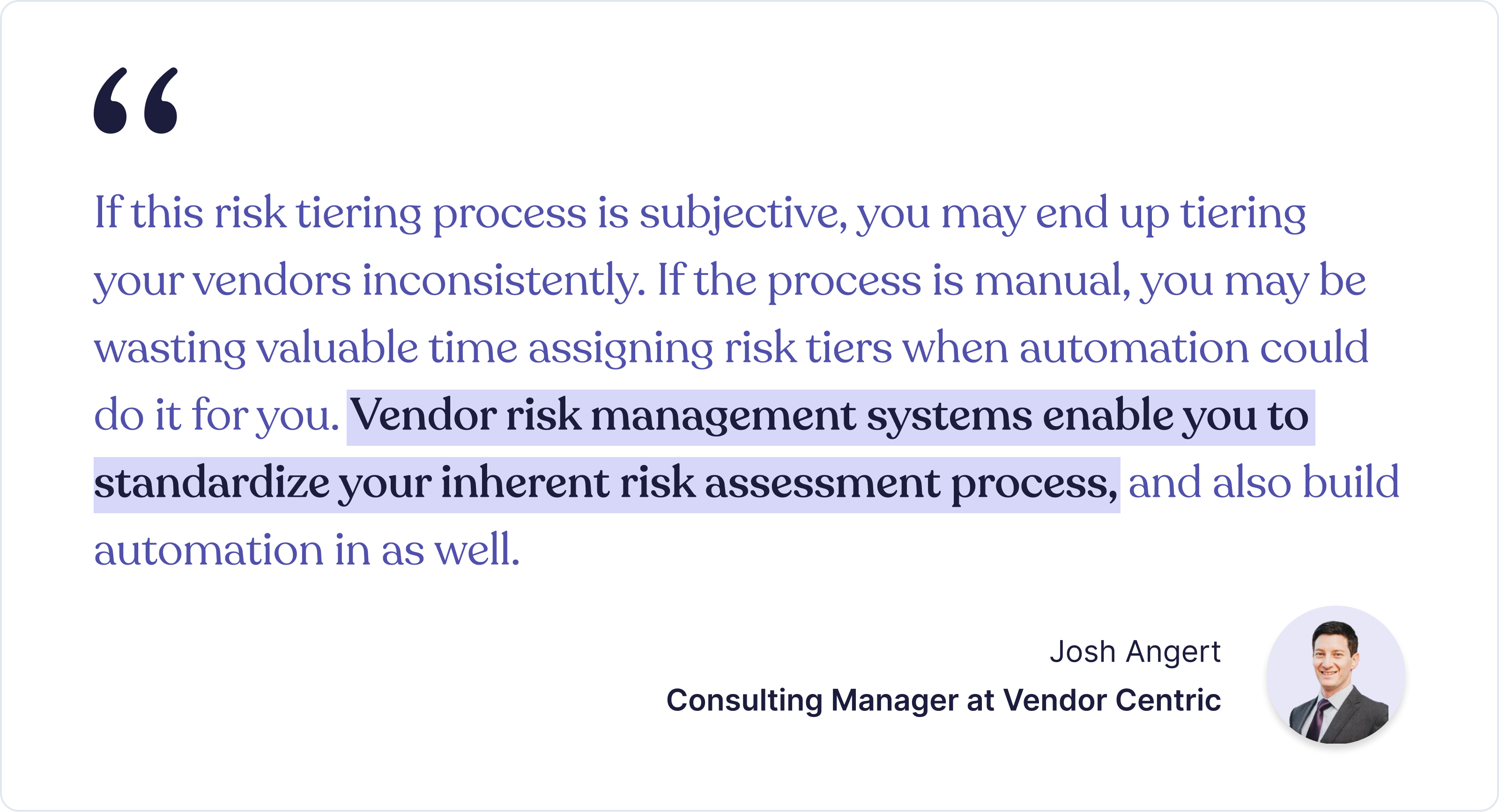
Josh Angert, Manager at Vendor Centric, observed how core functions of this subteam, if done manually with Excel, can lead to inconsistent vendor risk tiering, wasted time, and poor assessments. 

In his words:  


Josh Angert - Quote


As Josh advised, to curb vendor risk assessment bottlenecks, CISOs can leverage a vendor risk management system to standardize processes. 


That’s where Cyber Sierra comes in: 


vendor risk management system to standardize processes


As shown, our system streamlines the gruesome vendor tiering, assessment, and onboarding processes into three easy steps. For instance, your team can profile vendors based on their business type, location, and easily tier those requiring advanced assessments. 

illustration background

Automate Vendor Risk Assessments

Cyber Sierra streamlines crucial vendor assessment processes, so enterprise TPRM teams can compile reports faster.

card image

Vendor Risk Monitoring & Remediation Subteam

This subteam usually comprises risk detection and mitigation experts, each assigned to one or a group of vendors. They work closely with the security assessment subteam, share insights within each other, and report to the TPRM Program Director, or you, the CISO. 

Some core responsibilities include: 

  • Own assigned third-party vendors and manage their risks. 
  • Perform daily or weekly risk management tasks on assigned vendors, according to your company’s instituted TPRM program. 
  • Detect, mitigate, and report risks posed by third-parties, and work with them and the DevSecOps team to remediate the same. 
  • Flag third-parties that should be terminated, and in most cases, oversee the offboarding of flagged high-risk vendors. 

One way to empower this subteam is through software that enables ongoing vendor risk monitoring. This helps them identify vendors whose security controls become outdated and can’t be verified. 

Again, Cyber Sierra automates this: 


ongoing vendor risk monitoring


Our platform uses standardized enterprise security controls to auto-check evidence uploaded by vendors on an ongoing basis. As shown above, you get alerted of those that fail verification, flagging your team to immediately work with the vendor to enforce them. 


TPRM Program Auditors

According to Vikrant Rai


Vikranti Rai - Quote


In other words, having internal (and external) auditors is a must-have. They perform systematic evaluations of your company’s implemented TPRM framework, documentation, processes, and security controls. This enables them to document weaknesses that must be addressed and usually report directly to the CISOs, IT executives, and the TPRM Program Director/Manager. 


How Many People Should Be On My TPRM Team?

 There’s no magic number. 

Generally, the more vendors you manage, the more risk exposure your team may have to deal with, and the more people required. But all third-parties aren’t created equal. In a sample of, say, 200 vendors, only 5-10% (i.e., 10-20) may be high-risk or critical to your company’s operations. In a centralized reporting structure, where processes have been automated, 1-2 full-time employees (FTEs) on your risk monitoring and remediation subteam can manage such vendors closely, in addition to reviewing others occasionally. 

Going by this logic, the number of people you may need on your enterprise TPRM team should be around:

  • 1–3 FTEs for up to 200 vendors. 
  • 3–5 FTEs for 200 – 600 vendors. 
  • One (1) additional FTE for every 100–200 vendors beyond that. 

You may be wondering: 

How about the assessment and vendor onboarding subteam? 

Well, by automating processes with a tool like Cyber Sierra, your TPRM Director can vet, assess, and onboard vendors in a few steps because those critical to-dos have been streamlined. For instance, they can choose from standard security assessment questionnaires already built into our platform, customize per your company’s needs, and send to vendors: 


automating processes with a tool


Make Your TPRM Team More Effective

In a cybersecurity survey reported by Graphus:


cybersecurity survey reported by Graphus


This finding proves that, irrespective of how many full-time employees (FTEs) on your TPRM team or reporting structure, automation is needed to make them more effective.  

Third-party risk expert, Ian Terry, agrees


Ian Terry - Quote


We built Cyber Sierra to enable enterprise TPRM teams to achieve this needed automation and become more effective. From tiering critical vendors to continuous security assessments, and ongoing risk monitoring, our platform automates the steps required. 

Want to see it for yourself? 

illustration background

Automate Crucial Vendor Risk Management Process

Cyber Sierra streamlines crucial vendor assessment processes, so enterprise TPRM teams can compile reports faster.

card image
  • Third Party Risk Management
  • CISOs
  • CTOs
  • Cybersecurity Enthusiasts
  • Enterprise Leaders
  • Startup Founders
Pramodh Rai

Meet Pramodh Rai, a technology aficionado and Cyber Sierra's co-founder, whose zest for innovation is fuelled by a cupboard stacked with zero-sugar Redbull. With a nimble footwork through the tech tulips across Asia Pacific, he's donned hats at Hmlet (the proptech kind) and Funding Societies | Modalku, building high-performing teams and technologies. A Barclays prodigy with dual degrees from Nanyang Technological University, Pramodh is a treasure trove of wisdom, dad jokes, and everything product/tech. He's the Sherpa in sneakers you need.

A weekly newsletter sharing actionable tips for CTOs & CISOs to secure their software.


Thank you for subscribing!

Please check your email to confirm your email address.

Find out how we can assist you in
completing your compliance journey.
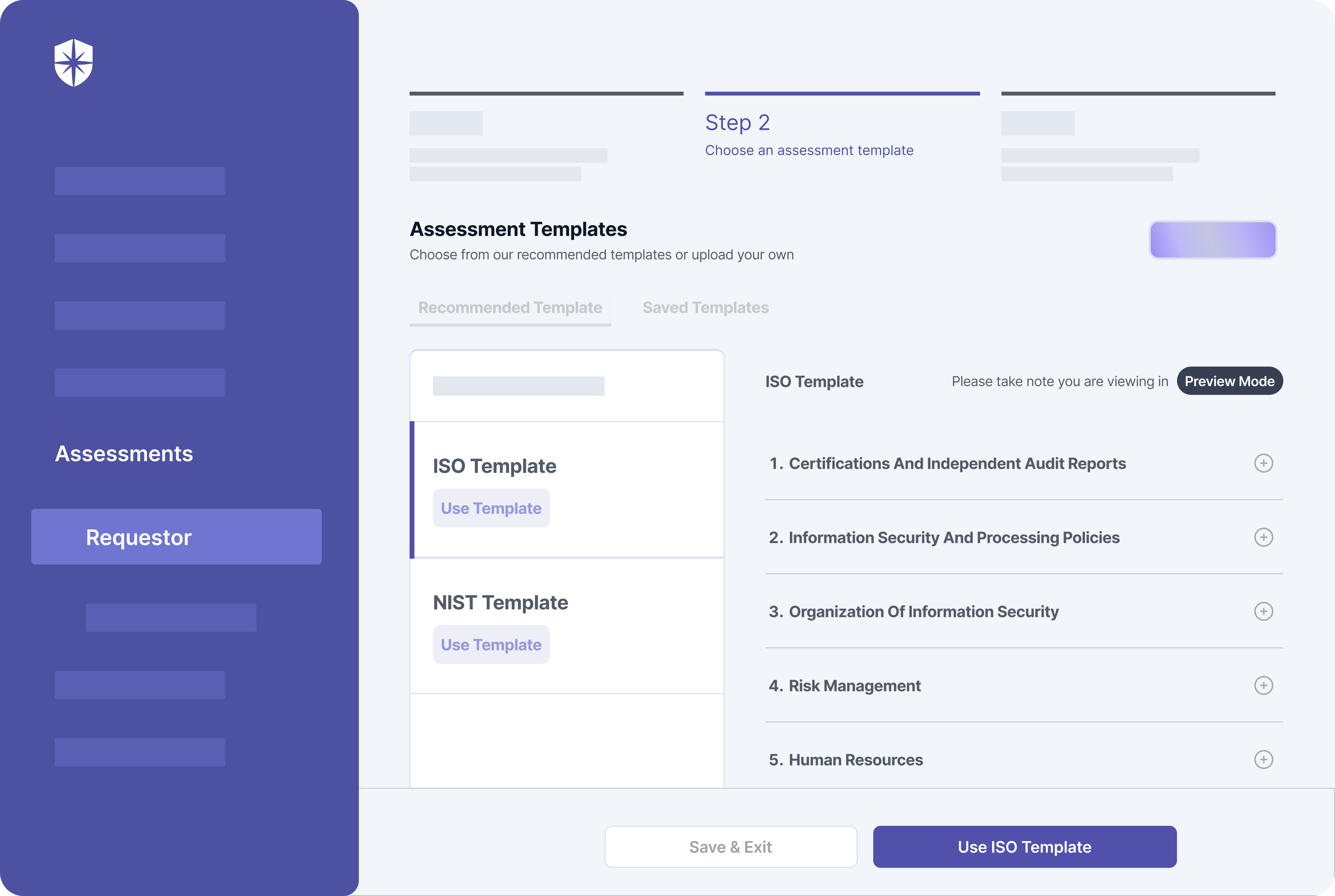
blog-hero-background-image
Third Party Risk Management

MAS Outsourcing Guidelines - What CISO Should Know in 2024 ?

backdrop
Table of Contents

Join thousands of professionals and get the latest insight on Compliance & Cybersecurity.


11th December 2024.


That’s the grace period the Monetary Authority of Singapore (MAS) has allowed before its new Notices on Outsourcing (658 and 1121) takes effect. Announced on 11th December 2023, the 12-month grace period also repeals the Outsourcing guidelines outlined in Notices 634 and 1108.


This means even if your organization was compliant with Notices 634 and 1108 last updated in 2018, you still have work to do. You’re probably here because you know that. So without much ado, in this article, I’ll:


  • Highlight who the latest MAS Outsourcing guidelines apply to
  • Discuss the key areas in the new MAS Outsourcing guidelines
  • Show you how to automate parts of the process of becoming (and staying) compliant with MAS’ updated regulations.


What is MAS Regulations?


The Monetary Authority of Singapore (MAS) regulations are comprehensive guidelines that govern Singapore’s financial sector. MAS regulates banking, insurance, capital markets, and payment services operating within the jurisdiction of Singapore to ensure financial stability, consumer protection, and market integrity.


Key areas of regulation include licensing, risk management, anti-money laundering (AML), and the safeguarding of customer assets. MAS also sets standards for outsourcing arrangements and operational risk controls, particularly in technology and digital payment services.


Who the Latest MAS Outsourcing Guidelines Apply to


According to the regulator’s official statements, Notices 658 and 1121 spells out compliance requirements for banks and merchant banks outsourcing relevant services to third-parties, respectively.


As illustrated below:


Who the Latest MAS Outsourcing Guidelines Apply to


Both outsourcing guideline Notices are issued pursuant to section 47A(2), (4), (6), (7) and (12), as applied by section 55ZJ(1), of the Singaporean Banking Act 1970 (the “Act”) and applies to all banks and merchant banks.


The stated information confirms who the new MAS Outsourcing guidelines apply to: Banks and merchant banks. However, the responsibility of becoming compliant rests on the senior management, CISOs, and executives at such financial institutions (FIs).


You’ll see that as we proceed.


But before we proceed:


CS cta


Key Areas in the New MAS Outsourcing Guidelines


Although there are dozens of requirements, key areas FIs must adhere to, to become compliant with the new MAS Outsourcing guidelines are:


  • Having a register of all outsourced service providers
  • Third-party risk governance and management oversight
  • Ongoing evaluation of 3rd (and 4th) party vendors
  • Continuous independent audits of third-parties


Register of All Outsourced Relevant Services


Under this requirement, MAS mandates all banks and merchant banks to have and keep a register that comprehensively records all:


More importantly, the regulator requires all FIs to update the register promptly and submit the same to the Authority semi-annually and at any time it is requested.


You can have and keep an updated register of outsourced relevant services like the one required by MAS through the good ol’ spreadsheet. But this will take a lot of manual data entry and maintenance efforts. A more optimal way is to leverage Cyber Sierra’s third-party risk management suite:


database for your security team


With our platform, an updated inventory of all third-party vendors and service providers are kept automatically. As shown above, you also get a database for your security team to quickly search and track how critical vendors perform relative to outlined MAS cybersecurity guidelines.


Third-Party Risk Governance & Management Oversight


In the new Outsourcing guidelines, MAS requires the implementation of an appropriate third-party risk management governance framework. They also require FIs to have an executive team to provide oversight of the same.


Two critical must-dos are:


MAS Outsourcing official documentation - In-content highlight design-2


To comply with these requirements, you can create a custom third-party risk management governance framework. A better option that helps in streamlining the compliance process is to adopt and customize globally-accepted governance frameworks like SOC and NIST.


Cyber Sierra helps with that:


pre-built with customizable versions of the SOC and NIST governance frameworks


Our platform is pre-built with customizable versions of the SOC and NIST governance frameworks used to assess 3rd parties worldwide. You also get a single pane to invite all stakeholders needed to collaborate, customize, and oversee any of the governance frameworks your team implements.


Ongoing evaluation of 3rd (and 4th) party vendors


In the updated Outsourcing guidelines, MAS requires FIs to properly evaluate third-parties before and after engaging them. The financial regulator also requires due diligence extended to the subcontractors (fourth-parties) a 3rd party service provider is working with.


This due diligence checks should be ongoing:


MAS Outsourcing official documentation - In-content highlight design-3


To become compliant with the ongoing evaluation of third-and fourth-parties, MAS expects third-parties working with FIs to provide evidence of meeting designated security assessment requirements.


Specifically, the expect that:


MAS Outsourcing official documentation - In-content highlight design-4


You can automate processes involved in collecting such evidence documents with Cyber Sierra. For instance, you can request and have third-parties upload required security assessment evidence from one pane.


Our platform also auto-verifies each uploaded evidence:


automate crucial third-party risk management


The ability to automate crucial third-party risk management processes like this is why financial institutions trust Cyber Sierra. Take one global bank based in Singapore:


CS case study quote


Continuous Independent Audits of Third-Parties


The compliance requirements here is straightforward:


Continuous Independent Audits of Third-Parties


Working with independent auditors has many benefits. One is giving external, more experienced eyes a chance to assess 3rd parties that pose risks and can stop your company from becoming compliant. But because MAS requires that this is done on an ongoing basis, there’s a need to streamline the process for everyone.


For instance, you can give auditors a central place where they can search, easily review, and identify third-parties with unsatisfactory security measures in place.


Again, you can do this with Cyber Sierra:


Take the MAS Outsourcing Notices Seriously


Take the MAS Outsourcing Notices Seriously


Singapore’s threat landscape is always evolving.


To stay one step ahead, Notice 658 and Notice 1121 sets out updated measures necessary for protecting financial institutions from threat actors increasingly trying to strike through outsourced services. By taking the new MAS Outsourcing guidelines seriously and complying with them, you bolster your organization’s cyber resilience.


Another reason to take this seriously is the allowed grace period. MAS expects all financial institutions to become compliant with all new requirements before 11th December 2024. Depending on when you read this, that’s just a few months away.


To facilitate the process for your team, consider streamlining and automating the crucial parts of becoming (and staying) compliant. Of course, this is where a platform like Cyber Sierra comes in:


Schedule a demo now to see how Cyber Sierra can streamline your TPRM processes. Our platform effectively mitigates third-party risks so you can focus on driving business growth through strategic partnerships.


CS cta

  • Third Party Risk Management
  • CISOs
  • CTOs
  • Cybersecurity Enthusiasts
  • Enterprise Leaders
  • Startup Founders
Pramodh Rai

Meet Pramodh Rai, a technology aficionado and Cyber Sierra's co-founder, whose zest for innovation is fuelled by a cupboard stacked with zero-sugar Redbull. With a nimble footwork through the tech tulips across Asia Pacific, he's donned hats at Hmlet (the proptech kind) and Funding Societies | Modalku, building high-performing teams and technologies. A Barclays prodigy with dual degrees from Nanyang Technological University, Pramodh is a treasure trove of wisdom, dad jokes, and everything product/tech. He's the Sherpa in sneakers you need.

A weekly newsletter sharing actionable tips for CTOs & CISOs to secure their software.


Thank you for subscribing!

Please check your email to confirm your email address.

Find out how we can assist you in
completing your compliance journey.
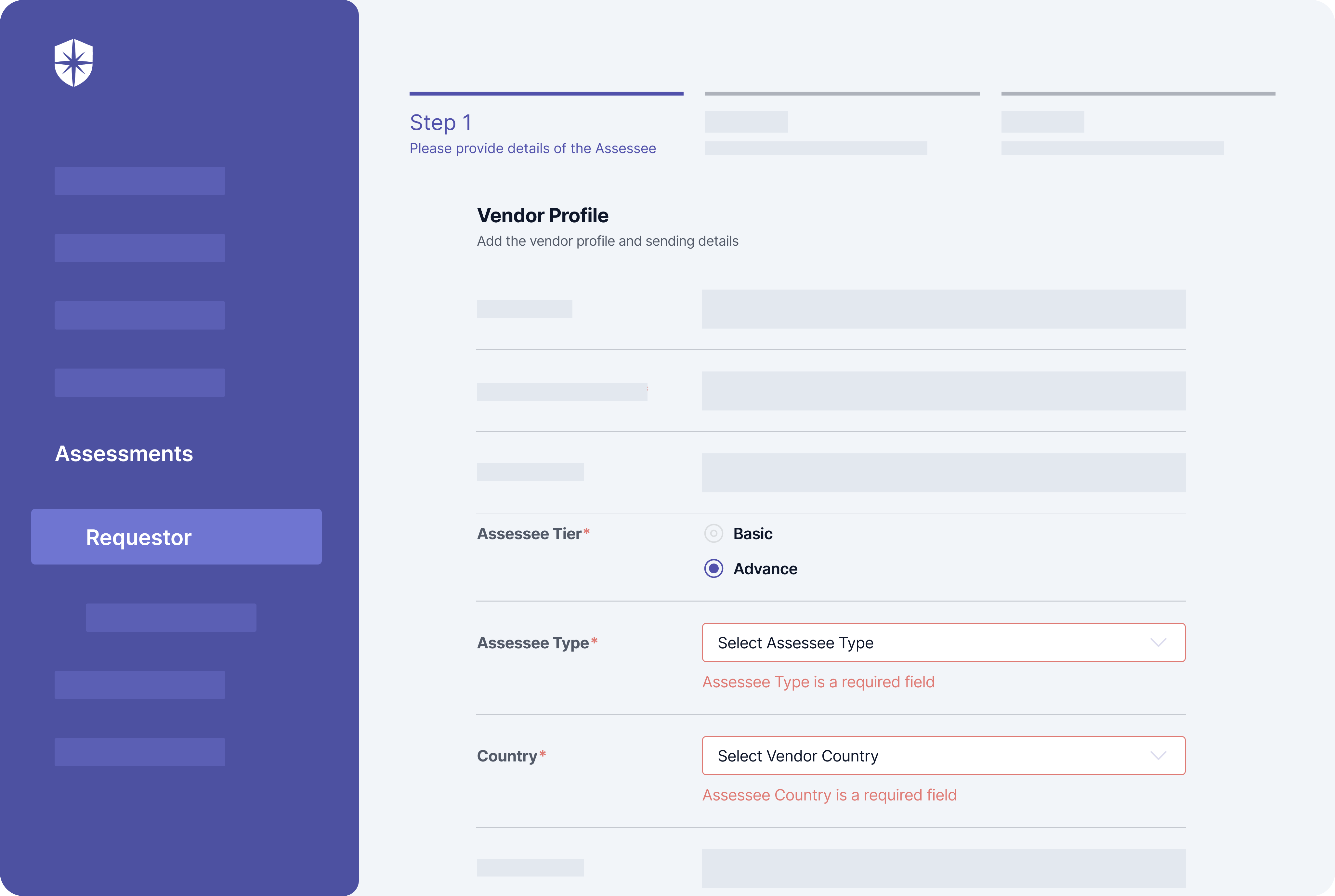
blog-hero-background-image
Third Party Risk Management

The Proactive CISO’s Guide to MAS TRM Guidelines

backdrop
Table of Contents

Join thousands of professionals and get the latest insight on Compliance & Cybersecurity.


What is MAS TRM Guidelines?

The MAS TRM Guidelines, issued by the Monetary Authority of Singapore, are a set of comprehensive regulations aimed at strengthening the technology risk management practices of financial institutions that MAS regulates. The main goal of these guidelines is to ensure robust cybersecurity and technology resilience by mandating measures like risk assessments, third-party risk management, and cyber incident response planning. These guidelines emphasize the need for financial institutions to proactively manage technology-related risks, safeguarding against cyber threats and ensuring operational continuity.

Where there’s sugar, expect unwanted ants. 


That has proven true in Singapore. As the country grows into a world-renowned tech hub, it has become a sweet spot for innovative startups and enterprises. So has it for unwanted bad actors. 


So much that, in 2022 alone, Singaporean financial institutions (FIs) spent a whopping US$5.7 billion fighting cybercrime and meeting regulations. In one massive phishing attack, for instance, Singapore’s OCBC Bank and its customers lost over US$10.8 million


With no end to such cyberattacks in sight, more stringent cybersecurity compliance measures were needed. The Monetary Authority of Singapore (MAS) rightly stepped up to update its Technology Risk Management (TRM) Guidelines. 


Updating the MAS TRM Guidelines was Necessary


The updated MAS TRM Guidelines adds another item to the already loaded to-dos of CISOs of banks and financial institutions (FIs). But given that cybercrime is getting worse, becoming (and staying) compliant is necessary to help your team achieve cyber resilience.


According to the regulatory body:


MAS TRM - techniques used


In other words, threat actors are now more sophisticated. The dire situation means MAS TRM Guidelines helps banks, FIs, and all enterprises working with them to:


  1. Understand their company’s exposure to technology risks.
  2. Ensure IT and cyber resilience by erecting robust risk management frameworks across their company’s operations. 


But achieving both can be overwhelming. 


What’s even more troubling is the fact that to remain compliant with Singapore’s MAS TRM Guidelines, companies are required to monitor cybersecurity controls continuously. For this, you need a smart enterprise compliance automation suite that automates mundane steps involved.


That’s where a platform like Cyber Sierra comes in.


And in this piece, you’ll see how it automates the process of becoming (and staying) compliant with MAS TRM Guidelines. 


Before we dive in…

illustration background

Subscribe to Secure My Software Weekly

Join thousands of CISOs, CTOs, and security pros getting actionable tips for security their software biweekly.

card image

Becoming (and Staying) Compliant with MAS TRM Guidelines


The updated MAS TRM Guidelines has fifteen sections

  1. Preface
  2. Application of MAS TRM Guidelines
  3. Technology Risk Governance and Oversight
  4. Technology Risk Management Framework
  5. IT Project Management and Security-by-Design
  6. Software Application Development and Management
  7. IT Service Management
  8. IT Resilience
  9. Access Control
  10. Cryptography
  11. Data and Infrastructure Security
  12.  Cyber Security Operations
  13.  Cyber Security Assessment
  14.  Online Financial Services
  15.  IT Audit


The first and second sections provide an overview of the MAS TRM Guidelines. After that, each section from 3–15 has subsections outlining best practices organizations should follow to become and stay compliant. But as illustrated below, after reviewing all these sections and subsections, we grouped them into three critical areas: 


The updated MAS TRM Guidelines


1. Risk Governance and Oversight


Sections under this area of the MAS TRM Guidelines outline the personnel and frameworks needed to ensure that a technology risk management strategy is established and implemented. The emphasis is first on having a more extensive list of roles appointed into your organization’s board of directors and senior management. 


The regulatory body notes:


MAS TRM - In-content highlight


The importance of these roles can’t be overstretched. 


Their combined expertise is needed to oversee the creation and implementation of technology risk management and IT project management frameworks, respectively. Once these personnels have been appointed, it’s best to have them working collaboratively. 


That’s where an interoperable cybersecurity platform like Cyber Sierra comes in. Our platform gives you a central place to work collaboratively and implement the needed security frameworks: 


Our platform gives you a central place to work collaboratively and implement the needed security frameworks


As shown, you can add appointed executives for more streamlined collaboration based on their roles. This automatically gives them role-based access controls for overseeing: 


  • The implementation of technology risk management strategy
  • The erection of a third-party risk management framework
  • The continuous assessment, management, and remediation of threats and risk necessary to remain compliant.


One benefit of having them collaborate from a streamlined platform like Cyber Sierra is that besides the ease of assigning policies and security controls to them, they’ll work together from a single pane. 


More on that as we proceed. 


2. Third-Party Risk Management (TPRM)


Sections 6–10 of the MAS TRM Guidelines, if you look closely, have a lot to do with 3rd party vendor risks. This is probably why the most recent update focuses mainly on third-party risk management. According to the regulatory body, this renewed focus is because:


MAS-TRM - scope and nature


By this recommendation, assessing risks from 3rd-parties should be prioritized. To do this effectively, it’s best to start by categorizing vendors based on their access to your organization’s sensitive data. 

As illustrated below: 


How to Categorize Third-Party Vendors


Once you’ve categorized vendors, the next step is to create, customize, and send security assessment questionnaires based on that categorization. Cyber Sierra automates this process. 


Our platform has globally-recognized vendor risk assessment templates, such as NIST and ISO. Your team can customize them to suit regional requirements for compliance programs like MAS TRM. You can also add and use your own risk assessment templates:


The steps are streamlined into: 


  1. Choosing an appropriate assessment template
  2. Customizing it by selecting and editing questions needed to assess a particular third-party vendor
  3. Assigning reviewer(s) with different role-based access control in a few clicks, and 
  4. Providing details of the third-party vendor such as where they are located or the assessee type they are:


Your team can customize them to suit regional requirements for compliance programs like MAS TRM. You can also add and use your own risk assessment templates


Through these steps, especially the 4th step, our platform enforces the categorization of 3rd-party vendors, right from sending out security assessment questionnaires. And by automating the entire process from one place, your organization can assess third-party risks and monitor their security postures in real-time. 


That was the case for a global bank using Cyber Sierra


global bank in singapore


Read their success story here. 


3. Data and Operational Security Management 


The last five sections of MAS TRM Guidelines deal with how organizations manage and secure data in their daily operations. Due to the dynamism involved in managing sensitive data, achieving compliance to requirements outlined in these sections calls for continuous monitoring of cybersecurity controls. 


That is, your security team should: 


  • Continuously monitor and analyze cyber events
  • Promptly detect and respond to cyber incidents. 


The regulatory body recommends that:


MAS TRM - In-content highlight design-3


Here’s why this recommendation is vital.


It allows enterprises to identify any changes in a provider’s risk profile over time rather than just at preset intervals, shifting from periodic risk assessments to continuous intelligence.


For instance, your organization outsources technology services to cloud providers like AWS, Azure, Google Cloud, and others. Based on the MAS TRM’s official statement, your security team should automatically, through continuous monitoring, test controls and configurations in those environments. This removes the need for manual checks and provides assurance on cloud-based controls.


Cyber Sierra automates this process: 


identify any changes in a provider’s risk profile over time rather than just at preset intervals, shifting from periodic risk assessments to continuous intelligence


As shown, in one dashboard, your team can: 


  1. Continuously monitor and detect MAS TRM control breaks and their corresponding vulnerabilities.
  2. View details of vulnerabilities related to a control break
  3. Get actionable tips for remediating threats, and
  4. Assign remediation to qualified teammates.


illustration background

Automate MAS TRM Compliance

Begin the MAS TRM compliance journey in a few clicks. Automate the entire process in one place.

card image

The Consequence of MAS TRM Noncompliance


Brand reputation damage and, of course, fines. 


Those are the major consequences of violating MAS TRM Guidelines. Specific to fines, this report noted that the penalty per breach of a TRM requirement can exceed S$1 million. But it doesn’t end there. Multiple breaches of the MAS TRM requirements can result in a multi-million dollar fine for an organization. 


This was demonstrated by MAS’s 2023 report of penalized financial institutions. DBS Bank was among those penalized. They were fined a whopping S$2.6 million for violations and noncompliance failures committed between July 2015 and February 2020. 


Their case revealed that your organization can still be penalized several years after for noncompliance failures committed today. This necessitates the need to prioritize becoming (and staying) compliant to MAS TRM Guidelines today. 


Ease through Singapore’s MAS TRM Guidelines


MAS TRM Guidelines has 15 sections. 


Under each section, there are dozens of subsections of requirements organizations must adhere to become compliant. Along with these, their corresponding security controls that must be implemented. To ease the process, it is better to leverage a platform that automates most processes involved: 


To ease the process, it is better to leverage a platform that automates most processes involved:


Our platform has the MAS TRM program built-in. 


This means, in a few clicks, you can invite your team and work collaboratively to become (and stay) MAS TRM-compliant, while automating various tasks involved from one place. 


Our platform has the MAS TRM program built-in. 


This means, in a few clicks, you can invite your team and work collaboratively to become (and stay) MAS TRM-compliant, while automating various tasks involved from one place.

illustration background

Automate MAS TRM Compliance

Begin the MAS TRM compliance journey in a few clicks. Automate the entire process in one place.

card image
  • Third Party Risk Management
  • CISOs
  • CTOs
  • Cybersecurity Enthusiasts
  • Enterprise Leaders
  • Startup Founders
Pramodh Rai

Meet Pramodh Rai, a technology aficionado and Cyber Sierra's co-founder, whose zest for innovation is fuelled by a cupboard stacked with zero-sugar Redbull. With a nimble footwork through the tech tulips across Asia Pacific, he's donned hats at Hmlet (the proptech kind) and Funding Societies | Modalku, building high-performing teams and technologies. A Barclays prodigy with dual degrees from Nanyang Technological University, Pramodh is a treasure trove of wisdom, dad jokes, and everything product/tech. He's the Sherpa in sneakers you need.

A weekly newsletter sharing actionable tips for CTOs & CISOs to secure their software.


Thank you for subscribing!

Please check your email to confirm your email address.

Find out how we can assist you in
completing your compliance journey.
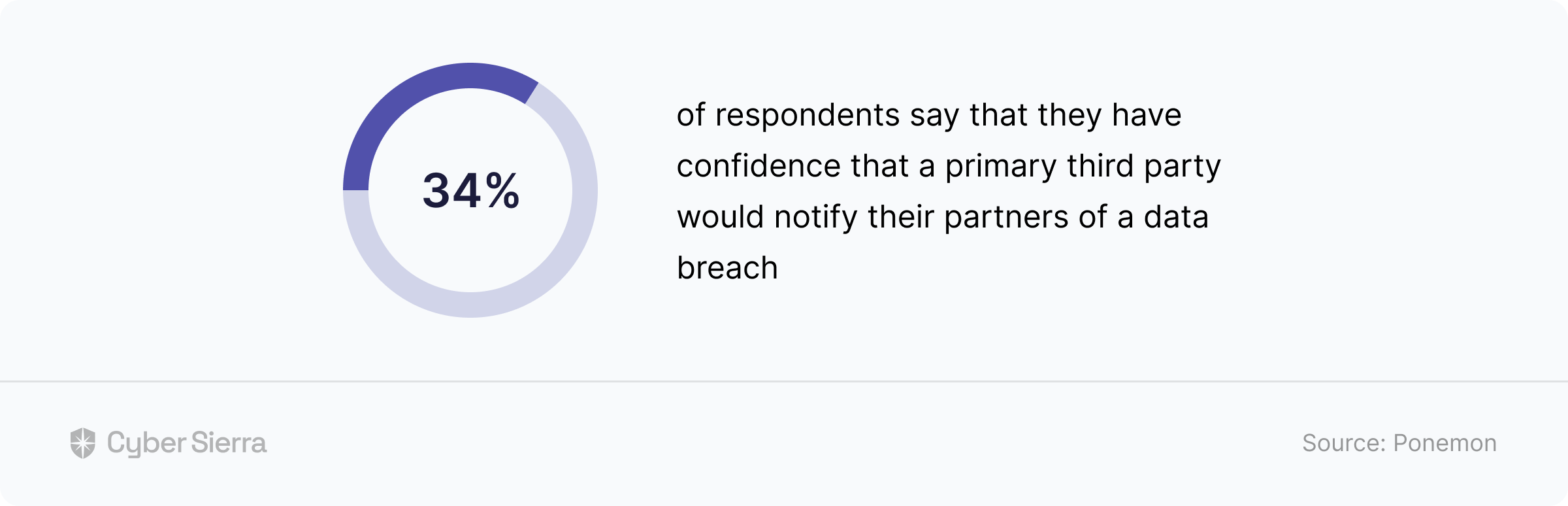
blog-hero-background-image
Third Party Risk Management

Cyber Risk ThroughThird Party Relationships

backdrop
Table of Contents

Join thousands of professionals and get the latest insight on Compliance & Cybersecurity.


Every cybersecurity risk that your organization faces, is likely present in companies or individuals it works with. Increasingly, breaches happen because of vulnerabilities present in the network of Third-Party Relationships (TPRs) you have.

As a result, the following are important points to note when you interact with parties outside your organization.

  1. Ensure your company has a policy for Third Party Risk Management (TPRM) with clearly defined controls that apply to TPRs.

  2. Maintain a central repository for TPRs and analyze the cybersecurity risks they pose and subsequently, apply appropriate controls to each party, with reference to TPRM or best practices you are familiar with.

  3. Third parties are not just ‘vendors’. Any supplier, IT service provider, associate, affiliate, or consultant is also part of the same set of third-party relationships. Controls in your organization's information security policies should apply to all.

  4. Apply controls across the relationship. The importance of cybersecurity controls is normally overlooked, especially during and in the terminal phases of the relationship.

  5. Require your third parties to inform you of their security practices and in particular, any breaches, especially in relation to data concerning your customers or organization.

When cyber attacks occur in your supply chain of TPRs and if the data compromised concerns your business or its customers, your organization is likely to suffer impact too and may even be held liable.

As a result, watch out for the parties you are interacting with within the course of business and be mindful of cyber risk in this sphere.

Schedule a demo now to see how Cyber Sierra can streamline your TPRM processes. Our platform effectively mitigates third-party risks so you can focus on driving business growth through strategic partnerships.

  • Third Party Risk Management
Srividhya Karthik

Srividhya Karthik is a seasoned content marketer and the Head of Marketing at Cyber Sierra. With a firm belief in the power of storytelling, she brings years of experience to create engaging narratives that captivate audiences. She also brings valuable insights from her work in the field of cybersecurity and compliance, possessing a deep understanding of the challenges and pain points faced by customers in these domains.

Find out how we can assist you in completing your compliance journey.
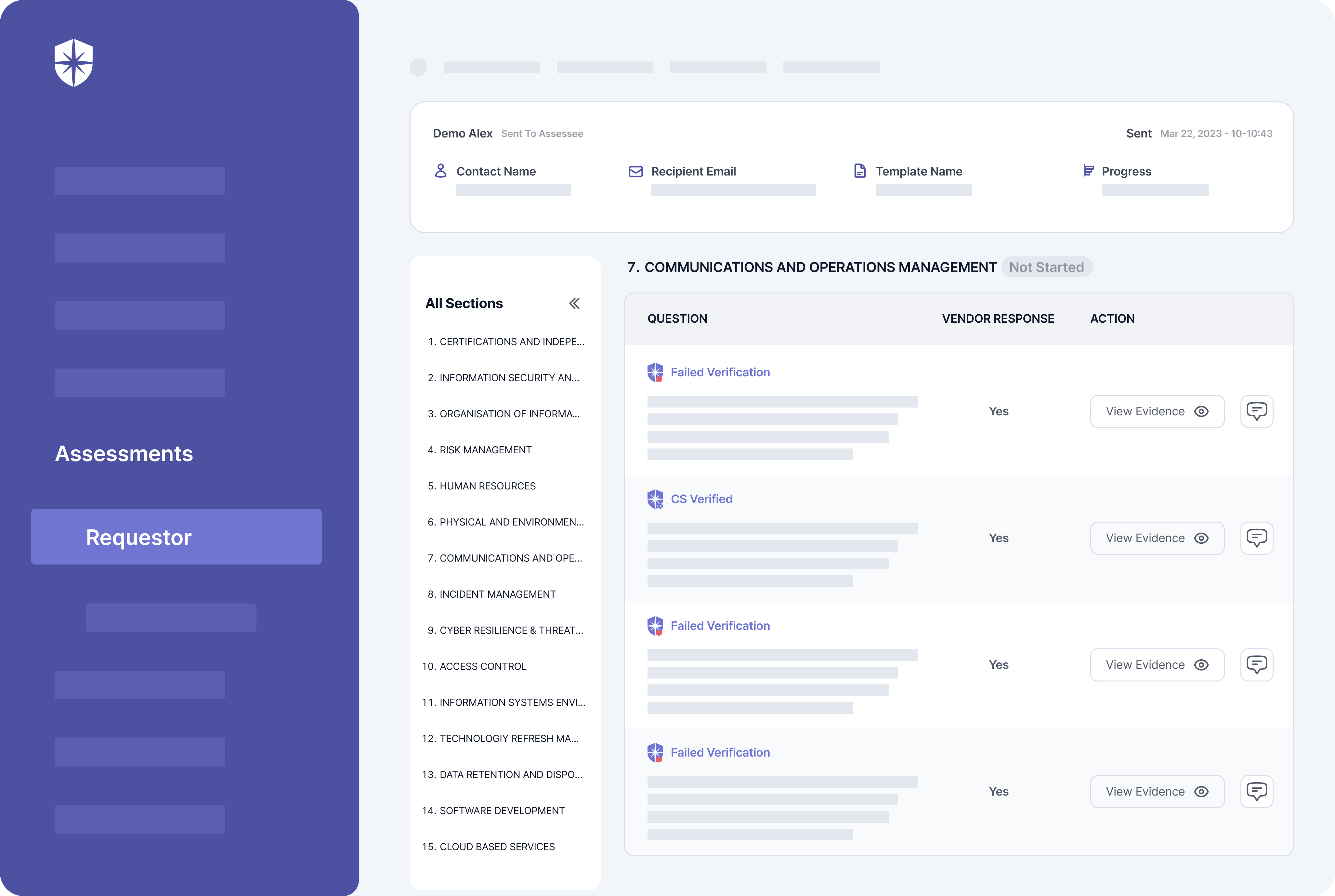
toaster icon

Thank you for reaching out to us!

We will get back to you soon.